PC manufacturers are starting to use memory from CXMT, a rapidly growing Chinese memory manufacturer. Apple is also testing it, but is in trouble because it cannot manufacture custom chips for Apple due to US regulations.
The U.S. Department of Defense has added more than 300 Chinese technology companies to a '
Apple Tests Chinese Memory Chips as Supply Squeeze Bites - WSJ
https://www.wsj.com/tech/apple-tests-chinese-memory-chips-as-supply-squeeze-bites-d292bb97
HP, Asus and Acer begin using CXMT chips amid memory shortage - Nikkei Asia
https://asia.nikkei.com/business/china-tech/hp-asus-and-acer-begin-using-cxmt-chips-amid-memory-shortage
Apple's Favorite Bullying Tactic Just Died in China. It Could Cost You Hundreds on Your Next iPhone.
https://www.barchart.com/story/news/3746480/apple-s-favorite-bullying-tactic-just-died-in-china-it-could-cost-you-hundreds-on-your-next-iphone
On December 2, 2024, the U.S. government imposed an export ban on 24 types of chip manufacturing equipment and three categories of software essential for semiconductor development to China. At the same time, it added 140 Chinese companies to the 'Section 1260H list,' a blacklist prohibiting them from accessing products and tools containing American technology without U.S. government approval. Initially, CXMT, a major Chinese DRAM manufacturer, was not included in this blacklist, and it was reported that this was due to pressure from Japan. However, on June 8, 2026, 188 companies were added to the Section 1260H list, and CXMT was newly included in the list of companies subject to restrictions.
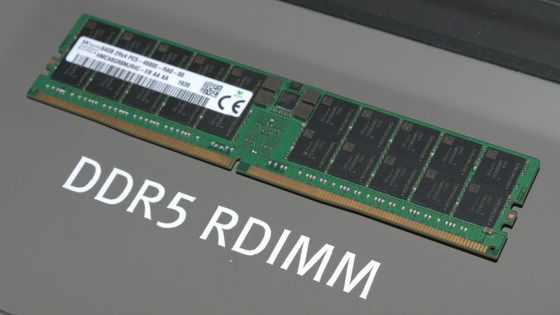
In response, Apple asked the Trump administration to make a deal with CXMT, which had been added to the Section 1260H list, to address the global memory supply shortage. In fact, it was reported in June 2026 that CXMT was testing DDR5 memory modules for PCs , and given that most memory modules are currently manufactured by three companies—Samsung, SK Hynix, and Micron—CXMT's entry is expected to bring about changes in the memory market.
Apple is seeking permission from the Trump administration to purchase memory from CXMT, a Chinese company blacklisted by the US government, to cope with soaring memory prices - GIGAZINE
Then, in July 2026, it was reported that Apple was testing whether it could use CXMT's DRAM chips in devices for the Chinese market. This is believed to be a technical certification process that takes place before mass production adoption, and it does not mean that Apple has decided to commercially use CXMT chips, but it may be that they are preparing to integrate them into their supply chain as soon as political approval is obtained.
Apple is reportedly testing memory chips from Chinese semiconductor manufacturer CXMT, possibly lobbying the US government for approval - GIGAZINE
However, it has been suggested that these tests may not be conducted adequately due to US government regulations. According to the Wall Street Journal, Apple often customizes components to suit its products in order to maximize performance, but federal regulations prohibit US companies from transferring technology to CXMT, including all information regarding the technical details and product specifications of the special chips that Apple wants to use. This restriction makes it virtually impossible for Apple to order custom chips from CXMT.
Industry analysts say CXMT's technology still lags behind its international competitors, citing its lack of access to state-of-the-art chip manufacturing equipment as the reason. As a result, it may be unable to communicate the necessary information for custom chip manufacturing, potentially forcing Apple to redesign parts of its products if it uses standard CXMT memory chips.
Furthermore, Apple raised prices across multiple hardware products, including Macs and iPads, in June 2026 in response to soaring memory costs. It has been pointed out that this price increase is related to Apple's previous strategy. Apple's previous strategy was to 'negotiate with multiple memory manufacturers and use the cheapest supplier,' but increased memory demand and US government regulations have given domestic company Micron an advantage, making the previous strategy no longer feasible. At the same time, barchart , a business news outlet, states that 'Micron is not hesitant to criticize Apple's past actions.'
Therefore, Apple is believed to be hoping to increase its memory suppliers, but according to Barchart, CXMT rejected Apple's offer to lower prices and instead offered prices equal to or higher than those offered by SK Hynix and Samsung. As a result, it has been suggested that Apple's plan to keep product prices down by purchasing memory from China may have fallen through without government approval.
On the other hand, notebook computer manufacturers HP (USA) and Acer and ASUS (Taiwan) have begun using CXMT memory chips in devices sold outside the United States. According to Nikkei Asia 's interviews with relevant parties, CXMT prioritizes supplying the majority of its production capacity to Chinese customers such as Huawei, so the amount of CXMT chips used and the number of notebook computer models employing them will be very limited as of July 2026. Furthermore, PC manufacturers are reportedly taking a cautious stance regarding the use of CXMT chips, mindful of their relationships with the three major memory chip manufacturers that account for more than 90% of the global market: Samsung, SK hynix, and Micron.

Nevertheless, amidst an unprecedented memory shortage, multiple sources reveal that many major PC manufacturers have completed the certification process for CXMT's DRAM chips around mid-2026 and have begun using them in laptops on a limited basis.
In response to a request for comment from Nikkei Asia, Acer stated, 'While we do not disclose our suppliers, we are working closely with multiple global manufacturers and suppliers to flexibly adjust our operations in order to respond to fluctuations in component prices. We are also working with multiple manufacturers and suppliers to strengthen the resilience of our supply chain.' HP declined to comment, and ASUS did not respond.
Related Posts:





in Hardware, Posted by log1e_dh