AI companies are hiring thousands of electricians and carpenters, with OpenAI, Google, Meta, and others offering record-breaking salaries in the industry.
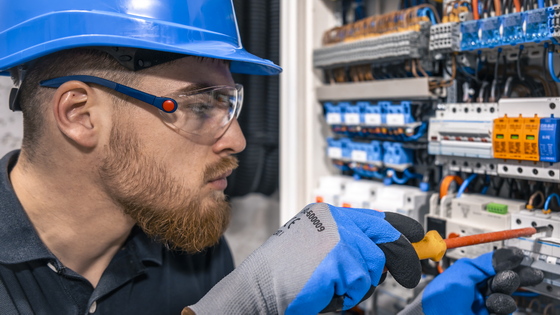
As the race to develop generative AI intensifies, technology companies like Meta and Google are rapidly expanding their recruitment and training of skilled workers such as electricians, carpenters, welders, and plumbers. According to job search site Indeed, job postings for workers in related facilities have more than doubled in the past two years, showing how the AI boom is creating jobs different from those of traditional software engineers.
AI Companies Are Recruiting Electricians and Carpenters by the Thousands - The New York Times
Hiring for the Data Center Build-Out - Indeed Hiring Lab
https://www.hiringlab.org/2026/07/14/hiring-for-the-data-center-build-out/
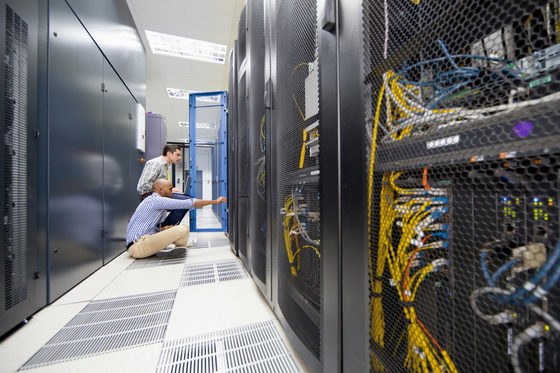
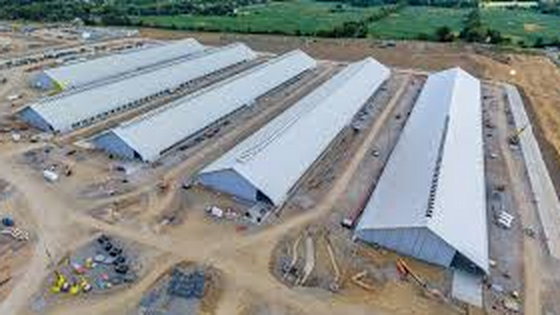
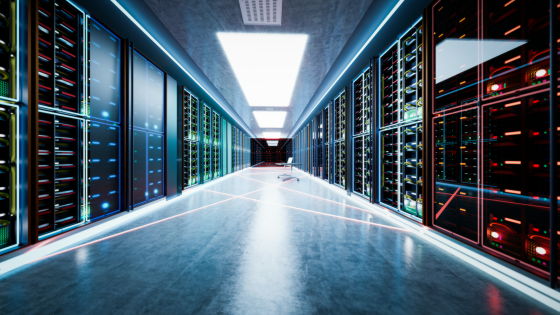
According to The New York Times, companies like Meta, Google, and asset management giant BlackRock have invested a combined $265 million (approximately 43.5 billion yen) or more in training skilled workers to secure personnel to build and operate large-scale AI facilities. This is because operating large-scale computer facilities requires not only IT engineers to handle servers, but also a large number of carpenters and steelworkers to construct the buildings, electricians to install power equipment, and plumbers to handle cooling systems.
Meta is investing $115 million (approximately 18.9 billion yen) in its skilled trades training program, 'America's Workforce Academy,' which will train electricians, welders, plumbers, fiber optic technicians, and other skilled tradespeople. America's Workforce Academy will cover tuition fees, certification costs, and transportation expenses, as well as pay participants a salary and guarantee employment, primarily at Meta's construction sites, to graduates. The program will begin pilot testing in Louisiana, Ohio, Texas, and Indiana, with the goal of training several thousand people in its first year.
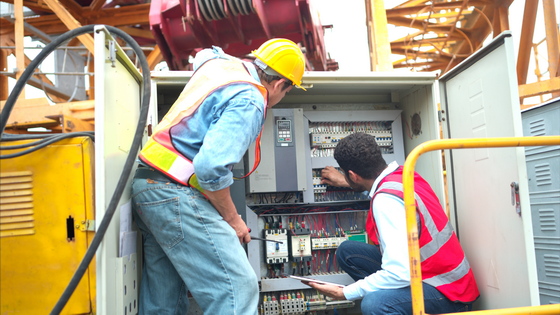
BlackRock is also contributing $100 million (approximately 16.4 billion yen) over five years to an initiative called 'Future Builders,' with plans to support the training and employment of 50,000 people in fields such as electrical engineers, welders, plumbers, and HVAC technicians. Instead of establishing its own school, BlackRock will support existing vocational training organizations and collaborate with companies such as Google, Meta, Walmart, and Home Depot.
An analysis published in July 2026 by the job search site Indeed also confirmed the increased demand for these skilled jobs. Job postings on Indeed that include 'data center,' 'datacenter,' or 'data-center' in the job title or description have more than doubled in the past two years. This is in contrast to the fact that job postings across the United States as a whole decreased by about 12% during the same period, and technology-related jobs excluding those also decreased by 6%.
The graph below compares the trends in job postings across the United States (blue), data center-related facilities (red), and technology jobs excluding these (yellow), with the number of job postings in June 2024 set at 100. It shows that while job postings across the United States and general technology jobs are decreasing, job postings for related facilities are growing significantly, with a particularly accelerated increase in the last year.
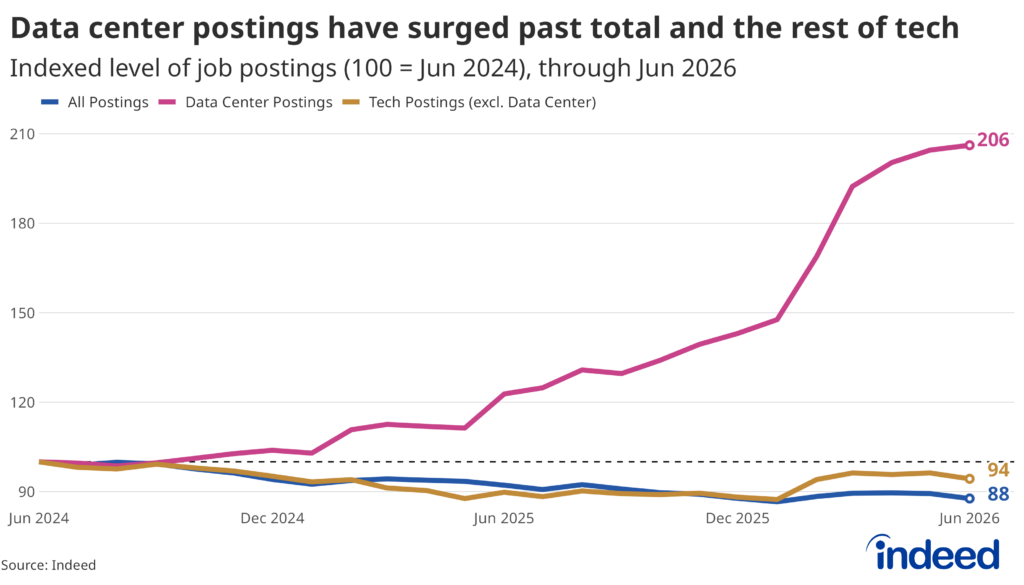
As of the time of writing, approximately 6 out of every 1,000 job postings in the U.S. are for data center-related facilities, a threefold increase from about 2 in mid-2023. 71% of job postings in 2026 will be from the top 10 technology companies by market capitalization.
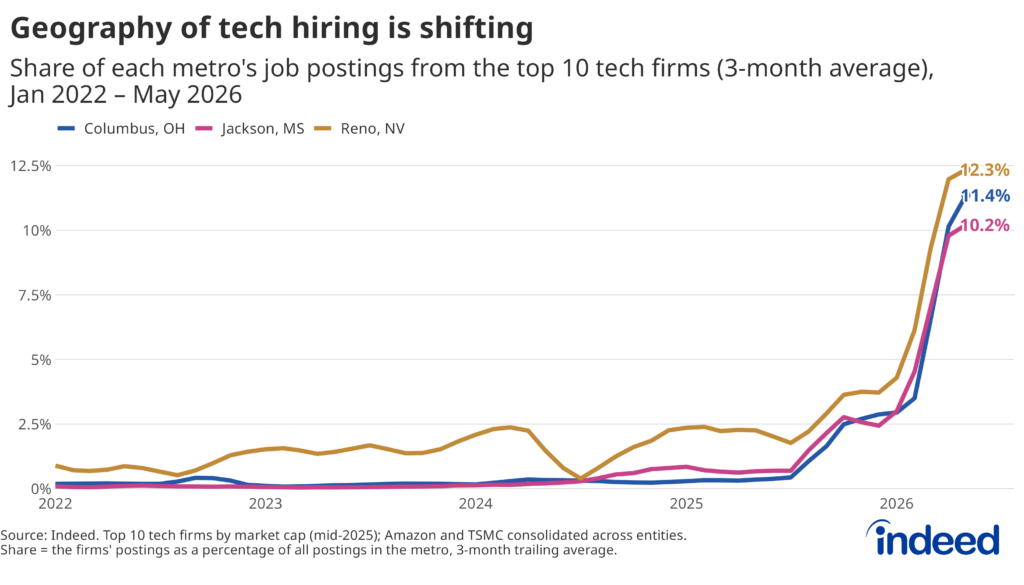
The areas where job openings are increasing are also different from traditional technology cities like Silicon Valley and Seattle. In Columbus, Ohio; Jackson, Mississippi; and Reno, Nevada, the percentage of jobs held by the top 10 technology companies was less than 2% until mid-2025, but it exceeded 10% in all three cities by 2026.
The graph below shows the percentage of job openings in Columbus (blue), Jackson (red), and Reno (yellow) that are held by 10 major technology companies. This percentage, which was less than 2.5% by the end of 2025, surged in 2026, indicating that AI investment is driving major technology companies to expand their recruitment bases to regional cities.
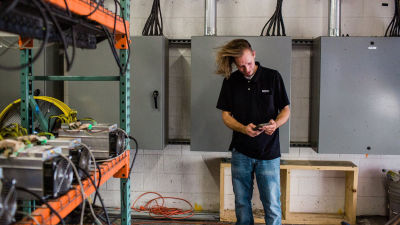
Approximately one-quarter of the jobs advertised are for personnel responsible for the installation and maintenance of electrical and telecommunications equipment, cables, computers, servers, and other infrastructure. IT infrastructure, operations and support, and installation and maintenance combined account for about half of all job postings. While salaries tend to be lower than those for traditional software engineers, Indeed analyzes that the median hourly wage for installation and maintenance positions is 42% higher than for similar jobs in general, representing an additional $10 (approximately 1640 yen) per hour.
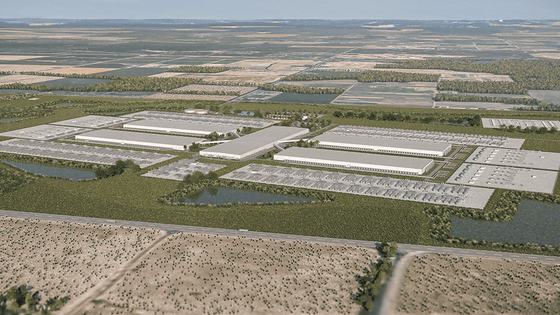
This surge in job openings is supported by massive investments in AI computing infrastructure around the world. Meta has partnered with BlackRock to establish a joint venture to develop and own a 1GW computing facility in El Paso, Texas. Meta will be responsible for construction and management, and will be the first sole user upon completion, with the construction project expected to create thousands of skilled jobs.
NVIDIA is reportedly the lessee of a lease agreement worth up to $50.2 billion (approximately 8.23 trillion yen) for Hut 8's planned 1GW facility in Texas. The Hut 8 facility is planned to house hundreds of thousands of AI chips, and NVIDIA's long-term contract is structured to support Hut 8's fundraising for construction.
NVIDIA is also reportedly in talks to guarantee approximately $250 billion (approximately 41 trillion yen) in funding to enable OpenAI to lease a 10GW facility being developed by SB Energy, a subsidiary of SoftBank, in southern Ohio. NVIDIA is also said to be considering providing an additional $350 billion (approximately 57.4 trillion yen) in financing for the AI chips to be installed in the facility. Negotiations are ongoing, and there is a possibility that the agreement will not be finalized.
This Ohio facility will utilize land and electricity managed by the U.S. government and is expected to provide 800 MW of computing power by 2028 as its first phase. The total project cost, including the facility and internal chips, could exceed $500 billion (approximately 82 trillion yen), and if realized, it would become one of the world's largest AI computing centers.
In South Korea, NAVER is partnering with Brookfield and NVIDIA to expand its AI computing infrastructure with a total investment of $10 billion (approximately 1.64 trillion yen). Brookfield will contribute up to $9 billion (approximately 1.48 trillion yen), NVIDIA $1 billion (approximately 164 billion yen), and NAVER will cover the remainder. The initial NVIDIA DSX facility will be expanded from 55 MW to 200 MW, and the goal is to develop a total capacity of over 2 GW in South Korea, including projects with SK Group.
OpenAI is advancing 'Project Camellia,' a long-term infrastructure project in Effingham County, Georgia. Under this project, they have secured a 3.2 GW power supply contract with Georgia Power, with phased delivery planned from 2028 to 2032. According to reports, the investment is expected to exceed $30 billion (approximately 4.92 trillion yen), and OpenAI has stated that households will not bear any costs, as they will pay for the necessary power and transmission equipment themselves.
We're developing Project Camellia, a long-term AI infrastructure project in Effingham County, Georgia.
— OpenAI Newsroom (@OpenAINewsroom) July 22, 2026
There is significant work ahead. Here is the approach guiding that work:
- Georgia families will not subsidize this project. OpenAI will pay all infrastructure and…
Anthropic has signed a 20-year lease agreement for a facility being developed by TeraWulf in Hawesville, Kentucky. The supplied computing capacity will be approximately 401 MW and will be delivered in stages from late 2027 to early 2028. TeraWulf initially anticipates contract revenue of approximately $19 billion (approximately 3.12 trillion yen) over the 20-year period, with the possibility of extending the contract for up to another 10 years.
Today, TeraWulf announced two strategic transactions that significantly advance our AI infrastructure strategy:
— TeraWulf (@TeraWulfInc) July 6, 2026
???? A 20-year lease with @AnthropicAI at our Justified Data Campus
???? The sale of our 50.1% ownership interest in the Abernathy Joint Venture to an investor group led…
Large-scale projects are underway outside of the United States as well. ByteDance, the company that operates TikTok, is planning to build a complex with a maximum computing capacity of 1 GW in the free trade zone of Ceará state in northeastern Brazil. The investment is reported to amount to approximately $39 billion (approximately 6.4 trillion yen). If completed, it is expected to become ByteDance's largest computing base outside of China.
Bloomberg reports that Chinese AI company Z.ai has completed a 1GW facility equipped solely with Chinese-made semiconductors and has begun partial operations. Z.ai, formerly known as Zhipu, is said to be operating multiple computing clusters consisting of more than 10,000 Chinese-made AI chips, which will be used for training next-generation GLM models. Amid ongoing US export restrictions on advanced semiconductors, this is attracting attention as China's attempt to develop large-scale AI without relying on NVIDIA chips.
However, the construction boom isn't just creating jobs. The construction of facilities that use large amounts of electricity and water near residential areas is also causing conflicts with residents over noise, heat emissions, the landscape, safety, and electricity costs. Indeed also points out that while thousands of workers are needed during construction, it's uncertain whether the same level of employment will be maintained after completion.
Similar problems are surfacing in Japan. There are approximately 300 related facilities in Japan, with an estimated market size of $23 billion (approximately 3.77 trillion yen), and it is expected to expand by about 50% by 2030. About 90% of these facilities are concentrated in densely populated areas such as the Tokyo metropolitan area and the Osaka metropolitan area, leading to opposition from residents who are concerned about noise, waste heat, storage of emergency fuel, and a decline in property values as construction progresses near their homes.
In Inzai City, Chiba Prefecture, residents have gathered more than 13,000 signatures against a plan to construct a 52-meter-tall facility in front of their apartment building, and have filed a lawsuit against the developer who approved the plan, a case that has been reported overseas . Under Japan's current building regulations, such facilities are sometimes treated as 'offices' rather than factories or warehouses, and local governments acknowledge that the existing system is insufficient to address the impact on residents. While AI is creating new jobs for electricians and carpenters, the issues of where these facilities will be built and who will bear the burden are unavoidable challenges in Japan as well.
Related Posts:

in Note, Posted by log1i_yk