Tens of thousands of geometric earthworks, left behind by a now-extinct ancient civilization, have been discovered beneath the Amazon rainforest.
When you hear about the Amazon rainforest in South America, you might imagine a place where nature remains untouched. However, new research using
Over 20,000 precolonial earthworks in the Southwest Amazonia | Nature
https://www.nature.com/articles/s41586-026-10835-7
An ancient civilization of millions once flourished in the Amazon | University of Helsinki
https://www.helsinki.fi/en/news/culture/ancient-civilization-millions-once-flourished-amazon
'Completely Transformed My Understanding': Scientists Uncover Hundreds of Hidden Structures Beneath The Amazon : ScienceAlert
https://www.sciencealert.com/completely-transformed-my-understanding-scientists-uncover-hundreds-of-hidden-structures-beneath-the-amazon
In the Brazilian state of Acre , located in the southwestern Amazon, there is known to have been a civilization called the 'Aquiry civilization' that existed from around 600 BC to 850 AD. Although the Aquiry civilization has already perished, it is believed that they cleared the Amazon rainforest to create fields for corn, pumpkins, cassava, and other crops, as well as structures for rituals and roads leading to them.
In 2002, Professor Emeritus Martti Parsinen, an archaeological anthropologist at the University of Helsinki in Finland, reportedly saw earthworks of the Achillee civilization hidden in the Amazon rainforest. Regarding that time, Parsinen said, 'Acre province had long been known as an untouched rainforest region. This completely changed my understanding and made me realize how wrong my previous assumptions were.'
The Achilles civilization is thought to have been not a single kingdom or empire, but rather a network of diverse communities bound together by a common tradition. However, little is known about it because there are no written records or stone ruins. The only clues left for modern researchers are the magnificent earthen ramparts separated by ditches several meters deep and the roads that connected them.
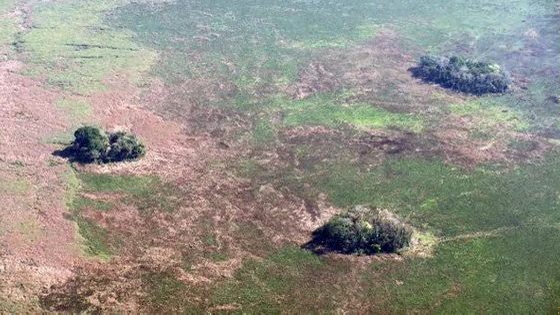
The following are earthworks in Acre Province believed to be from the Achilles civilization. Clearly, traces of man-made geometric structures can be seen in the gaps of the rainforest.
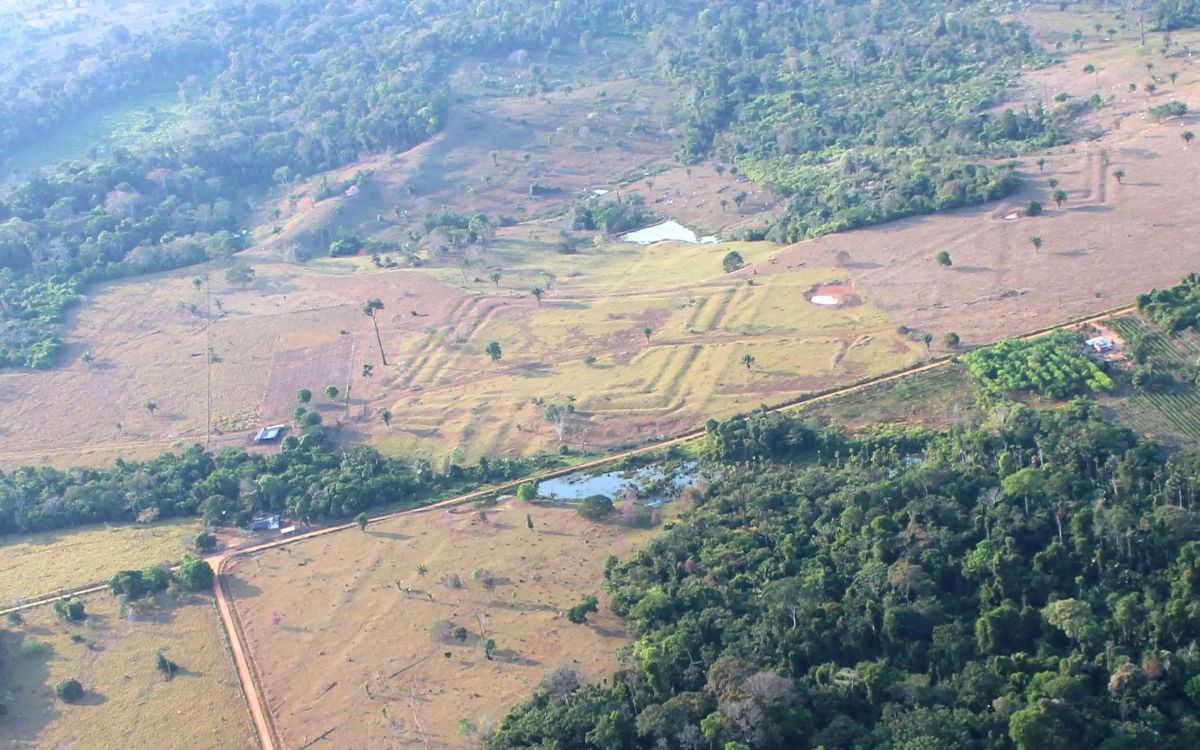
After the Achilles civilization collapsed around 850 AD, tropical rainforests covered most of the ruins within centuries, obscuring their full extent. However, the advent of LiDAR, a laser-based surveying technology, has changed the situation.
LiDAR surveys involve firing laser pulses from an aircraft that penetrate through gaps in the forest, allowing researchers to search for traces of ancient structures hidden within the woods by observing the reflections off the ground. The research team flew over previously unsurfaced rainforest areas, surveying an area of 4,497 square kilometers.
The investigation uncovered a total of 432 earthworks across the entire dataset, 396 of which were previously undiscovered. Extrapolating these results to existing findings, the research team estimated that the Achilles civilization may have controlled a vast area of 183,000 km² at its peak. They also argued that between 1.2 million and 3 million people lived in this region during its peak, and that the total number of earthworks could reach between 24,000 and 30,000.
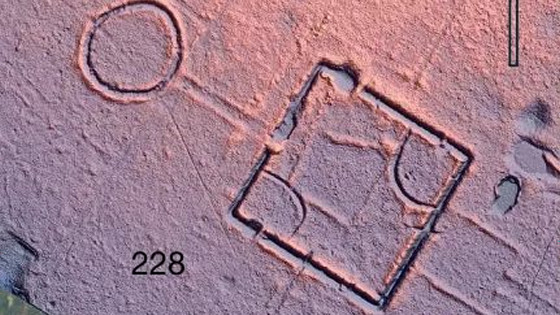
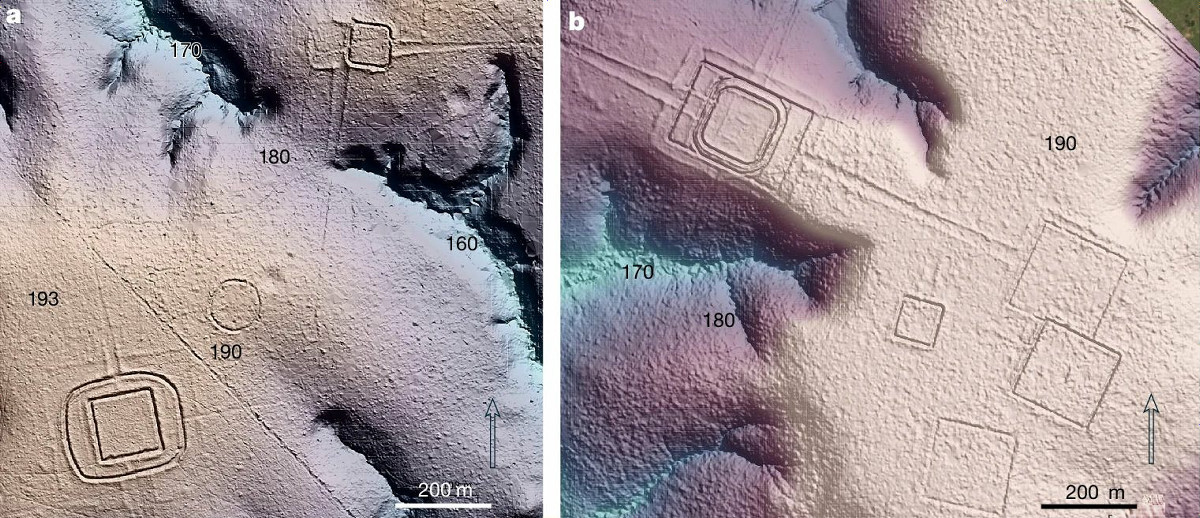
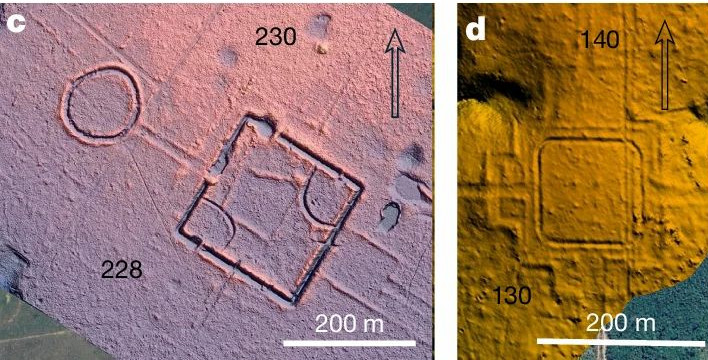
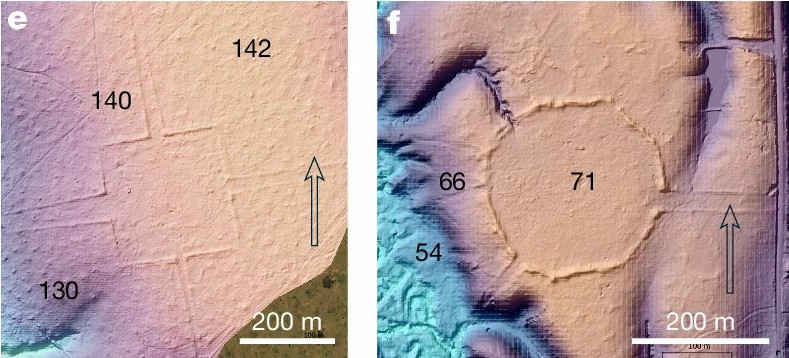
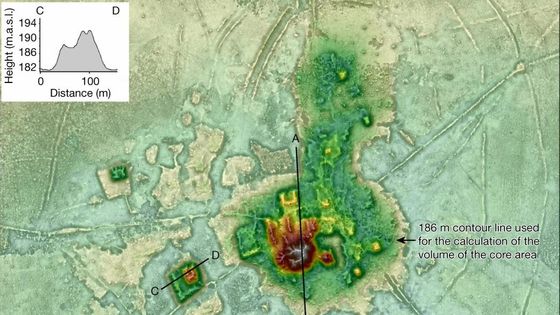
The following photograph shows an example of an earthen embankment believed to be from the Achilles civilization. The colors and shading were applied to a digital terrain model, and the numbers represent the relative elevation (above sea level in meters) obtained from the model.
Parsinen says, 'In the center of these settlements, there must have been a large geometric earthwork connected by roads of varying widths. At some point in the year, these places would have been bustling with ceremonies, gatherings, dances, athletic competitions, and other communal events.'
At its peak, the earthworks were likely surrounded by fields of corn, cassava, pumpkins, and cotton, and were probably enclosed by large row houses that housed a considerable population. Parsinen pointed out, 'The nearby forests are rich in managed fruit trees and nut trees, which is evidence of centuries of human landscape management.'
The findings of this study suggest that other regions of the Amazon may have had much higher population densities and undergone more intensive human modification than previously thought. Parsinen also stated, 'Many questions remain unanswered. One of the most important questions is what happened between approximately 850 and 1000 AD. Why did this civilization disappear?'
Related Posts:


in Science, Posted by log1h_ik