'Shufflecake' allows you to create a secret data storage area on your PC, even concealing the existence of the storage volume itself, and can create a 'decoy volume' for emergencies.

' Shufflecake ' is software that can create multiple hidden volumes on storage, allowing files to remain hidden even when subjected to storage analysis by experts. It was developed with use in mind by 'people whose freedom of expression is threatened by governments or criminal organizations,' such as 'whistleblowers,' 'journalists,' and 'human rights activists,' and can also create 'decoy volumes' that can be useful when being questioned.
Shuffle
[2310.04589] Shufflecake: Plausible Deniability for Multiple Hidden Filesystems on Linux
https://arxiv.org/abs/2310.04589
Shufflecake is hidden volume creation software developed for Linux. It manages storage devices such as USB drives by dividing them into a 'header area' and a 'data storage area.' The official website describes it as the 'spiritual successor to TrueCrypt and VeraCrypt.'
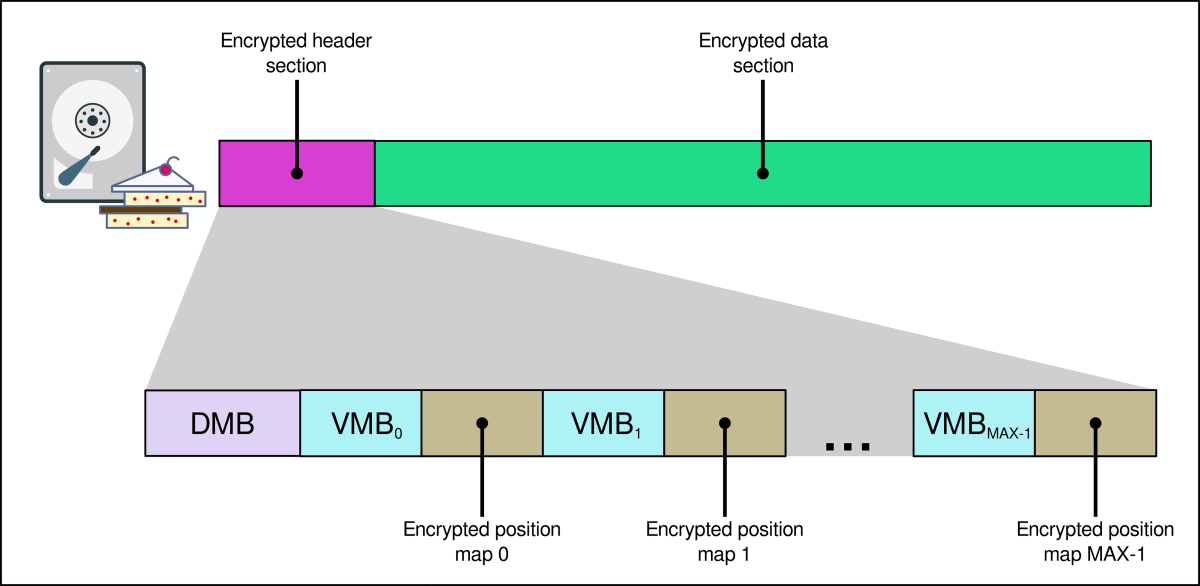
In the data storage area, encrypted volumes are fragmented and randomly arranged. As a result, the data appears as random noise when not decrypted.
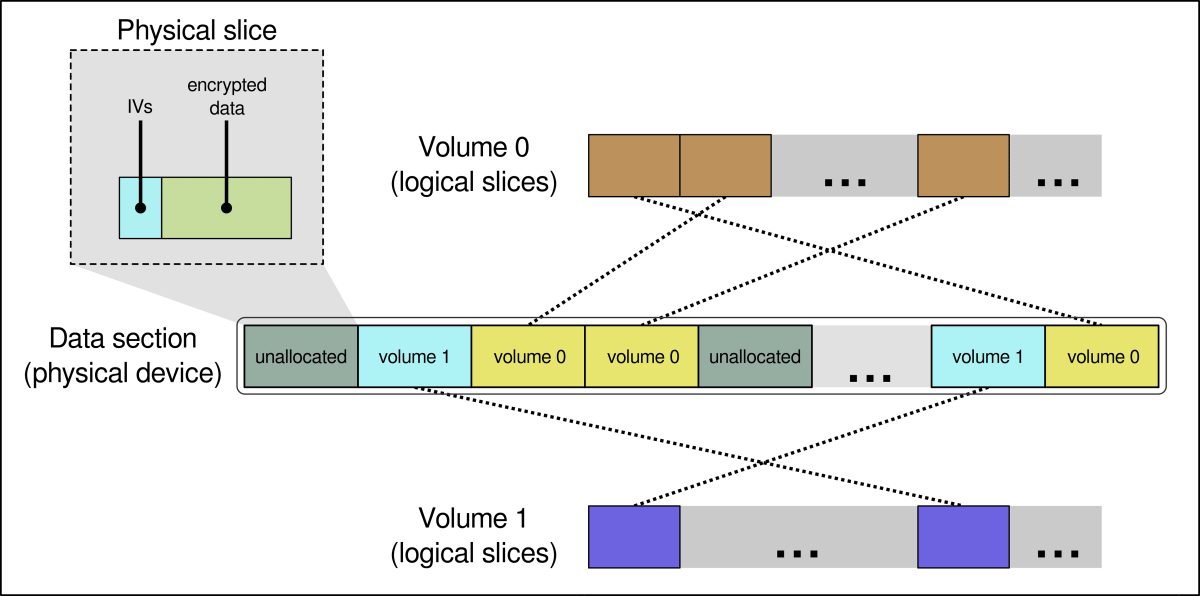
Shufflecake allows you to create up to 15 levels of tiered encryption volumes, with each level having a different password. Passwords for shallower levels can only decrypt shallower levels, while passwords for deeper levels can decrypt both shallower and deeper levels. This means that during questioning, you can reveal only the 'decoy data' by providing only the 'passwords for shallower levels.'
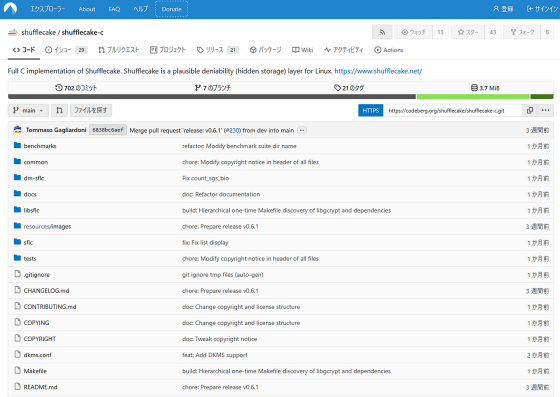
Instructions on how to install Shufflecake and its source code can be found at the following link. At the time of writing, it is experimental software being tested on Ubuntu and Debian, and its use for critical purposes is discouraged.
shufflecake/shufflecake-c: Full C implementation of Shufflecake. Shufflecake is a plausible deniability (hidden storage) layer for Linux. - Codeberg.org
https://codeberg.org/shufflecake/shufflecake-c
Related Posts: