I tried making delicious ice in a home refrigerator.
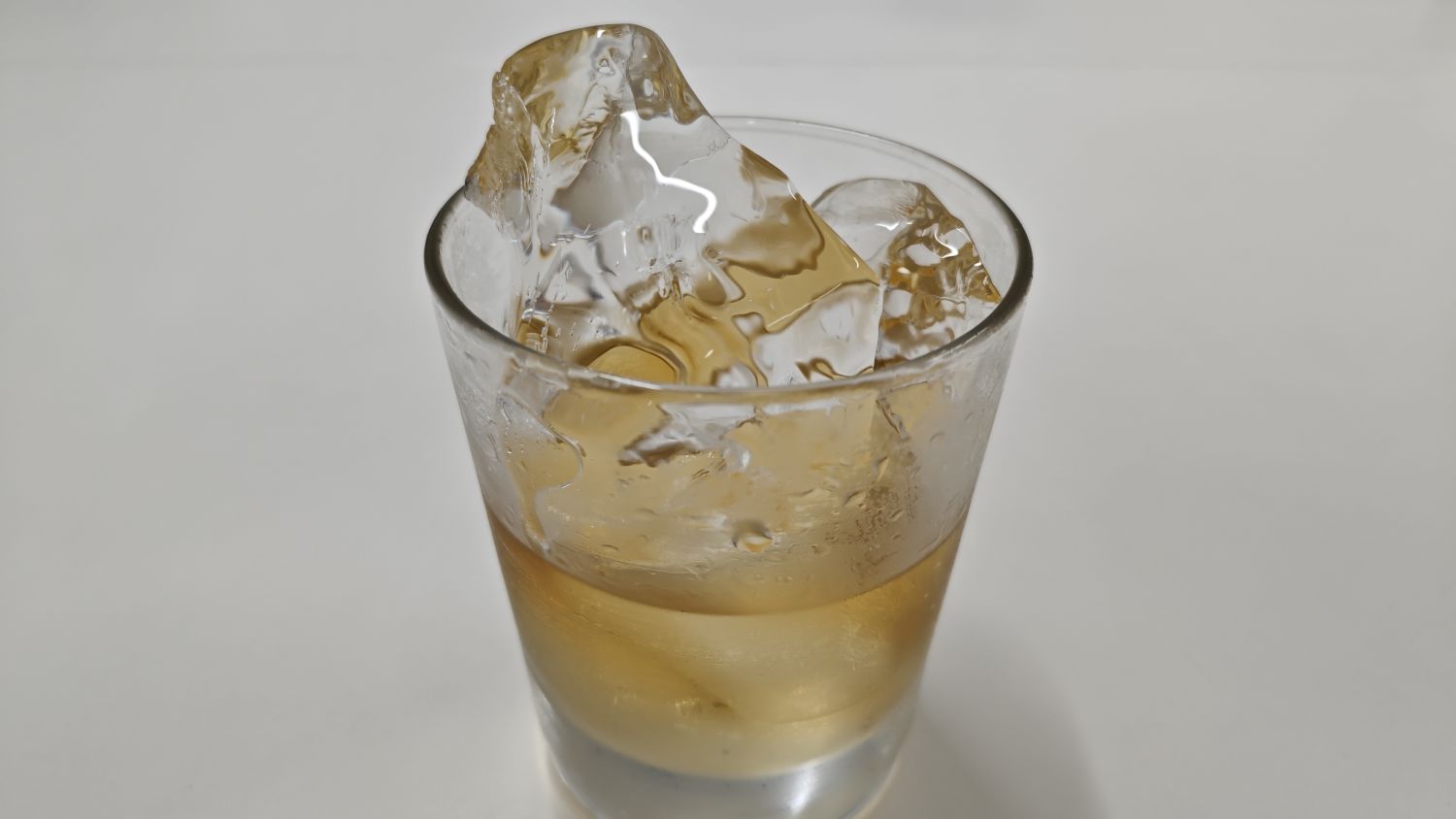
Summer is in full swing, and it's finally the season when we crave ice. Ice is important as a treat to bring along on leisure activities, and above all, it's essential for preventing heatstroke when outdoors. When making ice at home, it's common to use ice trays or the ice-making function of a refrigerator, but due to the chlorine smell of tap water and other factors, it doesn't taste as good as commercially available ice. So, we'll try to make delicious ice using a home refrigerator while keeping costs down as much as possible.
◆Items prepared
The following items were prepared for making ice this time:
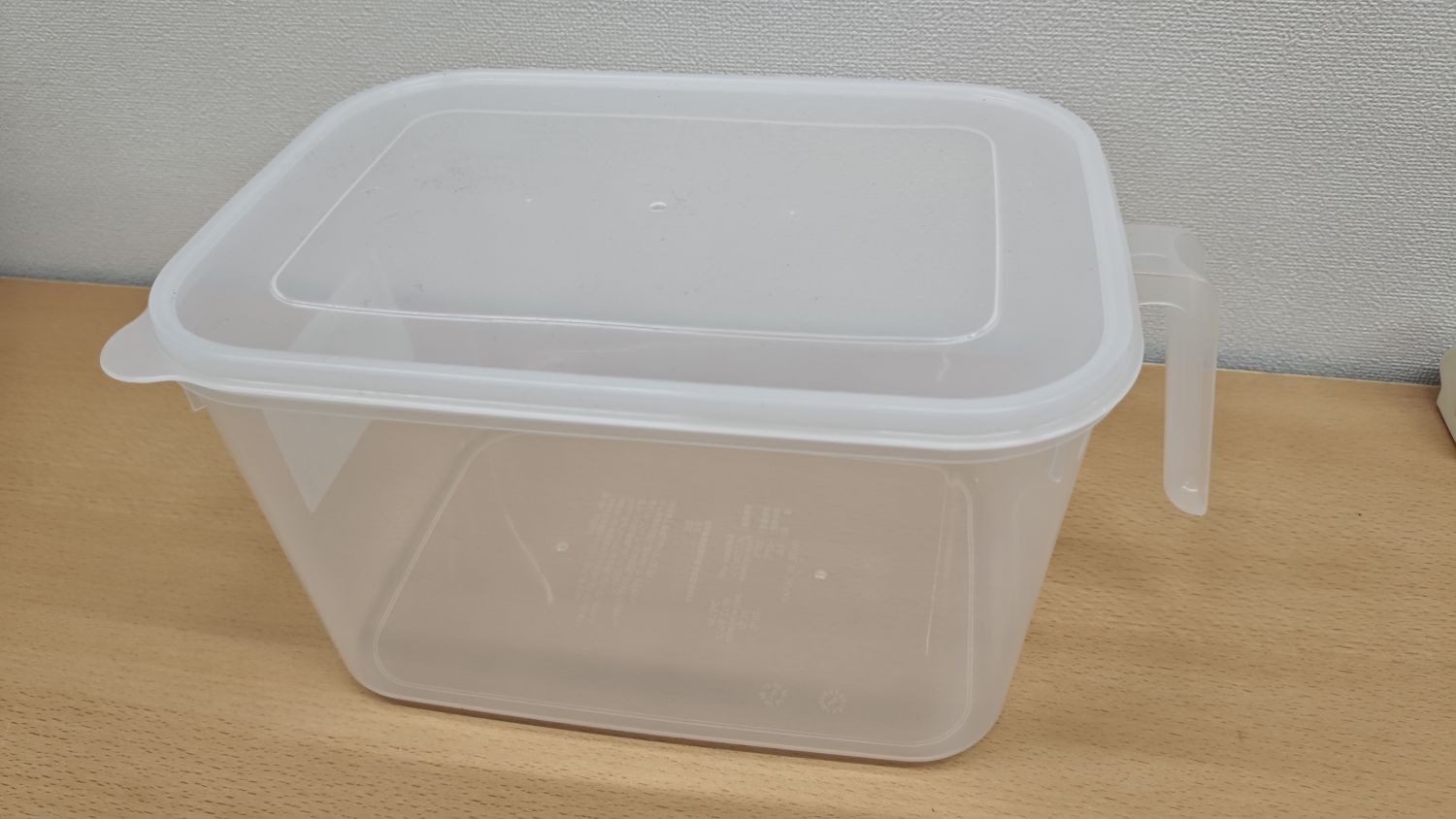
• Mega Food Container (200 yen)
I used a large plastic storage container that I bought at a 100-yen store; the one I used has a capacity of 5.5L. The side walls of the container are not vertical but slightly sloped inward, so it seems that you can easily remove the ice by pouring water on the surface to melt it.
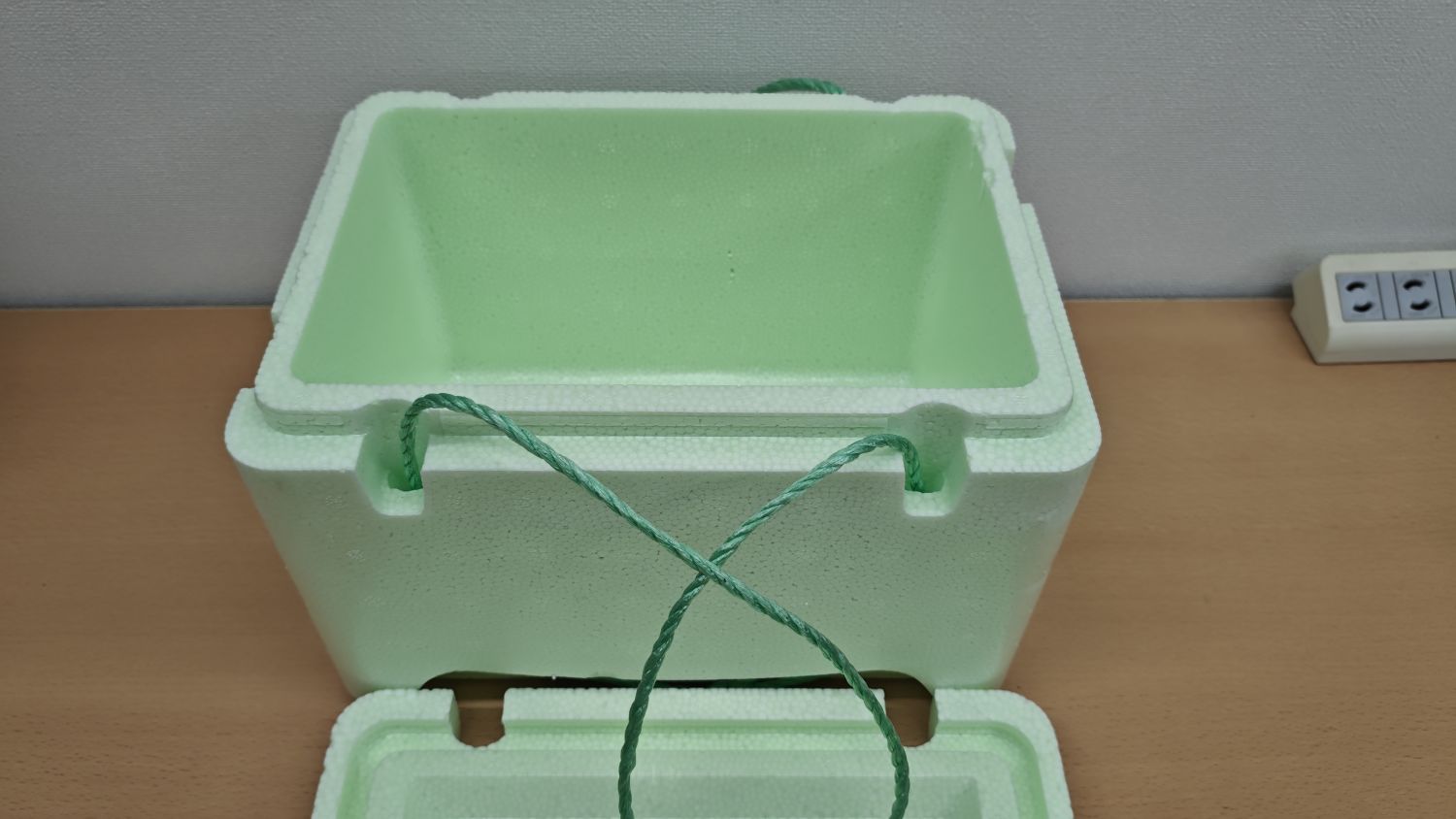
• Styrofoam cooler box (800 yen)
I bought a small box at a home improvement store that looked like it could hold about eight 350ml cans, but when I checked its capacity, it was 5.8L.
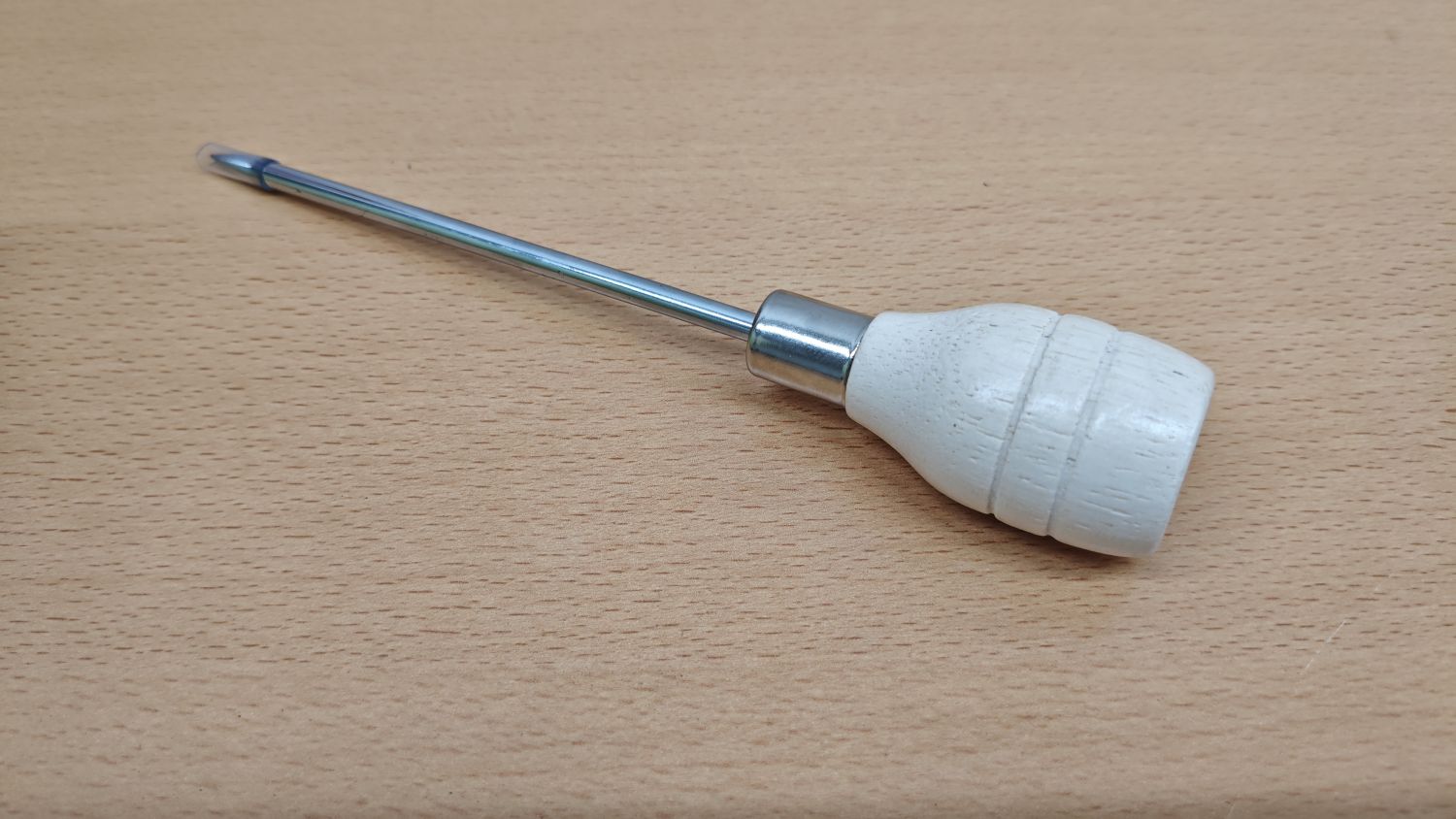
• Ice pick (100 yen)
I actually wanted a three-pronged one, but I ended up getting a single-pronged one that was sold at a 100-yen store. It's quite small, so to be honest, I'm a little worried about its performance.
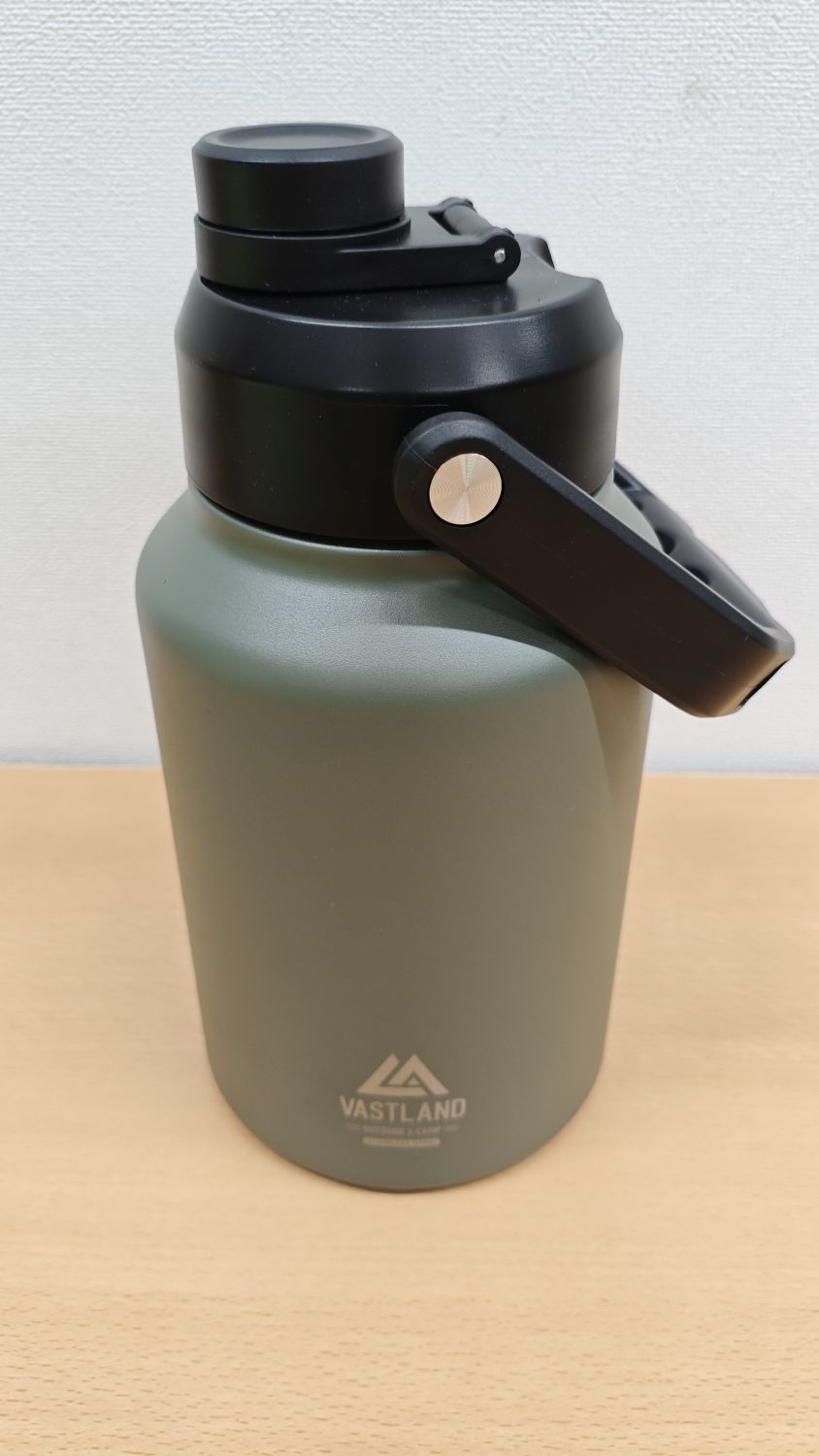
Although not directly related to ice making, I prepared a 1.9L container as a reference for what to put the ice in.
◆Principle
This time, we'll be using a significantly simplified method for making ' pure ice .' Tap water contains impurities such as air and chlorine. When making pure ice, various methods are used to remove impurities from the raw water, but this is not practical for the average household, so we will simply pour tap water directly into the mega food container.
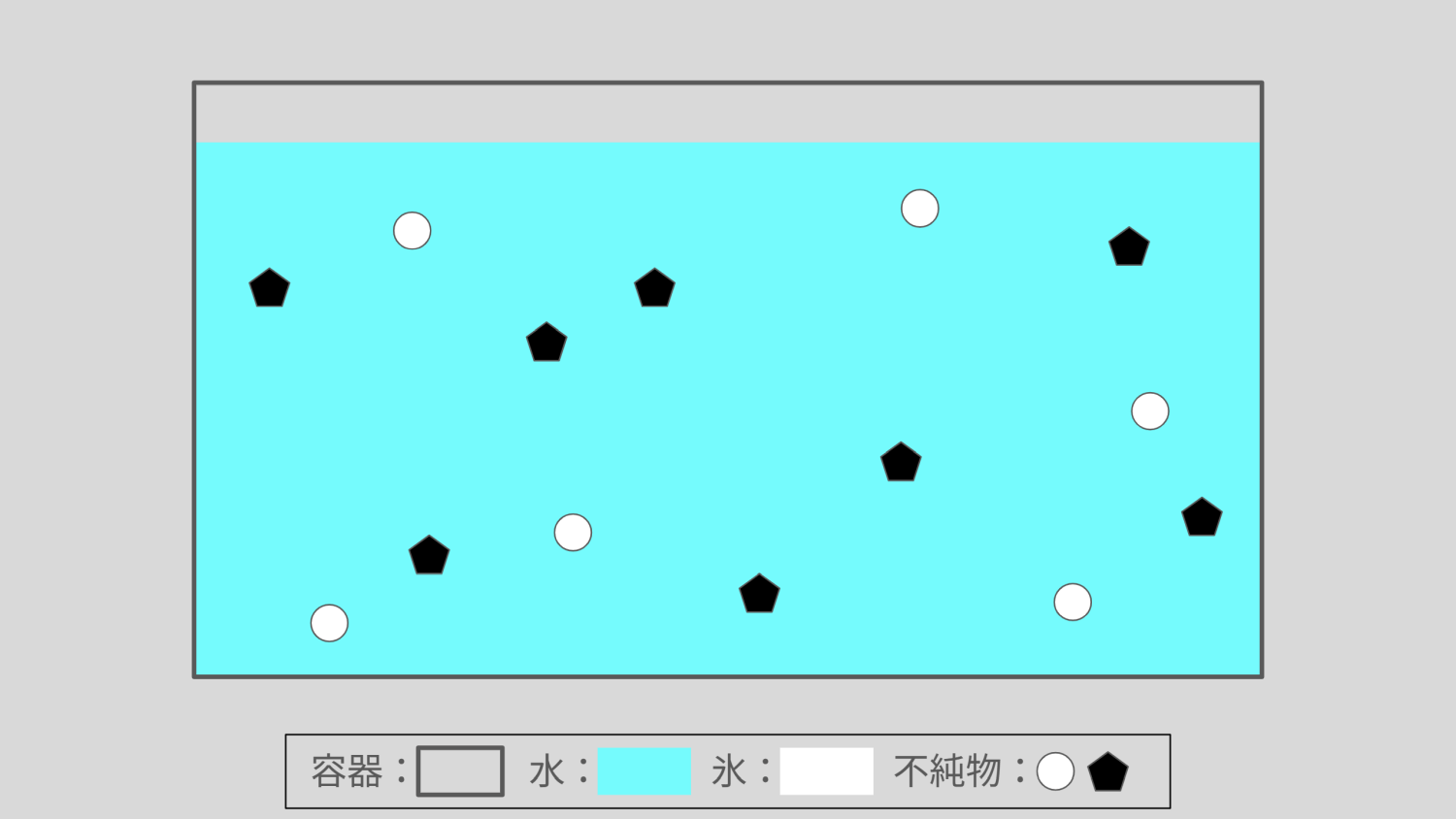
If you put tap water in a Mega Food Container into the freezer, the water will freeze. However, instead of rapidly freezing it in a small container like an ice tray, if you cool it slowly in a large container over time, the water molecules will crystallize as they freeze, pushing impurities to the parts that haven't frozen yet. If you freeze the whole thing completely, you'll trap the impurities, but if you take it out before it freezes completely and discard the part of the water that contains impurities, you can get fairly pure ice.
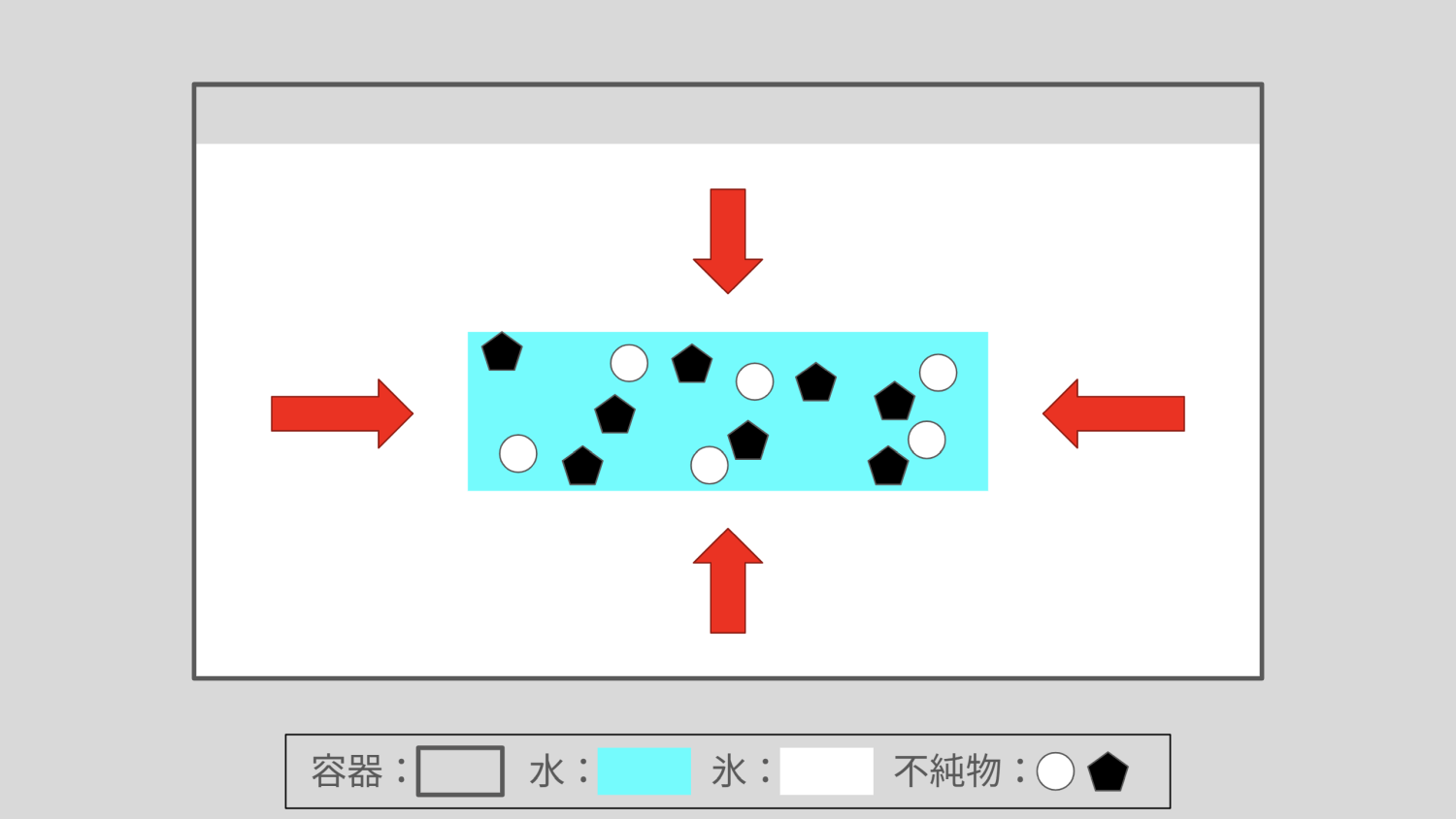
The polystyrene foam cooler box was prepared for a control experiment. This one will not have a lid.
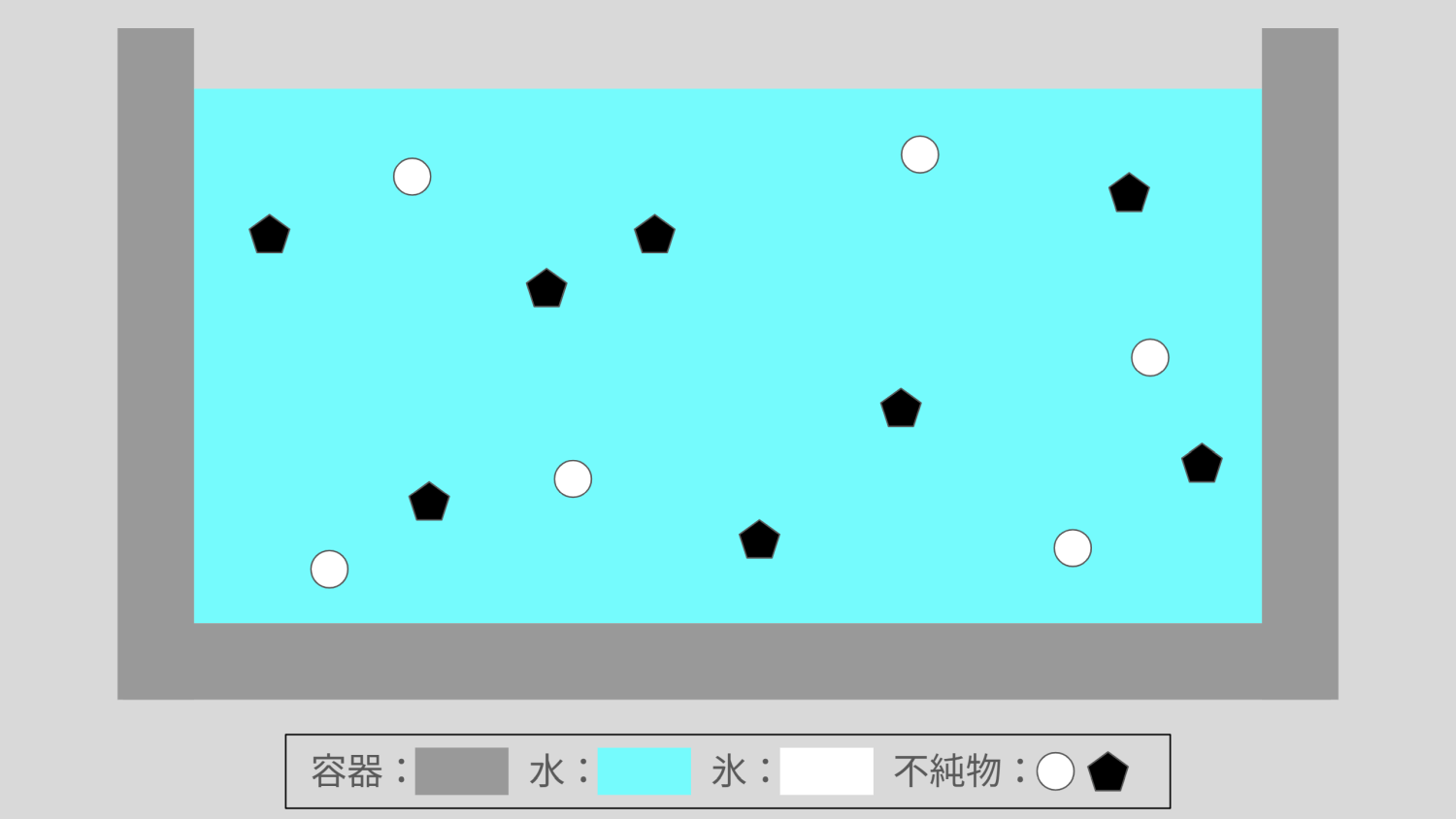
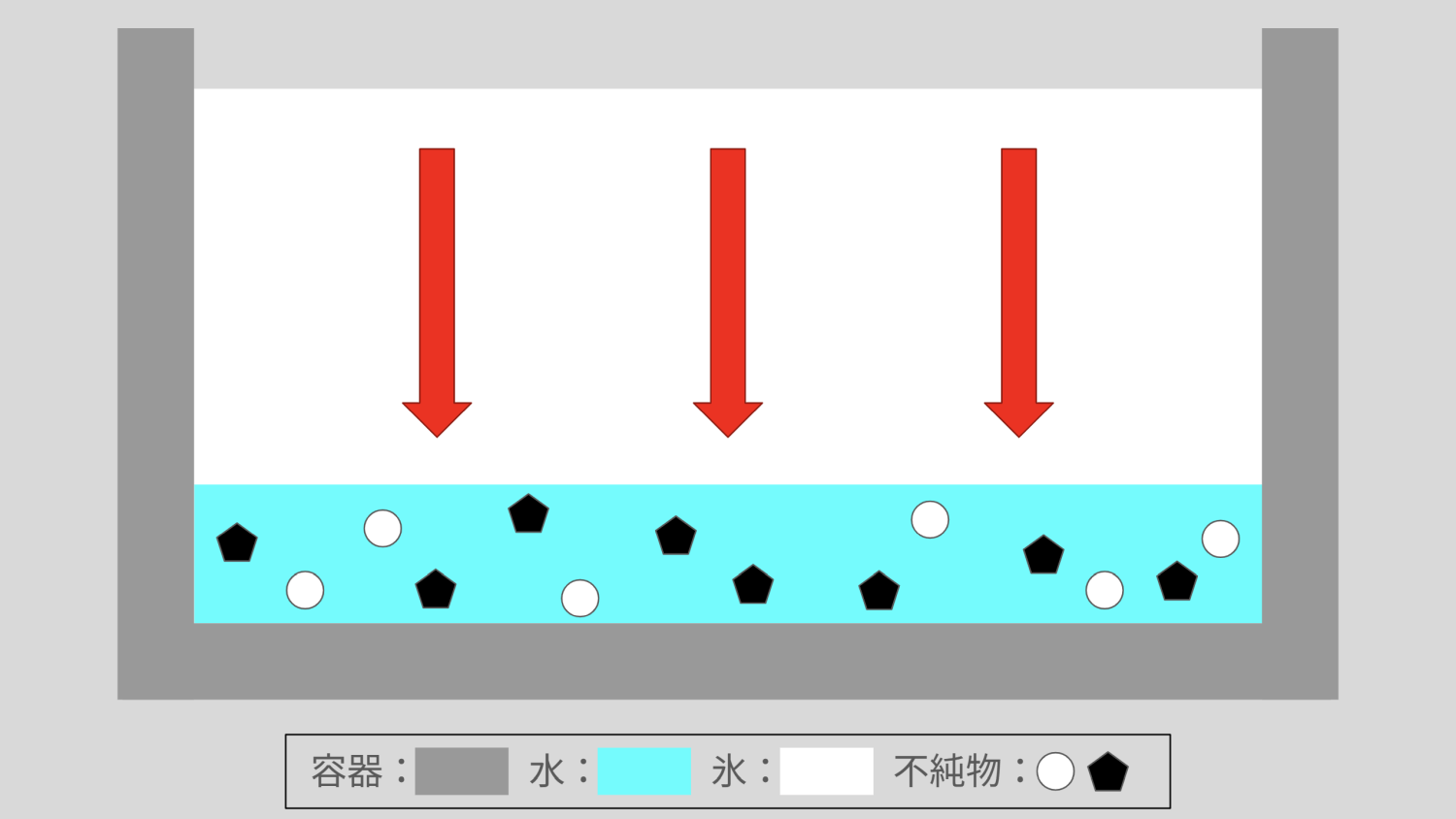
Because styrofoam is poor at passing cold air through, if you leave it in the freezer without a lid, it will freeze from the top down. As a result, water containing impurities will remain at the bottom, which might make it easier to remove only the ice, unlike when using a mega food container. However, since it doesn't freeze from all sides, there seems to be an advantage in that ice crystallization is more likely to occur as it freezes slowly, but a disadvantage in that it takes time for the ice to grow.
◆Preparation
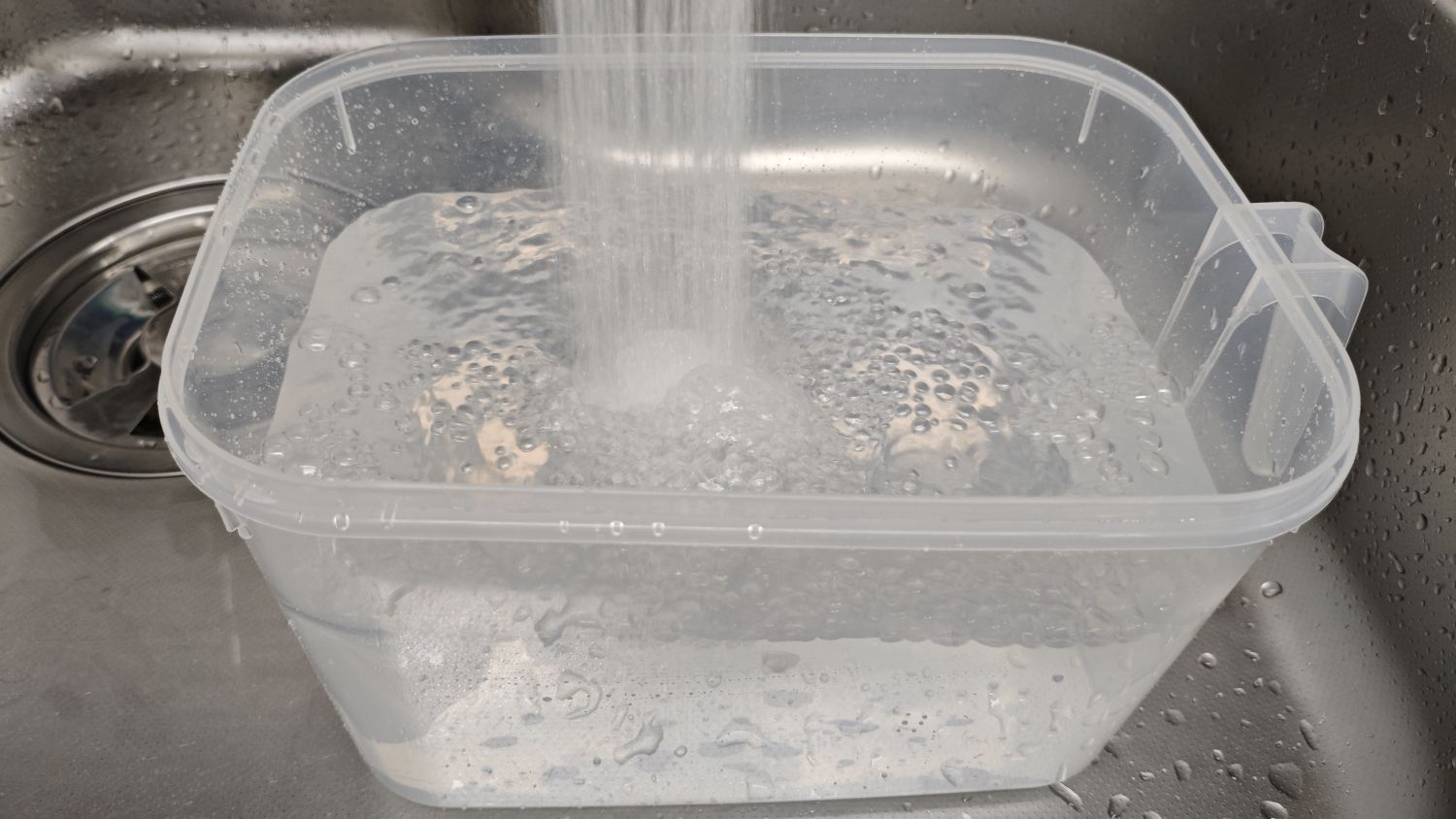
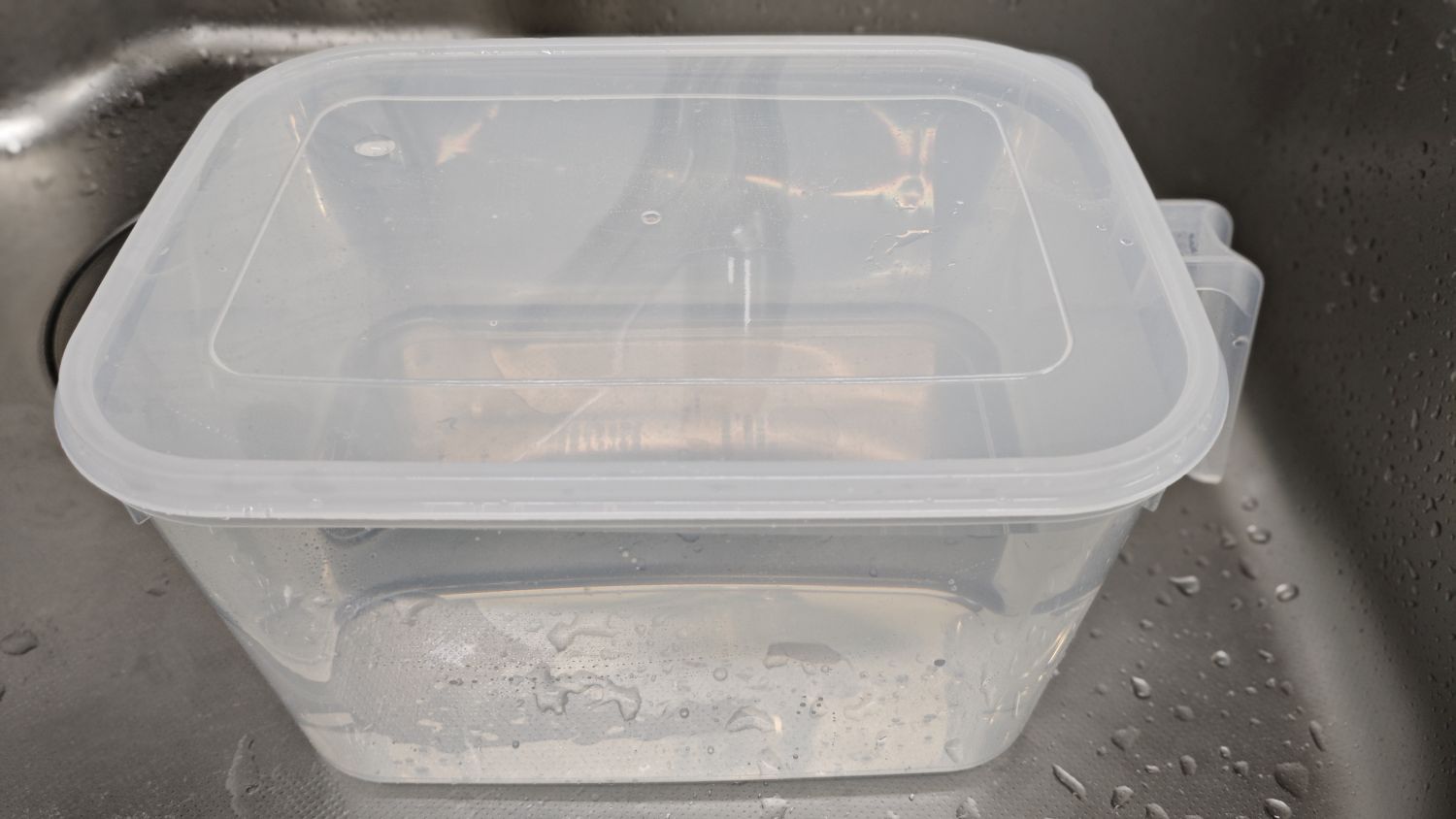
Pour tap water into a well-cleaned mega food container.
Once you've finished pouring, close the lid.
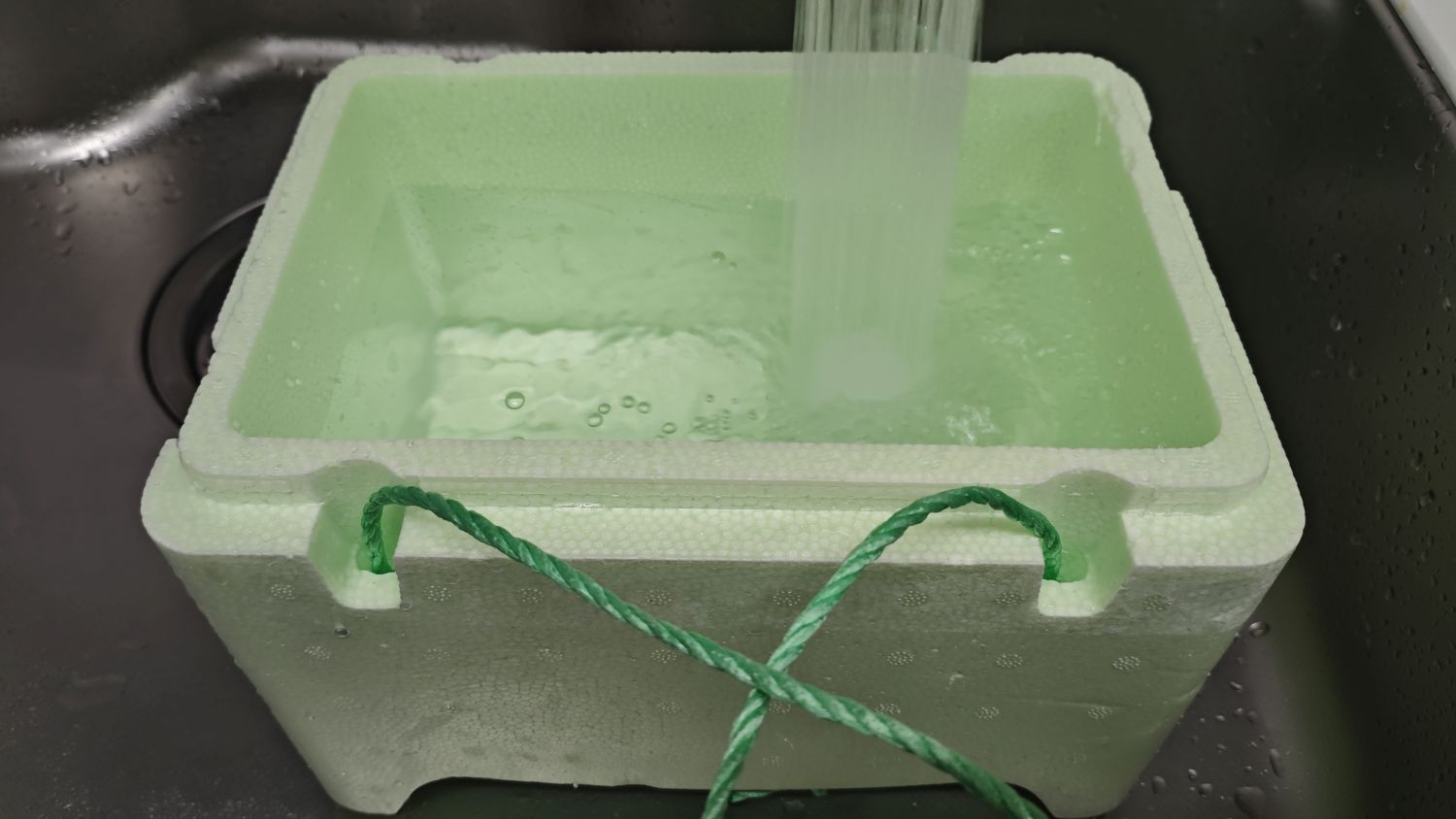
After thoroughly washing the styrofoam cooler box, pour in tap water.
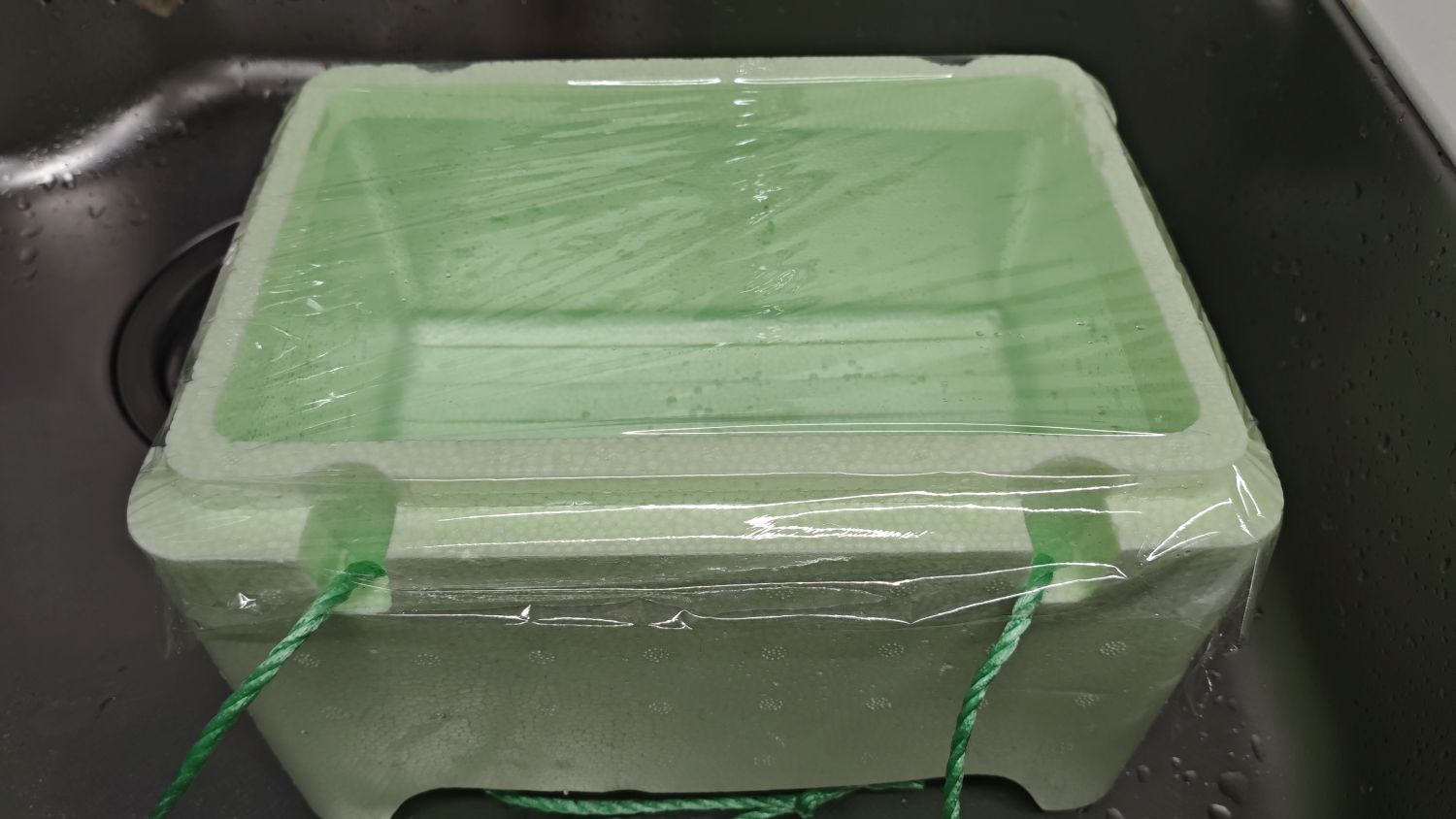
Even after pouring, I don't put a lid on the cooler box, but I cover it with plastic wrap to prevent spills in case foreign objects fall in or someone opens the freezer door too forcefully.
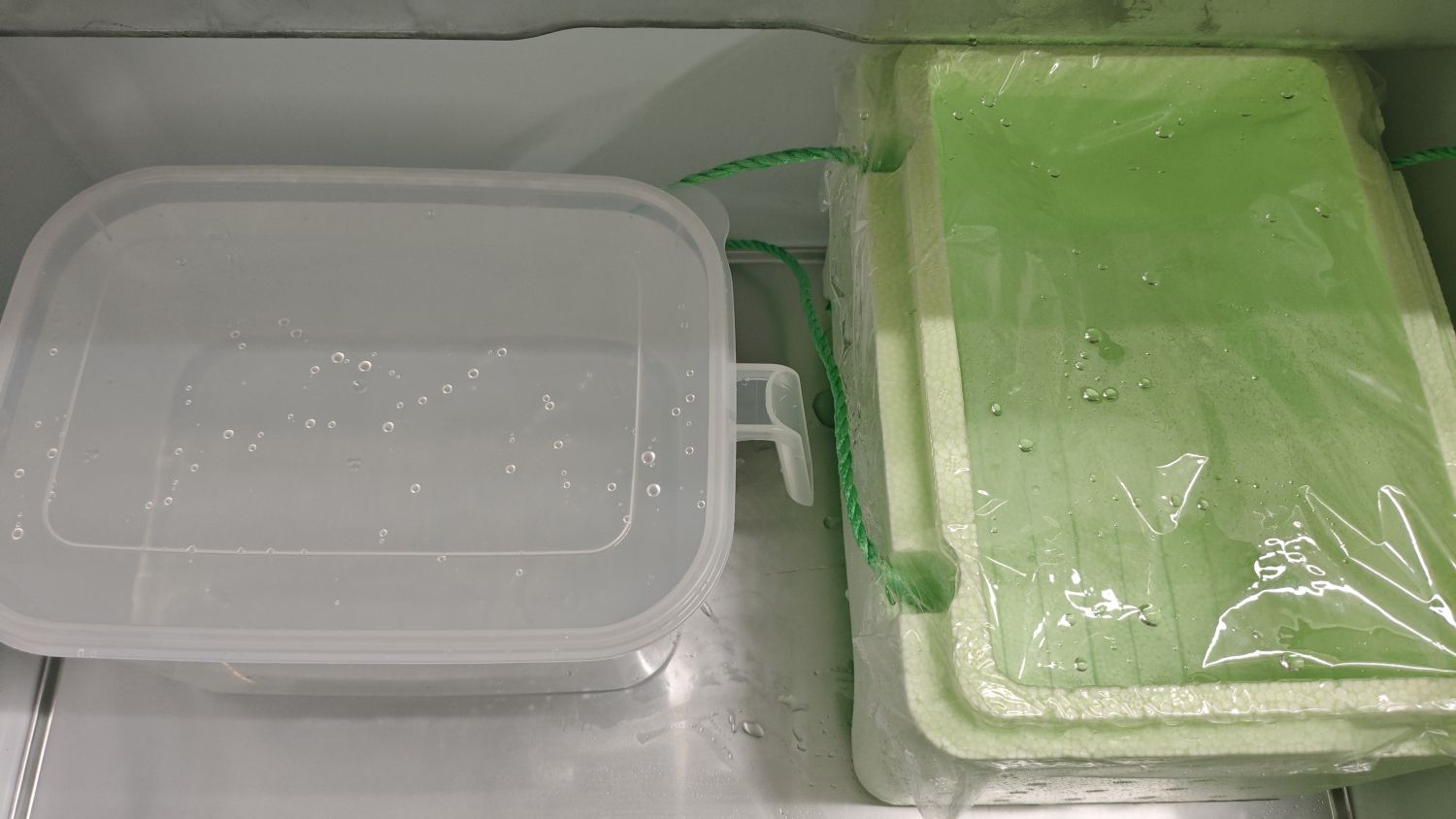
Place the two containers in the freezer and leave them for 24 hours.
◆Removing the ice
This is the condition after 24 hours. At least the surface appears to be completely frozen.
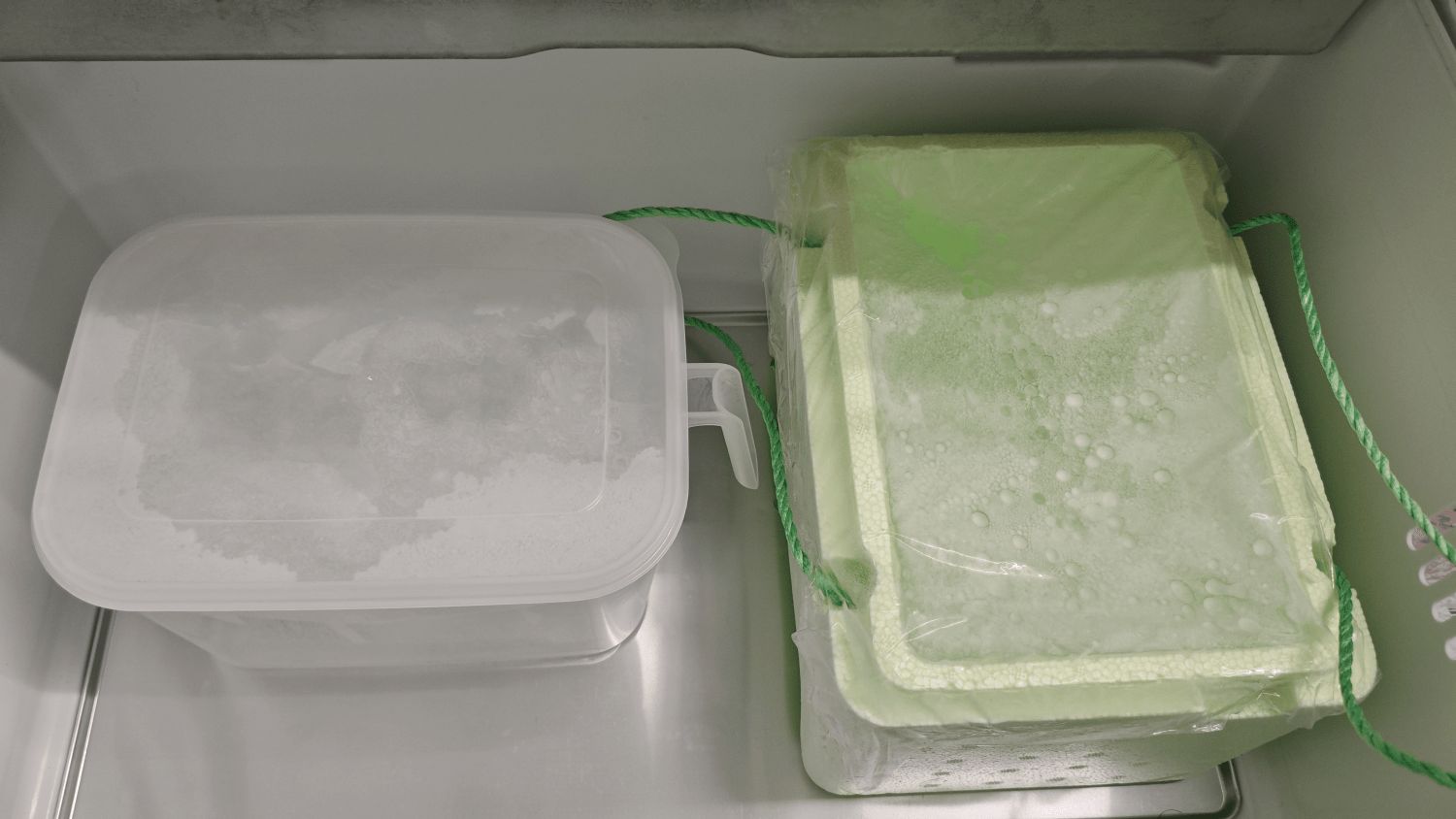
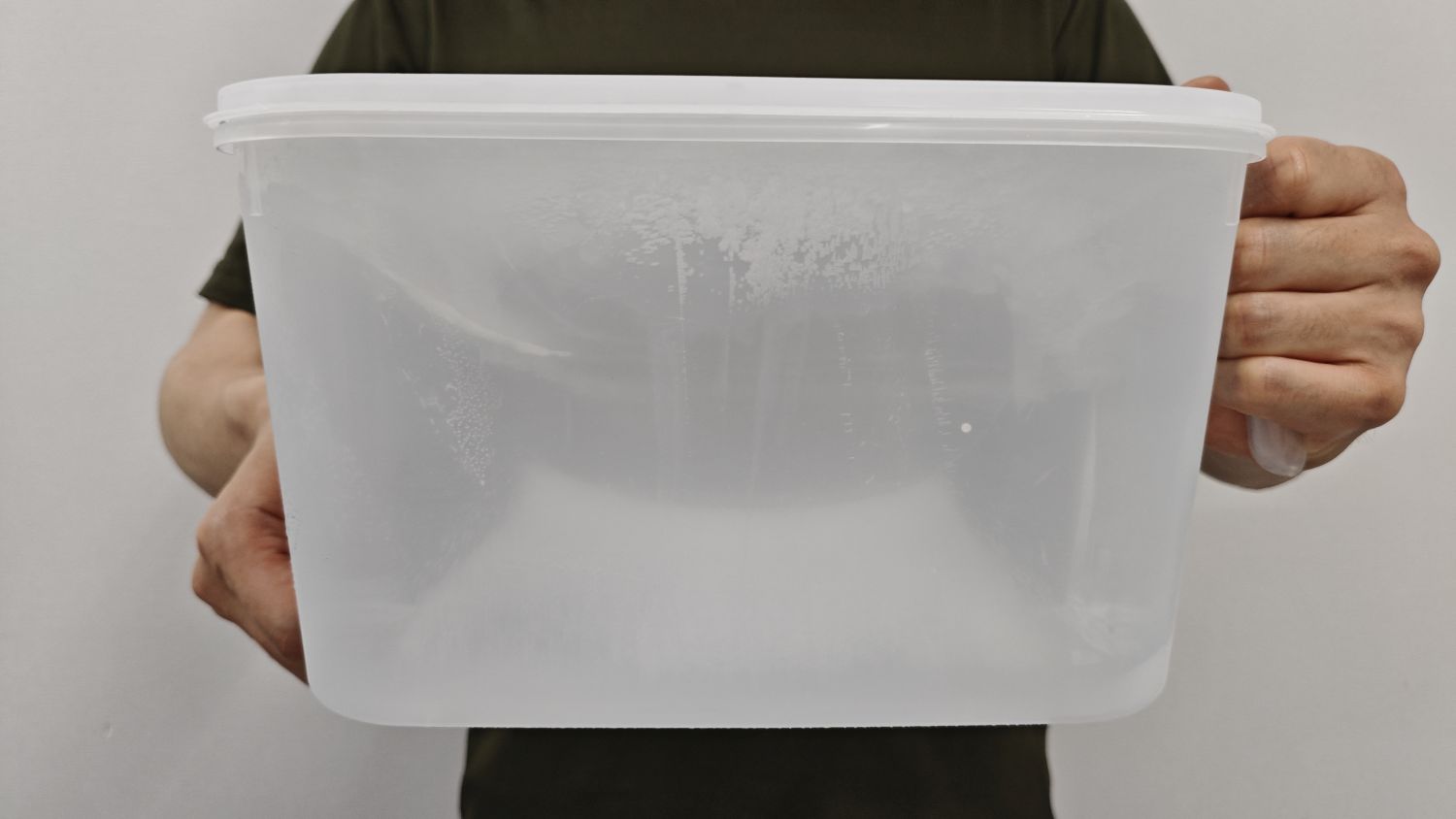
This is what the mega food container looks like. You can faintly see an oval-shaped area in the center that hasn't frozen yet. However, I'm concerned about the white ice visible underneath. It's probably ice that froze before it could crystallize, so it contains air and impurities.
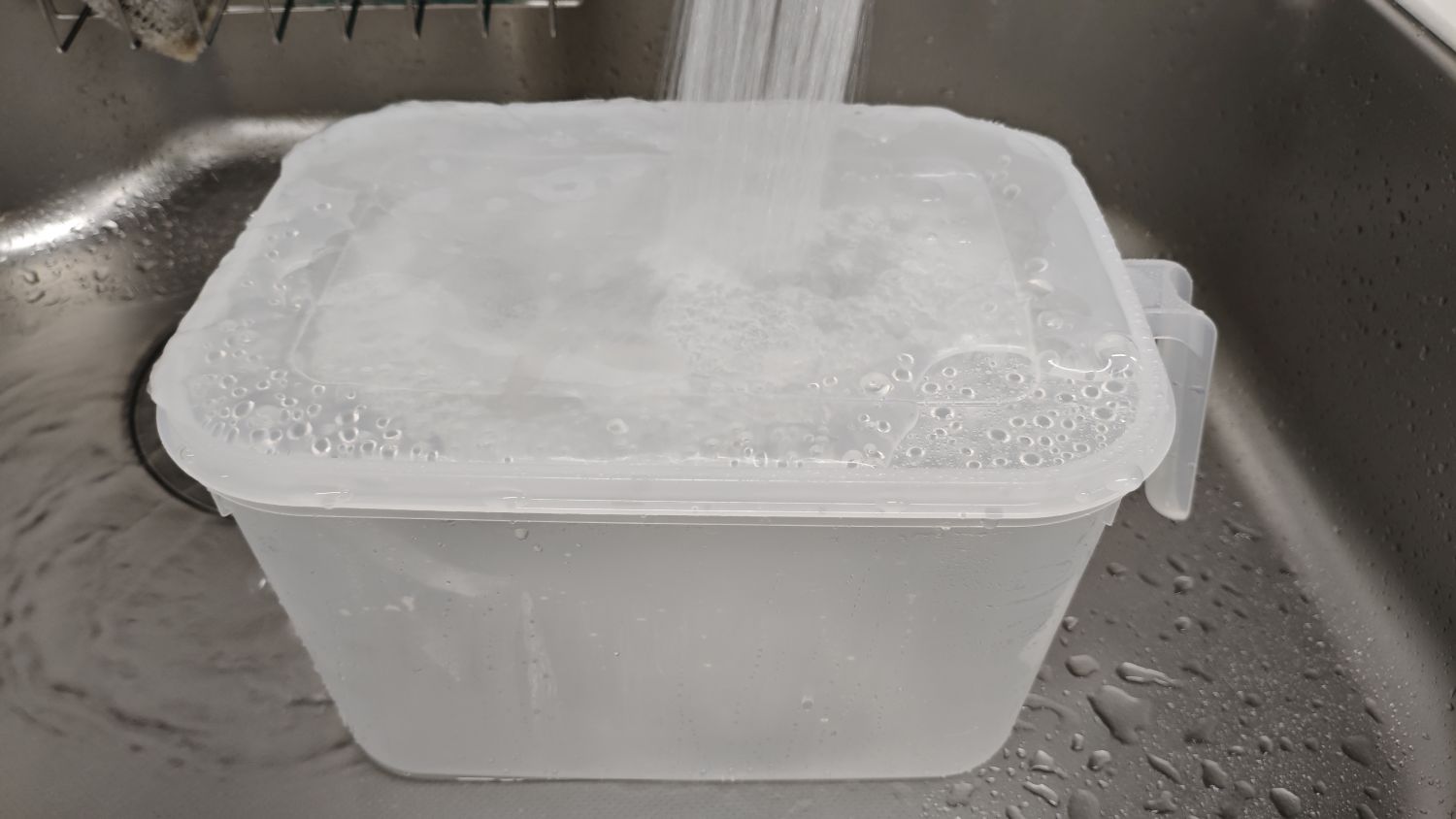
To remove the ice from the mega food container, pour water over it to melt the surface.
I successfully removed it, but I'm concerned about the amount of white ice that's more than I expected. I plan to scrape off the white ice, so I'm wondering how much will be left.
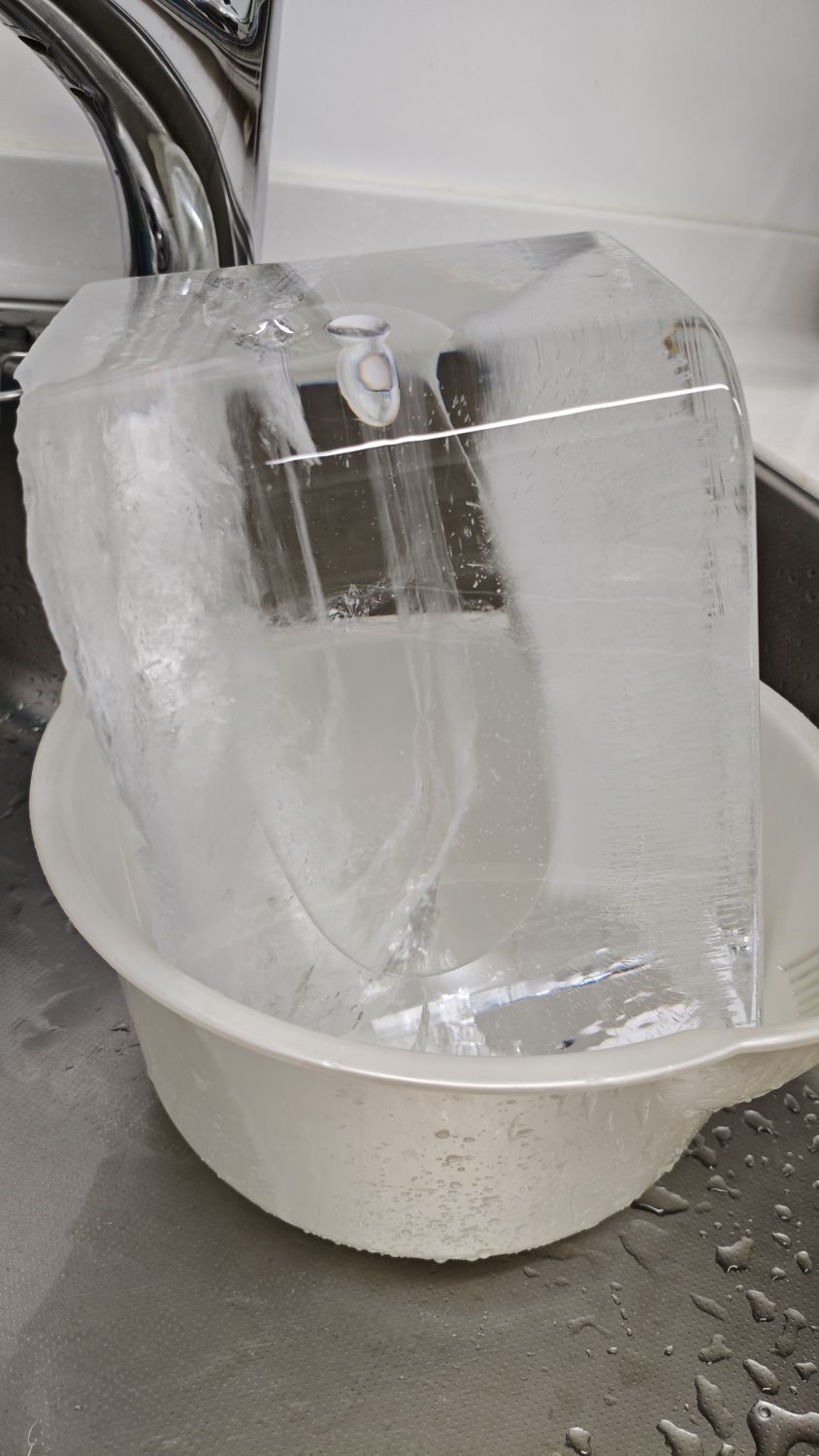
It's cut in two. The top of the ice only appeared white due to refraction. The amount to be scraped off might be surprisingly small.
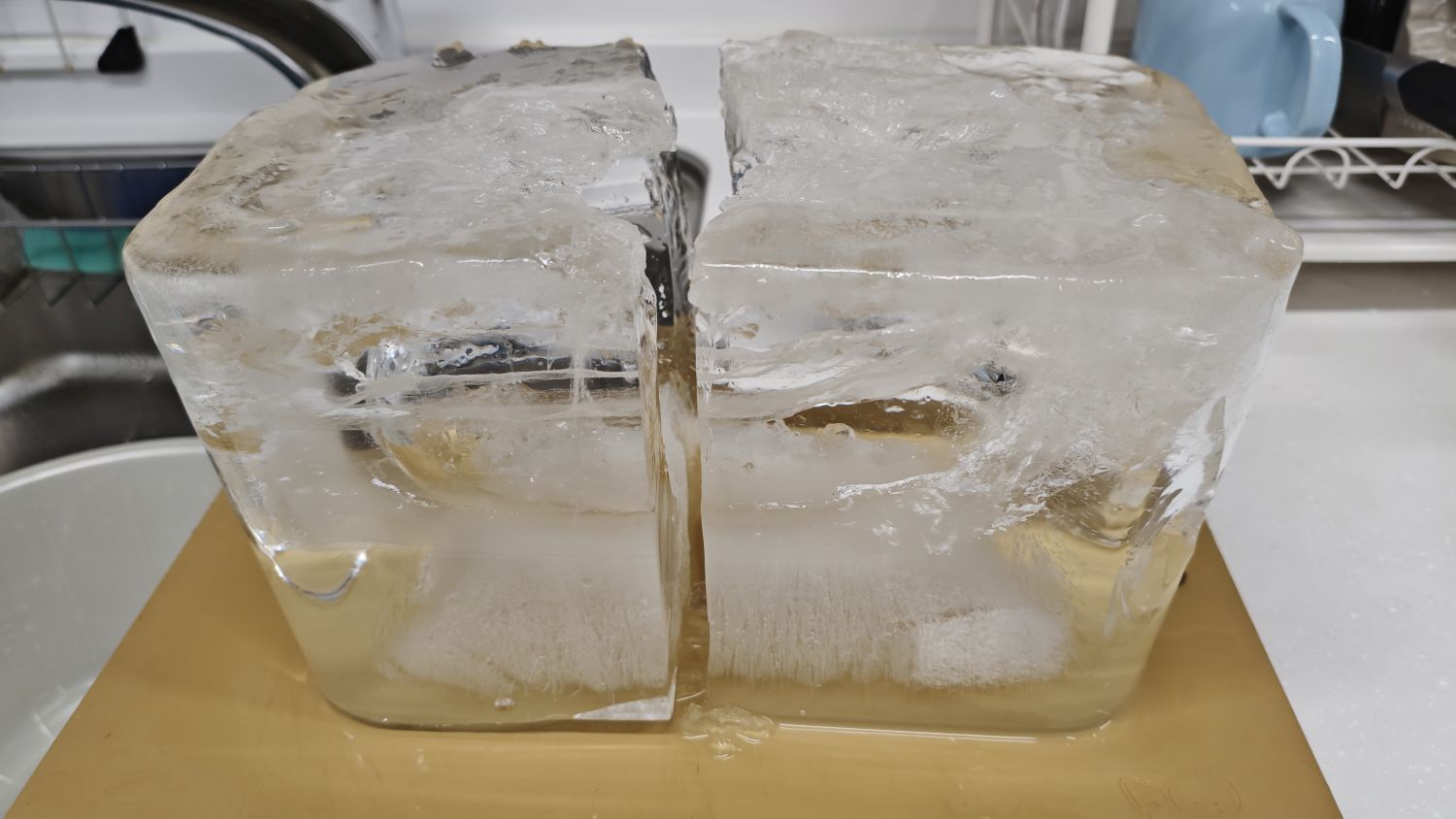
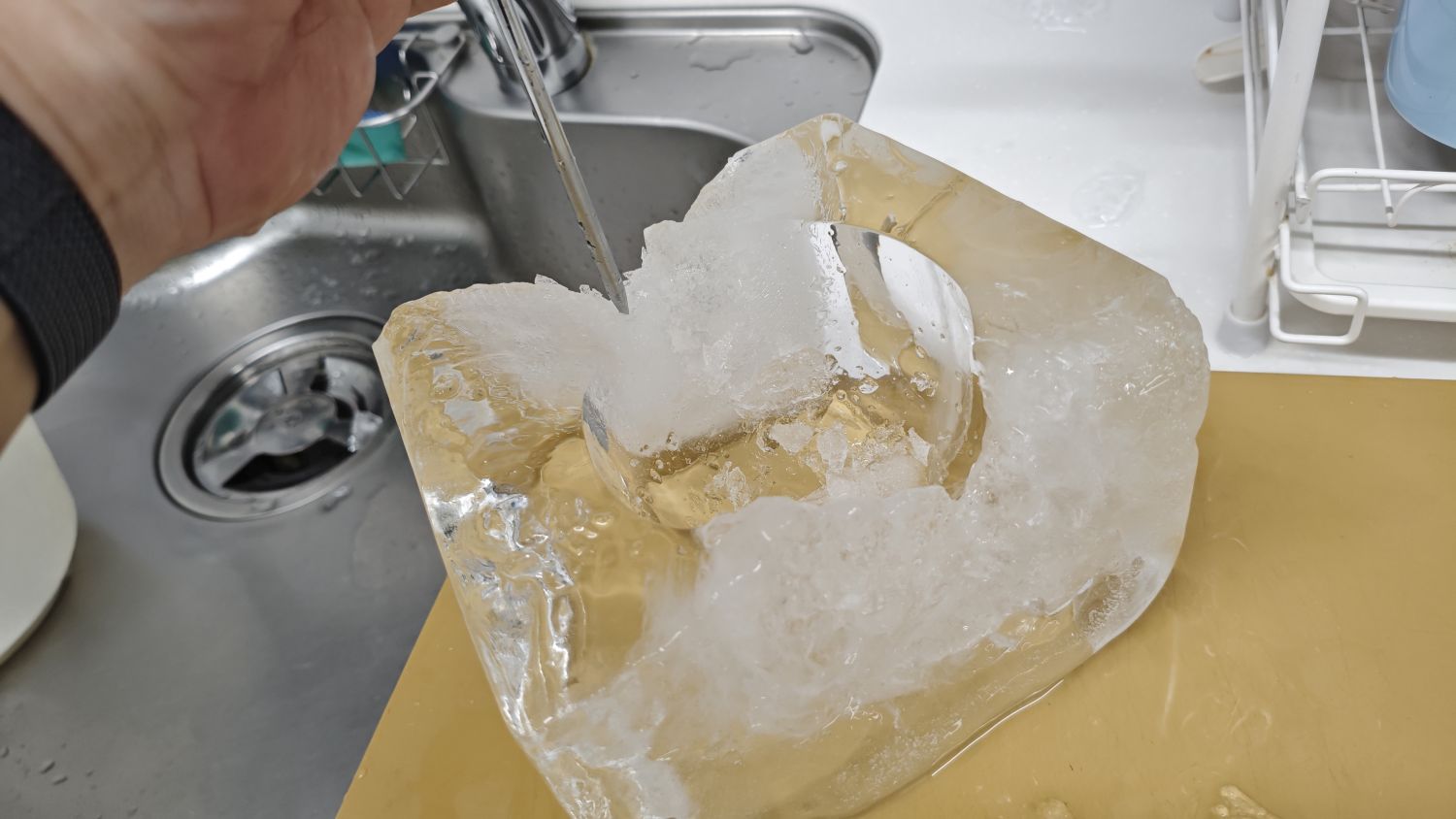
The white parts are scraped away without hesitation using an ice pick. It's all to obtain only delicious ice.
The final amount of ice obtained was as follows: It was more than enough to fill the ice jug we had prepared.
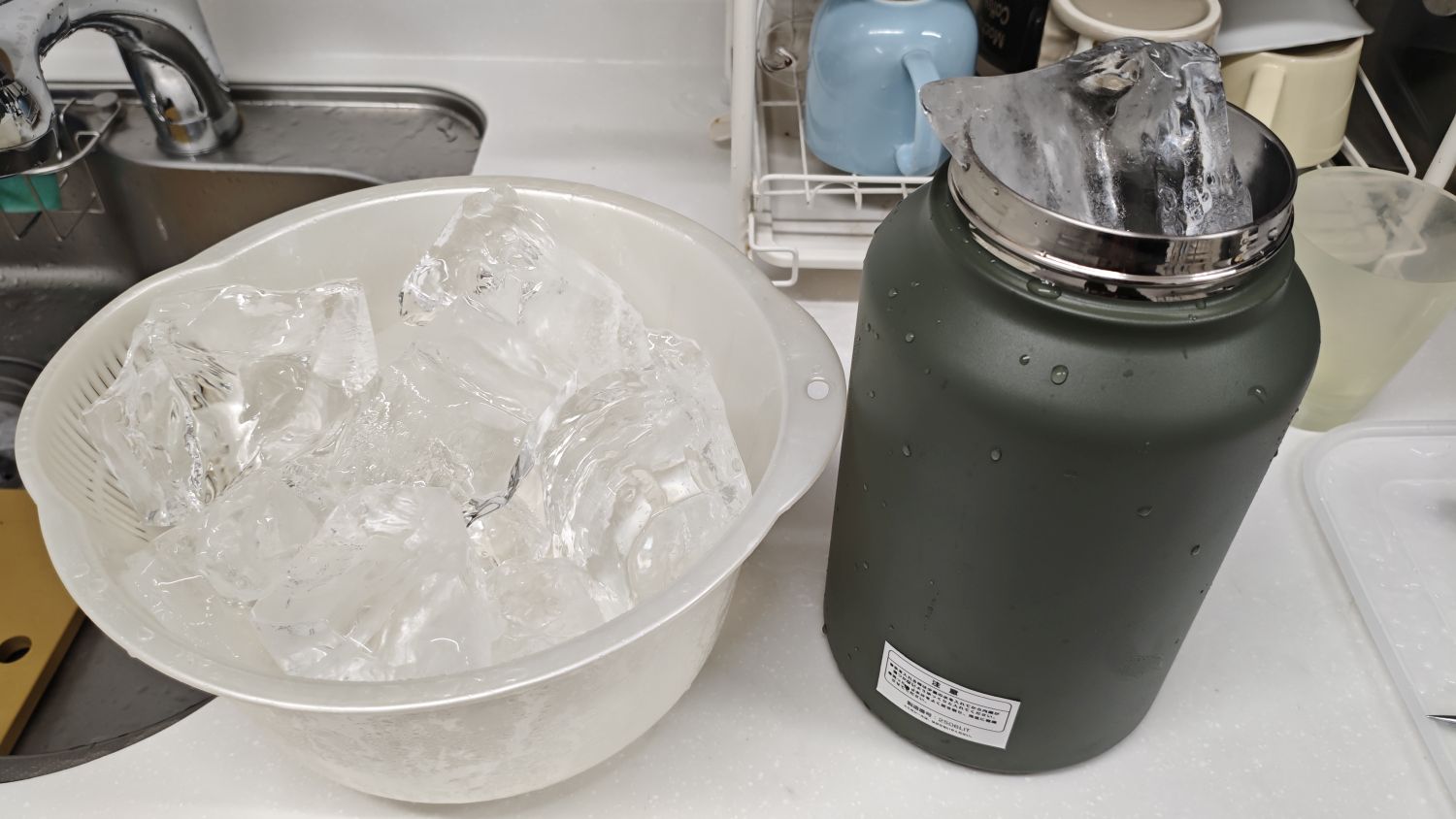
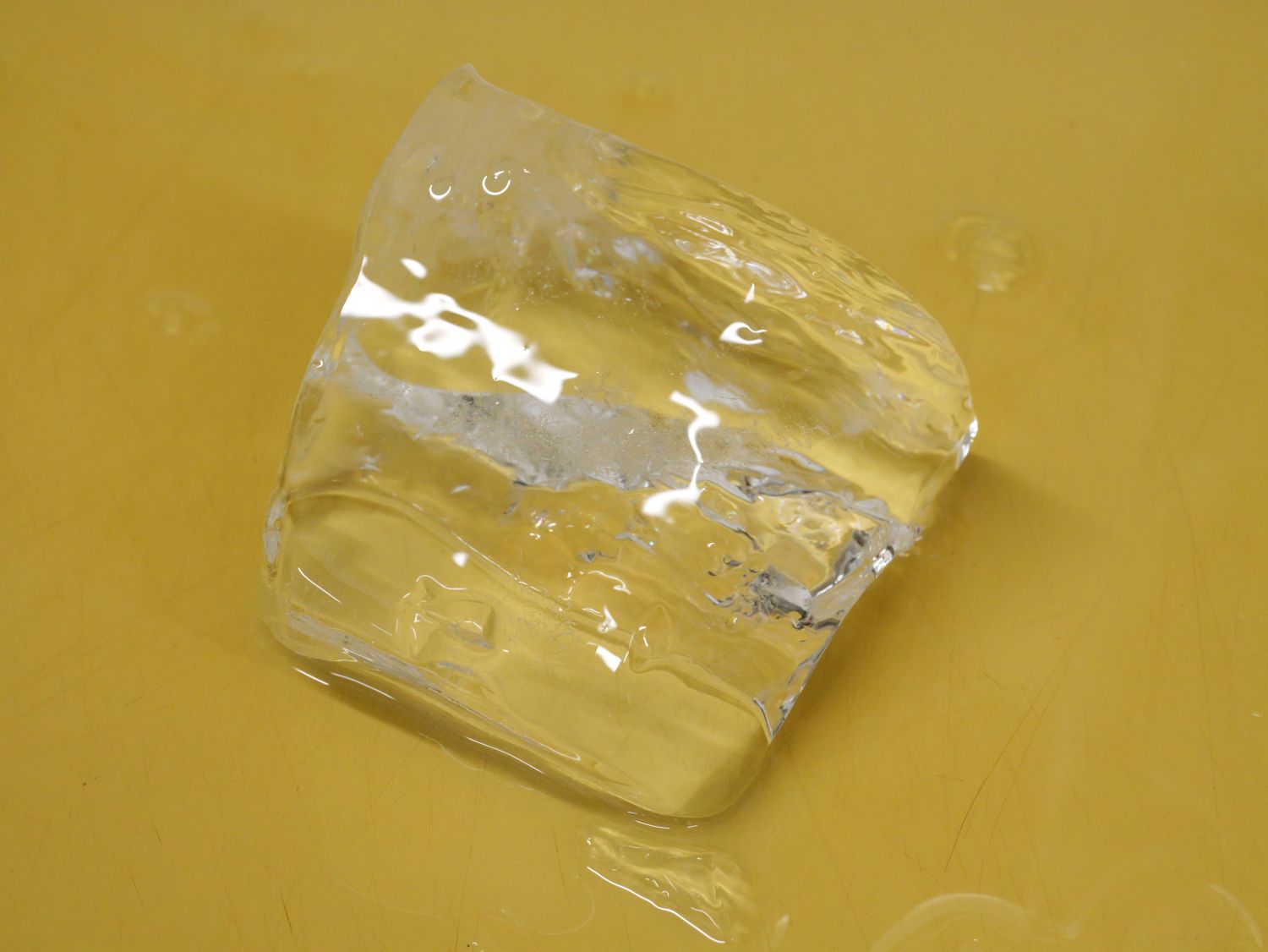
Crushed ice. It may be slightly less transparent than commercially available crushed ice, but it looks much nicer than ice made in an ice tray.
◆Try using ice
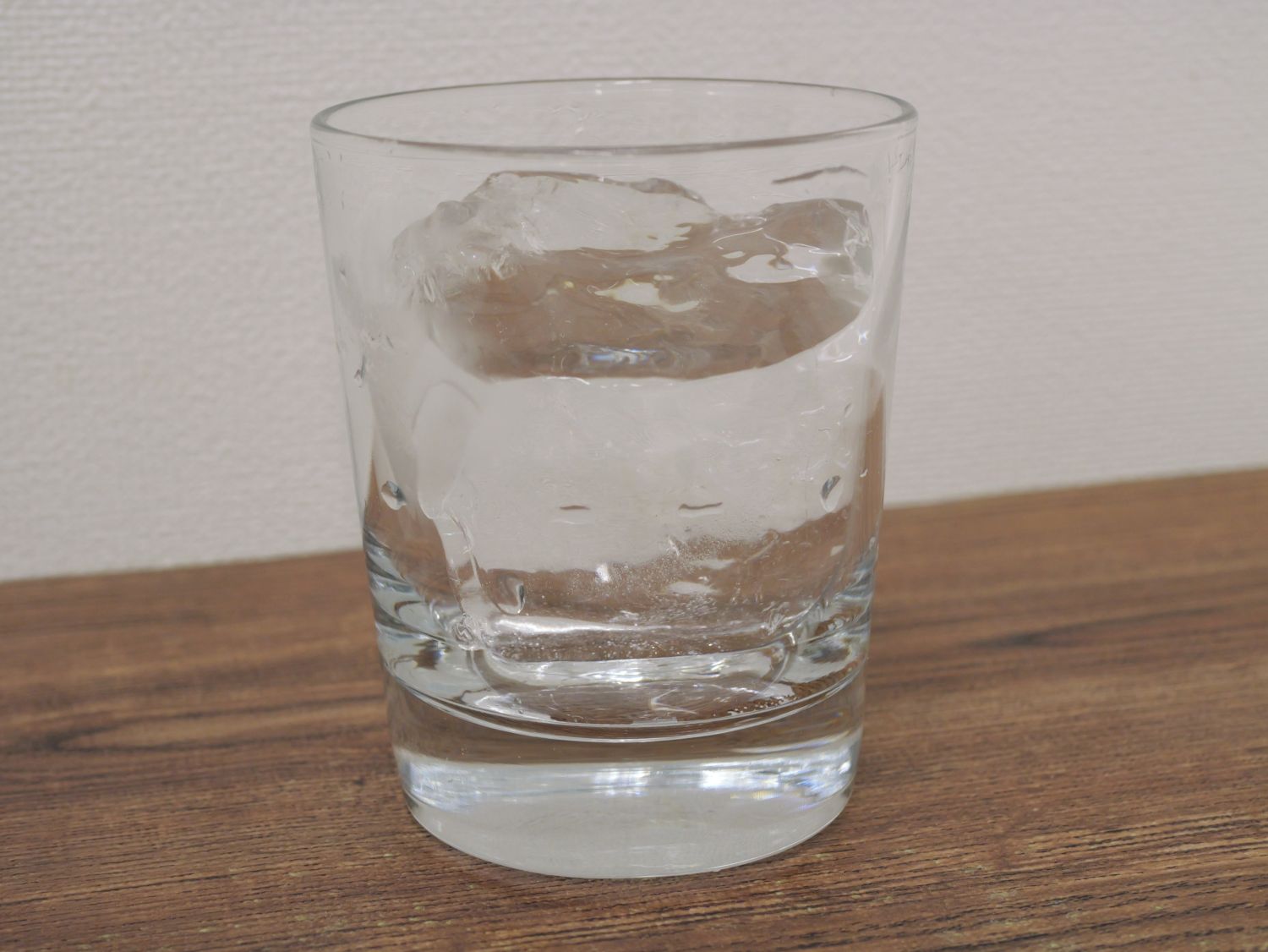
I put the ice I made into a glass.
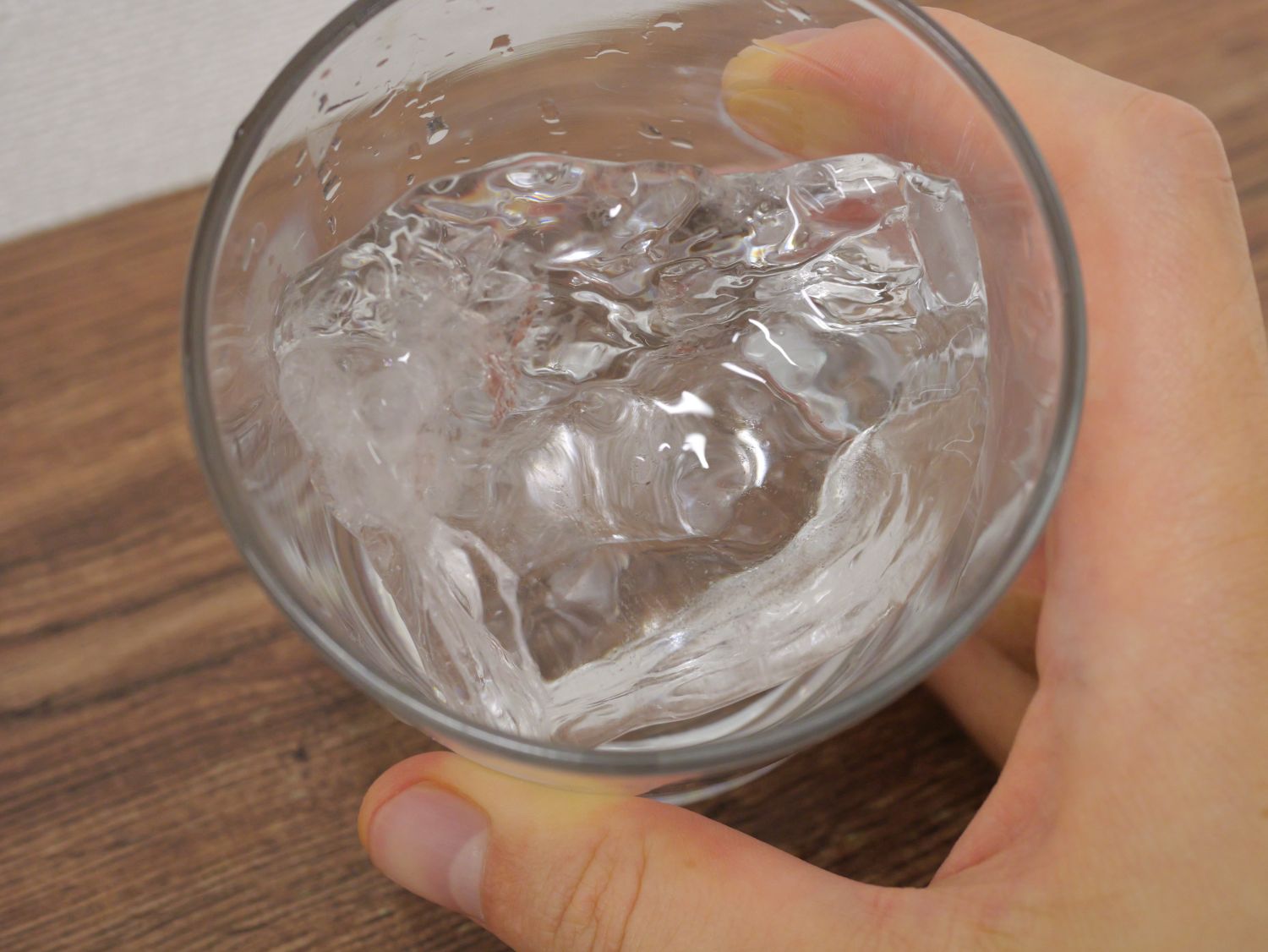
You can really see how clear it is when you pour water into it.
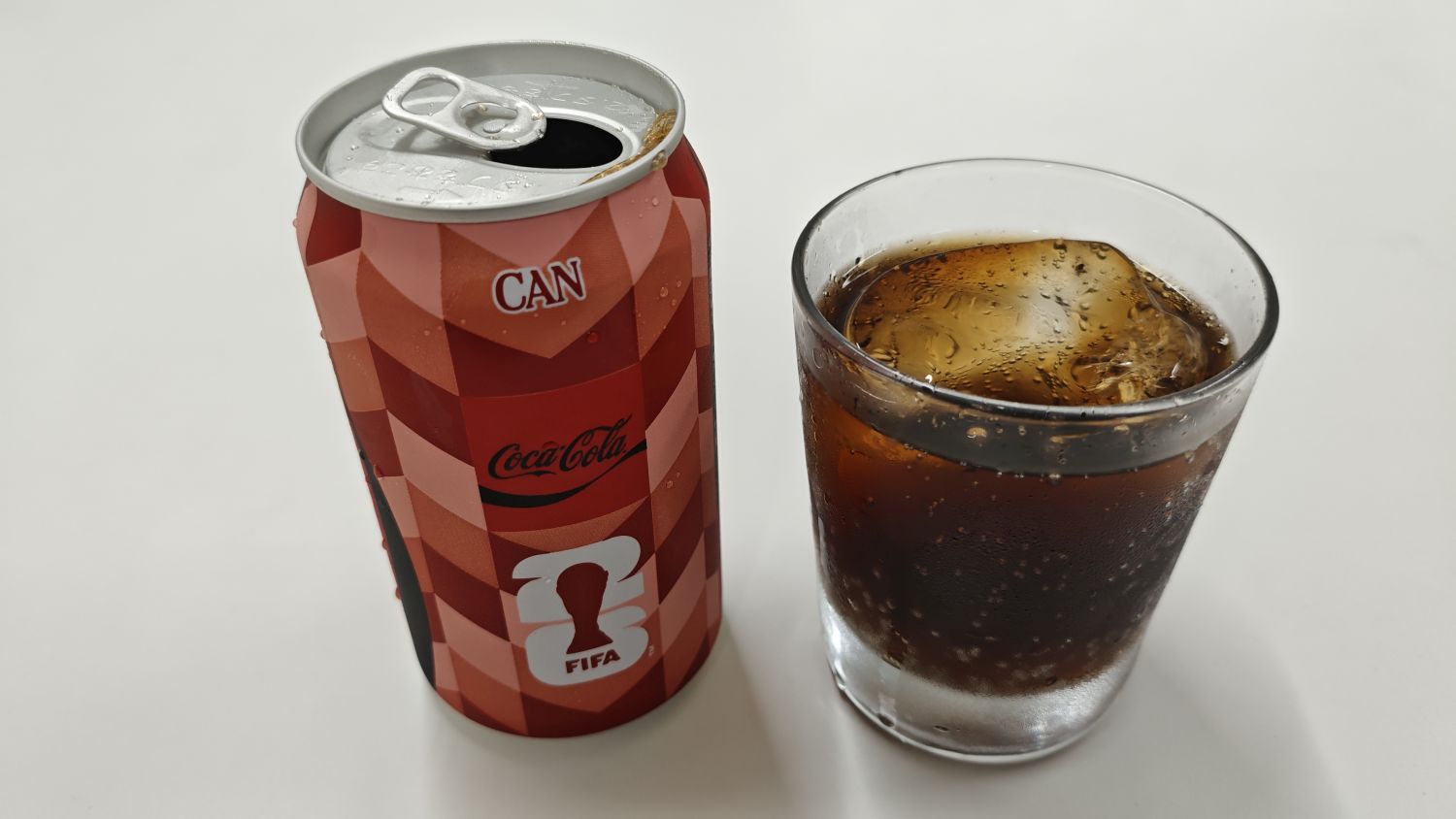
Since I had the opportunity, I decided to try it with a soft drink. The homemade ice had absolutely none of the strange smell that often comes from melting ice, allowing me to fully enjoy the flavor of the beverage. I also tried it with beverages with more delicate aromas, such as barley tea and green tea, and without exaggeration, it was 'delicious ice.'
◆Styrofoam container
When I took out the styrofoam container that had been frozen at the same time, it seemed that ice had only formed on the surface.
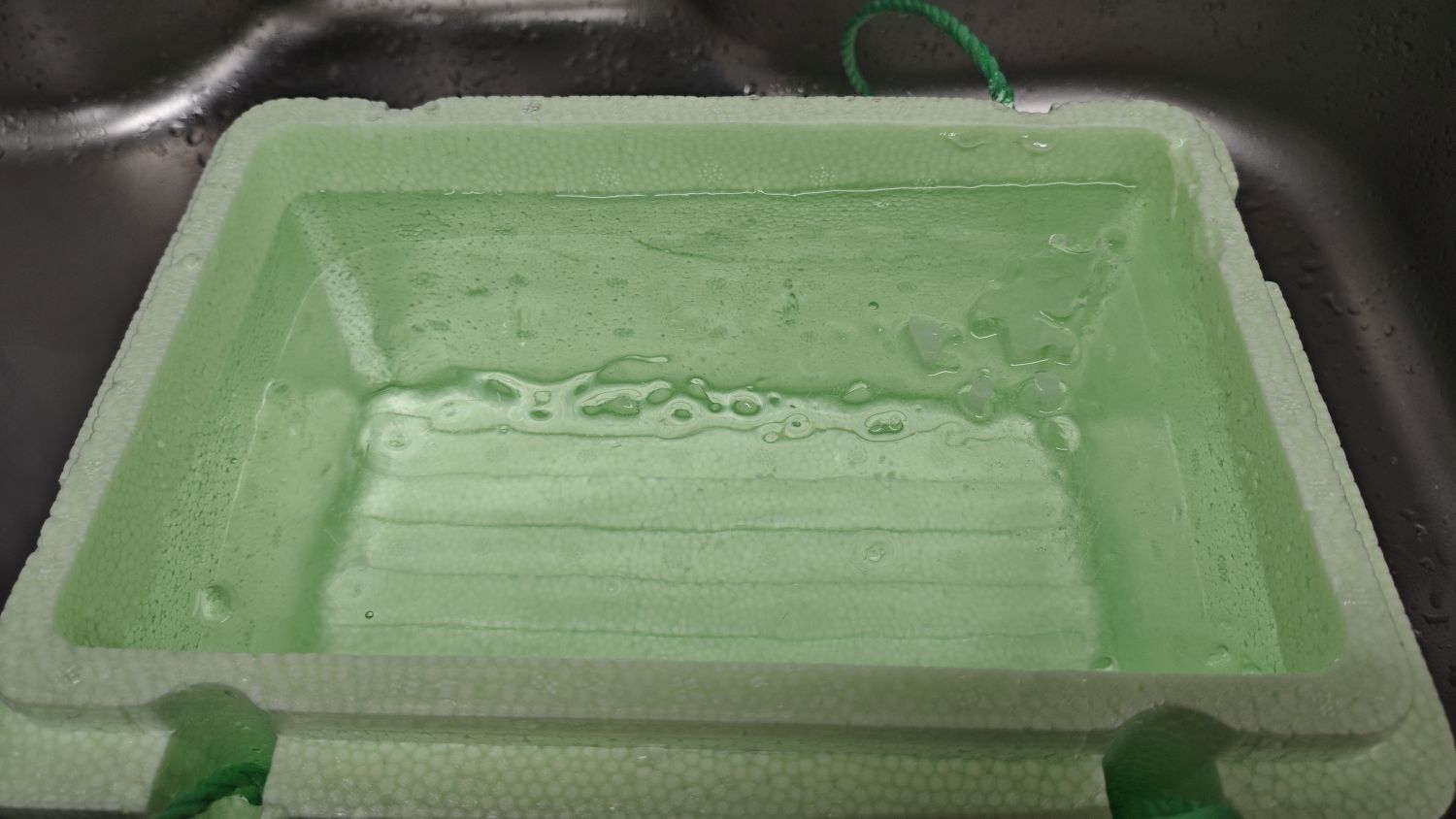
They're discarding the parts that aren't frozen. It's sad to see almost all of it being washed away.
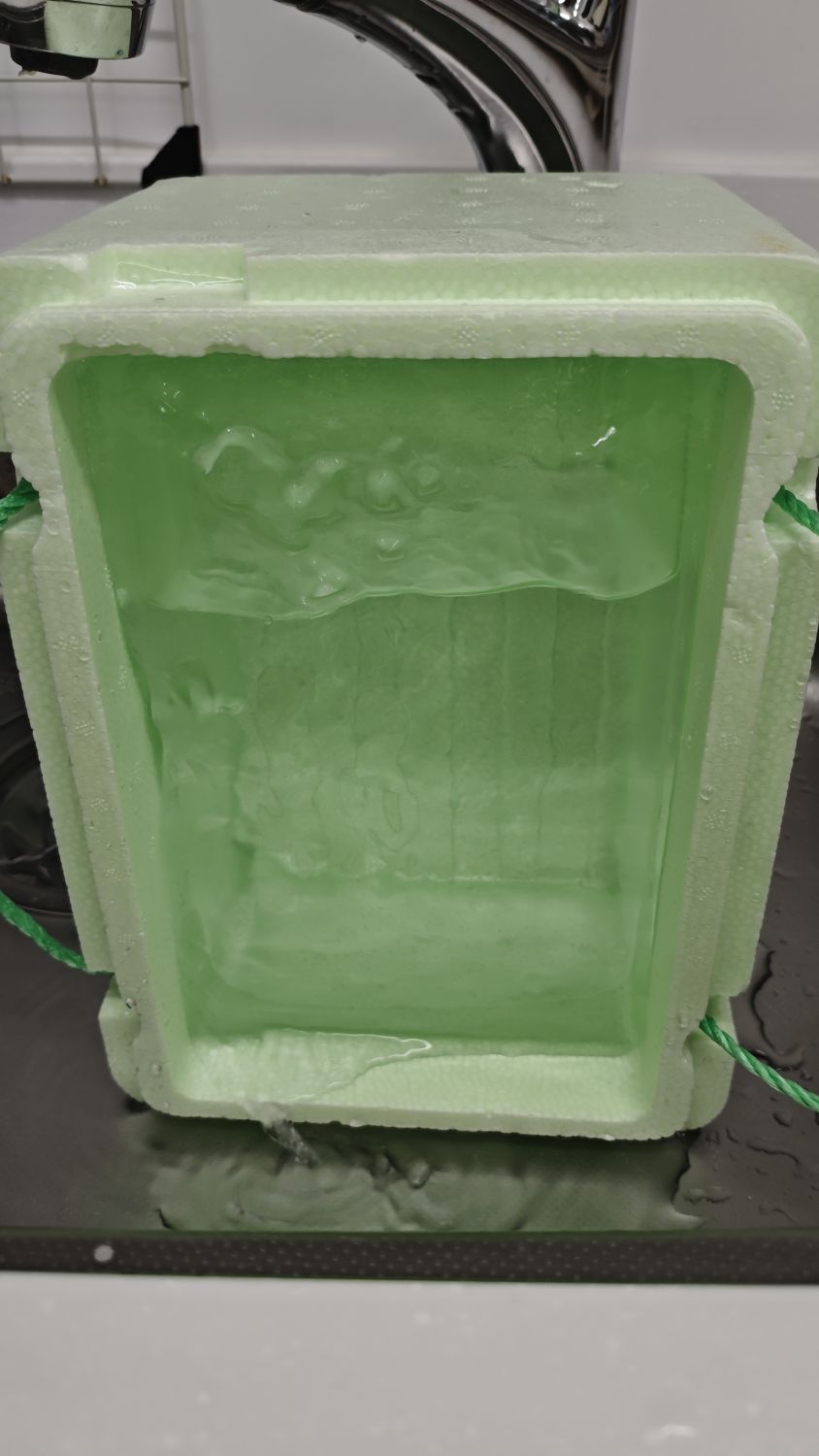
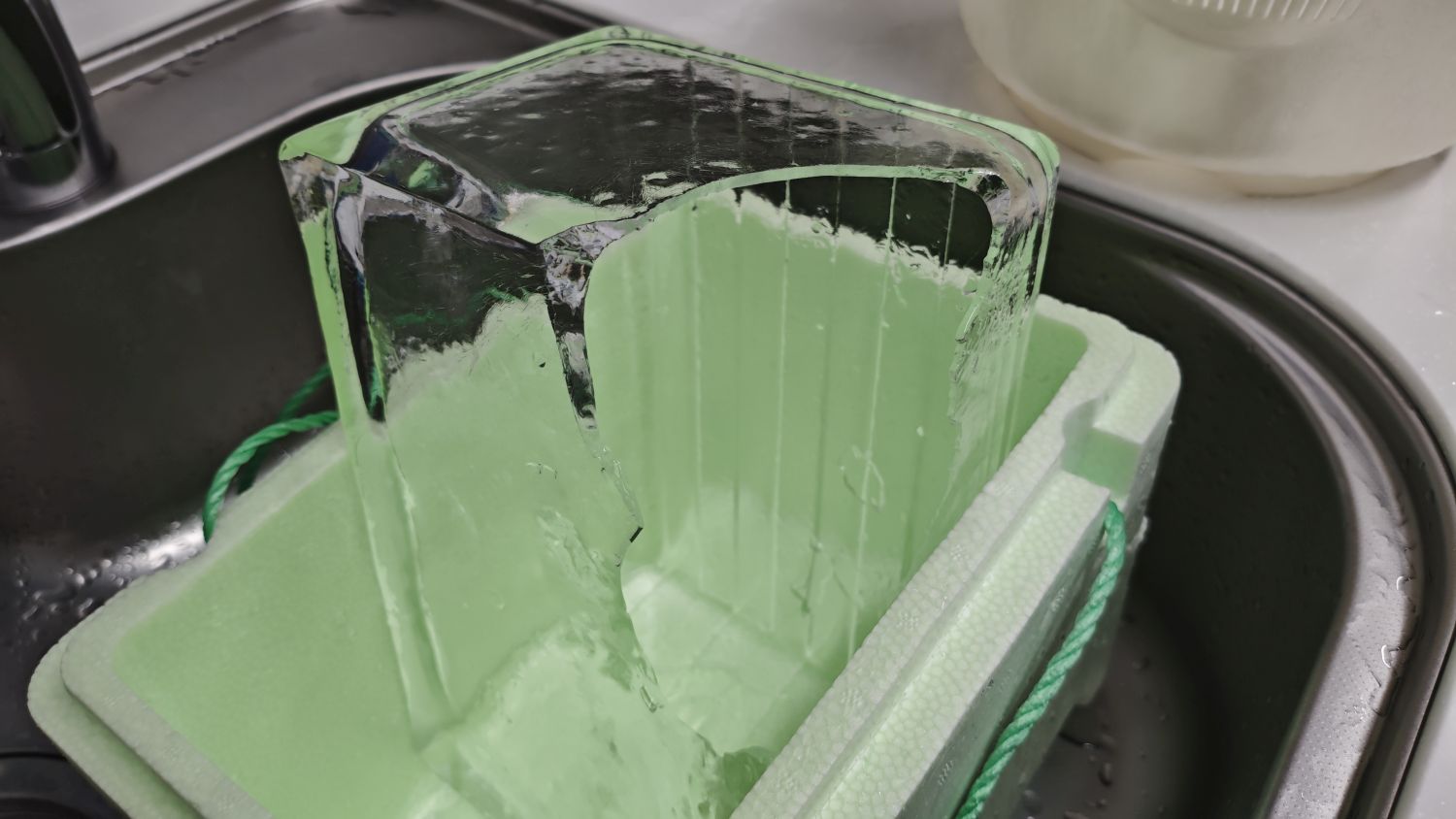
I took out the frozen portion, but only a very small amount had turned into ice. In other words, if you want to make ice in a home refrigerator in about a day, I wouldn't recommend using a styrofoam container. However, the clarity of the ice that was produced was significantly higher than the ice made in the Mega Food Container, so if you had more time, you might have been able to get a larger quantity of higher quality ice.
◆Results and reflections
As described above, the plan to 'make delicious ice using a home refrigerator with minimal cost' was largely successful. However, I would like to point out a few areas for improvement.
- Place insulation material under the mega food container.
The ice made in the Mega Food Container was cloudy white at the bottom. This is likely because the cold air from below was so strong that it froze before it could crystallize. I think that placing something insulating like foam or a towel under the Mega Food Container when putting it in the freezer might have slowed down the freezing rate at the bottom. As a side note, when I extended the freezer time to 30 hours, it froze completely, so it turns out that 24 hours was the correct time in the environment I tested.
How to use an ice pick
I had a lot of trouble breaking ice with the ice picks sold at 100-yen stores, perhaps because they weren't designed for breaking large pieces of ice, or maybe it was just a matter of skill. I was worried that applying too much force might cause an unexpected injury, so I eventually settled on lightly tapping the handle of the ice pick with a rubber mallet. Also, to cleanly divide a large piece of ice, you need to apply impact in a straight line and at equal intervals, and it might have been easier if I had used an ice pick with three prongs.
- When using polystyrene foam containers
From the perspective of easily making ice, the styrofoam container, which only produced thin ice after 24 hours, unfortunately resulted in a 'not recommended' outcome. However, if twice as long, around 48 hours, it seemed possible to produce a large quantity of extremely high-quality ice. Another issue to add is that, due to the material, it was difficult to melt only the surface of the ice and remove it from the container.
Related Posts: