Are data centers really the cause of rising electricity prices for ordinary citizens?
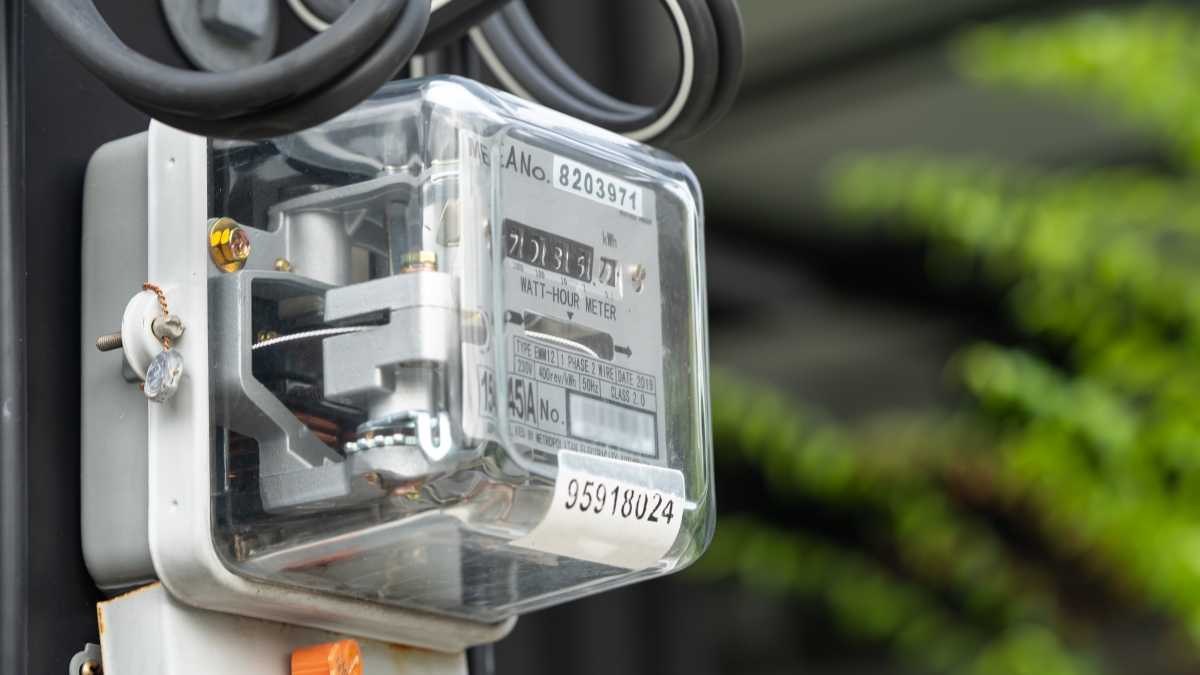
With the rise of data centers driven by the AI boom, major technology companies in the U.S. have pledged to fairly share the additional costs of power generation and transmission, but concerns are growing that these costs will be passed on to ordinary consumers in the form of higher electricity bills. Theodore J. Curie, director of energy research at the University of Florida, explains how the costs of power infrastructure for data centers will be allocated to electricity rates.
It may be almost impossible to make data centers pay their 'fair share' of electricity costs
https://theconversation.com/it-may-be-almost-impossible-to-make-data-centers-pay-their-fair-share-of-electricity-costs-283946
Curie cited the 2025 market report (PDF file) compiled by Monitoring Analytics, an independent market monitoring arm of PJM , which operates the wide-area power grid in the eastern and midwestern United States, as evidence that the power demand from data centers is driving up the cost of electricity supply.
PJM operates a 'capacity market' that pays power generators to secure the power generation capacity they will need in the future. Monitoring Analytics estimates that the market revenue received by power generators will increase by a total of $23,109,5341 (approximately 3.74 trillion yen) in the three capacity market auctions held in 2025-2026, 2026-2027, and 2027-2028, compared to a scenario without demand from existing and planned data centers. This amount represents the increase in costs borne by users within the PJM region and does not consist solely of the billing amounts from ordinary households.
The regulatory body that sets electricity rates determines who bears how much of the costs incurred to meet the demands of data centers. According to Curie, the regulator reviews thousands of cost items, including investments in power plants, transmission lines, and substations, as well as fuel costs and labor costs, and allocates them to user categories such as residential, commercial, and industrial. For example, if a user category uses 20% of the supplied electricity, they will be allocated 20% of the cost of supplying that electricity. Other criteria include the number of users and the amount of electricity used during specific time periods, and electricity rates for each category are set to ensure that the allocated costs are recovered.
If equipment is installed solely for the data center, the cost burden is clear. For example, if it's a power line connecting the data center to the nearest substation, it's clear that the data center should bear the cost. However, if the substation is expanded or new power generation equipment is secured to supply power to the data center, the equipment will also be used by other users, so the costs may be distributed among all users.
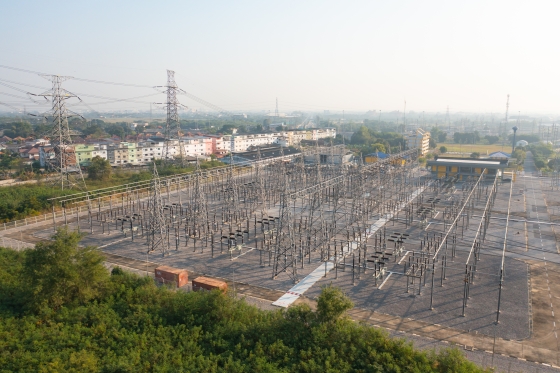
Cost allocation sometimes uses 'simultaneous peak demand,' which represents the amount of electricity each user category was using at the moment when the overall power grid usage was at its highest. However, Curie points out that data centers can automatically adjust the amount of computer processing power they do and reduce power consumption only at the moment demand peaks, so even if they use a lot of electricity at other times, they may not have to bear the costs allocated based on simultaneous peak demand.
Furthermore, while power facilities are used for long periods, not all planned data centers are necessarily built. If, even after completion, power consumption is less than predicted, or if technological advancements render the facilities obsolete in a short period, the costs incurred by power companies in anticipation of supplying power to the data centers will be redistributed to other users.
On the other hand, Sean Regan, a senior fellow at the Manhattan Institute, has stated that 'data centers have not caused electricity prices to rise for households.'
Data Centers Aren't Raising Your Power Bill. Bad Policies Are.
https://cityjournal.substack.com/p/data-centers-arent-raising-your-power
The evidence Reagan cited was a pre- peer-reviewed working paper by Asa Watten and others at the Electric Power Research Laboratory in the United States, which analyzed data from 2015 to 2024.
Simply comparing electricity rates and the number of data centers could lead to misinterpreting the concentration of data centers in states with inherently lower electricity rates as a result of data centers driving down electricity costs. Therefore, Watten et al. used the '1947 Interstate Highway Plan,' which was not formulated based on current electricity rates, to estimate how likely each state would have been to see an increase in data centers. This is because the fiber optic cables used for data center communications are often laid along highways, and the highway plans of that time have influenced the current locations of data centers.
According to an analysis by Watten et al., doubling the power capacity allocated to data centers would reduce the average retail electricity price for residential customers by approximately 3.5%. Furthermore, averaging the increase rates across states to reflect the larger number of residential electricity users in each state, data center power capacity increased by 160% between 2019 and 2024. Applying the estimate that 'a 100% increase in capacity reduces prices by approximately 3.5%' to this 160% increase, Watten et al. calculated that residential prices would be approximately 6% lower than if the data center increase had not occurred.
Watten and his colleagues explain that electricity rates include fixed costs such as power plants, transmission lines, and distribution networks. If existing facilities have surplus capacity, adding data centers that continuously use large amounts of electricity allows fixed costs to be distributed across a larger volume of electricity, thus lowering the average cost per kWh.
Furthermore, Regan cites a literature review (PDF file) published in June 2026 by Columbia University's Center for Global Energy Policy, stating that rising electricity prices are due to a combination of factors that differ from region to region, such as strengthening and expanding the power transmission and distribution network, recovery from disasters, fluctuations in fuel prices, and costs associated with regulatory obligations, and cannot be explained solely by increased electricity demand.
However, Watten and others warn that 'if future power supply constraints arise, the effect of pushing down prices could be reversed,' and Reagan argues that it is necessary to increase power generation and transmission facilities in line with the increase in data centers, and that the data centers themselves should bear the costs of the necessary equipment.
In July 2026, the Oregon Public Utilities Commission approved a rate revision requested by Portland General Electric, which will increase rates for large-scale electricity users such as data centers by an average of 29.7%, while rates for residential users will decrease by an average of 1.3%. Reagan says that these rate segments for large-scale users will prevent the costs associated with the increase in data centers from being passed on to ordinary households.
Related Posts:


in Science, Posted by log1b_ok