GPT-Live, a new feature in ChatGPT's voice mode, enables more natural conversations and allows for interjections and responses while listening.
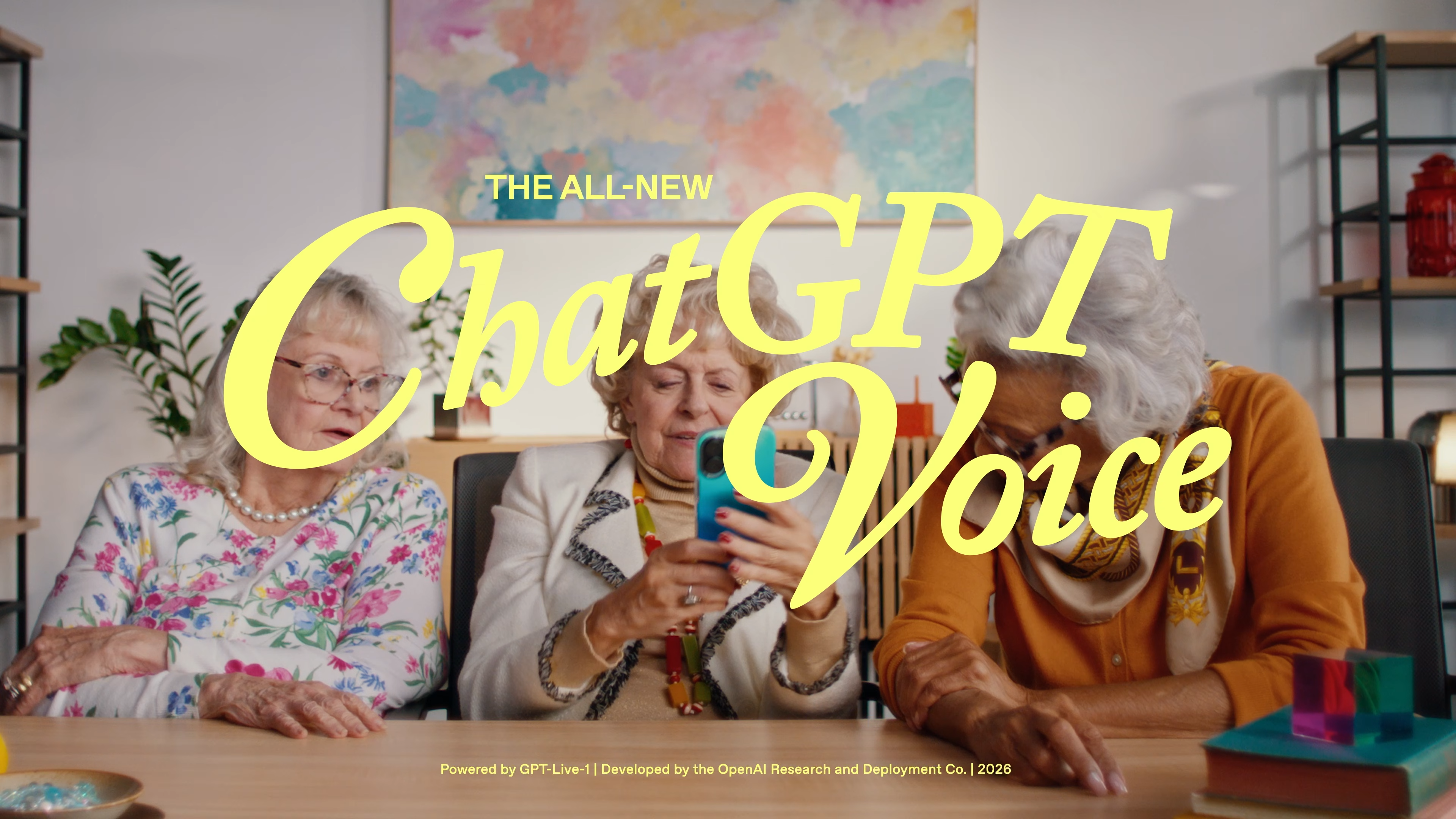
On July 8, 2026, OpenAI announced GPT-Live , a new generation voice model that makes ChatGPT voice dialogue more natural. GPT-Live employs a full-duplex system that allows simultaneous listening and speaking, and will be rolled out gradually as the new standard model for ChatGPT voice mode.
Introducing GPT-Live | OpenAI
GPT-Live System Card - OpenAI Deployment Safety Hub
https://deploymentsafety.openai.com/gpt-live
GPT-Live is a speech model that aims to 'bring the experience of conversing with AI closer to that of conversing with a human.' The conventional ' ChatGPT speech mode ' used a multi-stage mechanism that converted speech to text, generated responses with a large-scale language model, and then converted that back to speech, which resulted in problems such as delays in responses and awkward conversations.
The later 'Advanced Speech Mode' reduced latency by processing speech understanding and generation with a single model, but the unit of conversation remained turn-based, where one person responded only after the other had finished speaking. As a result, short silences or ambient noise were sometimes mistaken for the end of speech, causing the model to interrupt at unnatural times.
GPT-Live employs a 'full-duplex architecture' that processes input while generating output. This allows the model to make decisions such as 'speak,' 'continue listening,' 'pause,' 'interrupt,' and 'call a tool' multiple times per second, enabling it to nod along with phrases like 'yes' and 'I see,' and to remain silent while the user thinks.
The following video shows an actual conversation with GPT-Live. You can clearly see GPT-Live nodding and giving verbal cues while the user is speaking.
Another feature of GPT-Live is its separation of the part that handles natural conversation from the part that handles heavy tasks such as searching and inference. When web searches, deep inference, or complex tasks are required, GPT-Live delegates the processing to the latest frontier models in the background, while maintaining the flow of conversation during the process. At launch, the model used in the background is GPT-5.5, and it will be continuously updated as new frontier models become available.
The following video shows what happens when you ask GPT-Live, 'Are there any places around here where I can have a late lunch?' When asked a question, GPT-Live searches for information using GPT-5.5 and immediately responds with a voice message.
The ChatGPT voice mode with GPT-Live allows users to interject questions, pause to think, and even ask ChatGPT to 'speak slowly.' OpenAI explains that the nine voices available in ChatGPT have also been remastered for GPT-Live, making it easier to focus on the user's voice even in the background with traffic noise or nearby conversations.
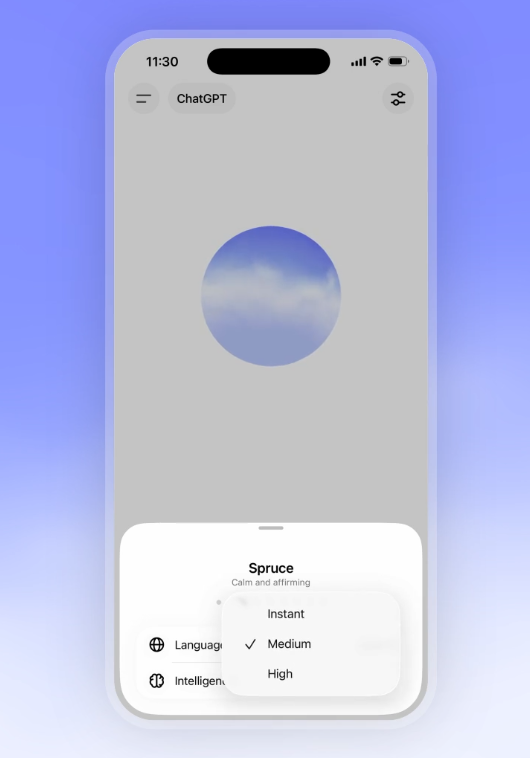
Regarding answering ability, you will be able to choose from three inference levels: Instant, Medium, and High. GPT-Live-1 Instant and GPT-Live-1 mini use GPT-5.5 Instant in the background, while GPT-Live-1 Medium and GPT-Live-1 High use GPT-5.5 Thinking at medium to high inference levels.
OpenAI also conducts human evaluations to measure the comfort and flow of conversation. In a 5- to 10 minute conversation, comparing overall preference, utterances, interruptions, conversation flow, and naturalness, the GPT-Live-1 and GPT-Live-1 mini were strongly preferred over the advanced voice modes.
OpenAI explains that in benchmarks, GPT-Live-1 significantly outperformed the advanced voice mode in
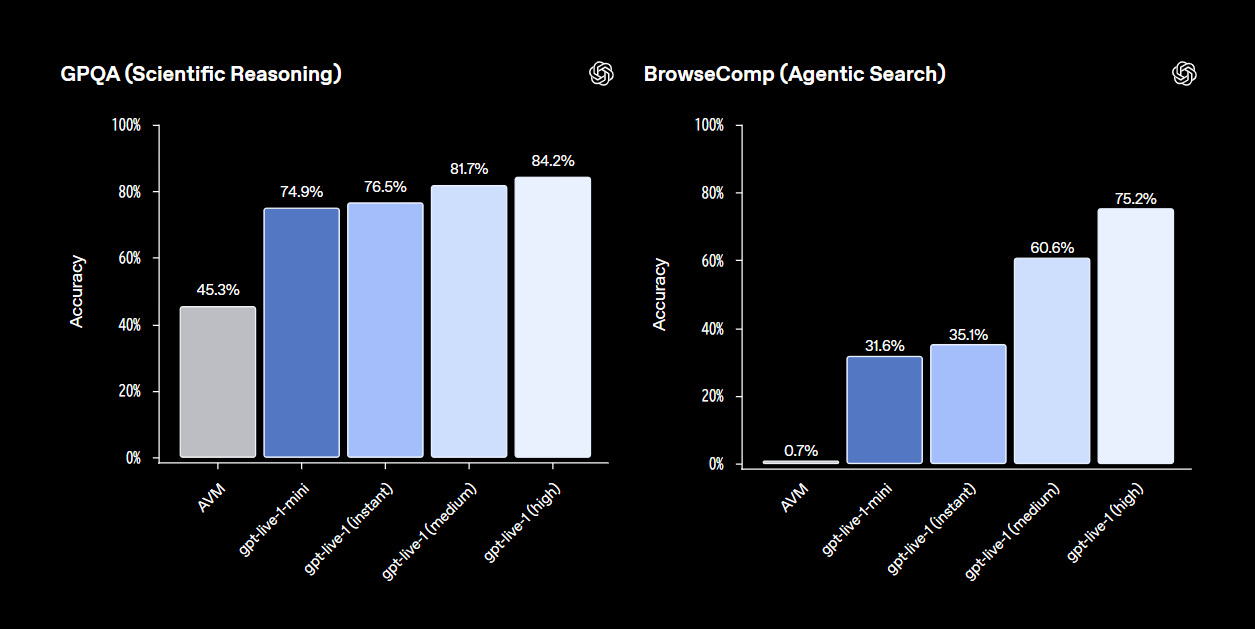
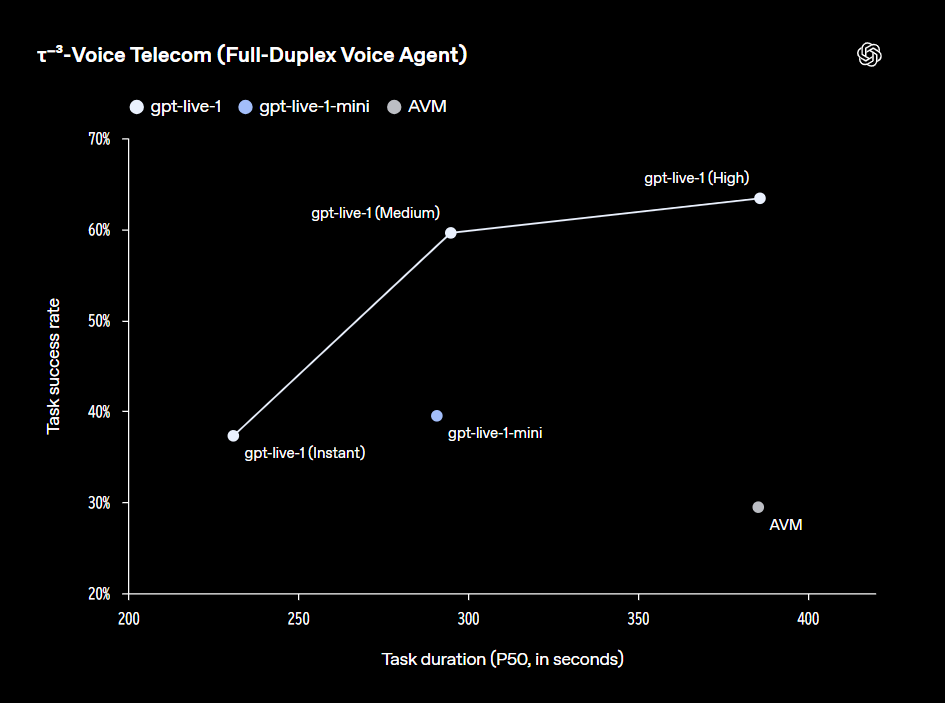
Furthermore, in
OpenAI has also implemented safety measures for GPT-Live that anticipate voice-specific risks. Because conversations proceed in real time, it can detect potentially dangerous outputs and guide users towards safer responses, display safety messages and support resources, or terminate voice conversations in high-risk situations.
Additionally, extra protections are available for teen users. Parents can choose whether their children can use ChatGPT voice mode through parental controls, and they will be notified if high-risk situations occur, including signs of self-harm or suicidal intent.
On the other hand, GPT-Live also has limitations at launch. According to OpenAI, GPT-Live does not yet support video-accompanied audio or screen sharing within ChatGPT, and these features are planned for future implementation. Additionally, non-native accents and fluency may not be fully supported in certain languages, and OpenAI states that it will work to improve the user experience across all supported languages.
OpenAI has announced that it will globally roll out two versions of GPT-Live: GPT-Live-1 and GPT-Live-1 mini . In ChatGPT voice mode, GPT-Live-1 will be provided as the standard model for paid Go, Plus, and Pro plan users, while the lightweight GPT-Live-1 mini will be provided as the standard model for Free users. It will be gradually made available on iOS, Android, and ChatGPT.com, and will also be available via API.
Related Posts: