Anthropic has released 'Claude Science,' an AI app for scientists that allows users to perform literature searches and create charts and graphs using a single application.
Anthropic has released a beta version of its AI workbench for scientific research, ' Claude Science .' Claude Science integrates everything from literature search and analysis to figure and manuscript creation and computing resource management into a single environment, supporting verifiable and reproducible research work.
Claude Science, an AI workbench for scientists \ Anthropic
Scientists typically need to navigate between multiple tools, such as research databases, analysis environments, and computing clusters. Claude Science consolidates these tasks into a single research environment, supporting multi-stage investigations and analyses.
Claude Science allows users to handle everything from literature analysis to creating deliverables such as figures, tables, and manuscripts. The created figures and manuscripts can be revised through conversation, allowing for refinement of the content before publication.
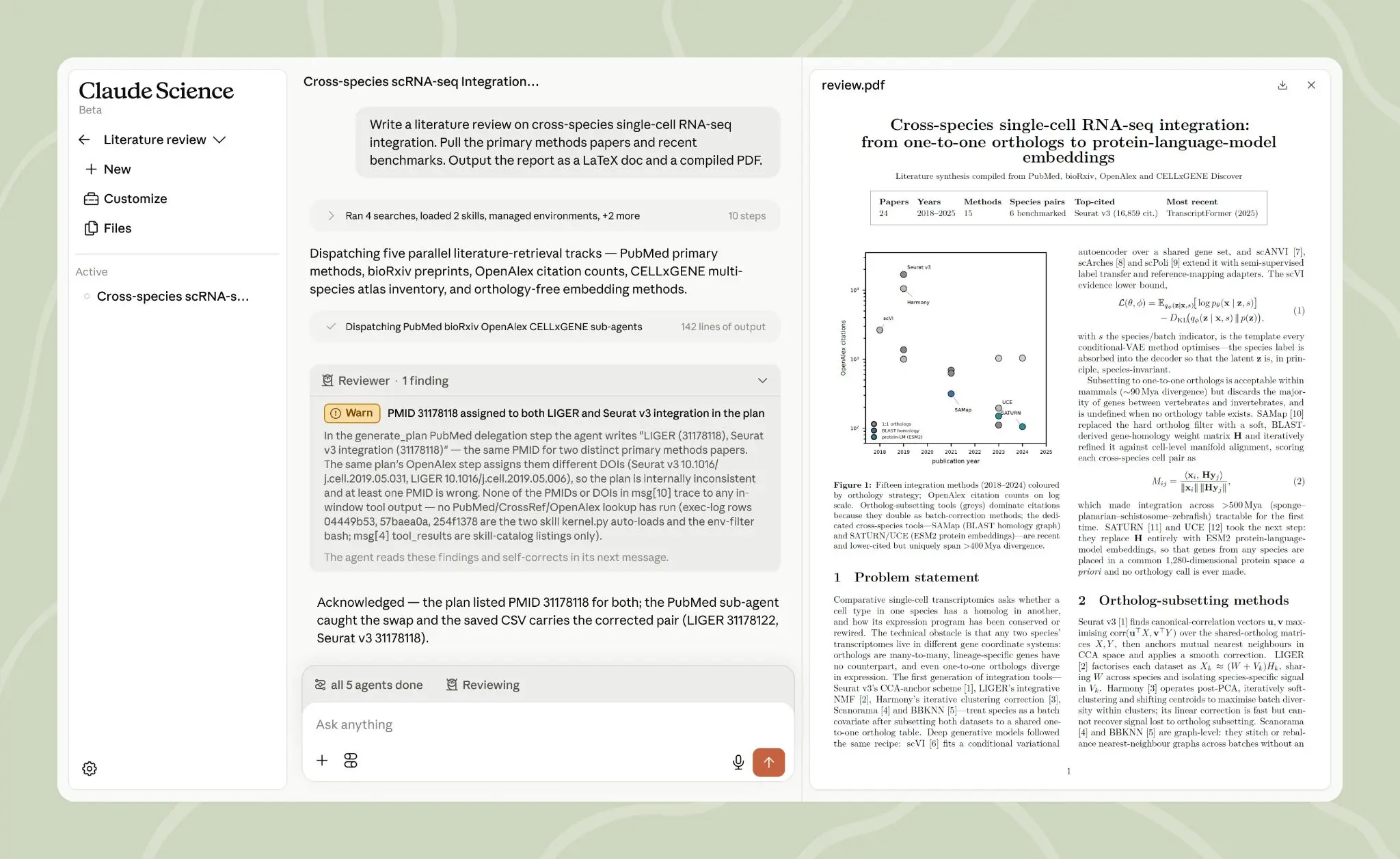
Furthermore, Claude Science comes pre-configured with over 60 skills and connectors for genome analysis, cell analysis, protein analysis, structural biology,
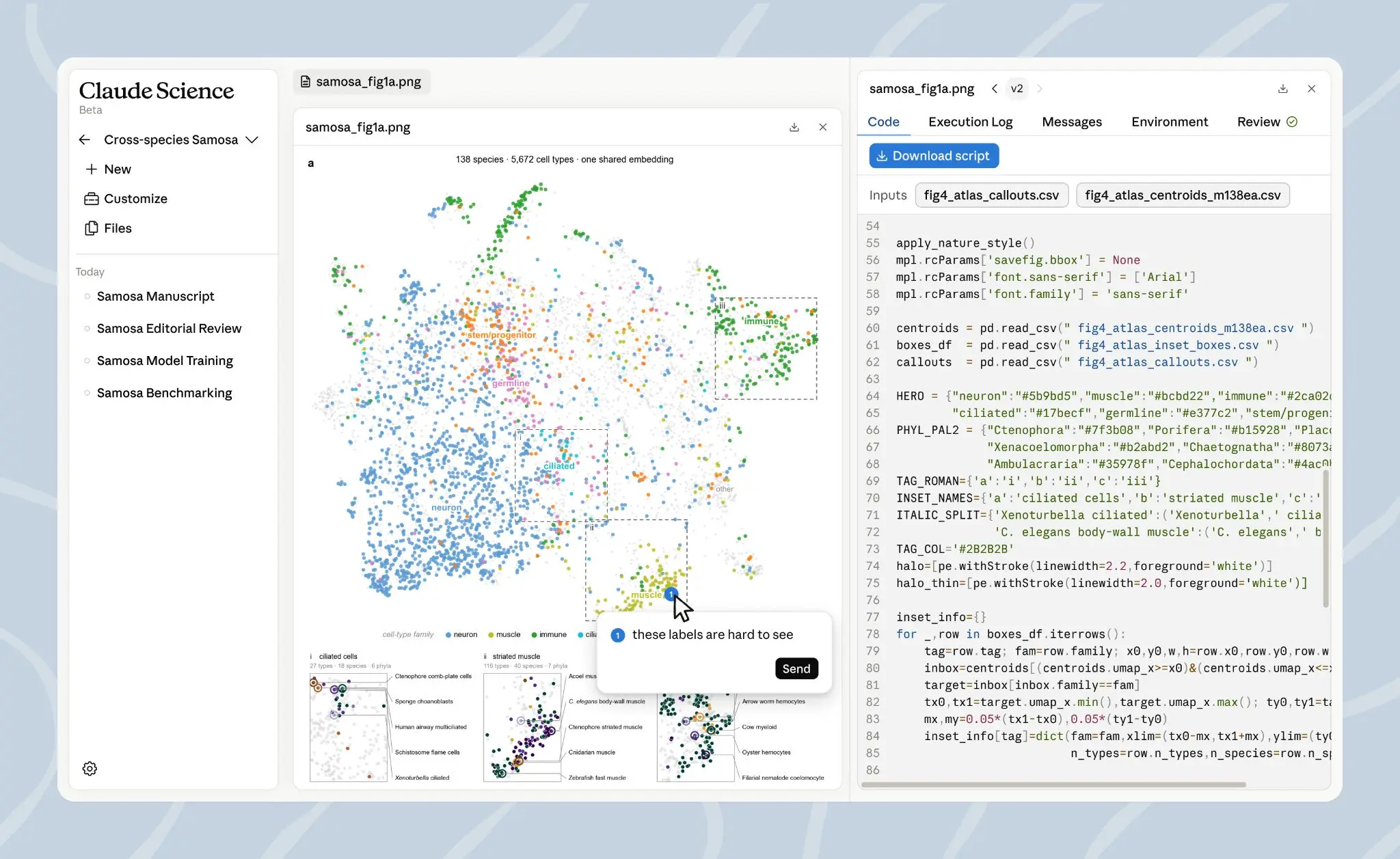
Claude Science saves the code and execution environment used when generating figures and tables, along with a simple explanation of the creation process and the conversation history. Researchers can give instructions in natural language, such as removing grid lines or changing to logarithmic axes, and can also use this information to verify results and reproduce them later.
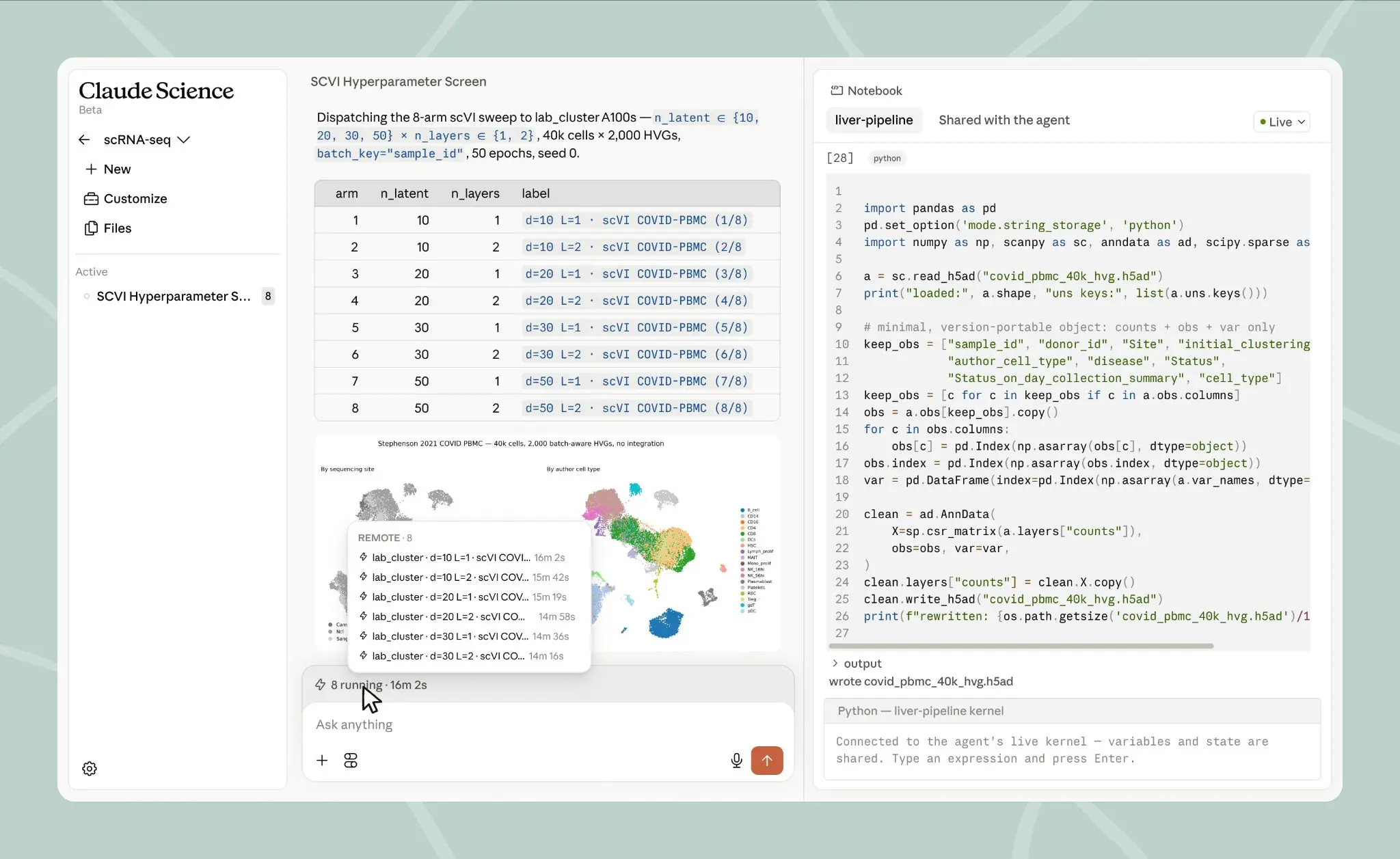
For computation, you can use your lab's
Because large-scale data is handled on laptops, Linux environments, and HPC login nodes within the laboratory, there is no need to transfer highly confidential data externally. Only the context necessary for each analysis stage is sent to Claude, and the review agent detects and attempts to correct incorrect citations, figures with untradable sources, and figures that do not match the code.
Claude Science's expert agents search and integrate across databases such as UniProt, PDB, Ensembl, Reactome, ClinVar, ChEMBL, and GEO. They also leverage NVIDIA's BioNeMo Agent Toolkit to connect to BioNeMo life science models and libraries, including Evo 2, Boltz-2, and OpenFold3.
The app is available for macOS and Linux, and is available on Pro, Max, Team, and Enterprise plans. Team and Enterprise plans require administrator activation. Anthropic also offers discounted plans for research laboratories in academic institutions and non-profit research organizations, as well as a program that supports up to 50 Claude Science AI for Science projects.
Related Posts: