Using AI to predict 'natural disasters that haven't happened yet,' and overcoming the limitations of extreme weather risk calculations with diffusion models.
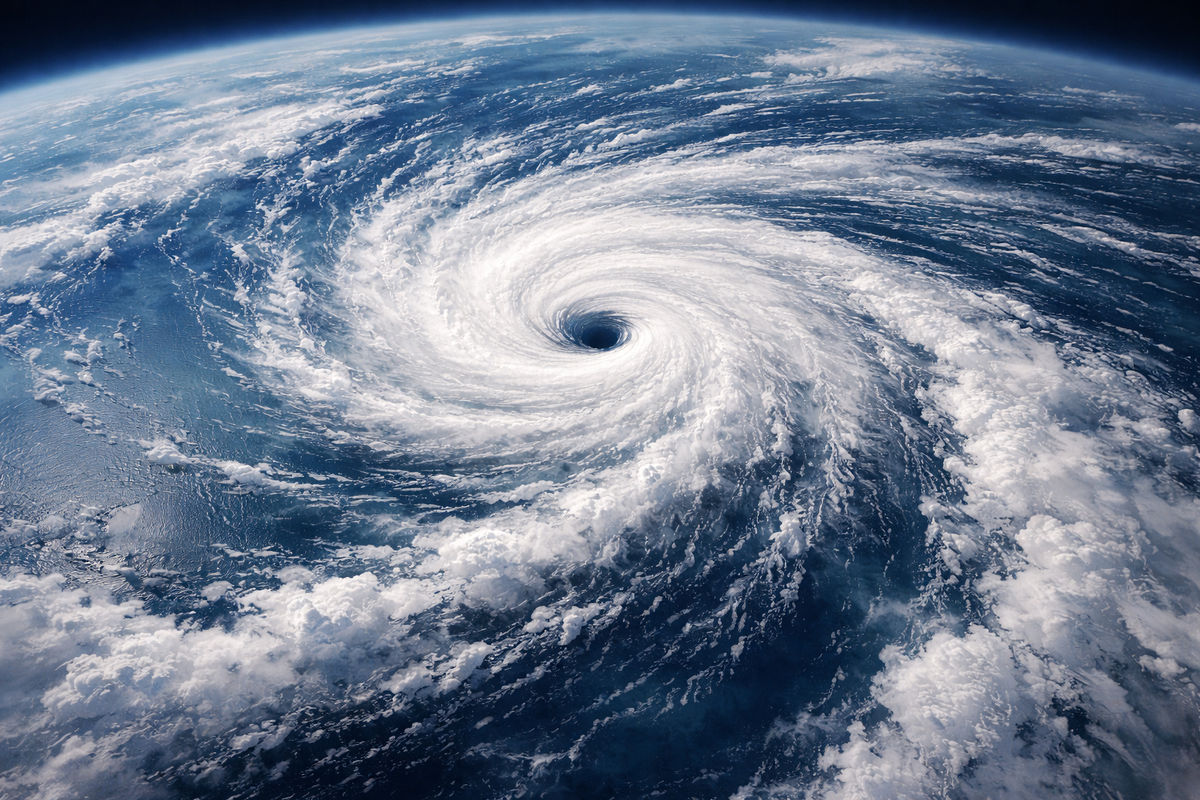
The accuracy of natural disaster predictions has a significant impact on government disaster prevention plans, corporate risk management, and ultimately, human lives. The Financial Times reported that 'efforts are underway to use AI and diffusion models to make natural disaster damage predictions more detailed and widespread.'
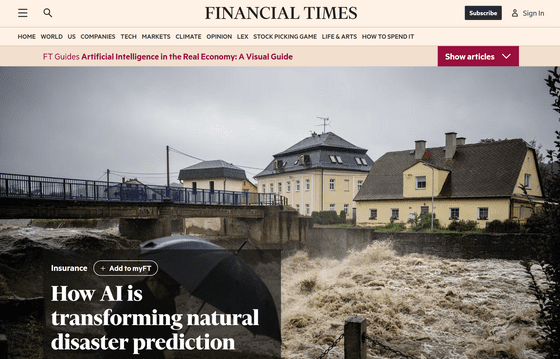
How AI is transforming natural disaster prediction
Catastrophe models (CAT models) are used to simulate how disasters occur on computers, such as when insurance companies estimate typhoon damage, when governments create evacuation plans, and when power companies investigate weaknesses in the power grid. However, calculating wind and water movements in detail based on physical laws using a CAT model requires a vast amount of data and computing power. Due to limitations in computing power, a choice must be made between making the calculation unit (the grid) coarser to broaden the scope of study, or narrowing the scope or time period to finer the grid.
Furthermore, actual observed weather data generally only covers about 100 years, and historical records alone are insufficient to consider disasters that occur once every 100 or 1000 years. As climate change increases the frequency of extreme phenomena, the problem becomes more significant that simulations become crucial for disasters with almost no historical precedent, yet conventional models are insufficient to address them.
Using generative AI could potentially overcome two obstacles: a lack of observational data and high computational costs.
Fathom, a flood risk company under the Swiss reinsurance company Swiss Re, is using diffusion models for flood prediction. Diffusion models, a technology also used in image generation AI, learn how to add and then remove noise from images, working to reconstruct details from coarse images. In disaster prediction, it is being applied as a technique to create more detailed rainfall patterns and flood spreads from low-resolution climate data.
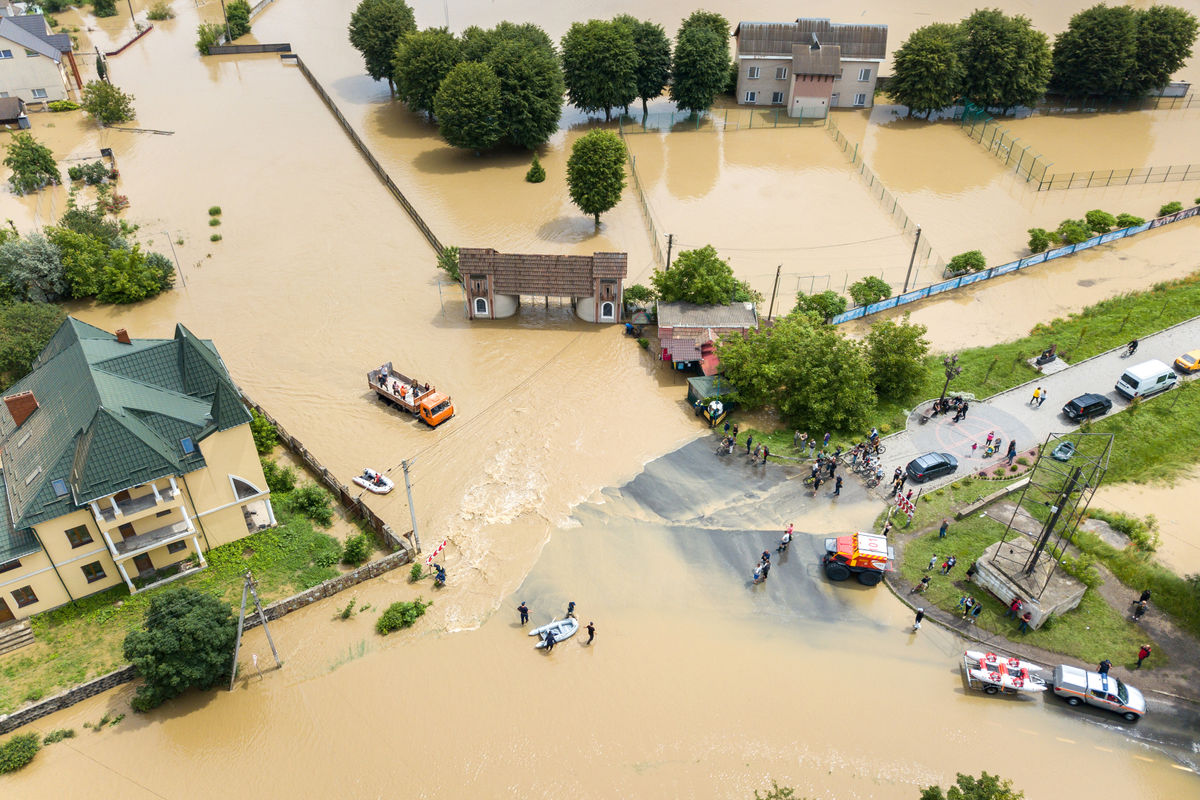
Fathom states that it trains its diffusion AI with approximately 1,000 years of weather data obtained from existing climate models, and then reproduces several thousand years of additional weather events based on a climate scenario around 2030. The initial scenarios are represented by a grid of approximately 100km squares, but this is too coarse to examine flood damage, so Fathom uses another 'image-sharpening' diffusion model to increase the resolution to approximately 10km squares.
By combining detailed flood scenarios with building data and damage risk data, it becomes possible to estimate how much damage a disaster with a certain probability of occurring will cause. For example, it becomes easier to estimate the amount of damage expected from a 'once-in-100-year storm,' and insurance companies may be able to adjust insurance premiums more easily by making detailed assessments of regional risks.
Furthermore, there are numerous examples of AI being used in practice, such as risk modeling company Verisk simultaneously analyzing heavy rain and wind with its high-resolution risk model for Europe, and Moody's RMS, a subsidiary of Moody's, using AI to analyze satellite images after wildfires and hurricanes to help estimate the extent and severity of damage and the amount of losses covered by insurance.
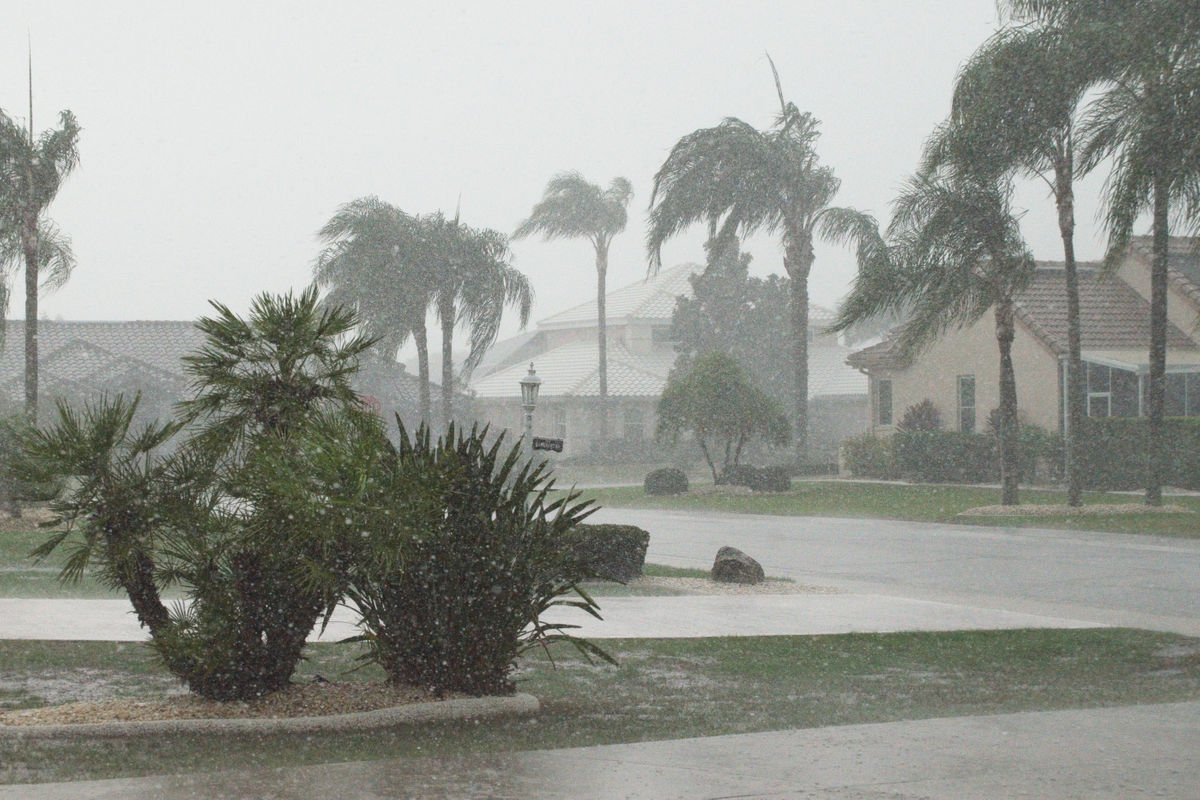
It has been stated that AI-powered model creation could be useful even in regions where adequate disaster models have been difficult to develop until now. In areas with a high risk of flooding, such as Bangladesh, or drought-prone areas, such as Brazil, large modeling firms have been hesitant to invest in developing physically based models due to the relatively low asset values. If the cost of model creation can be reduced with AI, it will become easier to assess risks even in disaster-vulnerable regions.
On the other hand, generative AI has a problem called 'hallucination,' which creates plausible-sounding misinformation, and in weather and disaster scenarios, it may produce results that do not conform to the laws of physics. Nevertheless, researchers are using AI because it can handle rare, large-scale disasters for which there is little historical data.
Oliver Wing, Chief Scientific Officer at Fathom, explained that 'if AI is used skeptically and cautiously, it can create disaster scenarios that go beyond what has been observed in the past,' but added that the challenge is 'to keep the output of AI within a realistic range and not be too bound by past records.' In natural disaster prediction in the age of AI, it will be important to see to what extent 'disasters that have not yet occurred but could occur' can be treated as realistic scenarios.
Related Posts: