ChatGPT's memory functionality has been intelligently updated, improving its ability to adapt to user preferences and appropriately forget old information.
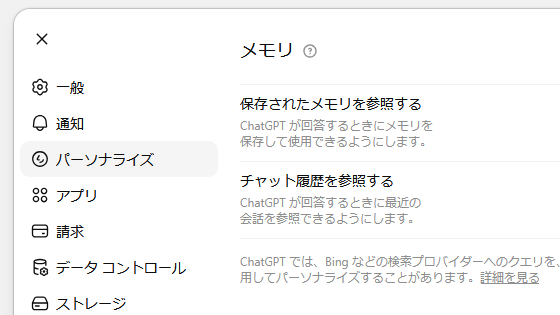
OpenAI has announced an update to the memory function of ChatGPT. The new memory function, called 'Dreaming V3,' automatically determines and accumulates memory from the chat history without requiring explicit instructions from the user. Furthermore, it is now possible to edit the contents from a screen that summarizes the key points of the memory.
Dreaming: Better memory for a more helpful ChatGPT | OpenAI
Memory is a feature that allows you to customize chat responses to suit each user's situation and preferences by having ChatGPT remember things like 'I live in XX' or 'I like XX.' When Memory was introduced in 2024, it was necessary to explicitly instruct the system to remember things like 'Remember that XX,' but in 2025, a feature was made available to paid plan users that automatically analyzes the conversation history and creates memories without requiring any instructions.
ChatGPT's memory functionality has been significantly enhanced, allowing users to access all past conversations - GIGAZINE
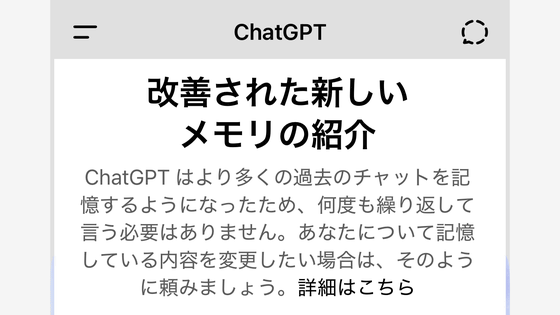
The newly announced Dreaming V3 significantly enhances memory management capabilities. For example, in conversations before Dreaming V3 was applied, a user's question 'What macro lens do you recommend?' would be answered with something like 'Recommended lenses vary depending on the type of camera.' However, after applying Dreaming V3, it automatically records in memory that 'the user owns a camera from company XX' from past conversation history and will then recommend lenses tailored to the user's camera.
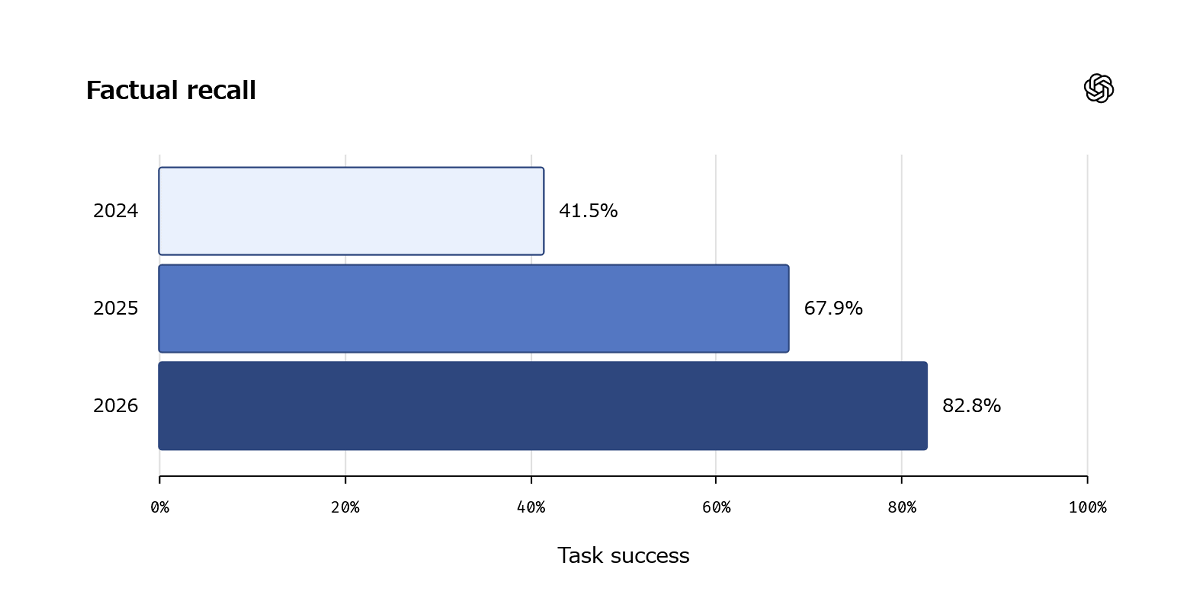
OpenAI has released the results of a comparison of the success rates of memory-related tasks using three memory systems: '2024 Memory System: Saved memories,' '2025 Memory System: Saved memories + Dreaming V0,' and '2026 Memory System: Dreaming V3.' The graph below shows the success rate of tasks that require users to recall factual information about themselves. The success rate in 2024 was 41.5%, but it improved to 82.8% in 2026 when Dreaming V3 was introduced.
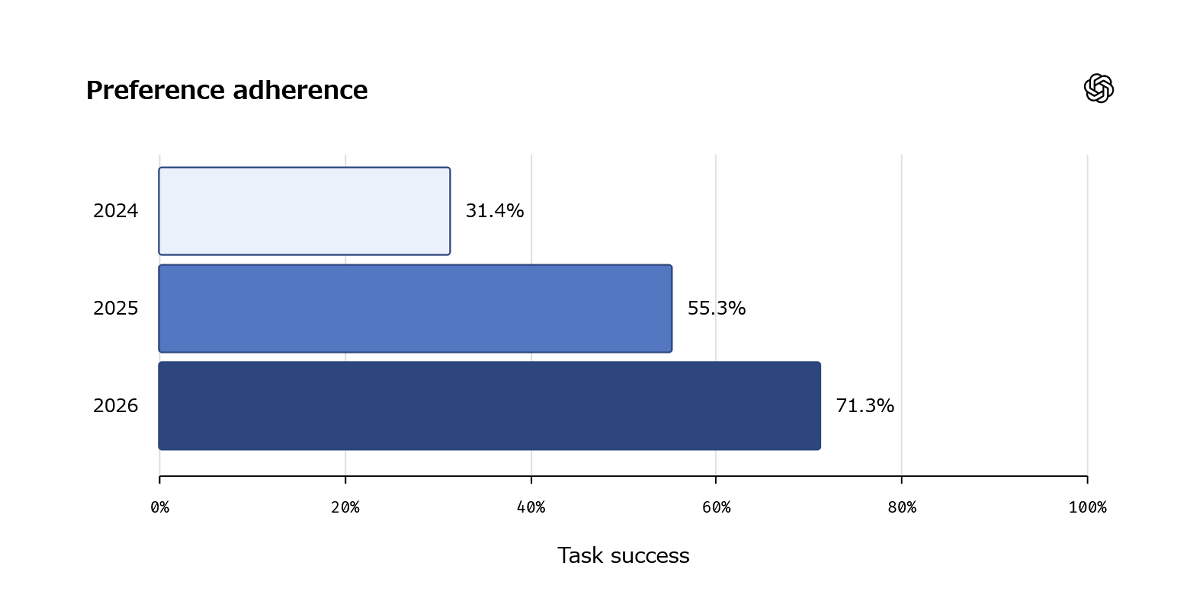
The success rate for tasks that need to be tailored to the user's preferences, such as 'outputting vegetarian-friendly answers to dietary questions if the user is vegetarian,' is as follows. With the introduction of Dreaming V3, the success rate for 2026 is projected to reach 71.3%.
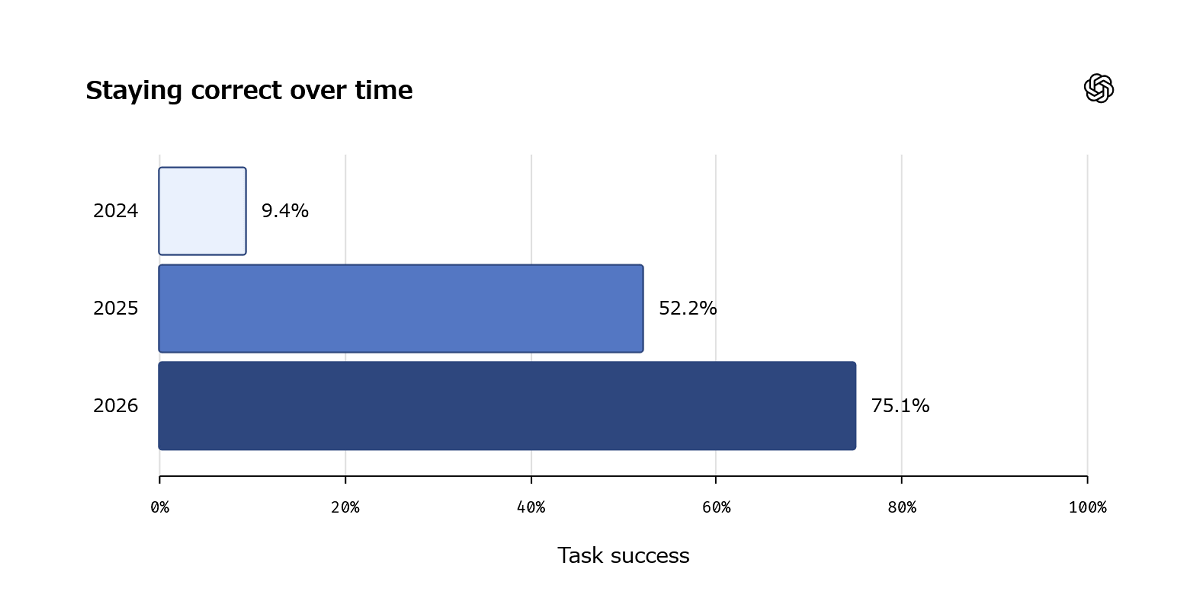
Memory sometimes needs to change over time. For example, if you record the memory 'I'm going on a trip to Singapore at the end of the month,' and you don't update the memory after the trip is over, you'll end up in a situation where 'it keeps outputting recommended information about sightseeing in Singapore even after the trip is over.' Dreaming V3 has improved its ability to update memory over time, and the success rate of the task 'maintaining the correct state over time' has increased to 75.1%.
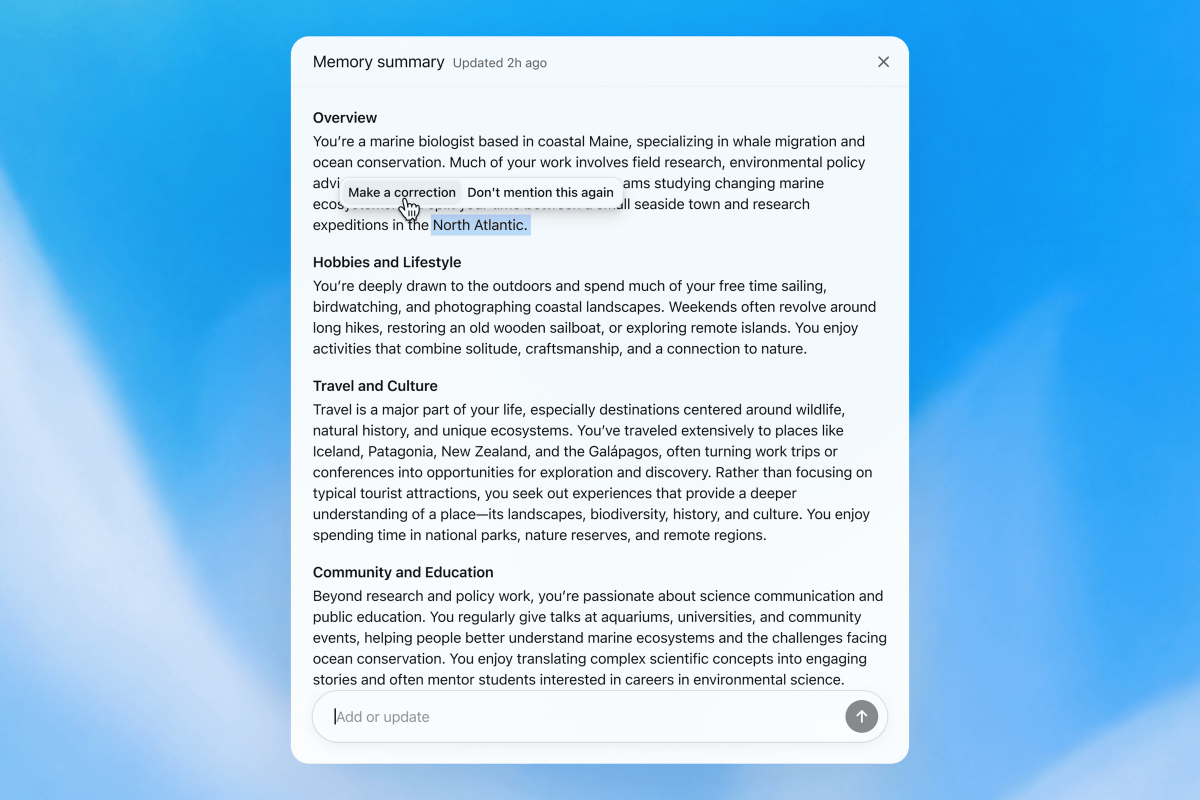
Furthermore, Dreaming V3 adds a management screen called 'Memory summary' that displays a summary of memory usage, allowing users to modify or erase parts of their memory usage from the management screen.
Dreaming V3 has been released to Plus and Pro plan subscribers in the US, and will be rolled out to the Free plan, Go plan, and other regions over the next few weeks. Additionally, following a reduction in server load to one-fifth of the previous amount for the feature that automatically creates memory from past chat history without explicit instruction, it has been announced that this feature will also be rolled out to the Free plan.
Related Posts:







in AI, Posted by log1o_hf