Finally, the first state to regulate prediction markets has emerged.
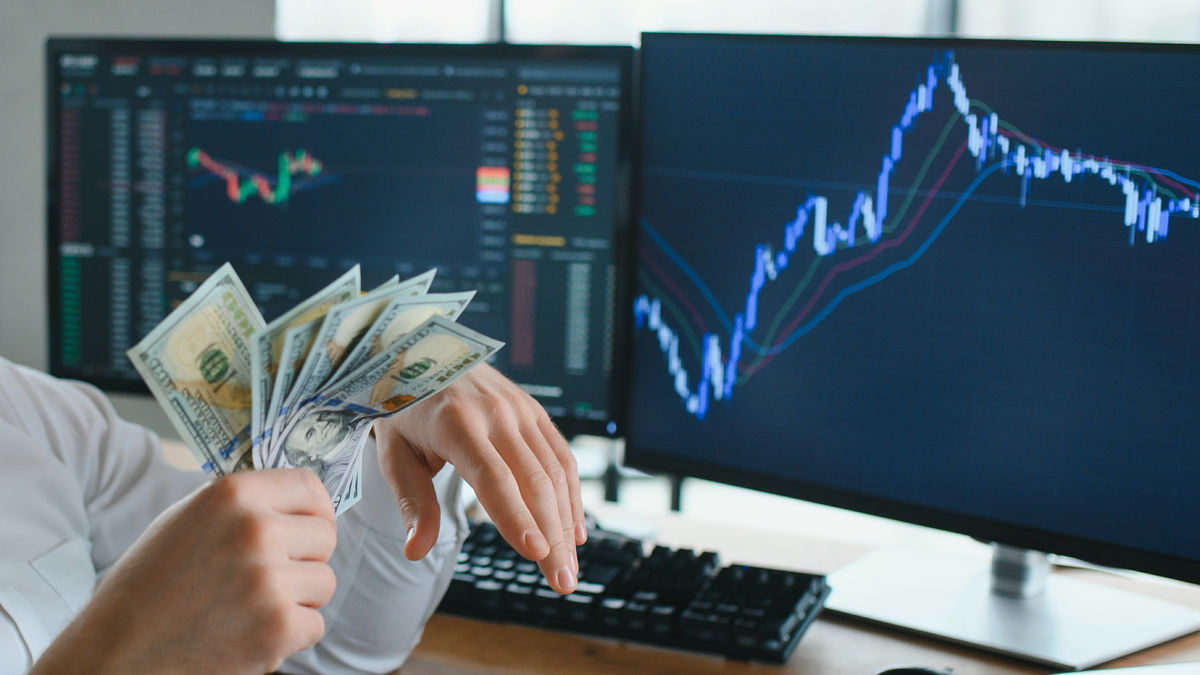
Prediction markets, which offer betting opportunities on everything from sports outcomes to political events, are expanding, with trading volume projected to reach $24.2 billion (approximately 3.78 trillion yen) by April 2026. Amidst this trend, Minnesota has become the first state in the U.S. to sign a law banning the operation of prediction market websites, and the U.S.
Minnesota to ban prediction markets like Kalshi, Polymarket : NPR
https://www.npr.org/2026/05/19/nx-s1-5821265/minnesota-ban-prediction-markets
CFTC Sues Minnesota to Block State Law | CFTC
https://www.cftc.gov/PressRoom/PressReleases/9233-26
US senators ban themselves from prediction markets trading
https://www.cnbc.com/2026/04/30/senate-prediction-markets-trading-ban-kalshi-polymarket.html
Gillibrand, McCormick team up to crack down on prediction markets - POLITICO
https://www.politico.com/news/2026/04/30/gillibrand-mccormick-team-up-to-crack-down-on-prediction-markets-00901671
A state law signed into law by Minnesota Governor Tim Walz on May 11, 2026, makes certain prediction market services illegal within the state. Although sports betting, which involves betting on the outcome of sporting events or the performance of athletes, became legal in the United States in 2018, it remains illegal in more than 10 states, and Minnesota is one of them.
How did sports betting become legal in the United States? - GIGAZINE

Emma Greenman, a Democratic representative from Minnesota who introduced the bill, said, 'As a state, we must decide what kind of regulations should be imposed on gambling and what the best way to regulate it is in order to protect public safety and protect children.'
The state law is scheduled to take effect in August 2026. Once enacted, prediction market sites such as Polymarket and Kalshi could face prosecution if they operate in Minnesota, and promoting or encouraging activities that allow users to falsify their location information, such as using virtual private networks (VPNs), to circumvent the ban will also be prohibited.

Regarding this law, the CFTC argued that 'the prediction market industry should only be regulated by federal authorities' and filed a lawsuit to block its implementation. According to the CFTC, Minnesota is one of America's leading agricultural producing states, and in agriculture, to cope with unpredictable weather and crop failures, farmers invest in financial markets related to crop prices and weather to mitigate losses. The CFTC points out that, under the legal definition, such financial contracts are included in 'prediction markets' and could be subject to regulation.
CFTC Chairman Michael Selig criticized the law, saying, 'This Minnesota law turns legitimate operators and participants in prediction markets into criminals overnight. Minnesota farmers have used financial contracts on weather and crop-related events to mitigate risk for decades. This law regulates even those legitimate markets, and Governor Waltz has prioritized certain interest groups over American farmers and innovation.'
Following opposition from the CFTC and the agricultural sector, the Minnesota state government is drafting a revised version of the Prediction Markets Act. The revised version would allow weather-related trading as an exception, thus avoiding impact on the agricultural sector.
However, the ban has drawn strong opposition from operators of prediction market sites. Elizabeth Diana, a spokesperson for Kalshi, said in a statement, 'The ban on prediction markets is a clear violation of federal law. Prediction markets are financial markets, not gambling, and Minnesota banning them is like trying to ban the New York Stock Exchange. This will reduce competition and push activities overseas, which is clearly detrimental to users.' A spokesperson for Polymarket also told NPR that 'Minnesota's ban goes against the 'established framework' for prediction market regulation set by the federal government.'
While several states, including Minnesota, have banned sports betting, prediction markets provide access to sports betting even in these states. This has led to problems, such as a judge in Nevada ruling that it was impossible to distinguish between state-regulated sports betting and Kalshi's sports predictions. In addition, prediction markets are strongly associated with issues such as suspected insider trading , and their regulation is sometimes challenged.
Republican Senator John Curtis of Utah and Democratic Senator Adam Schiff of California introduced a bill in March 2026 stating that 'prediction markets are gambling.' This bill would prohibit prediction market sites from handling sports betting and casino-style game betting.
A bipartisan bill to ban sports betting in prediction markets has emerged - GIGAZINE

Furthermore, at the end of April 2026, the U.S. Senate passed a rule prohibiting senators from trading in prediction markets due to concerns about using political deals or events related to death or violence as betting opportunities.
Furthermore, Senators Kirsten Gillibrand and Dave McCormick called for strengthening the rules to prohibit the president, vice president, and senior executives from trading in prediction markets. 'Americans have a right to fair, transparent financial markets that are not biased in favor of privileged individuals. This common-sense, bipartisan bill will protect consumers, prevent insider trading, and provide strong safeguards to ensure prediction market platforms adhere to fairness standards,' she said.
Related Posts:



in Web Service, Posted by log1e_dh