The new 10GbE USB adapter is ultra-compact, but how powerful is it?
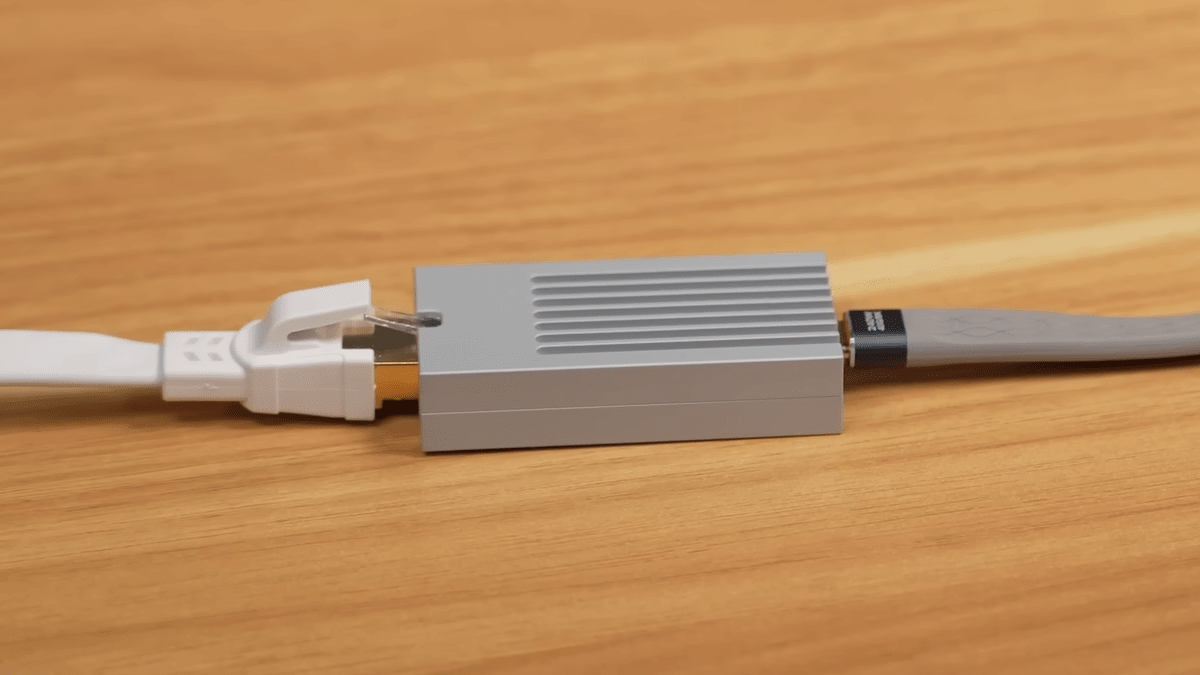
For many years, the best way to achieve 10 Gigabit connectivity on a laptop was to purchase an expensive, bulky, and heat-generating 10GbE Thunderbolt adapter. Engineer Jeff Gilling recently introduced USB 3.2 adapters featuring Realtek's RTL8159 chipset, pointing out that 'bulky adapters may be a thing of the past.'
New 10 GbE USB adapters are cooler, smaller, cheaper - Jeff Geerling
How did they make it this small?? - YouTube
If your PC doesn't have a LAN port, you can connect via a wired connection by attaching a conversion adapter to a USB port. While 2.5G and 5G USB adapters are readily available, 10G compatible ones are less common.
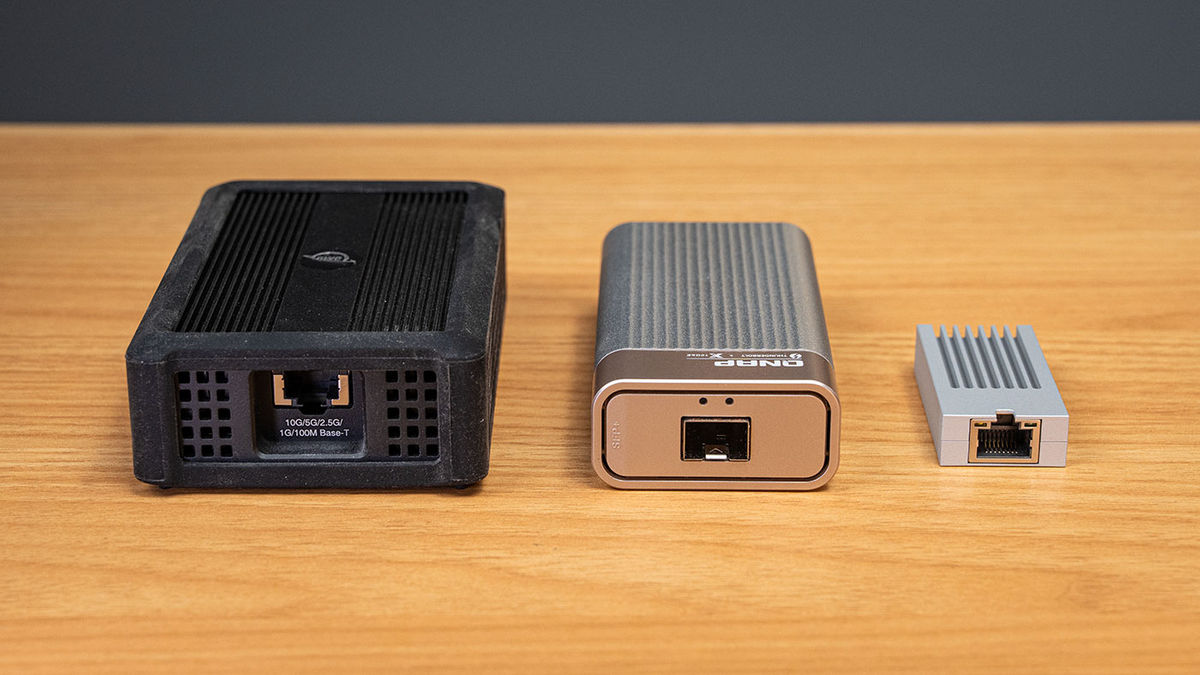
In recent years, adapters supporting 10G have become available. The model tested by Mr. Gilling was a WisdPi model costing around $80 (approximately 13,000 yen) (pictured on the right below), which is twice the price of many 5G/2.5G adapters, but less than half the price of a Thunderbolt-type 10G adapter that Mr. Gilling previously purchased.
Mr. Gieling tested this adapter in the following four configurations:
MacBook Neo (USB 3.1 and USB 2.0)
・M4 MacBook Air (USB 4 / USB 3.1 Gen 2)
Desktop PC with AMD Ryzen 7900x and B650 motherboard (USB 3.2 Gen 2x2)
Only a desktop PC with a USB 3.2 Gen 2x2 port supporting 20Gbps throughput was able to achieve a full 10Gbps speed. Other machines achieved approximately 6-7Gbps.
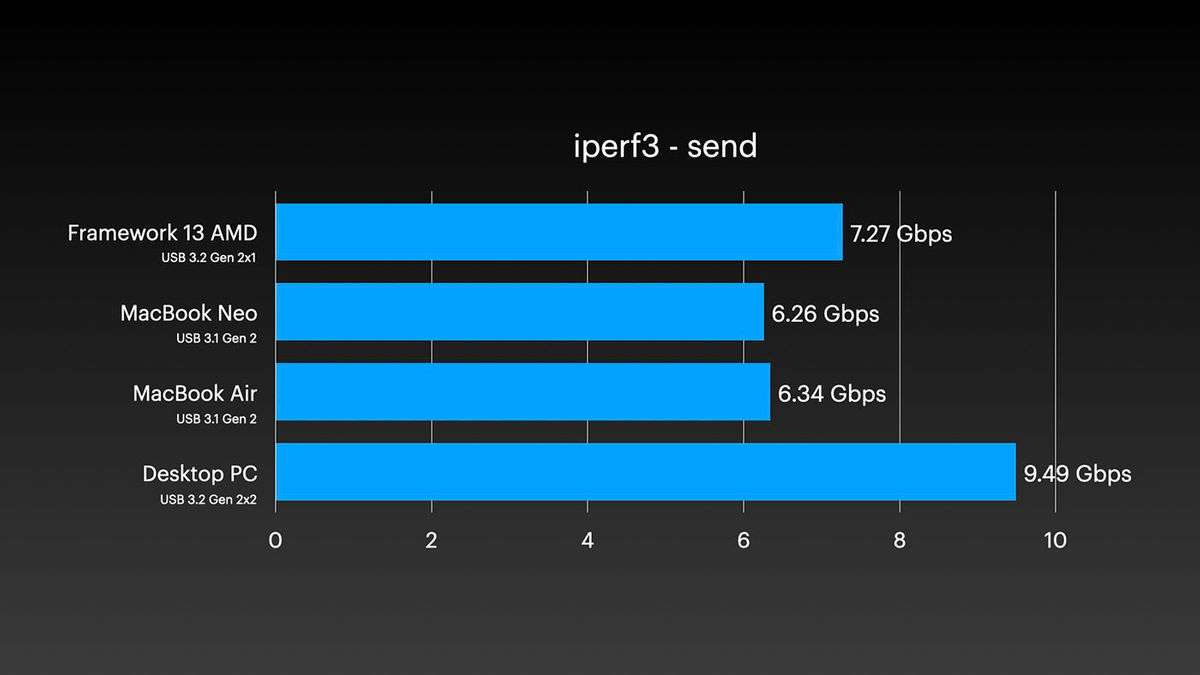
While Macs have the same bandwidth per port (10Gbps for USB 3.1 Gen 2x1), performance was consistently lower than with Framework. Although the adapter was recognized correctly upon connection and worked immediately without additional driver installation, there was a bug where the connection speed was incorrectly displayed as 2500Base-T in the 'Hardware' tab of the network settings.
On Windows, the adapter was recognized upon connection, but the user was unable to connect to the network until they downloaded and installed the latest Realtek driver from the official website.
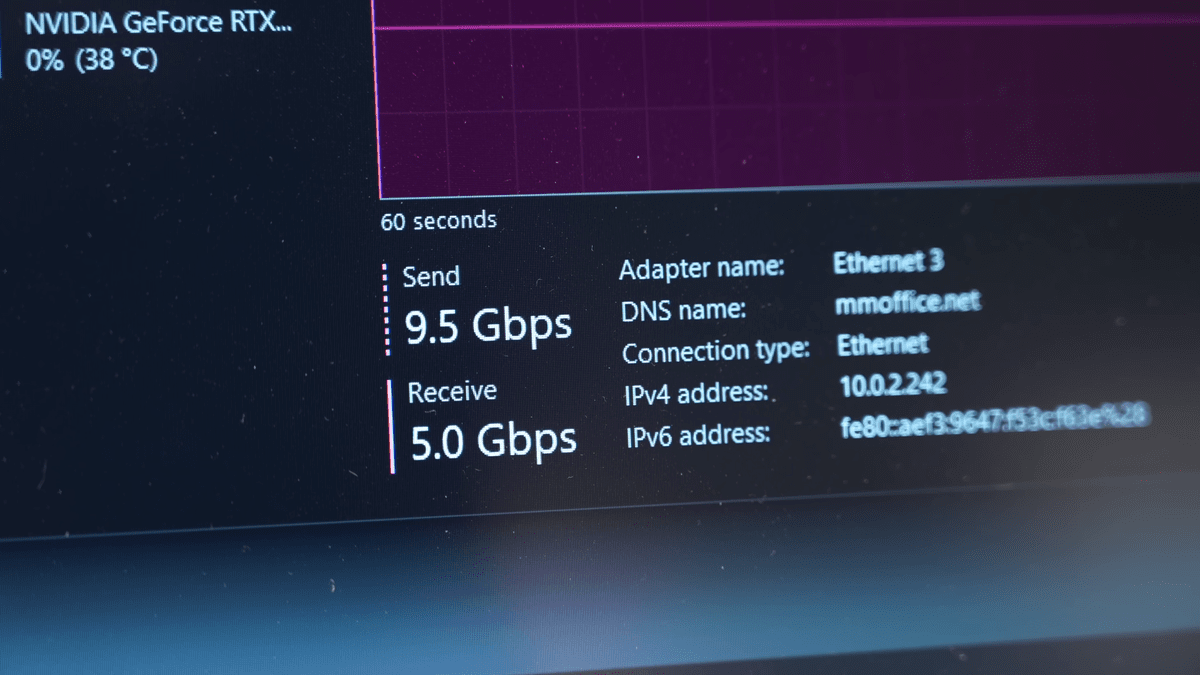
Bidirectional bandwidth tests revealed interesting differences, with a decrease in upload speeds observed on Framework and desktop PCs. In response to a reader's
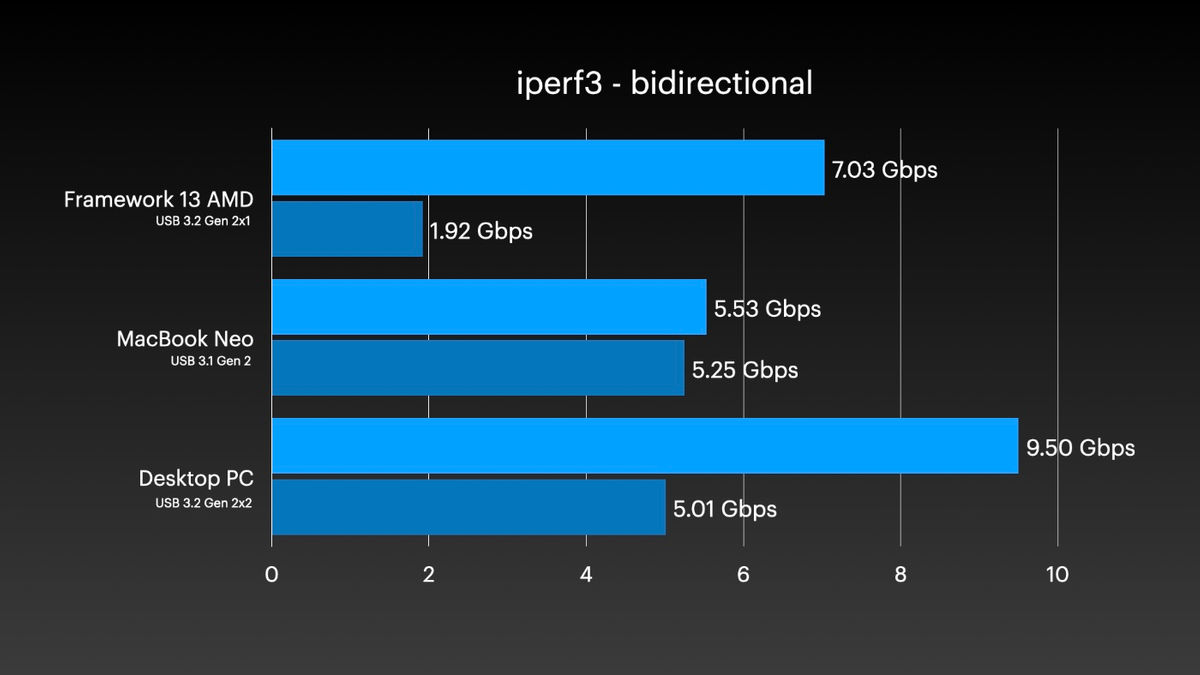
Gilling stated, 'The main conclusion is that this adapter only performs at its best if it has a USB 3.2 Gen 2x2 (20Gbps) port. And given the confusion surrounding USB naming over the past decade, and the fact that Microsoft displays all USB 3.x connections as '3.0' in device settings, it will be difficult to determine your computer's compatibility without checking the specifications.'
Regarding whether 5G or 2.5G offer better cost performance, Gilling pointed out, 'If you already have a 10Gbps network environment, are using RJ45 instead of SFP+, and are looking for a more compact adapter, then it's a good choice. However, if 10Gbps isn't necessary, you should stick with a 2.5Gbps or 5Gbps adapter. At the moment, those offer the best cost performance.' He added, 'With PC prices continuing to rise across the board, it's great to see new devices that are cheaper, faster, and better than before.'
Related Posts: