Interview with Motonobu Hori, director of the TV anime 'Marriage Toxin': It's getting more and more chaotic, just like the original work.
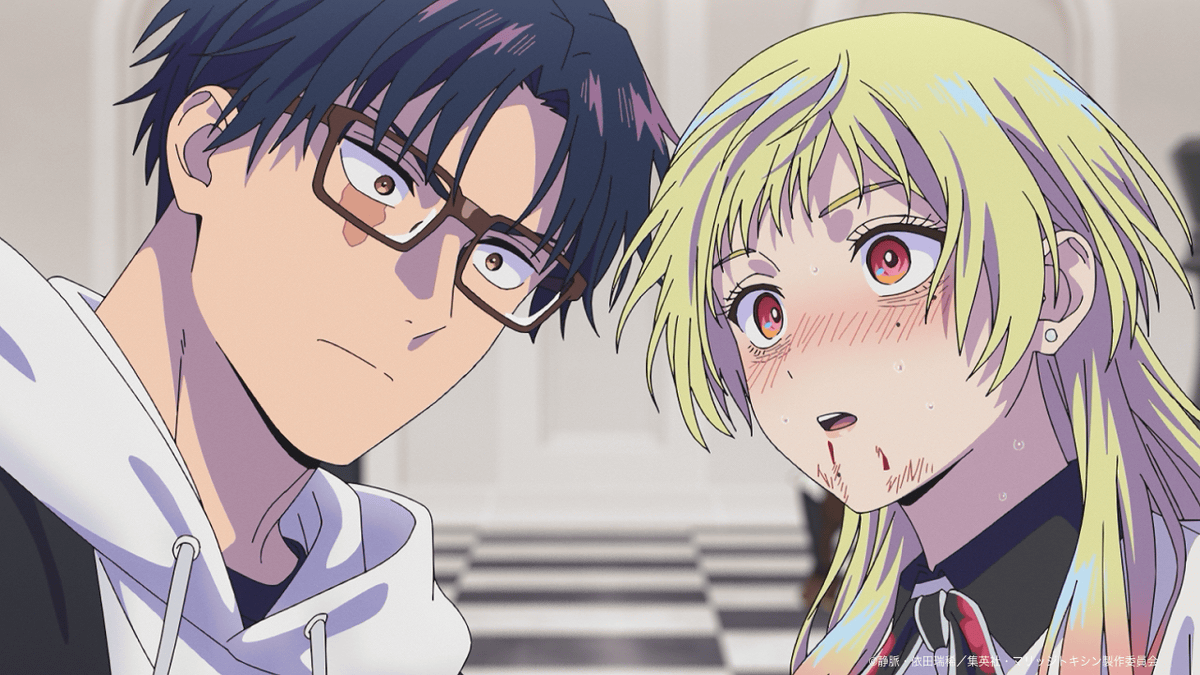
'
Official website for the TV anime 'Marriage Toxin'
https://www.marriagetoxin-anime.com/
GIGAZINE (hereinafter referred to as G):
I've been following the 'Marriage Toxin' series from the very first chapter, so when I first heard about the anime adaptation, I thought, 'Seriously?!' and then when I found out that Bones Films would be producing the animation, I was like, '!?!?!'
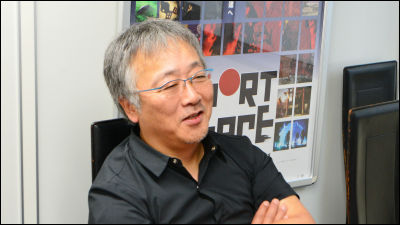
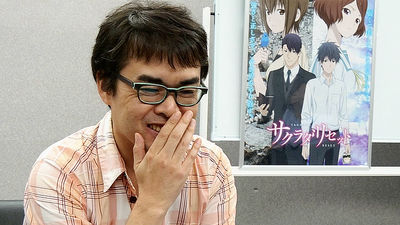
TV anime 'Marriage Toxin' director Motonobu Hori (hereinafter, Hori):
This might be a little different from my usual work (lol).
G:
When I saw 'Director: Motonobu Hori' listed, I wondered what kind of film it would be, so I watched the PV and was surprised by how stylish it was, thinking, 'This might be something amazing.' When did the director first get approached about this project?
moat:
I was in the middle of working on ' Metallic Rouge ,' and I think it was about one or two months away from being finished. Even before that, I had always thought that it would be better for me to gain experience in an environment where there were staff around me who could understand my nuances, rather than going to various studios, so I had been hoping to work with Bones for a long time. That's why I asked Masahiko Minami, the CEO of Bones, 'Do you have any other projects?' A little while later, he handed me the original story in his office. I read it and found it very interesting, so I said, 'I'd love to do it!'
G:
In 'Making of Marriage Toxin Vol. 1: Character Design,' released on YouTube, character designer and chief animation director Kohei Tokuoka stated that they 'adjust the drawings so that they don't fall apart when viewed from 360 degrees.' Director Hori himself said that 'it's easier for animators to draw if the face doesn't look inconsistent when rotated around,' and I thought, 'Now that you mention it, that's certainly true.' However, thinking back to when I was reading the manga, I felt that the characters already looked fine no matter which angle I viewed them from. When creating an anime, what kinds of adjustments are made to finish the character designs to make them suitable for animation?
Making of Marriage Toxin Vol. 1: Character Design - YouTube
moat:
I also come from a background in drawing, but I think there are quite a few things you can only understand once you become an animator. For example, when we talk about 'realistic drawing style,' what an animator means by 'realistic' is a little different from what a manga artist or illustrator means by 'realistic.' From an animator's perspective, 'realism' in manga and illustrations is a matter of style, and I think it's about contrasts like, 'The eyes are around here on the face, and the distance between the eyes and mouth is about this much.' But for an animator, even if the drawing style is stylized for children, 'realism' means whether you can actually rotate it 360 degrees, or rather, it refers to a drawing where the three-dimensionality is easy to grasp.
G:
I've heard that some people can rotate a 3D object in their mind, while others can't. Are you the type of person who can rotate a 3D object in your mind, Director?
moat:
Well... animators tend to think in terms of a somewhat operational, concrete process, and when you have a profile view and a diagonal view, it's like you're doing in-between frames in between (laughs).
G:
Huh? (laughs)
moat:
For example, while the face is spinning, the ears might wiggle. Even in manga artists' drawings that look realistic, there are different rules for frontal, side, and angled views.
G:
Ah, I see.
moat:
Even when it comes to drawing eyes, animators start with the premise that 'eyes are spheres,' and on top of that, they have to follow the original artwork style. So they look at the character sheet and read the rules like, 'This part is drawn in a style that deviates a little from realism, but only in this one place.' There are also rules like, 'The way the eyes are drawn follows the original, so please ignore the other rules.'
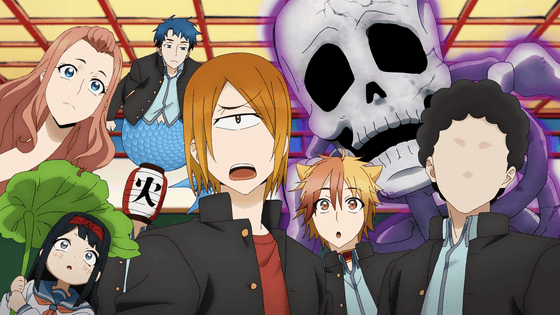
In the TV anime 'Marriage Toxin,' Kohei Tokuoka's artwork looks exactly like the original, but in reality, he has streamlined various rules from the original artwork to make it easier for animators to draw. The impression is that it's the same as the original, but the content is completely different, which is quite unique. Character design is a difficult job that requires more than just being able to draw pictures that resemble the original.
G:
So that's what it was. In the same video, Tokuoka mentioned that the director had requested that they add more 'four-white-eyed' and 'three-white-eyed' character designs...
moat:
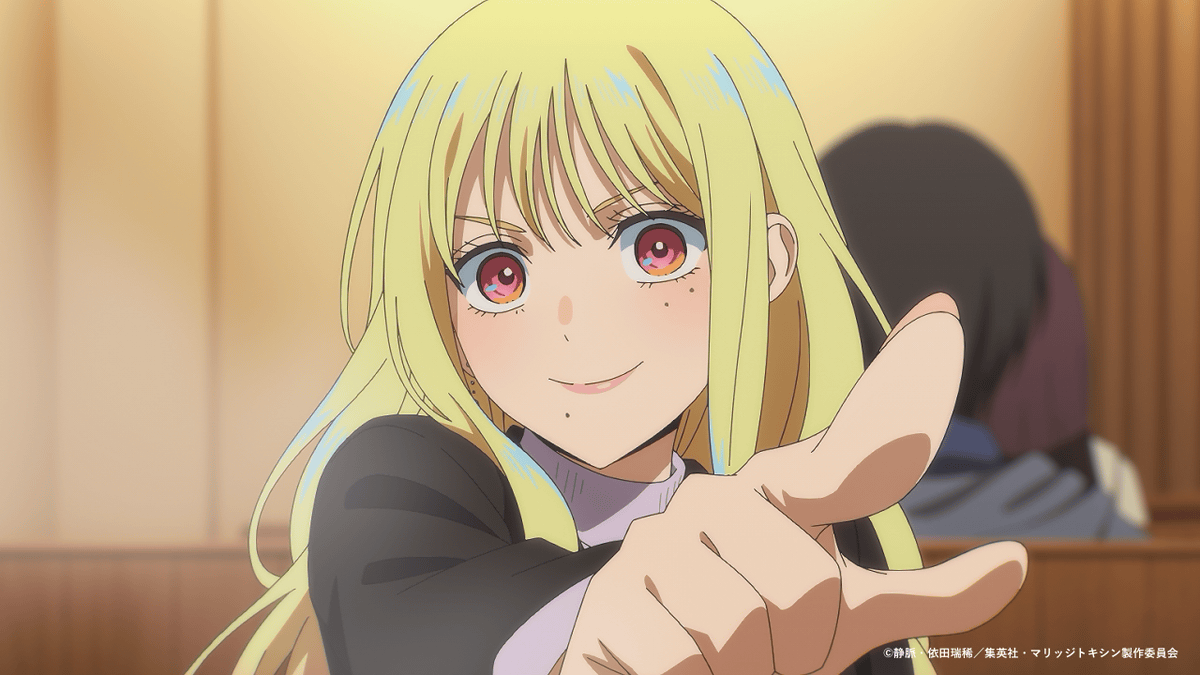
This is a bit different from typical animator rules, but for example, Shirosaki has a surprised expression where the whites of her eyes are almost entirely visible around the pupils. In most popular art styles these days, the pupils are positioned between the upper and lower eyelids, but in Shirosaki's case, the pupils are separated from both her upper and lower eyelids. So, I thought 'four-white eyes' were necessary (laughs).
G:
I see (lol)
moat:
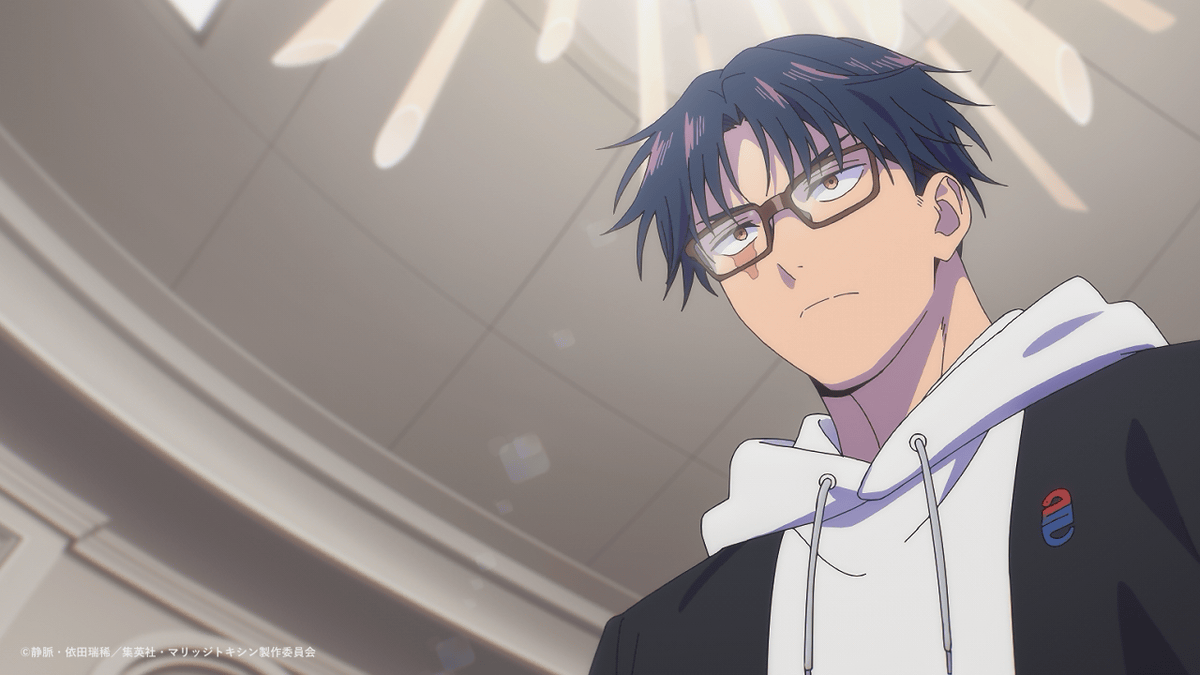
Regarding Gero, his pupils are very small, and even in the original work, his design makes him seem like a gloomy character at first glance. If his pupils were larger, he wouldn't look like Gero anymore, so we went with 'sanpaku eyes' (eyes with visible whites above and below the iris). So, this was simply an attempt to capture the characteristics of the original work.
G:
In the making-of video, 'Vol. 2: Color Design,' the director mentions that he aimed for a vibrant, colorful style in the anime, similar to the cover of a manga volume, but adds, 'Animation tends to become more realistic.' Was this 'more realistic' aspect a point of concern for Director Hori?
Making of Marriage Toxin Vol. 2: Color Design - YouTube
moat:
People often say 'the animation quality is falling apart,' but if you ask 'why do people feel that the animation quality is falling apart?', I think it's because there's a certain correct way of doing things, and they feel it's falling apart because it deviates from that.
G:
I see.
moat:
So, what is the correct answer, the standard? It's the real world we see every day. After living for decades, you start to imagine that if you drop a plastic bottle you're holding, it will fall at a certain speed. When something deviates from that common sense, it feels like it's falling apart. I think that's what 'drawing breakdown' is all about.
G:
Oh, I see.
moat:
In terms of color, I think there was a period in the early 2000s when animation gradually shifted from cel animation to digital, and the images suddenly became much more vibrant.
G:
yes.
moat:
That's because the colors were determined based on the premise of going through the process of 'painting on a cell, photographing, and making film,' and those colors were then applied digitally as well. When you add the step of taking a photograph, the colors inevitably become duller. However, with digital, the painted colors appear exactly as they are on the screen, so green appears as green, which is too vibrant. The reason it gradually became more subdued is that we realized 'if we reproduce these colors as they are, they will be too vibrant, too flashy,' and we started to make them more muted and natural. I think this is also a kind of 'drawing breakdown.' People think fluorescent green grass looks strange because it deviates from the standard that everyone has in mind, like 'grass isn't this vibrant, is it?', and it won't look natural unless the colors are muted to some extent. But the cover of 'Marriage Toxin' is very colorful, isn't it?
G:
surely.
moat:
If someone with that color skin were to exist in the world, they would stand out. It would be like someone wearing a full set of fluorescent clothes. It's the same with teeth; if you whiten them too much, they look unnatural, right?
G:
(lol)
moat:
So, making the colors vibrant is actually quite difficult. I was a little scared that they might look out of place... But with this work, I aimed to make the anime exactly like the impression I had when I was reading the manga. The manga is basically in black and white and has no sound, but I think everyone reads it while filling in the blanks, imagining things like, 'This part must be this color,' or 'They must be jumping with this kind of sound and with this much force.' I think the cover illustration, which is in color, is what they rely on at that time, so I wanted to get as close to the cover illustration as possible. That's how I felt myself; when I read it, I thought the drama was depicted with the same kind of colors as the cover. If a character with pale colors appeared, I think people would think, 'That's not quite right.' I'm sure that people will think that vibrant colors are more in line with 'Marriage Toxin.'
G:
Besides the colors, the original work features some pretty wild and unrealistic movements. Are you trying to adjust those aspects in the same way?
moat:
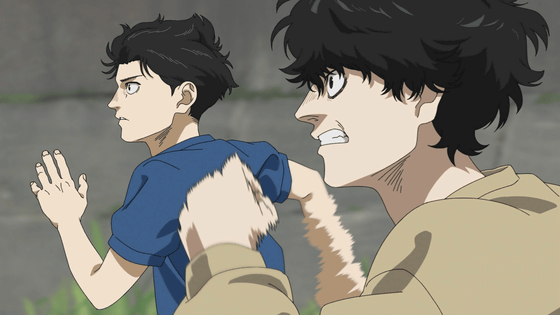
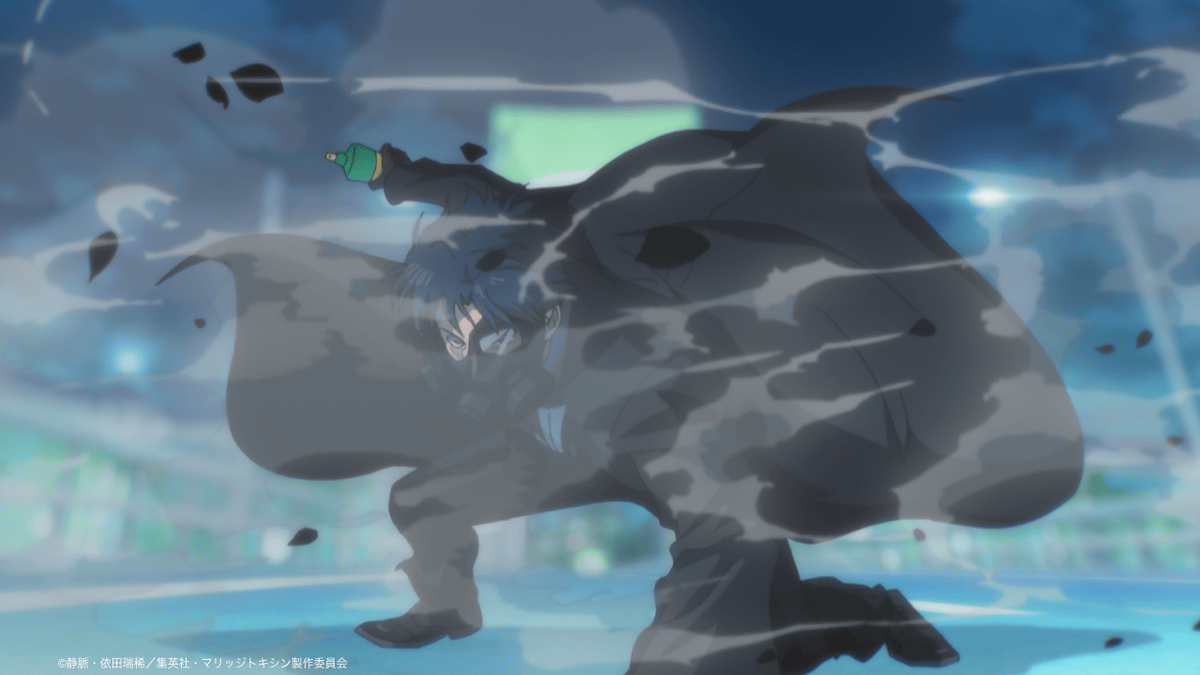
One point that made me realize that works that become hits enough to be adapted into anime are different is that the first chapter of the original manga is surprisingly tame, as it only goes up to the point where Gero defeats the yakuza who were holding Kinosaki captive. Those familiar with the original manga might have the impression that it's a work with quite a lot of crazy action, but that's something that happens as the manga progresses to volumes 2 and 3, and the limits are gradually removed.
G:
Oh, really?
moat:
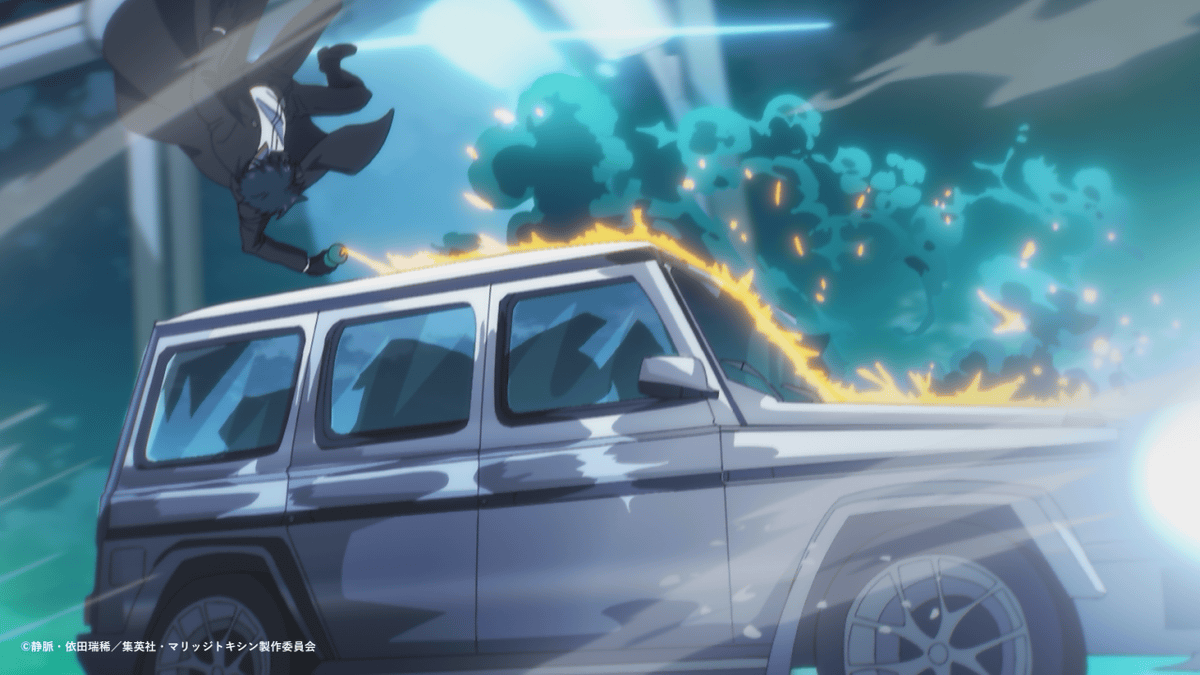
While some of it may have been accidental, as you read on, you can see that the limits are being removed in stages. So, the first episode of the anime combines the first and second chapters of the original manga into one story, and it similarly removes the limits in stages, even up to the scene in the PV where the car is cut in half. I think it's best to think of the first episode as depicting these stages in 30 minutes.
G:
So, does that mean things will get more and more chaotic as the story progresses?
moat:
In that respect, I want to avoid trying to be too realistic and just make it as crazy as the original story (laughs).
G:
I'm really looking forward to it (lol). By the way, I understand that Director Hori comes from an animation background. What was theきっかけ (trigger/reason) that made you want to work in the anime industry? Did you draw pictures when you were a child?
moat:
When I was in middle school, I started copying manga and thought it was fun. I gradually became obsessed with it, and by the time I was in high school, I was always drawing in my sketchbook during every class. At the time, I wanted to become a manga artist or illustrator, but I came from a really rural area, so there was no one to support me... (laughs)
G:
Oh dear.
moat:
Even though I wanted to go to art school, when I consulted my father, he strongly opposed it and I couldn't argue back... Because of that, I couldn't tell him that I wanted to become a manga artist or illustrator, so I went to university to study economics, but instead of studying, I just practiced drawing manga all the time (laughs).
G:
(lol)
moat:
Although I had the desire to become a manga artist, I didn't really study, and ended up failing university twice, so I dropped out and went to Tokyo, almost like running away from home. After that, I worked odd jobs, and when I got home I was so exhausted I couldn't even draw, but it was around that time that I saw 'Princess Mononoke.'
G:
oh.
moat:
I thought, 'If I work for an animation company, I can practice drawing while I work,' so I looked up Studio Ghibli in the phone book and called them. They told me, 'We'll be posting an advertisement in Animage magazine around autumn,' so I checked Animage at a bookstore in the autumn and it was indeed there. I applied and passed the first round, but failed the second. I was so frustrated, thinking, 'I passed the first round!', so I tried again the following year, but failed again. I was about 25 years old by then and knew I had to get a job, so I checked the names of other animation studios credited in the Princess Mononoke pamphlet, looked them up in the phone book, and called them in alphabetical order.
G:
Wow... that's amazing...
moat:
When I contacted O Production, they said, 'Okay, bring your drawings,' and when I asked for their address, they asked something like, 'When can you come?' O Production was originally a famous company, but when I went there, it was still a small company. When I thought of an 'animation company,' I imagined it would be a large office building on one floor, but they rented about three rooms in an apartment building with tatami mats, and the tatami would sink and shake a little when the person next door stood up to go to the toilet (laughs).
G:
(lol)
moat:
...That's kind of where I started, and I've been steadily working my way up ever since.
G:
He didn't initially aspire to be an anime director; he started as an animator and gradually gained experience to move up the ranks.
moat:
Initially, I didn't intend to become an animator, but when I tried it, I found I was surprisingly suited to it, so I was able to continue. Rather than saying I was suited to it, it's more like I just kept going without quitting (laughs). I originally wanted to be a manga artist, so rather than just doing drawing, I wanted to try directing as well, and that's how I ended up working as a director.
G:
I see. Finally, regarding the TV anime adaptation of 'Marriage Toxin,' could you tell us if there were any parts that changed from your impression when you read the original work, or any parts that went well?
moat:
The story gradually becomes more and more chaotic, so I felt it would translate even better to animation than my initial impression from reading it. The art style features tall, realistic proportions, which I initially thought was quite realistic, but it's a work that allows for fun, less restrictive action that the animators can really enjoy drawing. With adaptations of original works, sometimes the anime can go too far and stray from the original's atmosphere, but that doesn't happen here. I felt that this work has a great capacity to accept whatever the anime side does and has fun with it.
G:
I'm looking forward to seeing how the story picks up pace as the episodes progress. Thank you for today.
moat:
thank you very much.
The TV anime 'Marriage Toxin' is currently airing every Tuesday at 11 PM (23:00) on the Kansai TV/Fuji TV network's 'Ka-Ani-Bal!!' block, starting April 7, 2026. It also began streaming on d Anime Store, DMM TV, Netflix, Prime Video, and U-NEXT at 11:30 PM on April 7th. Other streaming services will begin streaming it sequentially from 11 PM on April 10th.
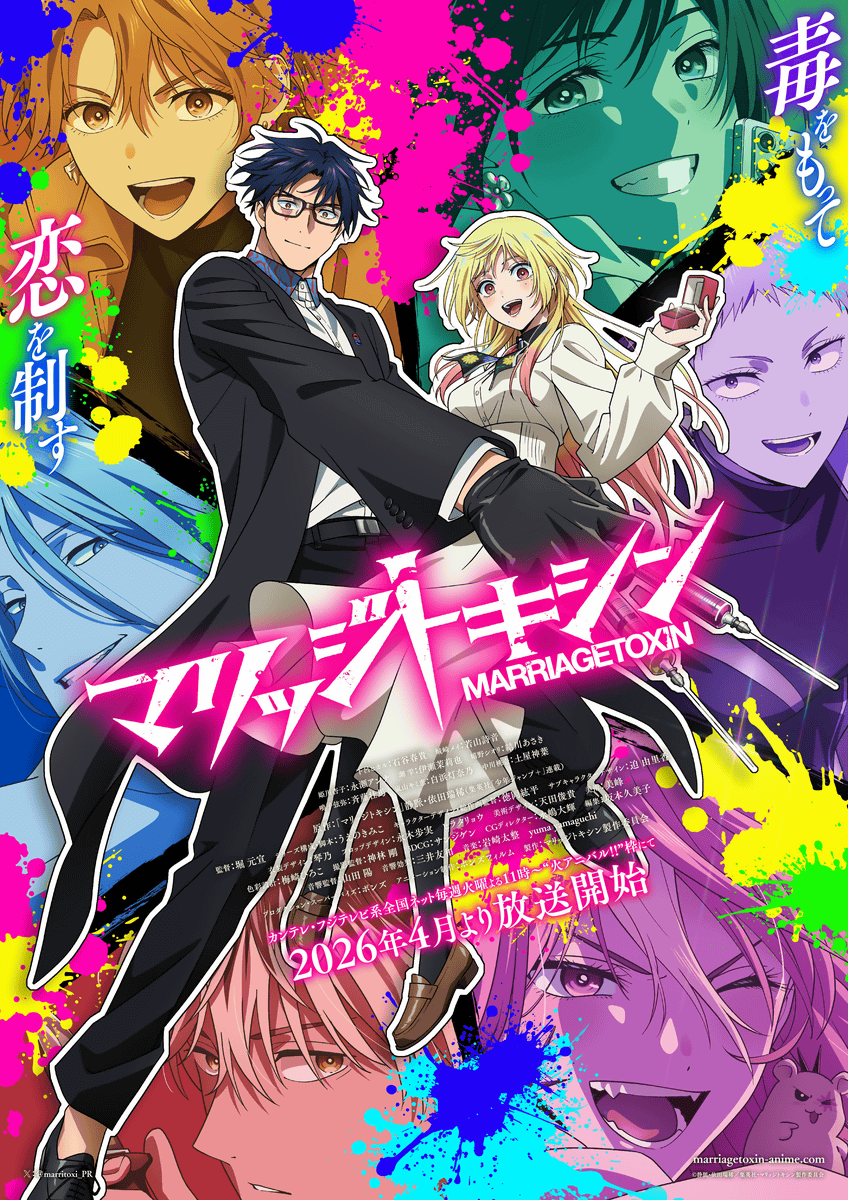
A six-part series titled 'Making of Marriage Toxin,' which delves into the making of the film, is available on YouTube.
Making of Marriage Toxin Vol.0 - YouTube
◆TV Anime 'Marriage Toxin' Production Information
·staff
Original work: 'Marriage Toxin' by Mizuki Yoda (serialized in Shueisha's 'Shonen Jump+')
Director: Nobu Horimoto
Series composition and script: Kimiko Ueno
Character design and chief animation director: Kohei Tokuoka
Sub-character design: Yurika Sako
Costume design: Kotono
Prop design: Ayumi Nagaki, Ryo Hirata
Art and design: Toshiki Amada
Art: Miho
Color design: Hiroko Umezaki
Director of Photography: Tsuyoshi Kanbayashi
3DCG: Sanzigen
CG Director: Daiki Nagashima
Edited by: Kumiko Sakamoto
Sound director: Yo Yamada
Sound effects: Tomokazu Mitsui
Music: Taisei Iwasaki, Yuma Yamaguchi
Production Supervision: Bonds
Animation production: Bones Film
Produced by: Marriage Toxin Production Committee
·cast
Gero Hikaru: Haruki Ishitani
Mei Shirosaki: Shion Wakayama
Kyoko Himekawa: Anna Nagase
Shio Shizuku: Mariya Ise
Shiori Ureshino: Asaki Yukikawa
Naruko Genya: Soma Saito
Arashiyama Kimie: Shirahama Hinano
Momokazu Nakagawa: Shinba Tsuchiya
Gero Akari: Haruka Shiraishi
Toshiki Hanamaki: Yusen Yu
©静脈・依田瑞稀/集英社・マリッジトキシン製作委員会
Related Posts: