An interview with director Yoshitoshi Shinomiya of the animated film 'On the Day the Verdigris Dawns': How did he depict the vivid story of aiming to launch the legendary fireworks 'Shuhari'?
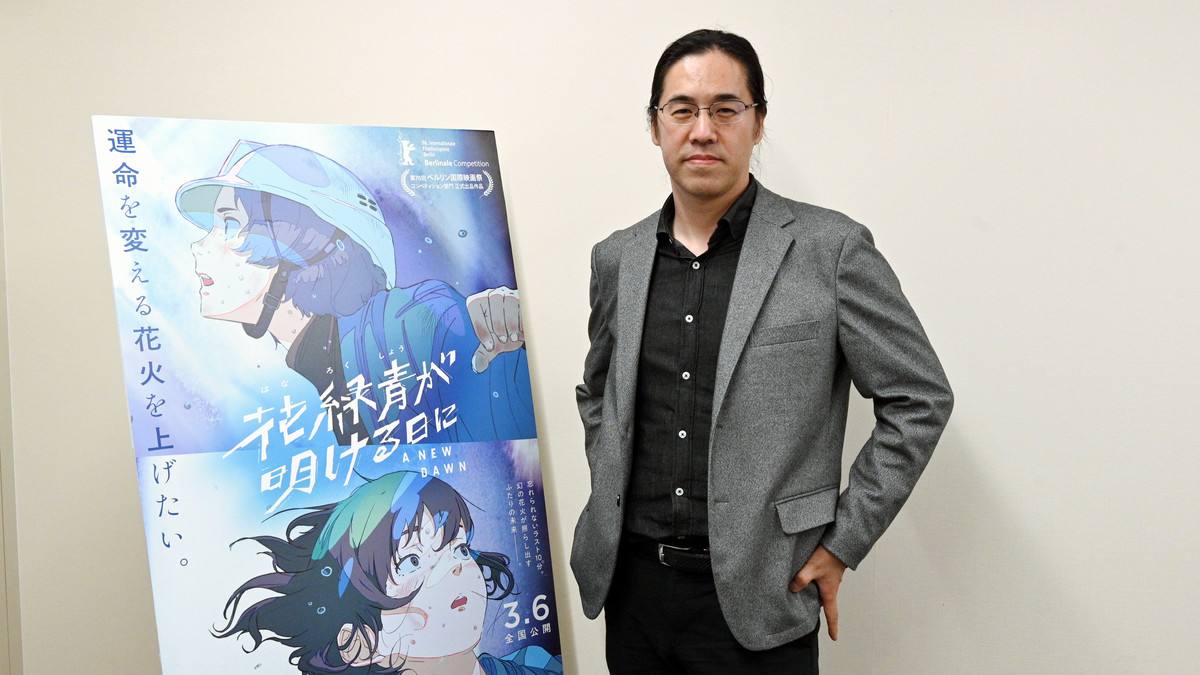
The film 'On the Day the Verdigris Dawns' is set in a long-established fireworks factory that is facing eviction due to redevelopment. It depicts the story of three people: Keitaro, who tries to complete and launch the legendary fireworks ' Shuhari'; Kaoru, who returns home after a long absence and learns of Keitaro's plan; and Sentaro, a local government official who is torn between Keitaro's aspirations and the eviction plan. We spoke in detail with
Official website for the film 'The Day the Verdigris Dawns' | Now showing | HanaRoku
https://hanaroku.asmik-ace.co.jp/
GIGAZINE (hereinafter referred to as G):
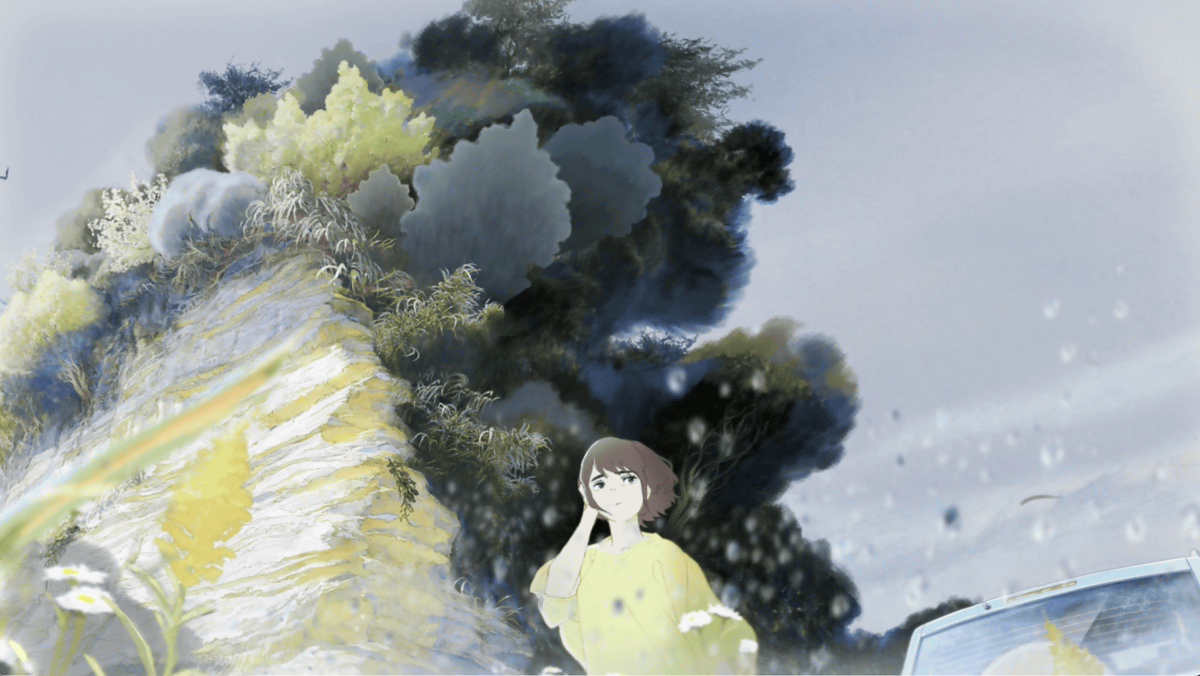
The opening scene of the film is available on YouTube, and even just this portion is fascinating. It starts with a period of silence, then what seems like aerial footage turns into Kaoru walking through a cave, and the sign in the foreground that reads 'Steep Slope Collapse Hazard Zone - No Entry' brings you back to reality. Beyond the cave, the scene shifts to a whale flying through the sky, and further on, to a construction site in progress...the realistic and fantastical scenes are interwoven in a dizzying fashion. When I saw it in the theater, I was already captivated at this point, unable to take my eyes off the screen. I wonder if this opening sequence was decided from the very beginning of the film's creation?
'The Day the Verdigris Dawns' Opening Scene | 3.6 (Fri) ❉ - YouTube
Director Yoshitoshi Shinomiya (hereinafter referred to as Shinomiya):
It's been a very long time since we started planning this, so it's hard to decide where to begin, but in the early stages, I was thinking of it as a short story, and there was a time when I wanted to start with a scene in Tokyo, where Chichi comes to pick up Kaoru. However, that wouldn't fully depict the past, so I added in the earlier parts. Once the story gained more depth, I thought I'd like to touch on the naval motif a little at the beginning, and it gradually took the form it is today.
G:
I see.
Shinomiya:
The original title was 'A New Dawn,' so I remember creating the opening scene with the idea of starting at sunset and ending at dawn, creating a connected image.
G:
So, in the opening scene, the part before the Miura Peninsula is at sunset.
Shinomiya:
In that scene where Kaoru walks through the cave, there was a time when I wanted to incorporate a bit of a mythological motif, linking it to the 'Ama-no-Iwato' legend, with the part where Keitaro is wondering whether or not to come out of the house. It's kind of a hint of that (laughs). In the end, I didn't go so far as to draw a direct parallel to mythology, but various elements remain as remnants of that idea.
G:
Wow (laughs). This time, Director Shinomiya is credited on the official website as 'Original Story, Screenplay, and Director,' but when you actually look at the end credits of the film, his name is also listed under storyboards, production, character design, animation director, key animation, color design, art director, backgrounds, and art setting. It seems like Director Shinomiya was involved in almost every aspect of the production process.
Shinomiya:
I did think it might be strange to try to do 'everything myself' (laughs), but from the very beginning of production, what I discussed with the producer at the distribution company was my insistence on 'who the original author is.' As an independent writer, I really want to place great value on the fact that it's my story, and I felt uncomfortable with the idea that 'even though I came up with it, it's not my copyrighted work' if my name was listed in the production credits. I think this is unavoidable due to the way movies work and is just a convention, but that's precisely why having my name listed as the rights holder is such an important element. I thought that having me as the original author was also an important point in the contract.
G:
So that's what it was.
Shinomiya:
Regarding my role in the main project, I had spent a long time only handling special scenes in commercials and music videos, and I had only ever done work where I could 'finish it myself' in the end. So, conversely, I was more afraid of saying 'I'm not involved.' On the other hand, I was confident that if I could control it in the end, I could somehow create a visually appealing image. It did take some time because of that, and although my name appears before and after in the credits, there were many people I worked with, and I owe a lot to their understanding and cooperation. I couldn't possibly handle everything by myself (laughs).
G:
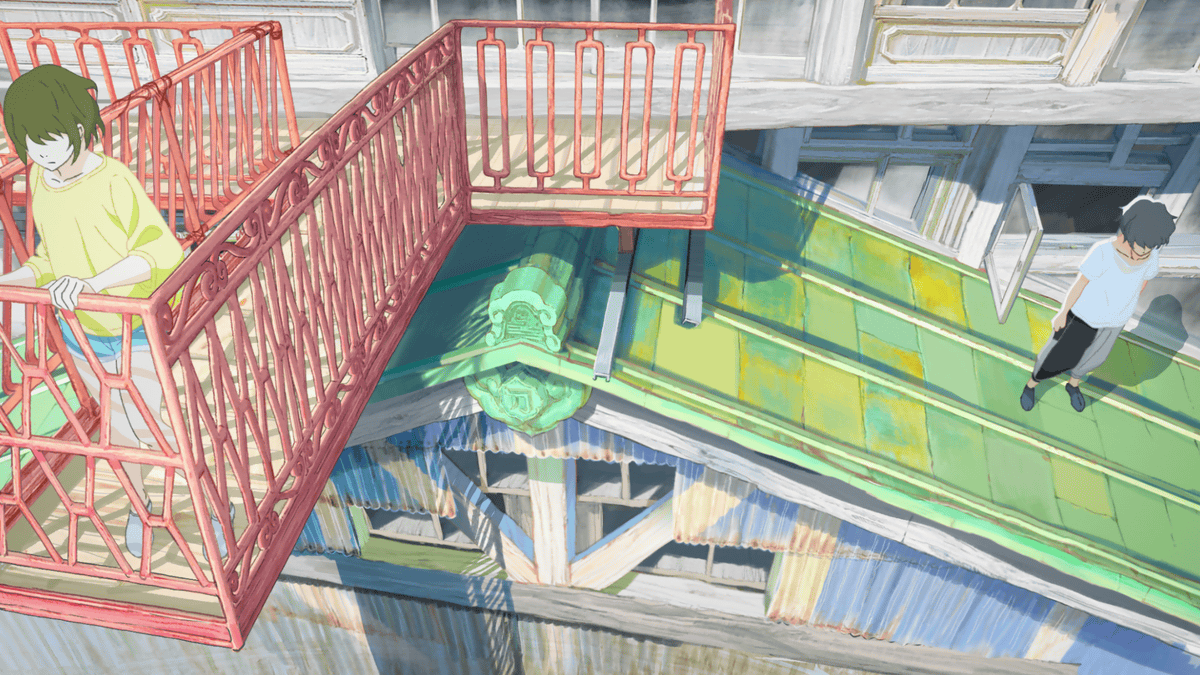
In terms of animation, Shohei Hamaguchi 's name is listed alongside director Shinomiya's as animation director. He was originally brought in as a key animator, but the scene where Kaoru returns to the fireworks shop was so good that they asked him to be the animation director. It seems that Hamaguchi's participation was completely unexpected, or rather, a pleasant surprise.
Having left her hometown of Niura City to attend university, Kaoru Shikimori is asked to persuade Keitaro, who opposes the eviction plan for the Taito Fireworks Store, and returns home for the first time in a long while.
Shinomiya:
It was definitely a pleasant surprise. As the director of my first feature-length animated film, and with an original project, it was difficult to gather people. In that situation, Mr. Hamaguchi was brought in by producer Tsutomu Fujio . At the time, I was the only one in the studio, and I was thinking, 'People will gather as the project progresses,' when Mr. Hamaguchi joined us a few months later. When Mr. Hamaguchi came to the studio, I first asked him to do some key animation, about 20 cuts, and it took 3 to 4 months for the finished product to arrive. When I saw the finished product, it was then that I thought, 'Could I ask this person to be the animation director?' But Mr. Hamaguchi had work to do on the key animation that I had returned, so it was more than six months later that I finally asked him again, 'Would you be willing to be the animation director?'
G:
Oh...is that so?
Shinomiya:
Even including the end of production, there were only two animators/key animators in the studio: one was me and the other was Hamaguchi-san (laughs). We also had Fujii Rina- san working remotely as an assistant animation director. I think most people who have seen various animated films imagine that there are 10 or even dozens of people working on set, but from beginning to end, the only key animators in the studio were me and Hamaguchi-san.
G:
Wow!
Shinomiya:
For the art department, it was just me and Ryoko Majima for two-thirds of the schedule. After a while,
G:
However, since they mostly work remotely or on the go, they don't get to see each other in person at the studio.
Shinomiya:
No, there isn't. While it presents challenges, I think the fact that anime can be produced under this system is a testament to the underlying strength of Japanese anime today.
G:
In an interview with Creators Station, Director Shinomiya stated that he '
Shinomiya:
That's part of it, and since this is my first feature film as a director, I don't think, 'I can just skip the checks and it'll be fine.' If this were a super famous work, like Doraemon, everyone would know the atmosphere of the story and the personalities of the characters, but Hanaryokushou is a story nobody knows, so I thought that unless the person at the center of it shaped it, it would never turn out well.
G:
There were many roles, but were they divided up like 'Today is the day for original drawings'? Or were they switched roles flexibly as needed?
Shinomiya:
For example, I drew all the original drawings from scratch for the opening scene where Kaoru walks through the cave, but I commissioned animators to draw many of the other scenes, so it took time to correct those. The general direction is decided, so I think I probably spent most of the schedule on layout and original drawings. Of course, there was art work in between, and even before the original drawing work started, I created art boards, which show the color atmosphere of each scene, and even the illustrations used for the pamphlet cover, and shared them with Mr. Majima.
G:
I see.
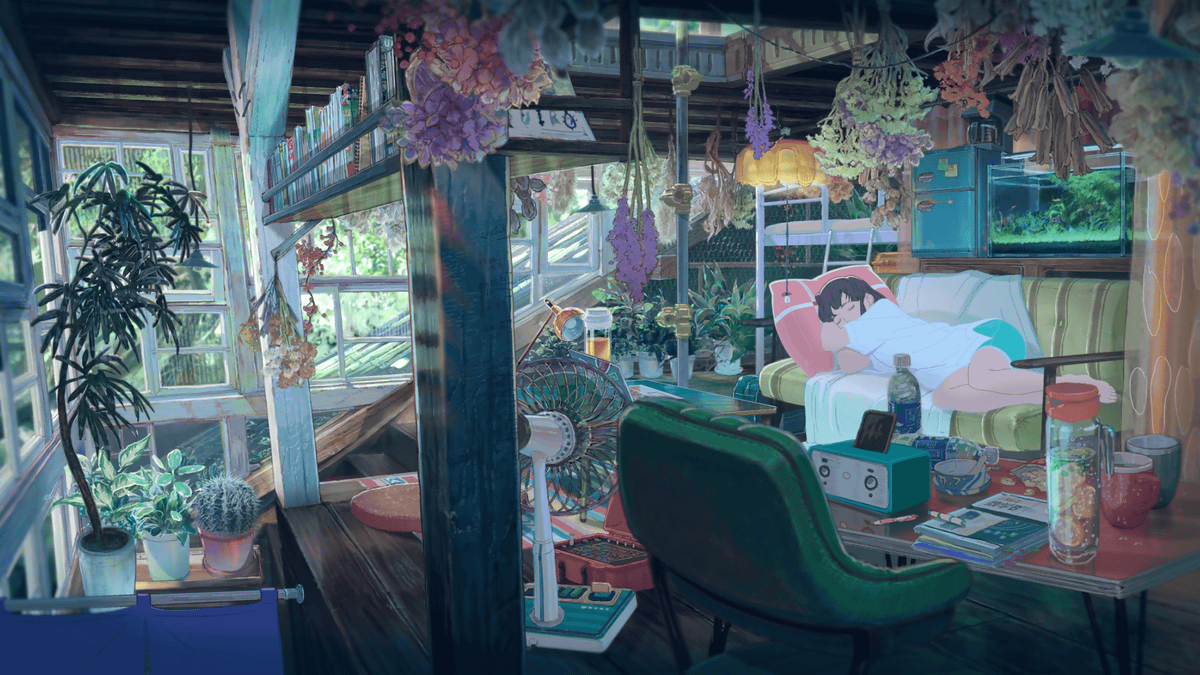
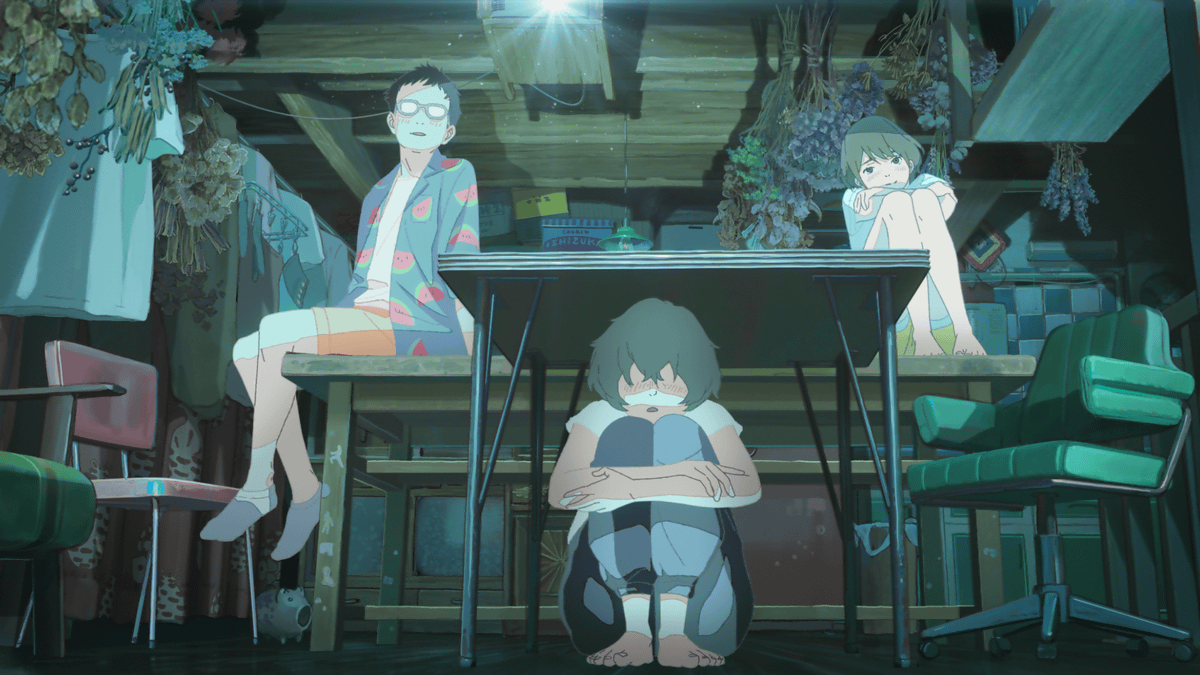
One of the points that shows meticulous attention to detail is the design of Taitou Fireworks Store. The mezzanine level serves as the living room.
Shinomiya:
The most important part is looking at the layouts and original drawings, but sometimes we'd dedicate a whole week to just the art, and since we absolutely had to draw the fireworks, we'd create a schedule like, 'This month we'll only work on the fireworks.' But that wasn't enough, so we'd frantically search for people to help us out... It wasn't like we had a strict schedule from the beginning; it was more like, 'We need this by next week,' or 'What should we do tomorrow?' By the very end of the month, it was like this (drawing a line graph with his hand that showed a sharp increase towards the end). It's the same at every animation studio, but even though we only produced about 20 drawings a month, by the end we were drawing about 60 drawings a week. It was the kind of schedule that made you lose your memory (laughs).
G:
I imagine that simply concentrating on one task isn't enough; having to constantly check on it would break your concentration and make things very difficult.
Shinomiya:
Well... we just have to switch gears as best we can, because we need to raise the quality here. But the hardest part was probably the meetings.
G:
Is it a meeting?
Shinomiya:
Up until now, I've worked as an independent artist, so I've never really had anyone to talk to about my work. But when I ask other people to help me with my work, I inevitably need meetings to explain things, and after long meetings, my brain just can't function properly. There's no guarantee that everything I say will be understood 100%, and I'm not used to meetings, so it's quite difficult.
G:
It's necessary because it's a group task, but...
Shinomiya:
If you can do the work with 10 people, you might be able to get it done in 10 meetings, but if you gather 1000 people, you might end up needing more than 1000 meetings. Because communication doesn't always go smoothly. For example, if you have foreigners involved, you'll need an interpreter, which will almost double the time it takes to communicate. It can be difficult to communicate even with Japanese people, so it's even more so when dealing with foreigners.
G:
Speaking of foreign countries,
Shinomiya:
That's right. I had absolutely no involvement in the animation or art direction for the main story.
G:
This is a series of scenes after Chichi gets drunk.
Shinomiya:
The French people showed us a lot of respect; they made a fence out of origami and incorporated the Nambu iron teapot that I requested. When it came to representing the solar panels, we saw differences in how people felt about the motifs and how it differed depending on the culture. When it came to showing the cardinal directions in the model, we had to decide whether to have a French person write them or a Japanese person living there write them. It seems like a simple thing, but even something like this required communication. In animation, only what I draw appears on screen, but in stop-motion animation, things I didn't draw are shown. However, with expressions like the gestures of the characters represented by mahjong tiles, I thought, 'This kind of humor works.' On the other hand, in that respect, there was a part of me that could accept things that weren't my own, which was thrilling (laughs).
G:
It's surprising that this part was outside the control of director Shinomiya, who apparently checked every single shot. Another distinctive feature of this film is that, along with the stop-motion animation, it also includes parts shot using multiplane photography. Apparently, Shinomiya contacted SUKIMAKI ANIMATION , who handled the multiplane photography, after seeing them on social media.
Shinomiya:
Yes, I saw him on X. As Makiko Sukigara of SUKIMAKI ANIMATION also mentioned, I got the impression that he had a great vibe reminiscent of Yuri Norstein and the old-school multiplane films, and I wondered, 'What kind of person is he?' It turned out we were close in age and shared similar values. He has a studio in Kansai, so I made arrangements to visit when I had business there, and he showed me the filming location. As a fine arts person myself, I can tell if someone is serious about their work by looking at their workspace, and I could see that, so I told him, 'I'd really like you to work with me.'
G:
I see.
Shinomiya:
I thought Mr. Sukigara might have some concerns since he doesn't have much experience with commercial animation, so I explained various things to him beforehand, such as whether he felt uncomfortable with 2D-style characters riding on the bikes. I was very relieved that he seemed to enjoy participating.
G:
Was this request made because the story included underwater, space, and fireworks scenes, or was it because you already knew Mr. Sukigara and had been hoping to work together on something in the future?
Shinomiya:
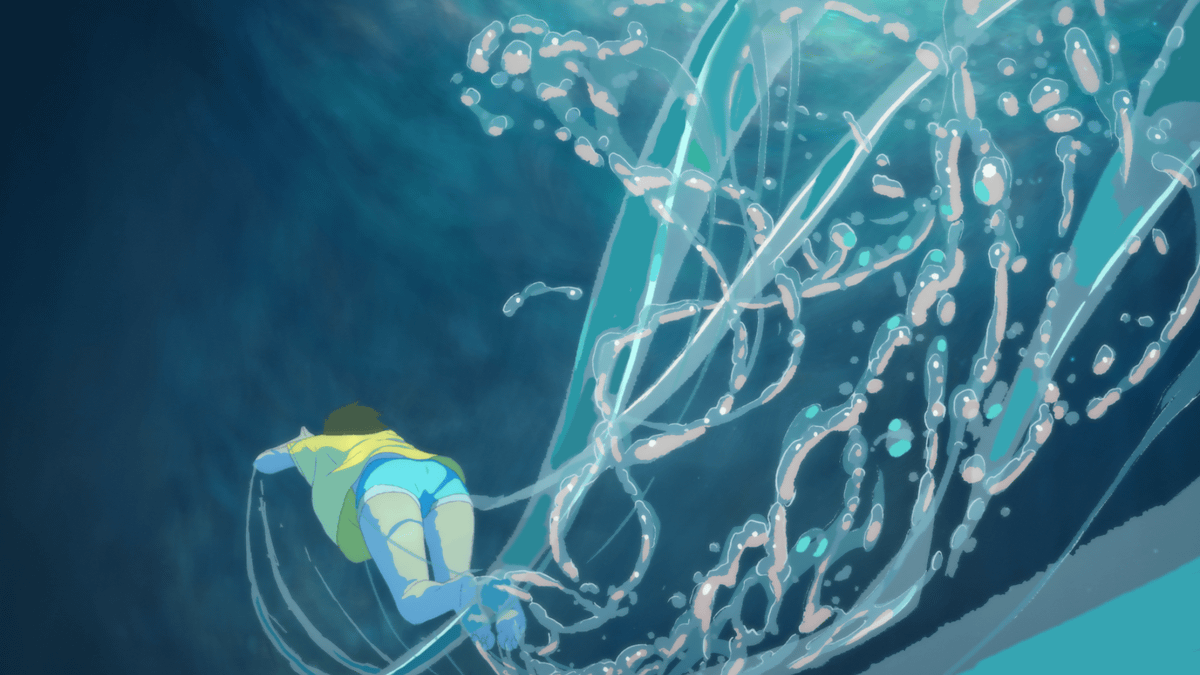
The colors of a dark night, if they're just the blurring of colors from digital information, just look artificial. Fireworks, space, and underwater scenes were elements that could be drawn directly from Mr. Sukigara's imagery, so it was like we asked him to do it with a firm resolve. The old Disney style with multiplane cameras, or rather, the

G:
oh.
Shinomiya:
The scene from the workshop we did in
G:
About 50 people were involved, and they stuck pins into the ground.
Shinomiya:
I really like it.
G:
In that scene, along with the falling blue sparks, there was another blue light that streaked across the screen. Was that added later using post-production, or was it also created manually?
Shinomiya:
During the workshop, I had participants trace the original artwork onto white paper using red-toned paints. When I digitally inverted the colors, it created a gradient in the darkness that could only be achieved by human hands. I combined that material with another piece of black paper where the original artwork had been pinned through.
G:
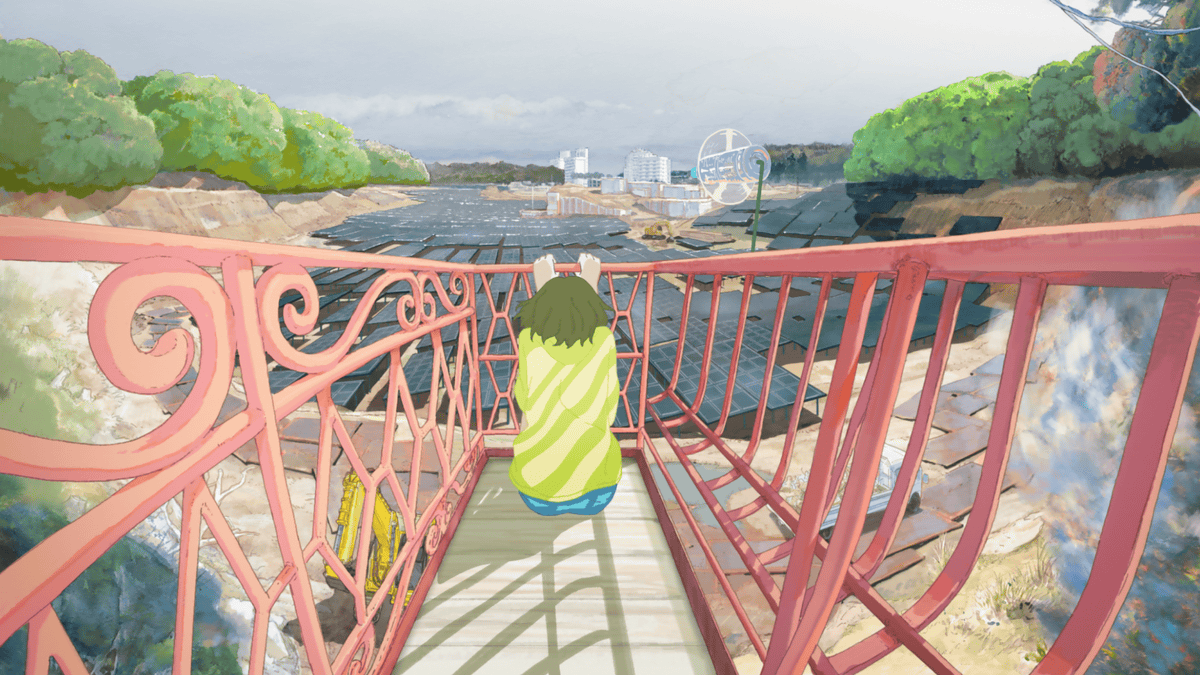
I see. There are anime that feature fireworks from time to time, but the depiction of such beautiful fireworks was impressive, and I think it was probably the first time I'd seen fireworks the blue color of 'Hanaryokushō'. I heard that one of the inspirations for this film was when the field outside Director Shinomiya's studio was covered in solar panels, and his daughter described them as looking like the sea, so was the decision to make the fireworks blue to match the blue of the sea made fairly early on?
Shinomiya:
Initially, I think I was undecided whether to go with a silvery-white color or blue. While interviewing fireworks makers, I was considering taking a more traditional approach, such as using a dark red color called 'Wabi,' which was the only color available during the Edo period, when I came across the word 'Hanaroku.' It turned out that it was made from the same raw material as the color 'Hana-rokushō' that I had heard about from a paint shop owner during my university days. At that point, I immediately thought, 'This is the only color that will do.' However, it seems that even for fireworks makers, a 'beautiful blue' is difficult to achieve, as the colors of the fireworks blend in and become invisible when the sky is bluish.
G:
surely.
Shinomiya:
I think the reason why verdigris stopped being used was partly due to its toxicity, and also because it was difficult to produce the color itself. I've never actually seen fireworks made with verdigris, so it's all within the realm of my imagination, and I can only create it from what I've heard, but it's a color that's worth challenging myself with. I thought it would be difficult because it would blend in with the background if it were replaced with CG, but I decided to go ahead with it.
G:
Since verdigris is also a color used in art materials, I wondered if Mr. Shinomiya, being a Japanese painter, had connected that to the image of fireworks, but it seems their encounter was rather coincidental.
Shinomiya:
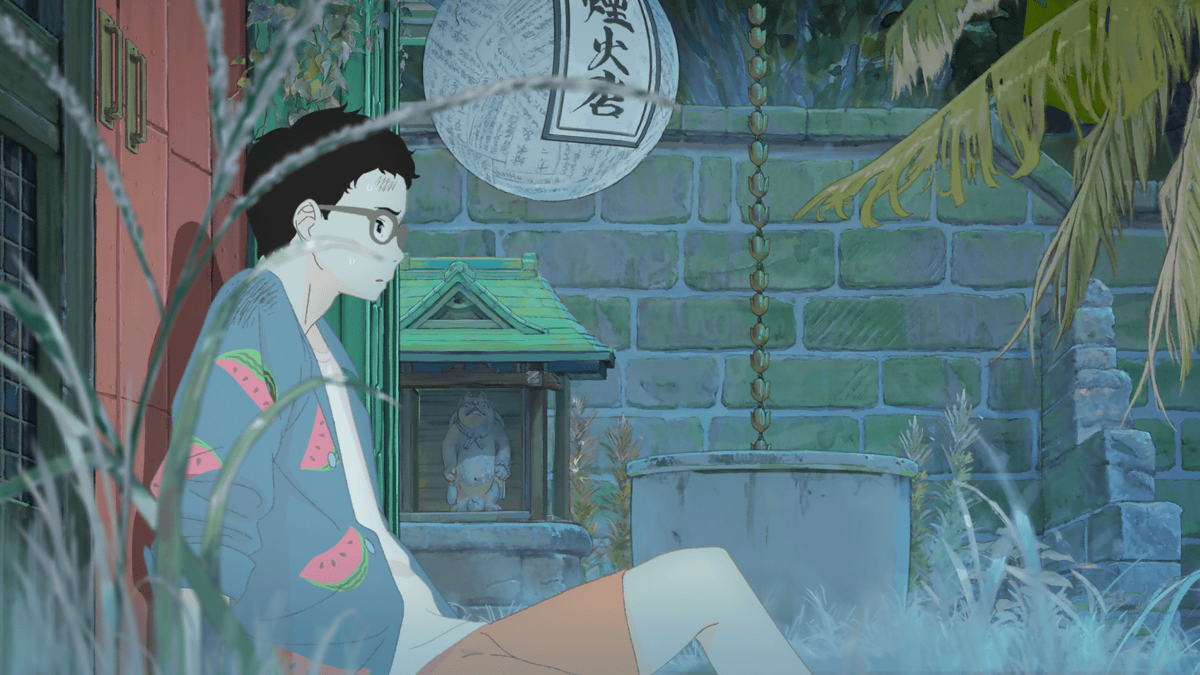
I was surprised, thinking, 'No way!', but then I realized that some materials I thought were unique to Japanese painting aren't actually exclusive to it. For example, if you go back to the Meiji or Edo period, 'glue' was used in every genre, and paper, which is now called 'washi' (Japanese paper), was made from mulberry bark, and everyone used that back then. In the play, the sign at the entrance of the Taito Fireworks Shop has the shop's name on it, as well as something that looks like calligraphy.
G:
You mean the round ones hanging in the storefront?
Shinomiya:
Those are made from 'waste paper,' like discarded drawings or the edges of ledgers. Until around the Meiji era, paper was a precious commodity, so there were businesses that collected and sold discarded paper, and I'm sure shops collected it too. If you peel back the old sliding doors, you'll find lots of that waste paper pasted on the inside. I've known since my university days that there are stylish mountings and fixtures that deliberately expose waste paper on the outside...that's because I've been making fixtures for a long time.
G:
Wow!
Shinomiya:
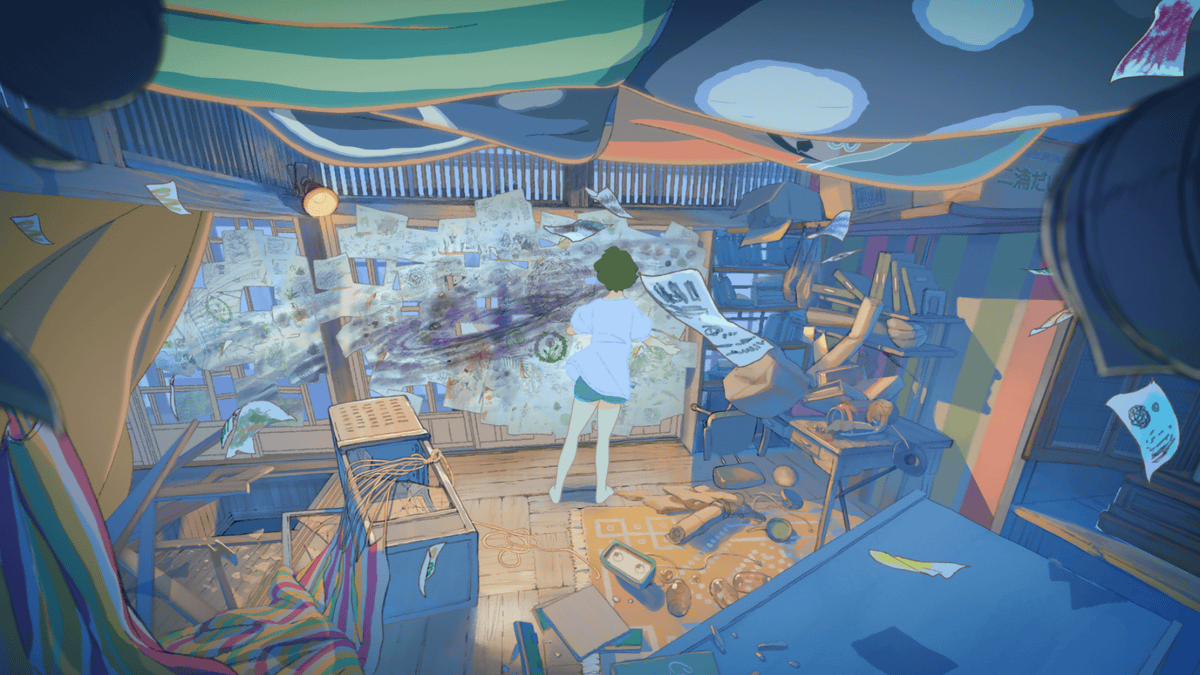
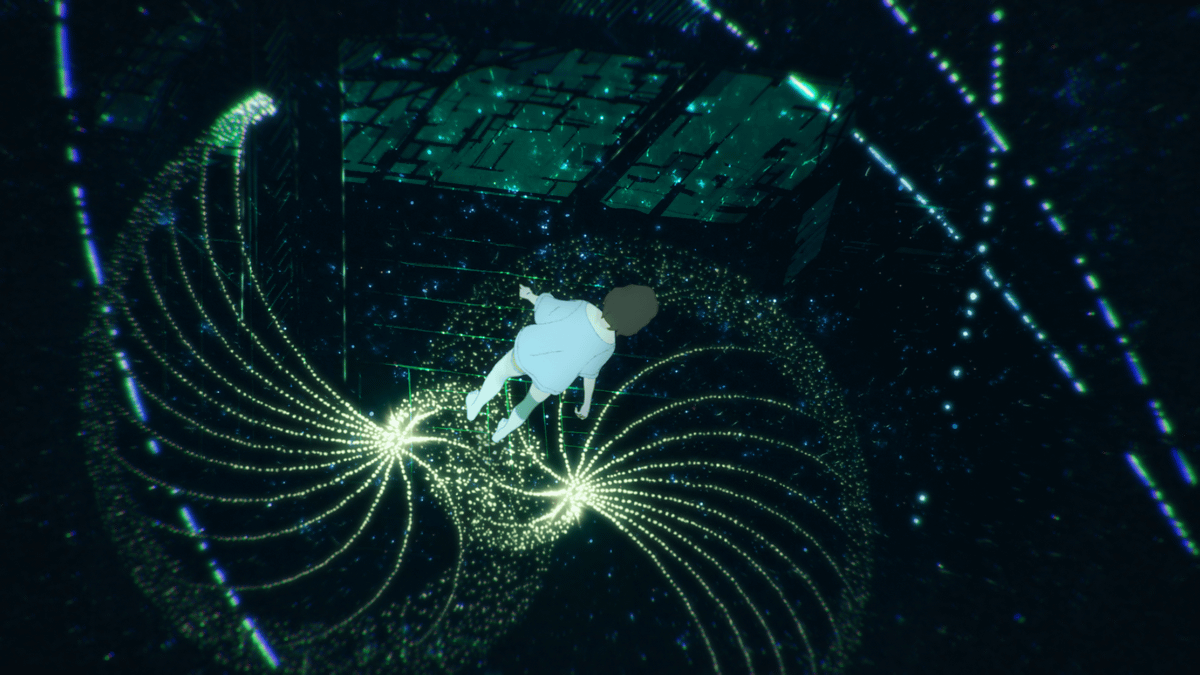
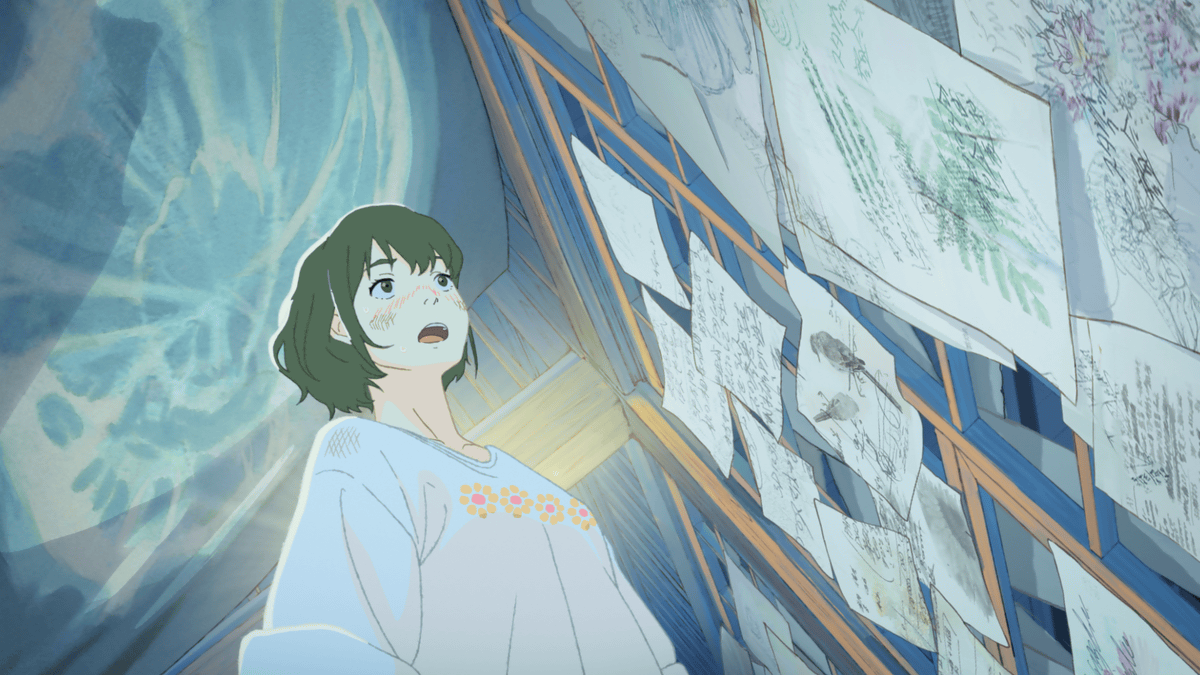
I've talked a lot about the connection between 'Shuhari' and the navy, but I haven't really talked about why it's related to space. That's because I feel a connection to space in Japanese joinery. That's why Keitaro and Kaoru realize the mystery of Shuhari when they stand in front of the joinery. This time, I've deliberately cut the patterns of the joinery to resemble the Fibonacci sequence and the golden ratio, but I've always felt a connection to space within that orderly lattice pattern since my university days.
G:
And here it is!!
Shinomiya:
When it comes to beautifully finishing joinery, there's a technique called 'harimaze hyogu,' which involves pasting pictures onto the joinery. I really love that kind of thing, and I spent my university days researching joinery and joinery. I would make my own sliding doors and rent out community centers to exhibit them. I don't want to say it too directly, but I imagine the ideal form of Japanese painting as the joinery being part of the building, or rather, the painting being housed within the joinery that is part of that set, and I have the impression that a kind of universe is expressed there. I'm now embodying that in painting, so the idea of the joinery transforming into the universe in front of the two of them is exactly the image I've been creating up until now.
G:
That was also a reflection of Director Shinomiya, wasn't it? It's as if the universe exists right here.
Shinomiya:
I did interview the fireworks makers, of course, and for example, the brushes they use to paste paper onto the joinery are the same brushes used in Japanese painting, and the fireworks makers also use the same brushes to paste paper when filling the balls with glue, which made me realize that they used similar tools in the past. Nowadays, these two fields have culturally dwindled and seem like separate genres, but the strings used to tie the tops of the fireworks are made of hemp or mulberry, the same materials used in Japanese painting, which I found very impressive when I visited the fireworks makers. Nowadays, fireworks are made of simple craft paper, but in the past, it was common to paste scrap paper onto them, and I felt a strong sense of connection to the image of them being crafted in the same way as Japanese painting. And then the paint called 'Hanaroku' came into the picture...
G:
It's perfect now.
Shinomiya:
There was a sense of joy in being able to relate it to my own situation and think about it from that perspective.
G:
It feels like fate, or like we were meant to meet.
Shinomiya:
One reason I wanted to depict the culture of artisans is that when I saw artisans who do mounting and joinery, I felt a certain coolness about them. There's a saying that 'artists and artisans admire each other,' and I think that artisans are like cogs in a machine, and it's about how beautifully they can become cogs in history. On the other hand, artists have to look at things from a distance, a step above. What they do is similar, but their ideals are inevitably different, so there is an admiration for artisans, but they also have to do what they have to do as artists. If an artist does the same work as an artisan, they can never win, but the question is what they can do within that. People who do Japanese painting sometimes apply gold leaf, but in terms of skill, gold leaf artisans are better, so I wonder what it means for an artist to go to the trouble of doing it. I've had a lot of questions about various artisans built up inside me, so I wanted to express those things.
G:
I had noticed that the fireworks hanging from the eaves of that fireworks shop had some small letters or patterns on it besides the words 'Tatewaki Fireworks Shop,' and I wanted to stop the film and check the screen if possible, but it turns out that it was made of scrap paper and had various things written on it. Speaking of letters, I'd like to ask you something: I felt that there was a lot of text in this film that you could read. For example, the documents for the compulsory execution, and even the mail had addresses written on it...
Shinomiya:
Things that need to be readable are readable, but parts that I don't want people to read are subtly made unreadable (lol).
G:
However, there were several things that I wanted to read carefully, such as the magazine cover featuring Kaoru and newspaper articles about her.
Shinomiya:
I quickly wrote on some scrap paper myself, but for the letters on the papers that Keitaro and Kaoru pasted on, we had a production staff member who was good at writing messy, scribbled letters specifically for that purpose, so I had them write mathematical formulas related to the golden ratio and the Fibonacci sequence in a way that was almost illegible. For the university scenes, we had a separate person create the materials for pasting on. The university scenes were quite a challenge.
G:
I could clearly read that the documents on the desk were from Futaura City.
Shinomiya:
The really difficult part was deciding on the SNS account names. If they were too out of place with the tone of the work, it would look really bad. 'Is such a frivolous name appropriate for this world?' Just like how a goofy character would look out of place in a violent movie, it took a lot of time to figure out what words wouldn't break the worldview, and in terms of being 'readable,' there is a newspaper article reporting the accident.
G:
yes.
Shinomiya:
Reading it will give you a general understanding of what happened to the Tatewaki family. Of course, you can't read everything in a movie theater (laughs), but for parts that absolutely need to be read for the film to be convincing, we've made it possible to read them even if it's difficult to read them due to the limited screen time.
G:
Important sentences are highlighted, but if you check the rest a few times, you'll find it's a well-written newspaper article.
Shinomiya:
I remember thinking about and revising the structure many times (lol).
G:
By the way, if there are any elements in this work that you had intended to include but reluctantly had to leave out, please let me know.
Shinomiya:
This project initially started as a short film, but we kept switching between 'Let's make it a feature film' and 'No, let's stick with a short film,' and at each stage, we had to cut out certain elements. Nowadays, 90 or 100 minutes is the standard for animated films, and some even exceed 120 minutes, making it feel like 'we could make another 'Hanaroku' film.' However, we ultimately had to condense it into a tight 76 minutes, so we inevitably had to cut out quite a bit of the background and the inner thoughts of the characters. But I think that if it creates a sense of speed and momentum, and contributes to the feeling you get after watching a film that goes up and then disappears like fireworks, then I want to cherish that. However, as we were working on it, there were countless instances where we thought, 'This is an expression we won't use this time,' and I won't name any specific scenes, but there were many places where we could have delved deeper.
G:
I often hear that animators, if time permits, want to fix and refine anything they can, even just a little...
Shinomiya:
In a race against time, I'm proud that I pushed myself to the limit within the given time, but there's still that uncertainty you get with the first film. When I finished making it, I realized, 'I don't know how to finish a project.' Each person in a specific role only works on their assigned part, so whether the director understands that or not has an impact on controlling the whole thing...that's something I need to work on in the future. After the first screening, when I talked with Mayuko Sagami, who worked as my assistant director, we were almost identical on the points we could have done better. We can't make any further changes to 'Hanaroku,' but what emerged from it is something to accumulate for the future, a great learning experience.
G:
With the theatrical release of 'Hana Roku' still ongoing, thank you very much for taking the time to speak with us today.
Shinomiya:
thank you very much.
The film 'The Day the Verdigris Dawns' has been showing in theaters since March 6th, 2026. It will also be showing at new theaters starting April 10th (Fri) at Cinema Ris in Jimbocho, Tokyo, April 15th (Wed) at Shimane Cinema ONOZAWA in Masuda City, Shimane Prefecture, April 17th (Fri) at Demachiza in Kyoto City, and April 18th (Sat) at Hita Liberte in Hita City, Oita Prefecture. Be sure to see this vividly portrayed story of three young people, including its breathtaking depiction of fireworks, in theaters.
Official Trailer with Theme Song for 'The Day the Green Leaves Dawn' | 3.6 (Fri) ❉ - YouTube
©2025 A NEW DAWN Film Partners
Related Posts: