Sakana AI, an AI company based in Japan, has launched 'Sakana Chat,' a free AI chat service tailored for the Japanese market.
Sakana AI, an AI company based in Japan, has developed 'Namazu,' a series of prototype models that adapt existing large-scale language models to Japanese specifications. Along with this, they have also released 'Sakana Chat,' a chat AI that uses Namazu.
Sakana Chat
We have developed a post-learning technique to adapt the largest open-source model to the specifications of various countries.
https://sakana.ai/namazu-alpha/
Sakana AI points out that pre-training large-scale language models is expensive, and only a few companies, mainly in the US and China, can keep up with cutting-edge development. On the other hand, with the increasing open-source nature of pre-trained models, they argue that it is important to adjust for biases by post-training open, high-performance models and build models that meet the expectations and safety requirements of Japanese users.
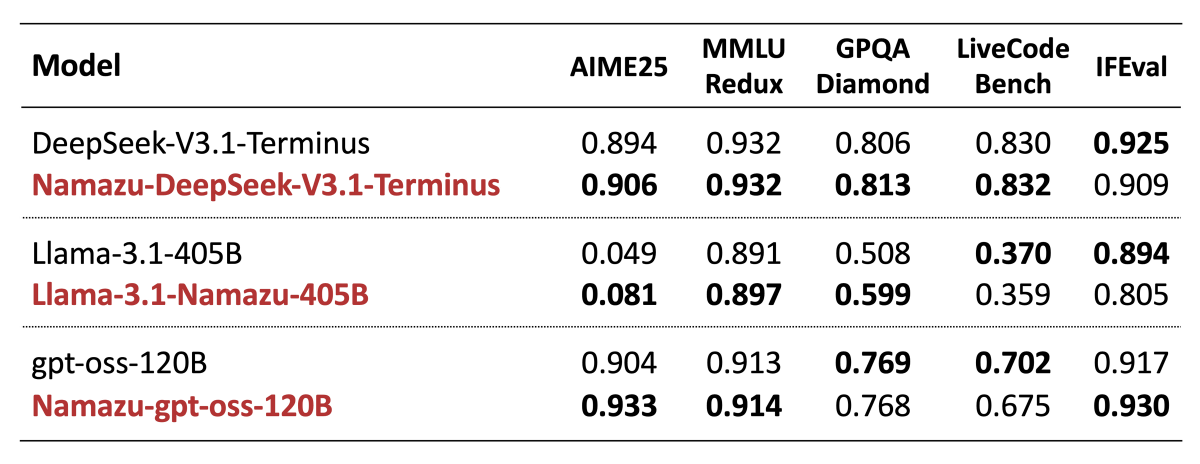
Sakana AI has announced the development of 'Namazu' (alpha version), a series of prototype models adapted for use in Japan by correcting the biases inherent in large-scale language models made overseas. The Namazu series is based on large-scale language models from DeepSeek, Meta, and OpenAI, and comes in three types: 'Namazu-DeepSeek-V3.1-Terminus,' 'Llama-3.1-Namazu-405B,' and 'Namazu-gpt-oss-120B.' It should be noted that 'Llama-3.1-Namazu-405B' has changed the order of the models in its name based on the license agreement of the base model.
The table below evaluates the basic inference capabilities, knowledge, and coding performance of the Namazu series using major benchmarks such as AIME'25, MMLU-Redux, GPQA Diamond, LiveCodeBench, and IFEval. It can be seen that the Namazu series maintains performance almost equivalent to the base model.
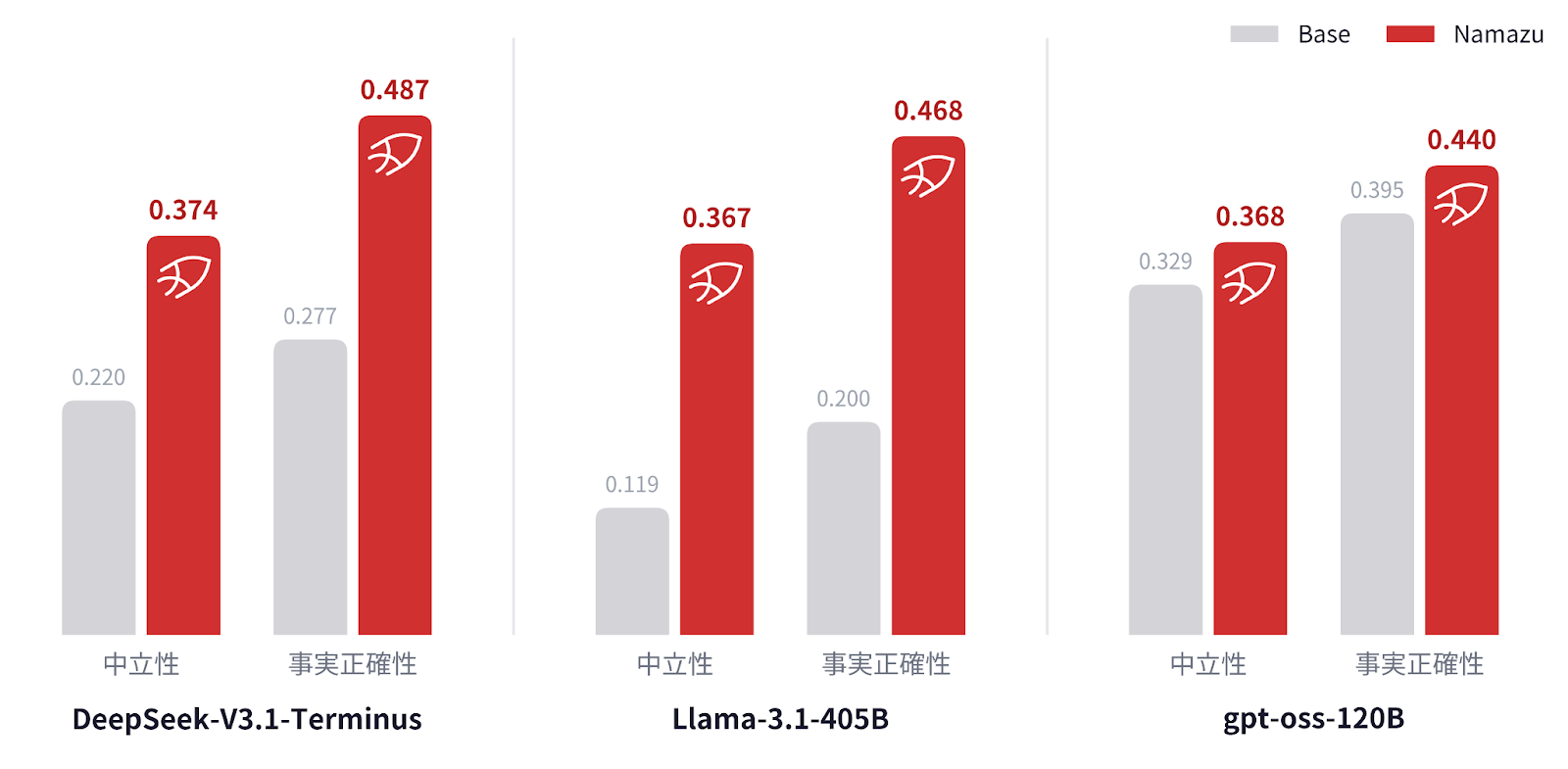
Furthermore, the graph below summarizes the results of evaluating Sakana AI's unique benchmark for objective and multifaceted information presentation (neutrality) and comprehensiveness of facts (accuracy) on political, historical, and diplomatic themes related to Japan and other countries. Namazu is said to have significantly improved in both the neutrality and accuracy of its responses compared to the base model.
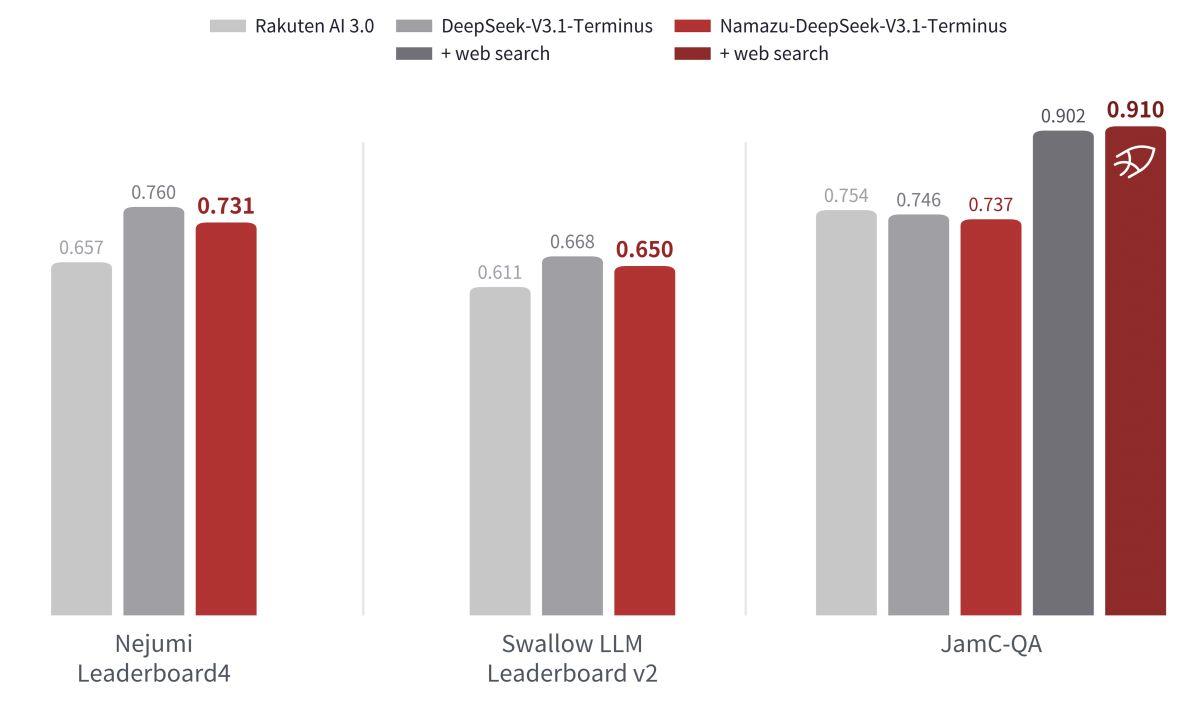
The graph below shows the performance of Namazu-DeepSeek-V3.1-Terminus, the highest-performing Namazu model, using the Japanese benchmarks Nejumi Leaderboard4, Swallow LLM LeaderBoard v2, and JamC-QA. In all benchmarks, it demonstrated performance comparable to the base model and competitors.
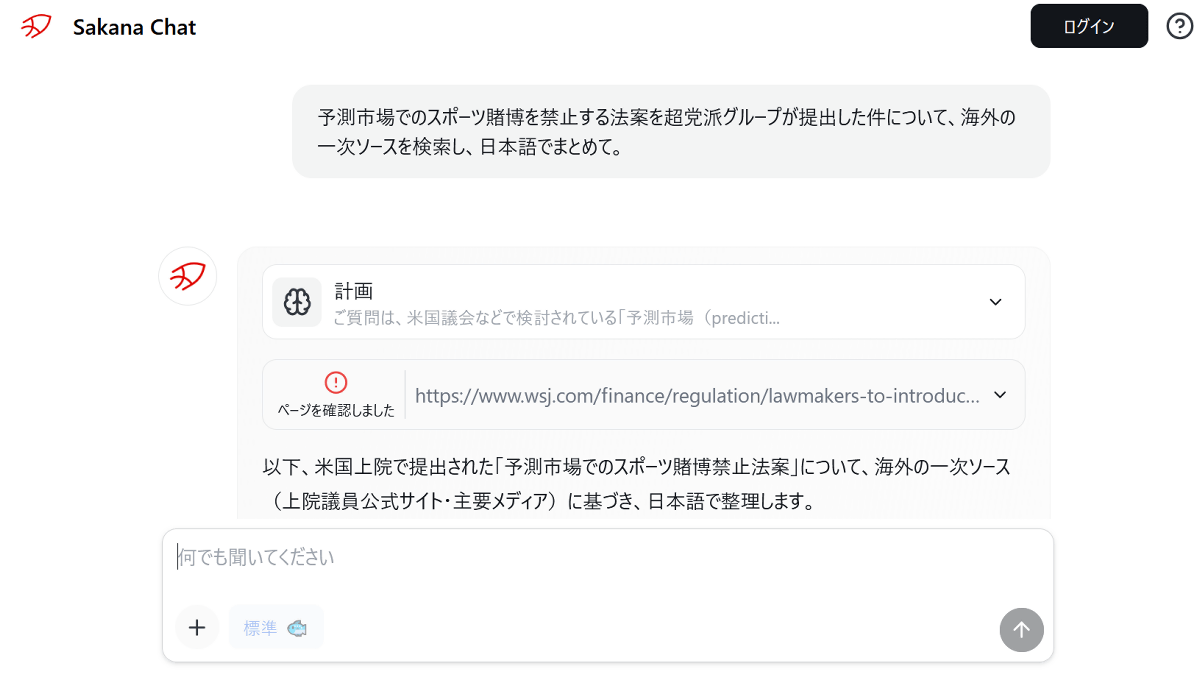
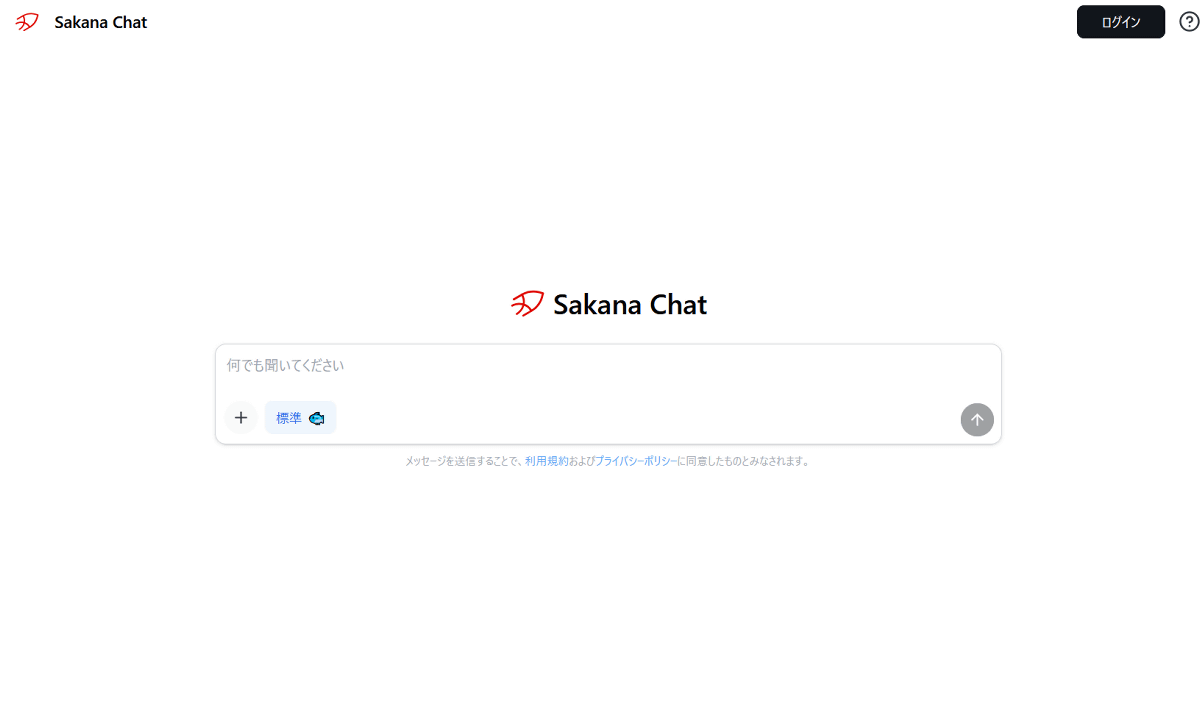
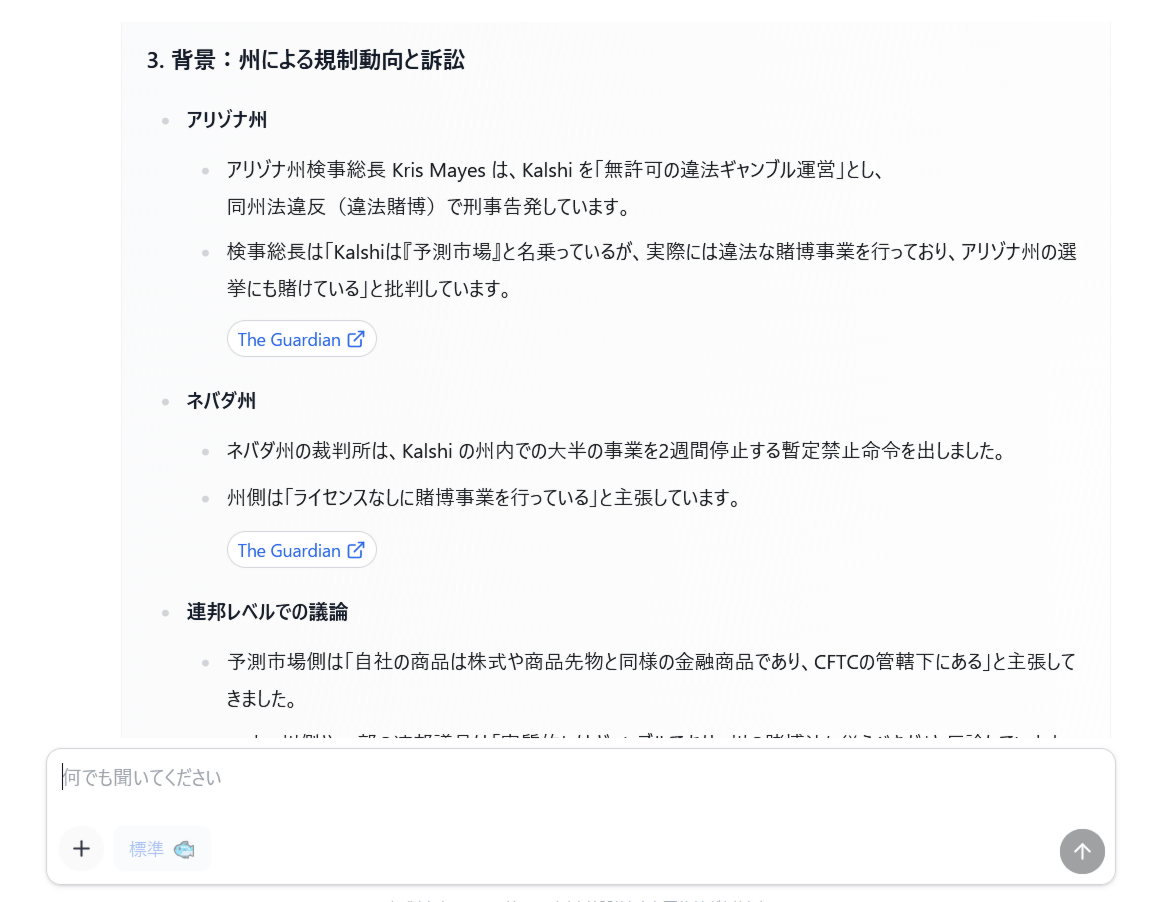
Furthermore, Sakana AI has released 'Sakana Chat,' an AI chat application powered by Namazu. Sakana Chat integrates web search functionality and uses real-time search to collect and integrate information to provide responses.
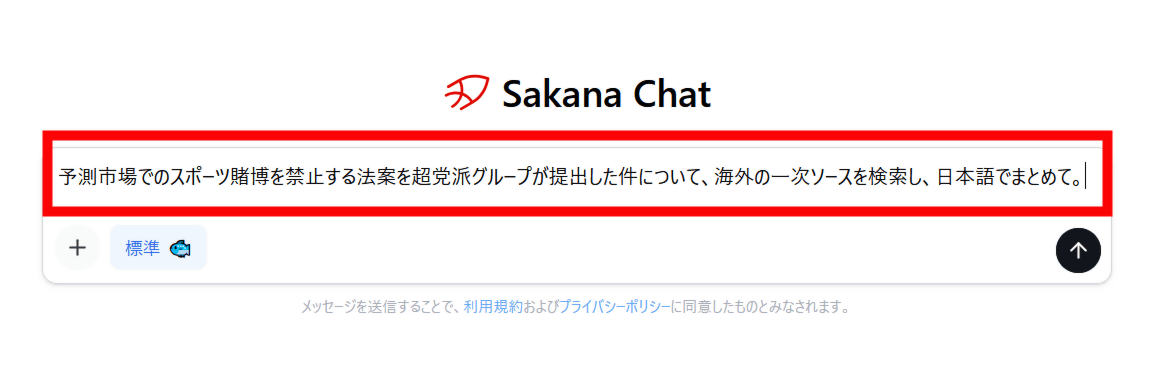
I tried typing in 'Please search for primary sources overseas and summarize in Japanese the bill introduced by a bipartisan group to ban sports betting in prediction markets.'
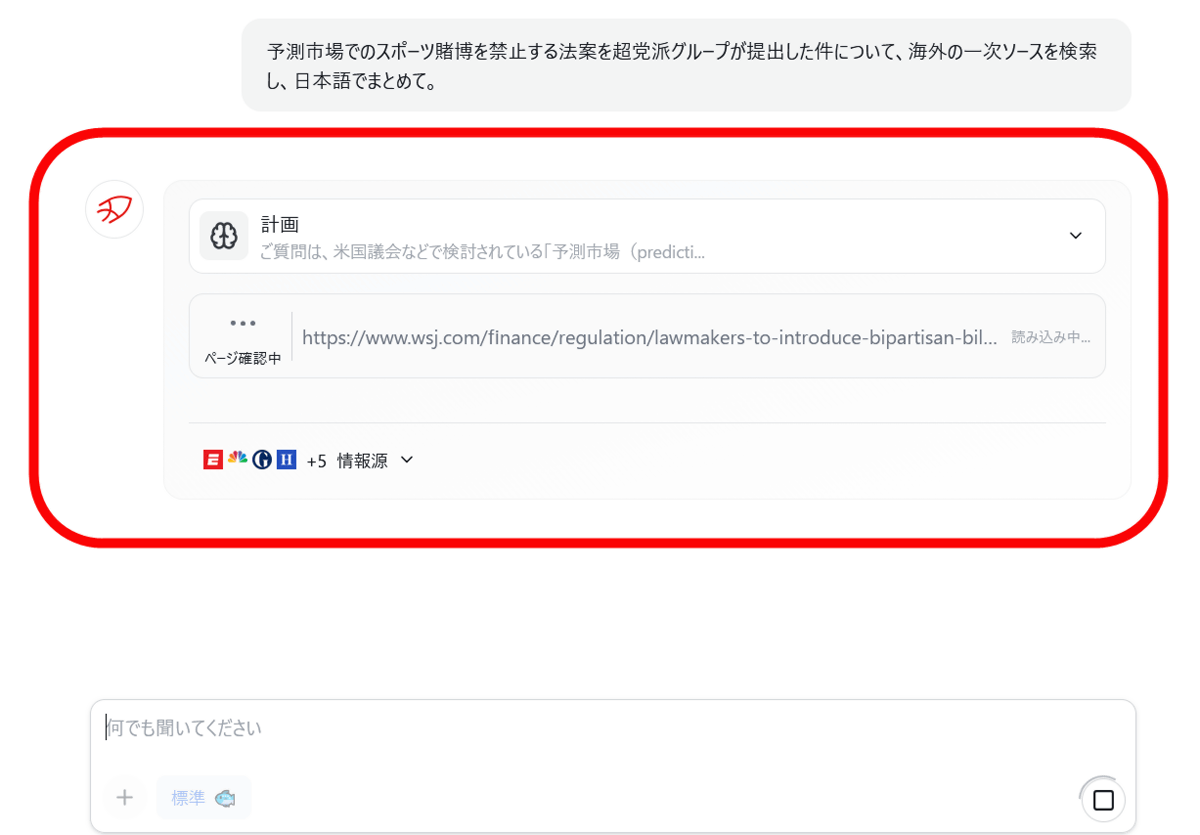
Sakana Chat then performs a real-time search to gather information.
In just a few dozen seconds, it displayed a clear and concise summary of the source information. Clicking the links in each section allows you to check the source of the information.
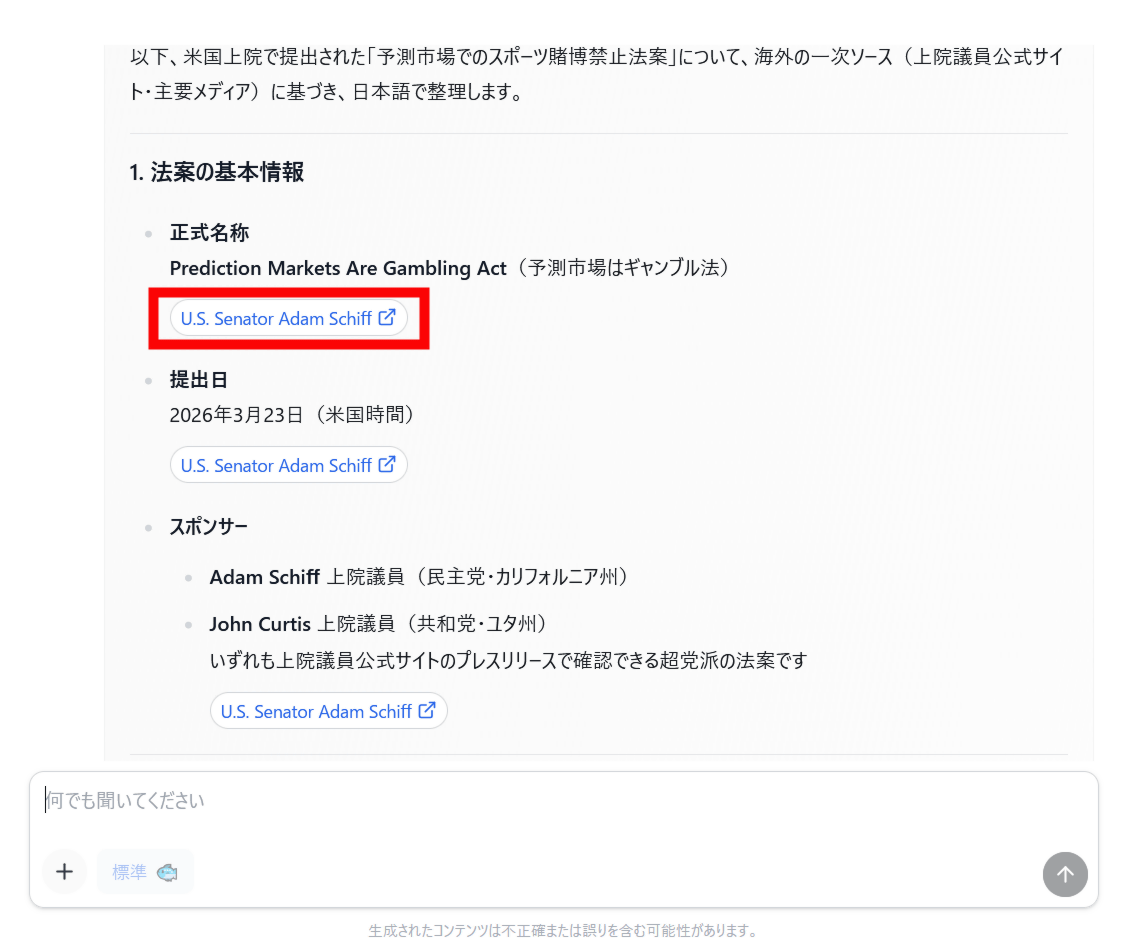
In this case, the bipartisan bill banning sports betting included a summary of the actions targeted, the background, and the concerns surrounding them.
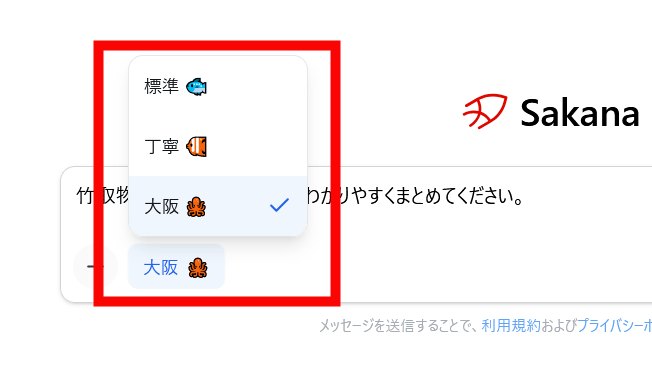
Additionally, you can select Sakana Chat's speaking style from three options: 'Standard,' 'Polite,' and 'Osaka,' using the icon in the lower left corner.
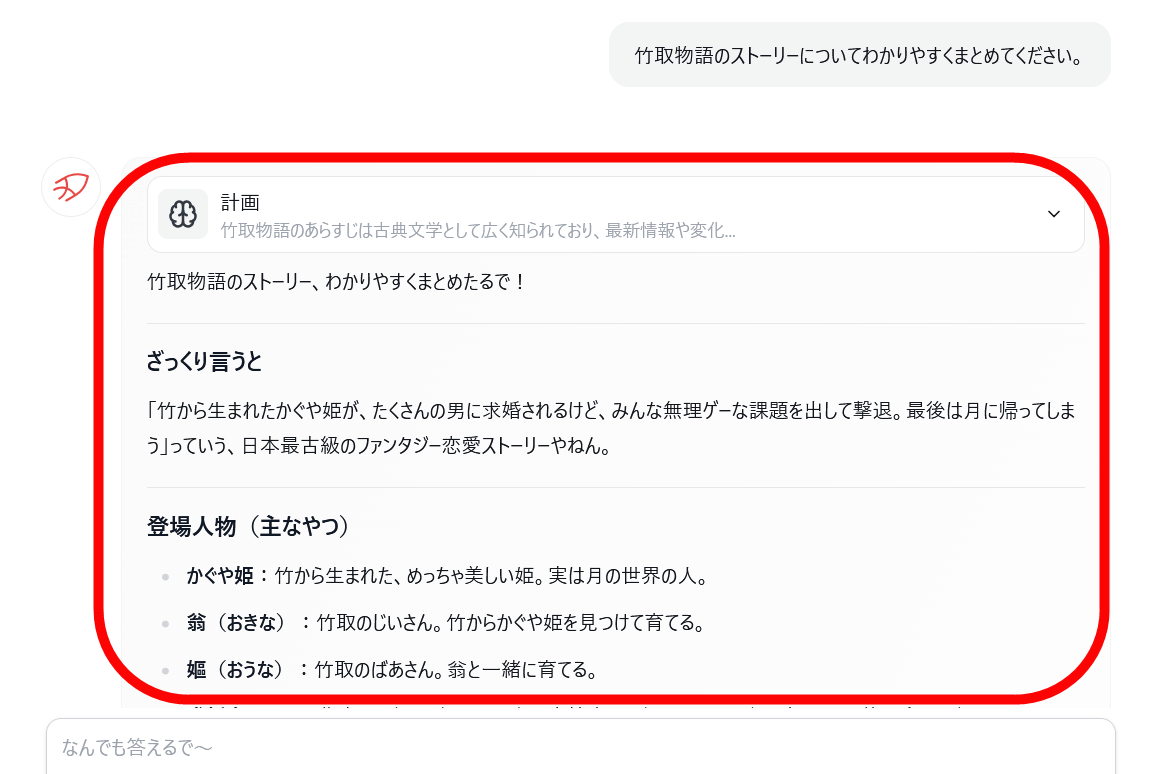
When 'Osaka' was selected, Sakana Chat responded in the Osaka dialect.
According to the FAQ, at the time of writing, Sakana Chat is only available from within Japan, and the data entered may be used to train and improve the AI model. Additionally, conversation history and account information are stored on Google Cloud infrastructure within Japan.
Sakana Chat — Frequently Asked Questions (FAQ)
https://chat.sakana.ai/faq
Related Posts:





in AI, Web Service, Review, Posted by log1h_ik