What can you see when you look at a laserdisc under a microscope?
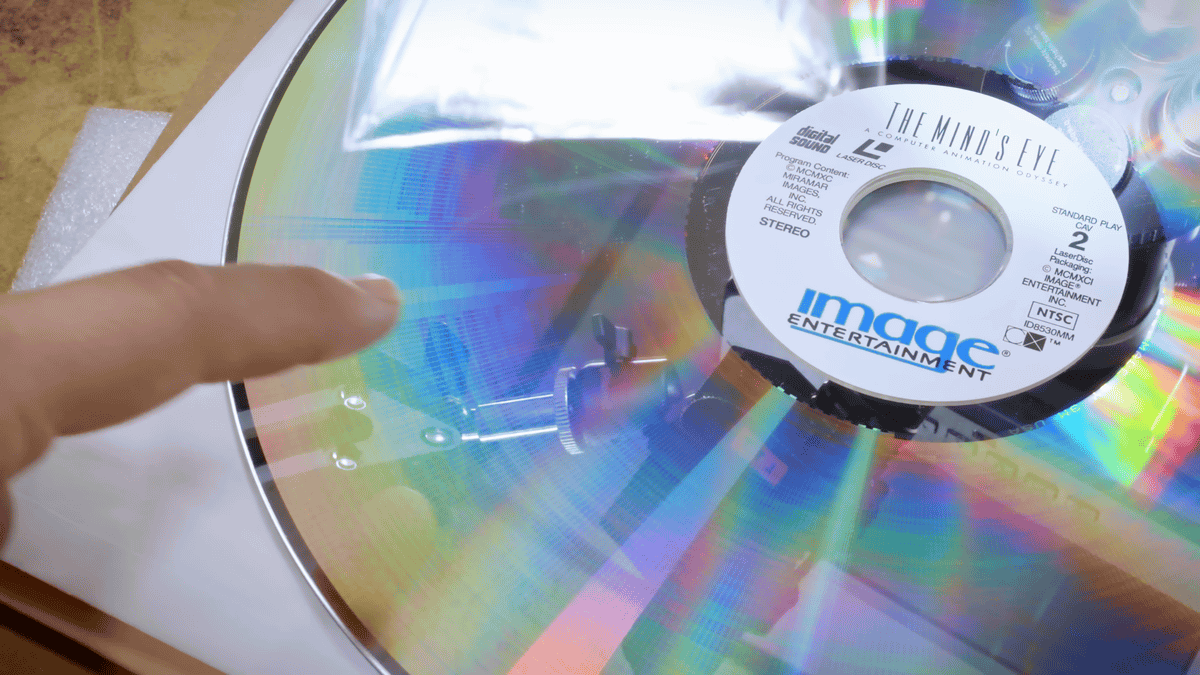
Laserdiscs are a video medium that records analog video and audio signals on a 30cm diameter optical disc, and they became popular in the 1980s and 90s. In a video reviewing a digital microscope with an LCD monitor for children, the technology-focused YouTube channel Tech Tangents conducts an experiment to view a laserdisc under the microscope.
This is a laserdisc.
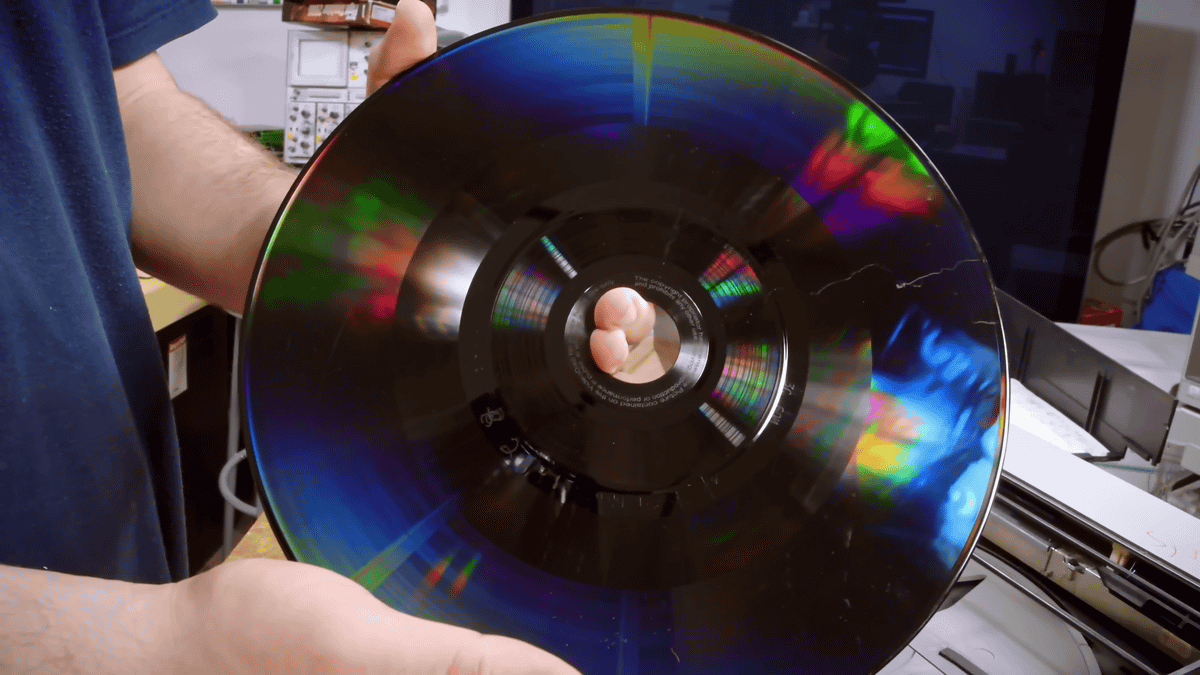
Laserdiscs, like CDs and DVDs, are optical discs that use lasers to read the fine irregularities on their surface. However, the content they record is not basically digital video but rather analog composite video signals. The playback device reconstructs the original video signal from the arrangement of pits and lands on the disc surface.
The microscope used was
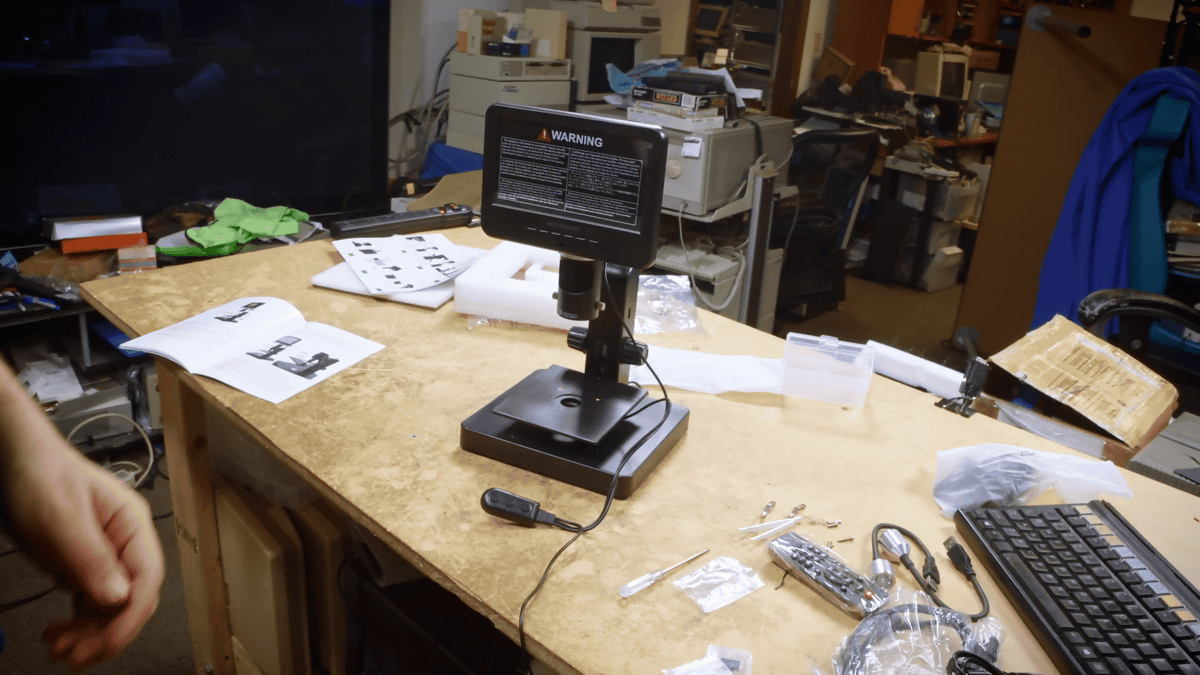
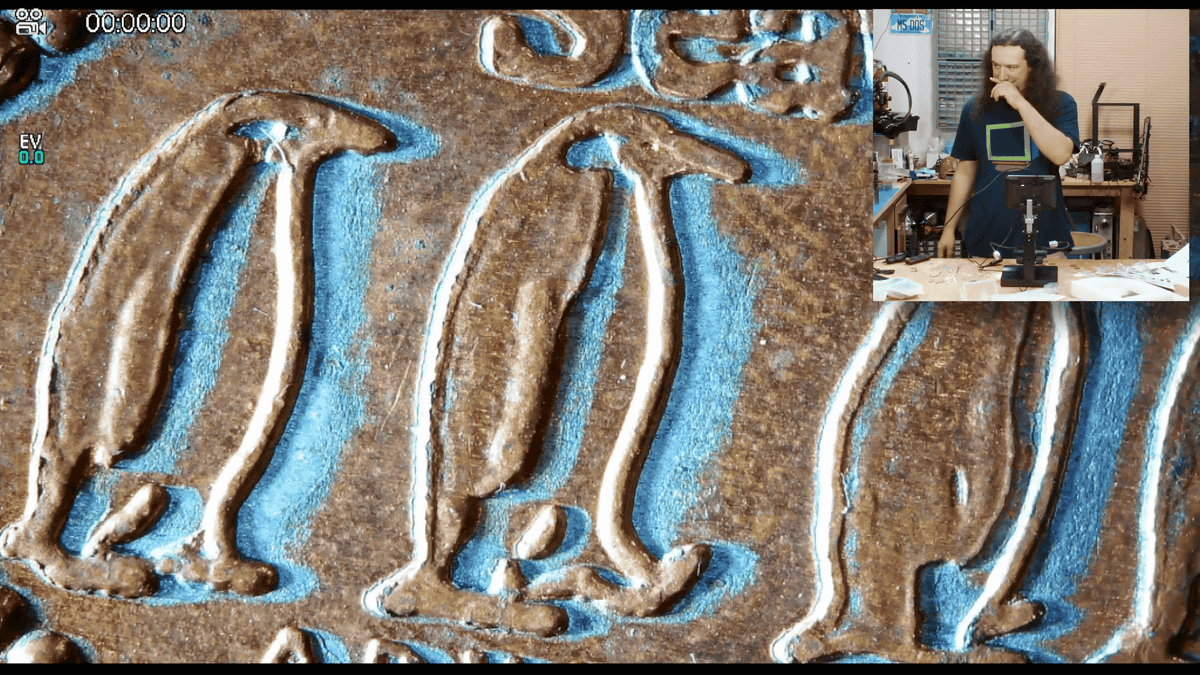
The image displayed under the microscope was excellent, and the HDMI output worked without any problems. Below is the result of magnifying a coin I had on hand.
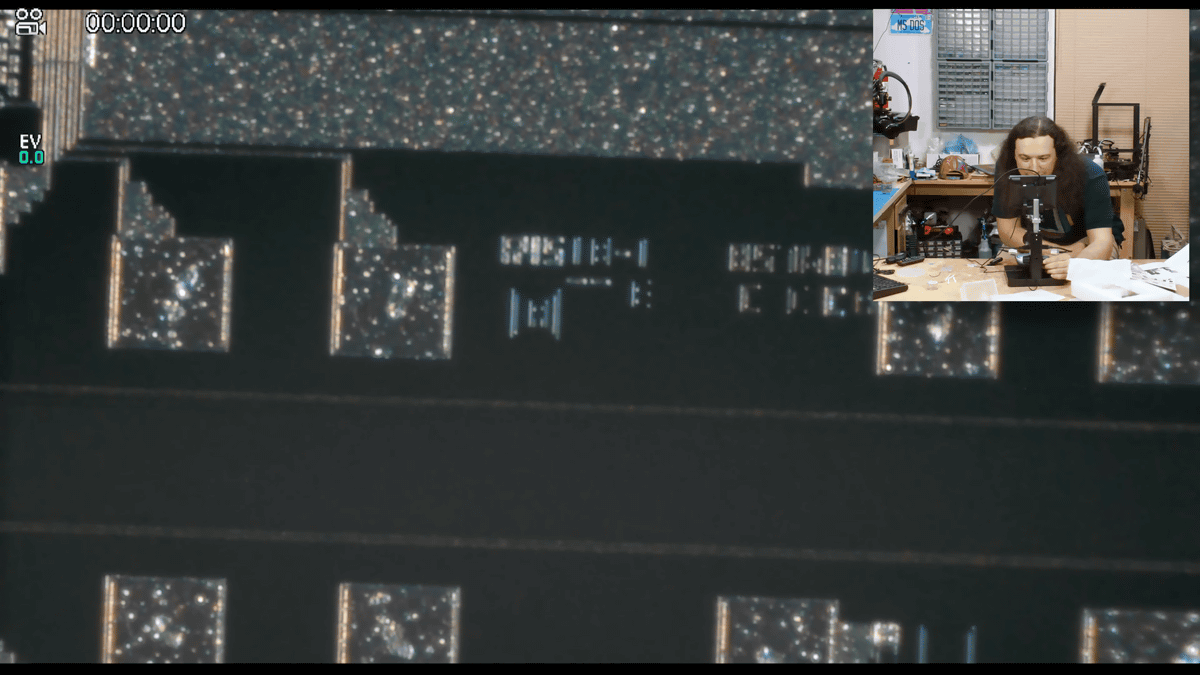
By attaching a higher magnification objective lens, we were able to read the extremely small characters engraved on the silicon wafer.
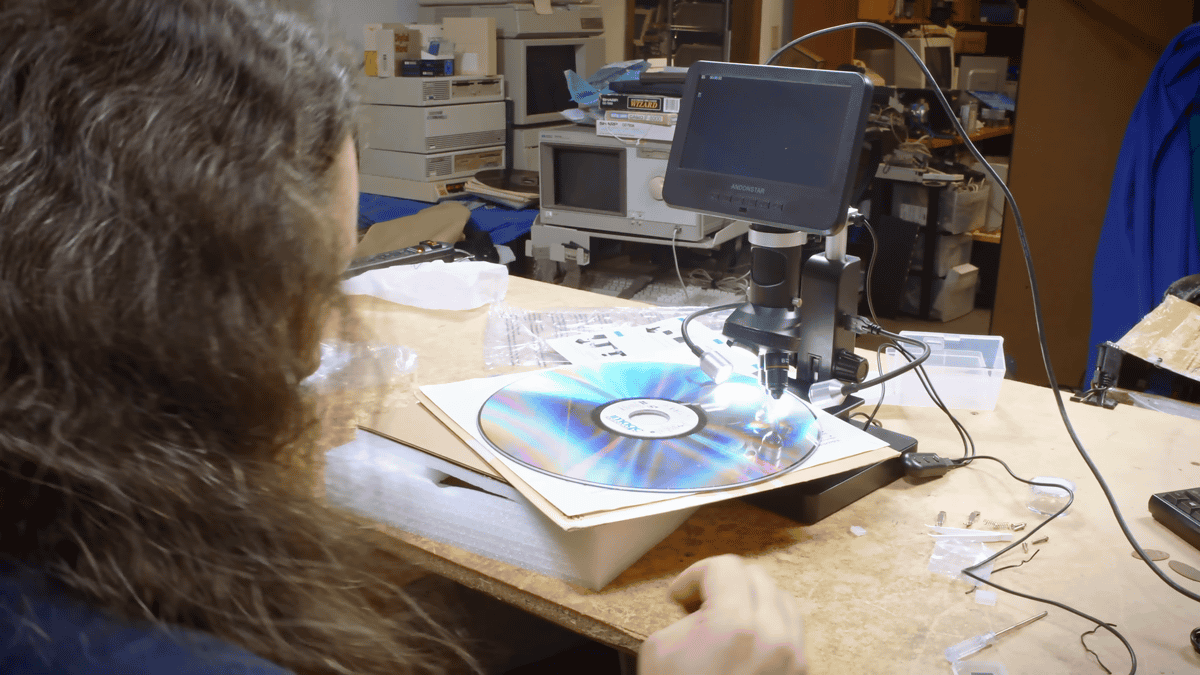
Given its ability to display such beautifully magnified images, Tech Tangents decided to try magnifying the surface of a laserdisc.
The screen at that time was originally drawn with one scan line at a time, and when you look at the laserdisc signal, you can see horizontal synchronization intervals to return to the next line from the edge of the screen, and vertical synchronization intervals to return from the bottom to the top of the screen.
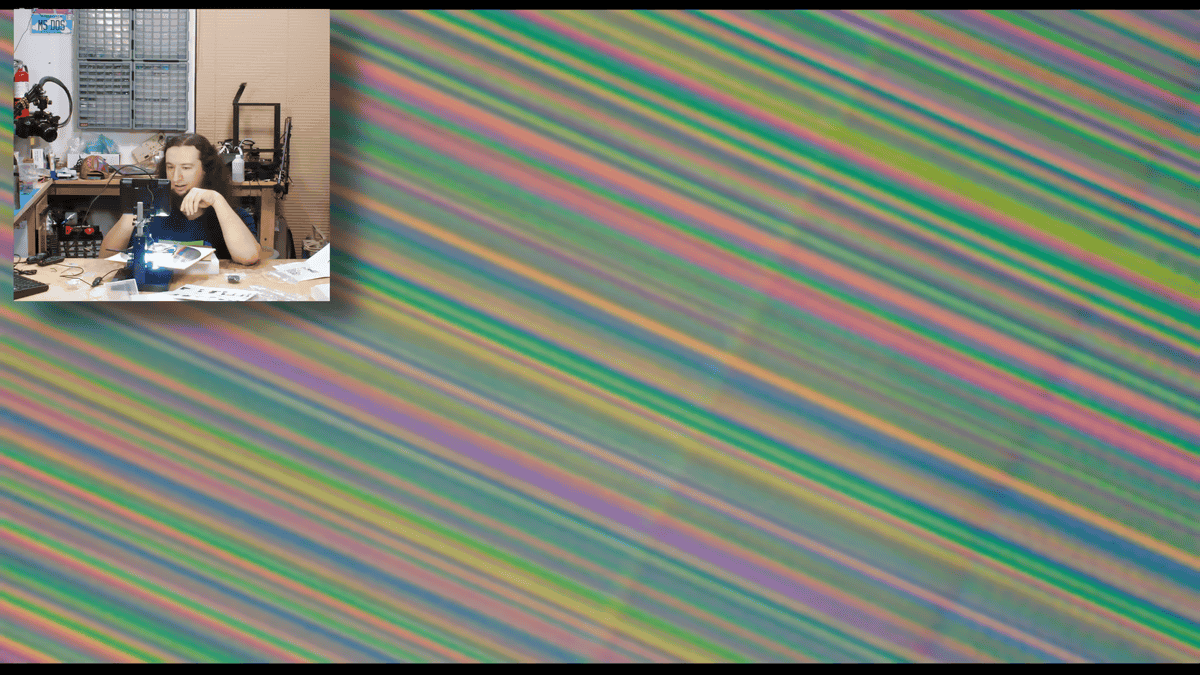
Laserdiscs primarily use two rotational modes: CAV and CLV. CAV rotates the disc at a constant speed, and in NTSC, one frame is associated with each rotation, making it suitable for still images and frame-by-frame playback. CLV changes the rotation speed during playback to increase recording density, allowing for longer recording times. The laserdisc used here is of the CAV type.
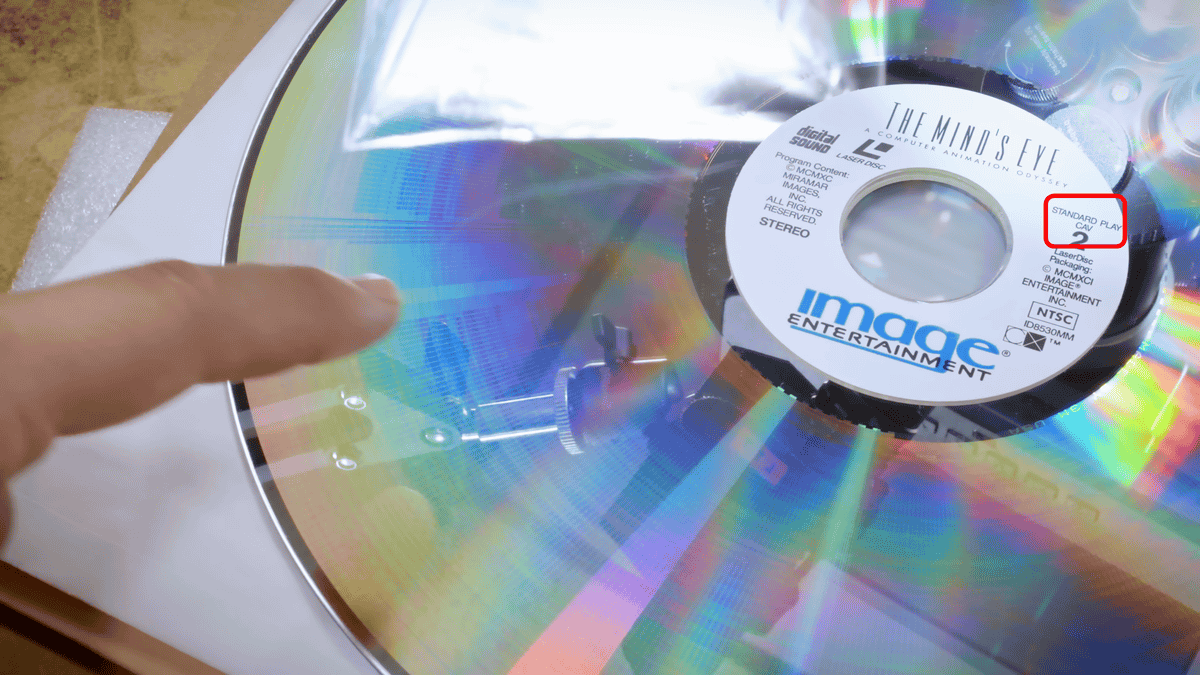
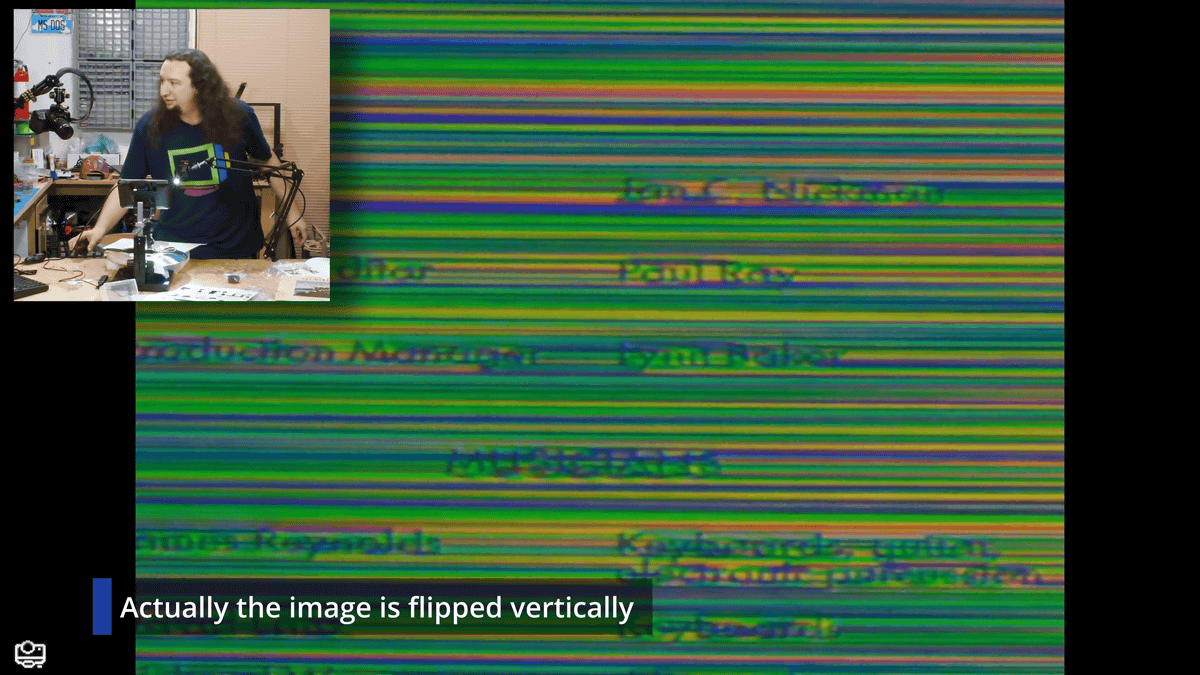
The surface of a laserdisc has a physical pattern inscribed with the sequence of video signals, so when viewed under a microscope, the image becomes visible.
Here's a comparison with the actual screen (left).
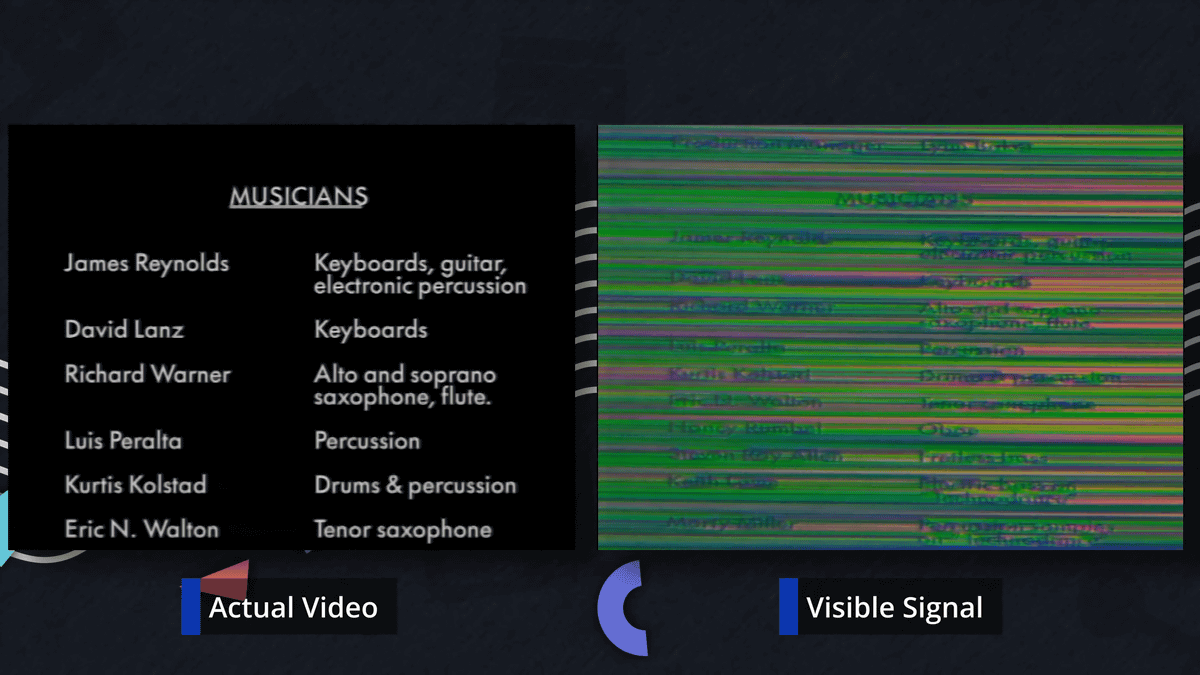
What is recorded on a laserdisc is not the finished 2D image itself, but rather a sequence of video signals arranged in time. Therefore, in normal scenes, even when viewed under a microscope, it is difficult for humans to perceive it as a 'picture.' However, in scenes where text is arranged, such as staff credits, and the screen moves relatively slowly, CAV (Chronic Image Format) corresponds to one rotation per frame, making it easier for the regularity of the video signals to appear around the text. In other words, the reason why something resembling text could be seen when viewed under a microscope is that the regularity of the arrangement of the recorded signals manifested itself in a way that the human eye could recognize as 'text.'
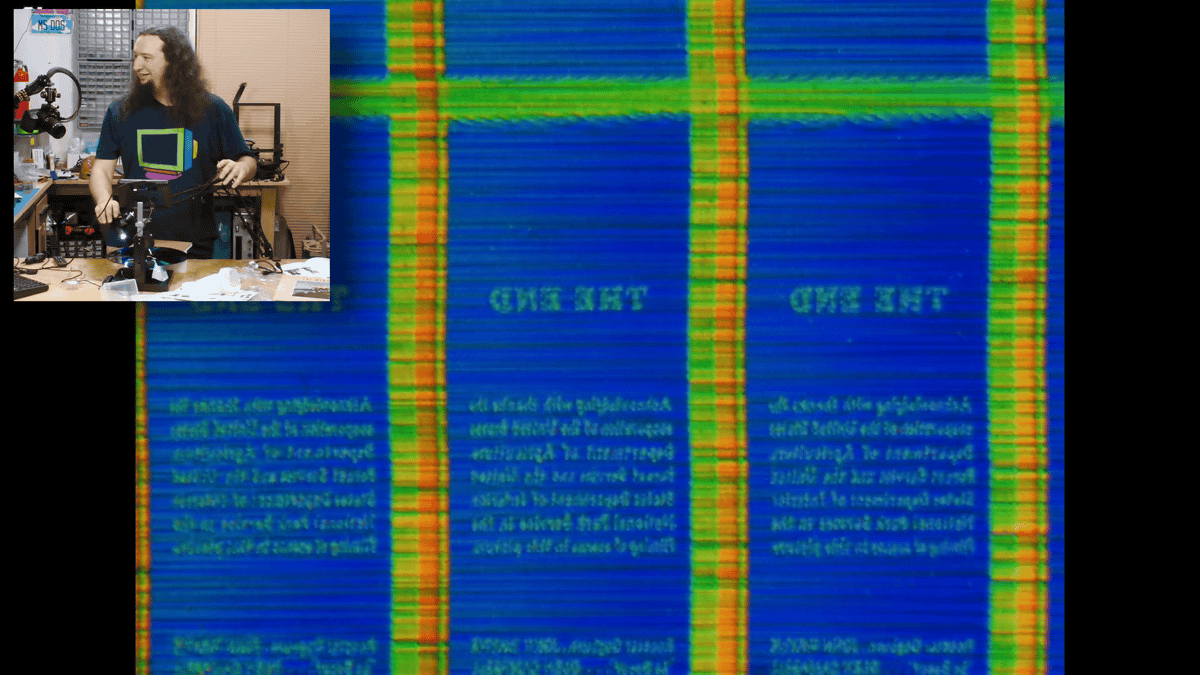
Tech Tangents gave a very positive assessment, noting that it wasn't just a fun experiment, but that they were actually able to obtain meaningful images from the surface of a laserdisc, and that the Andonstar AD246S microscope itself was quite capable.
Related Posts: