Why are clothing size labels so messy and unreliable?

While it's now easy to buy clothes online, the size of clothes can vary greatly depending on the brand, even if the same size is labeled.
Sizing chaos
https://pudding.cool/2026/02/womens-sizing/
Below is a chart showing the distribution of clothing sizes for 10- and 11-year-old girls in the United States, based on waist measurements from the National Center for Health Statistics. The median waist size is 26-28 inches (approximately 66-71 cm), and the perfect fit is a 'junior size medium.'
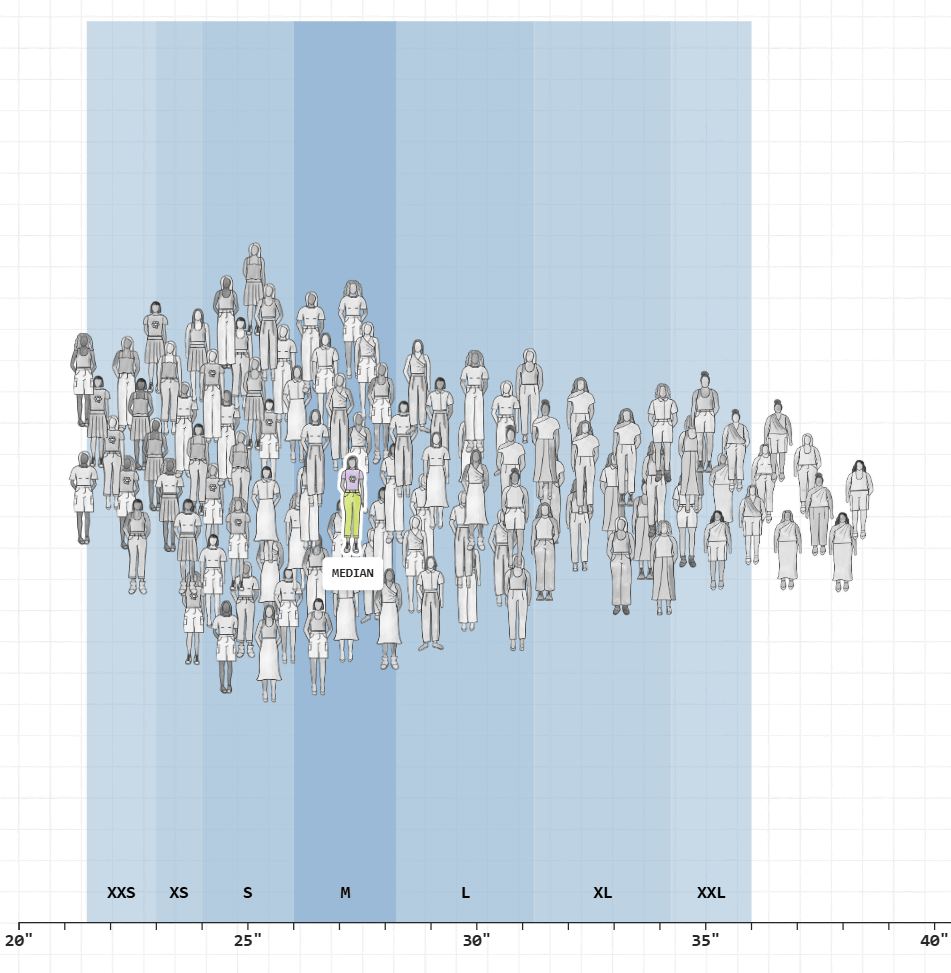
After that, by the age of 15, most girls will have gone through growth and puberty and will have reached their adult height. At this age, most girls will find that junior sizes no longer fit them. Therefore, at this point, they will begin wearing adult women's sizes. The median just-fit size is 'M,' but for girls in the 10th
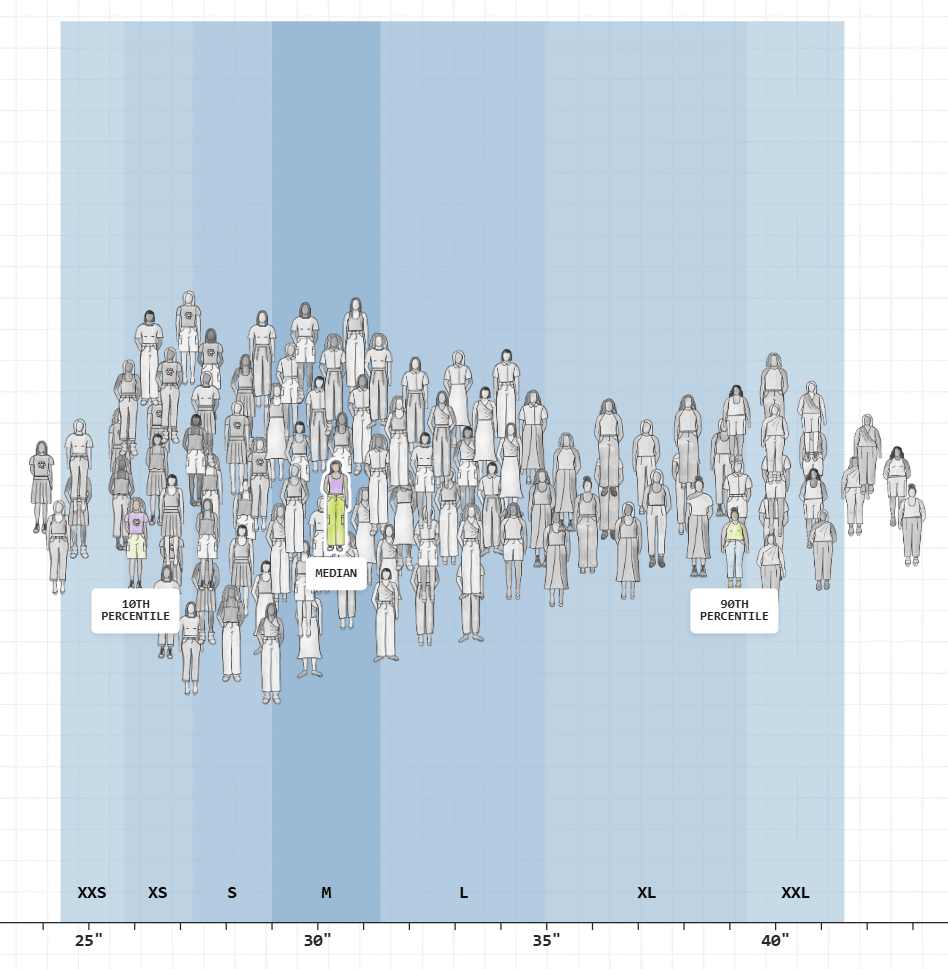
In the case of children's clothing, sizes are mostly determined based on age and developmental stage. This is based on the idea that as children grow, their clothes grow too. For this reason, teen clothes are designed to fit the body more snugly than children's clothes, but the waistline is higher than adult clothes, so curves are not as prominent. However, the concept of adult clothes is completely different from that of children's clothes.
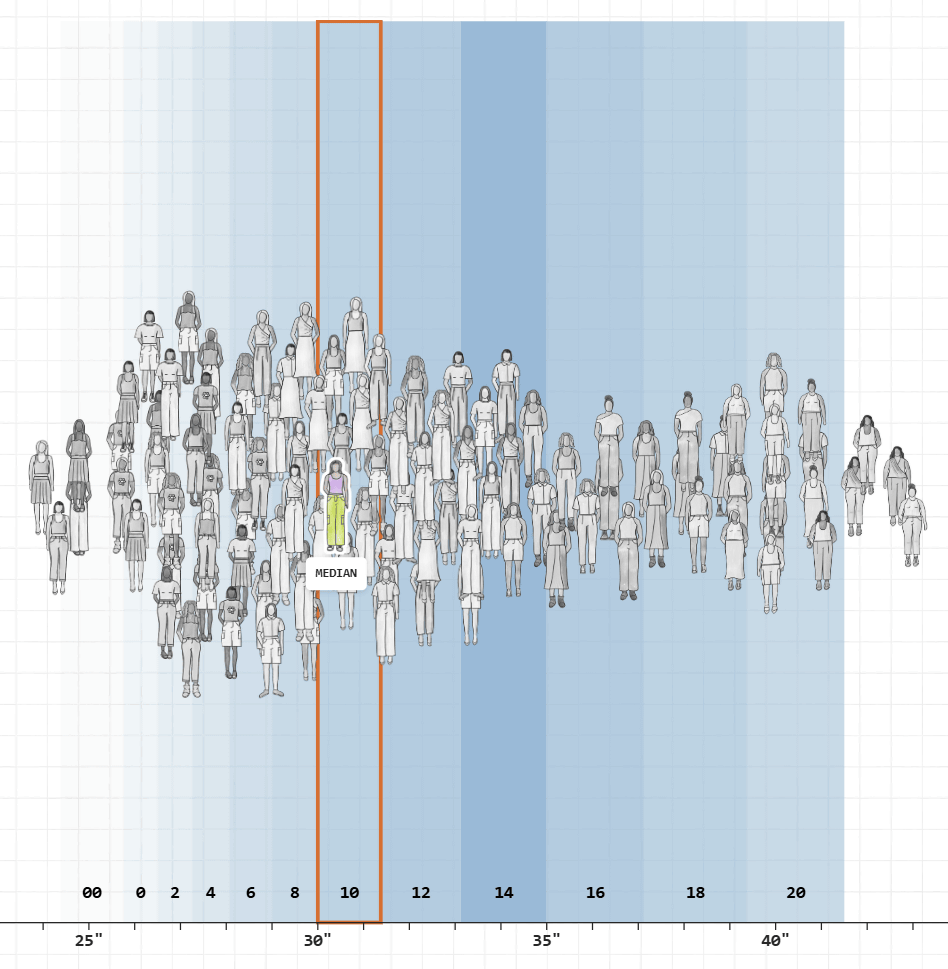
For adult clothing, sizes are not only labeled 'S,' 'M,' and 'L,' but also with more precise numbers. In this case, the size that fits the average waist size of a 15-year-old girl is '10.'
However, the size that fits the average waist size of a woman in her 20s is size 14, which is the standard size L. As we get older, the waist size clothing that fits the average woman will get larger.
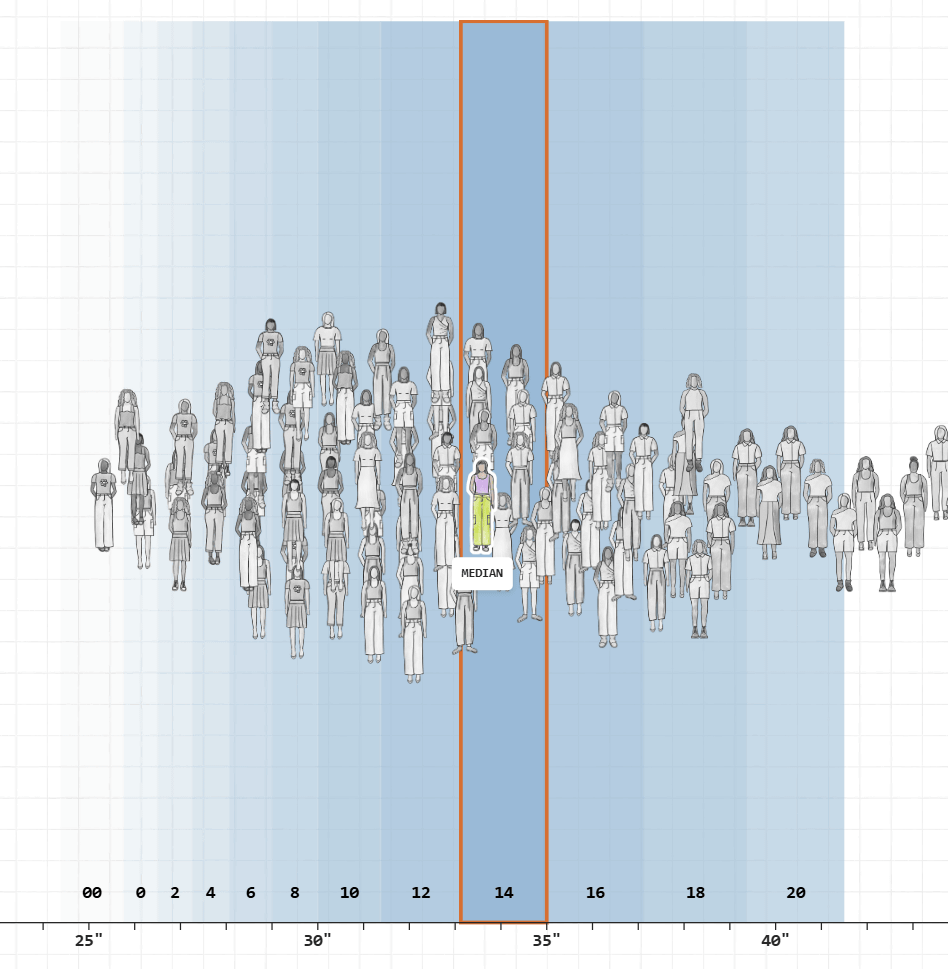
The problem is that most clothing sizes labeled 'straight' or 'regular' only go up to a size 16. As a result, millions of adult women (more than half) are excluded from the standard size range.
Additionally, sizes vary greatly from brand to brand, and even within the same apparel company. There are no regulations or universal sizing standards, which forces each brand to create their own size guides.
While there are no universal sizing standards, ASTM International regularly publishes informal guidelines. Clothing manufacturers sometimes loosely follow these standards, but often brands prefer to tailor their own practices to suit their target demographics, resulting in significant sizing variation.
Below is a comparison of the ASTM International Guideline '00-20 (XXS-XXL)' sizes with the size labels of famous brands. For example, Louis Vuitton's 'M' size corresponds to the ASTM International Guideline 'XS.'
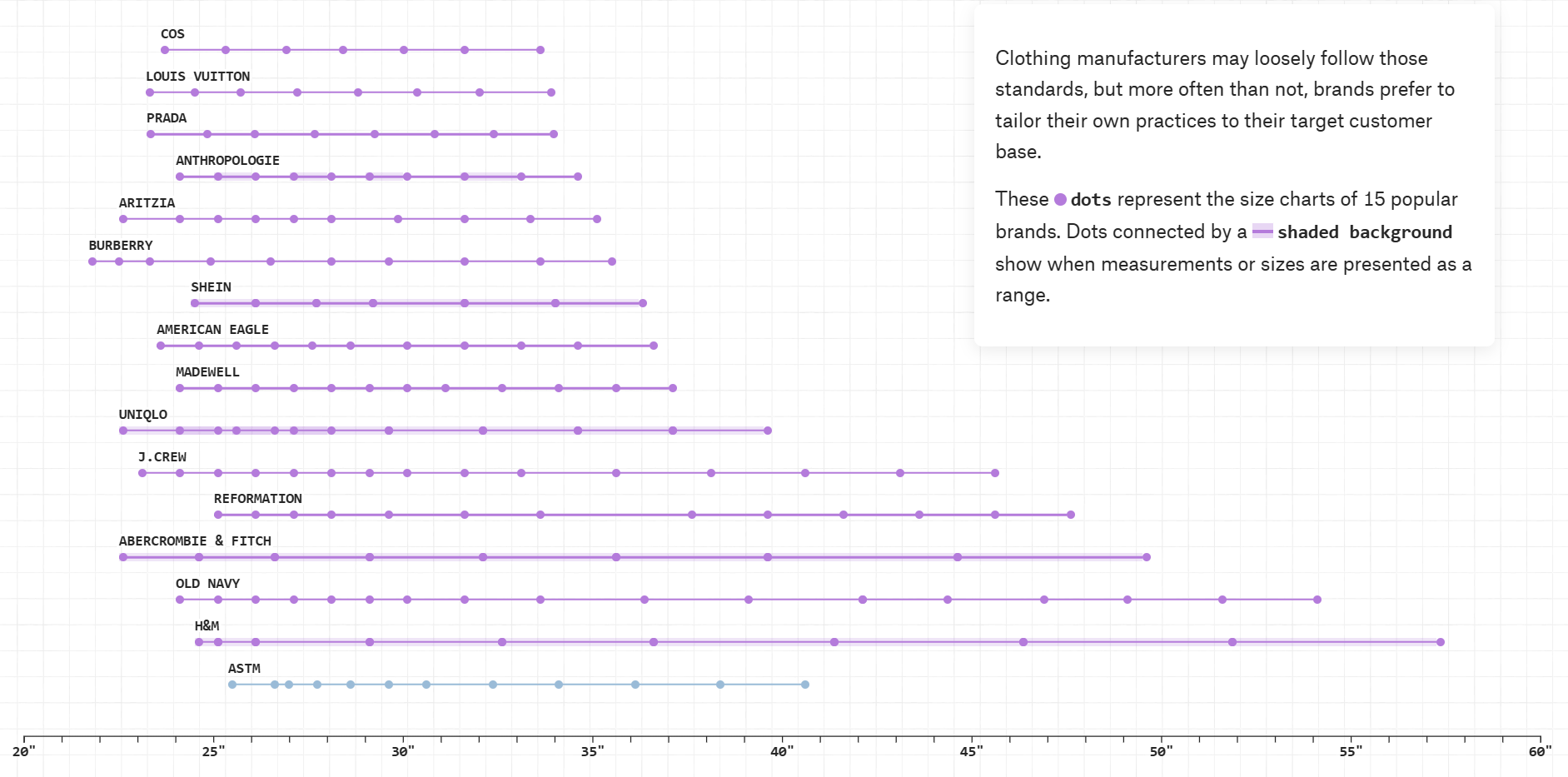
The Pudding writes, 'There are no rules forcing brands to adopt a particular sizing system. There is no such thing as a 'true size 8.' If brands are constantly developing and customizing their size charts, there's little point in maintaining a broken system. Sizes are a myth anyway. Why can't we do better?'
Related Posts:


in Note, Posted by logu_ii