What are the three biggest breakthroughs in mathematics in 2025?
Quanta Magazine, a science media company, explains in a movie about three major breakthroughs in mathematics in 2025, saying that 2025 is a historic year for mathematics.
◆1: A partial solution to Hilbert's Sixth Problem
The first is a proof of the continuation of equations describing the behavior of gas molecules, related to Hilbert's Sixth Problem. Hilbert's Sixth Problem asks, 'Can the laws of physics, which are originally derived inductively, be derived from axioms, as in mathematics?' For example, physicists model the behavior of gases using Newton's laws of motion from a microscopic perspective, the Boltzmann equation from an intermediate perspective, and the Navier-Stokes equation from a macroscopic perspective. However, although these three equations describe the same state of gases, they are not unified into a single theory because they each make different assumptions.
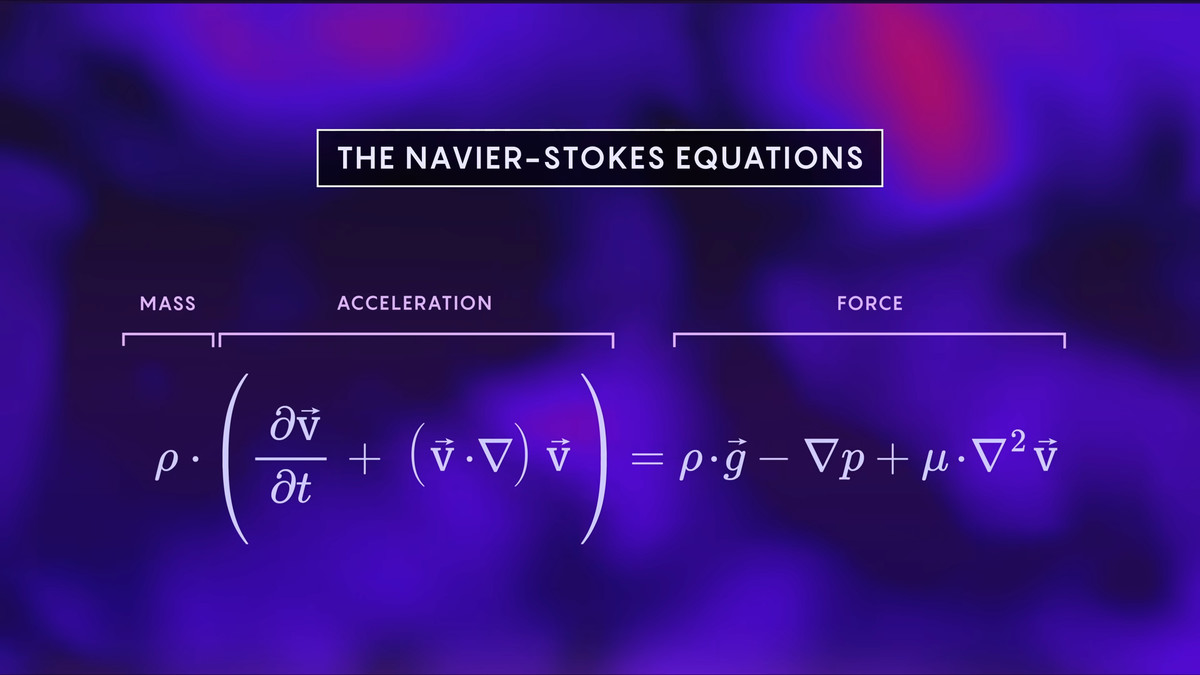
In March 2025, mathematicians Yu Deng, Zaher Hani, and Xiao Ma succeeded in mathematically deriving the Boltzmann equation and the Navier-Stokes equation from Newton's laws of motion. In other words, they took Newton's laws of motion as axioms and succeeded in deductively deriving the Boltzmann equation and the Navier-Stokes equation.

However, it should be noted that theories that form the basis of modern physics, such as quantum mechanics and general relativity, still require the unknown theory of quantum gravity, and that this is only a partial solution.
◆2: Research on the geometry of hyperbolic surfaces
A hyperbolic surface is a figure with negative curvature, shaped like a horse's saddle. The 'spectral gap' is a numerical value that represents the ease of information transmission and connectivity on this surface. The larger this spectral gap, the more efficiently you can move from any point on the surface to any other point.
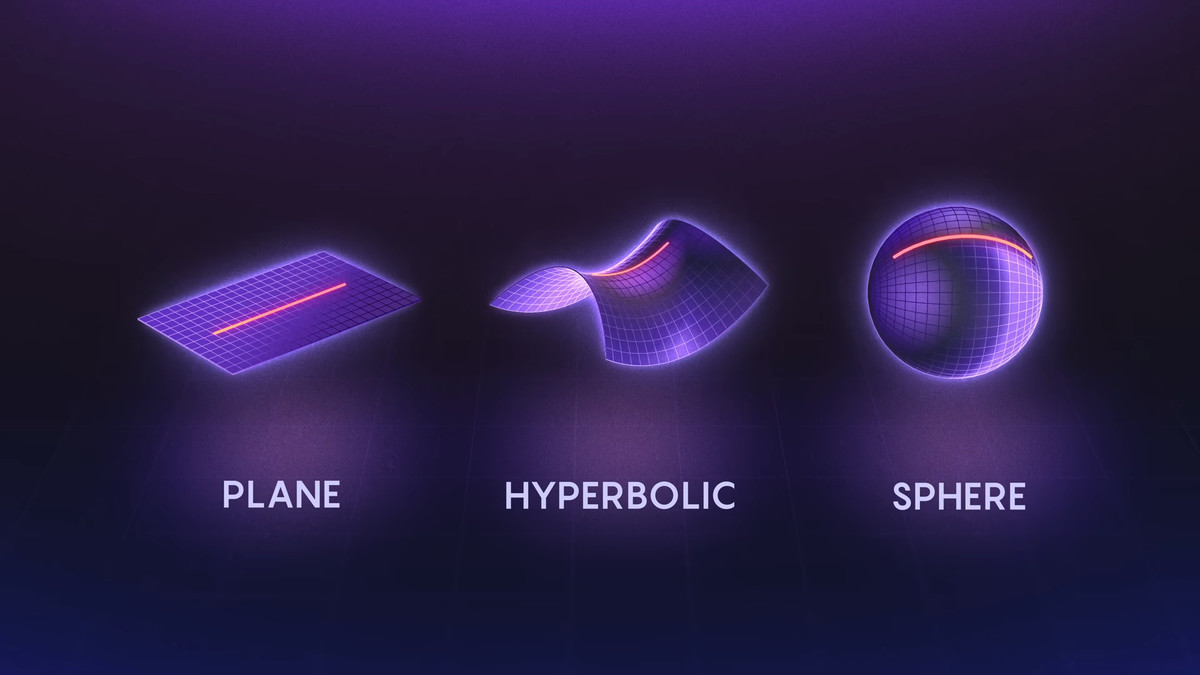
Mathematicians have long debated whether a randomly chosen surface can have a high degree of connectivity, above the theoretical limit of 1/4.
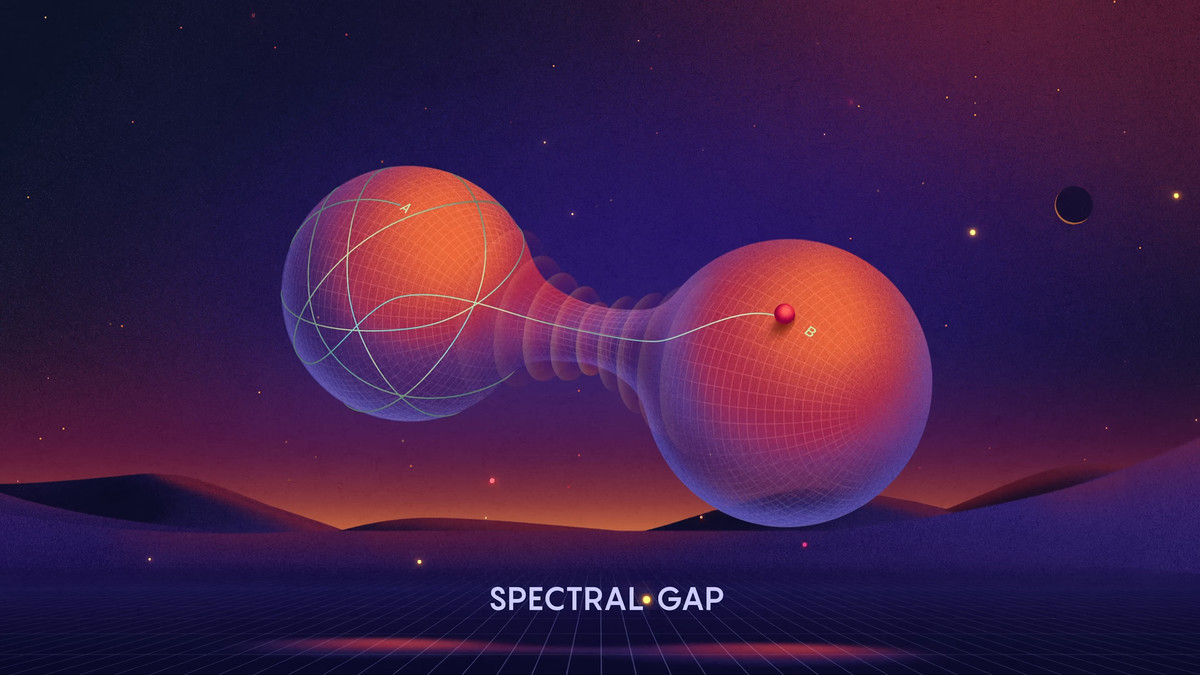
Mathematician Maryam Mirzakhani, who passed away suddenly in 2017, laid the foundation for investigating the properties of randomly selected hyperbolic surfaces using a technique called the Weil-Petersson measure. Nalini Anantharaman and Laura Monk added a new tool to Mirzakhani's research, the Friedman-Ramanujan function. They proved that when the genus g, which represents the complexity of a surface, is very large, the spectral gap of almost all hyperbolic surfaces is greater than 1/4.

The key to this proof was a filtering technique that excluded special surfaces with complexly intertwined geodesics as exceptions that would not affect the calculation results. This mathematically confirmed that the vast majority of random surfaces have an ideal network structure.
These research findings have a significant impact beyond the realm of geometry and into the field of physics. For example, the theory of spectral gaps is essential for understanding the phenomenon of
◆3: Proof of Kakeya's Conjecture in 3 dimensions
The Kakeya Conjecture originated from a problem proposed by mathematician

Regarding this problem, Russian mathematician Abram Besicovich has long proven that 'the area itself can be made arbitrarily small,' and in modern mathematics, attention is focused on the properties of dimension, i.e., 'how complex the space a region occupies.' The Kakeya conjecture in three-dimensional space asserts that the dimension of a set containing line segments of length 1 in all directions (a Kakeya set) must be three.
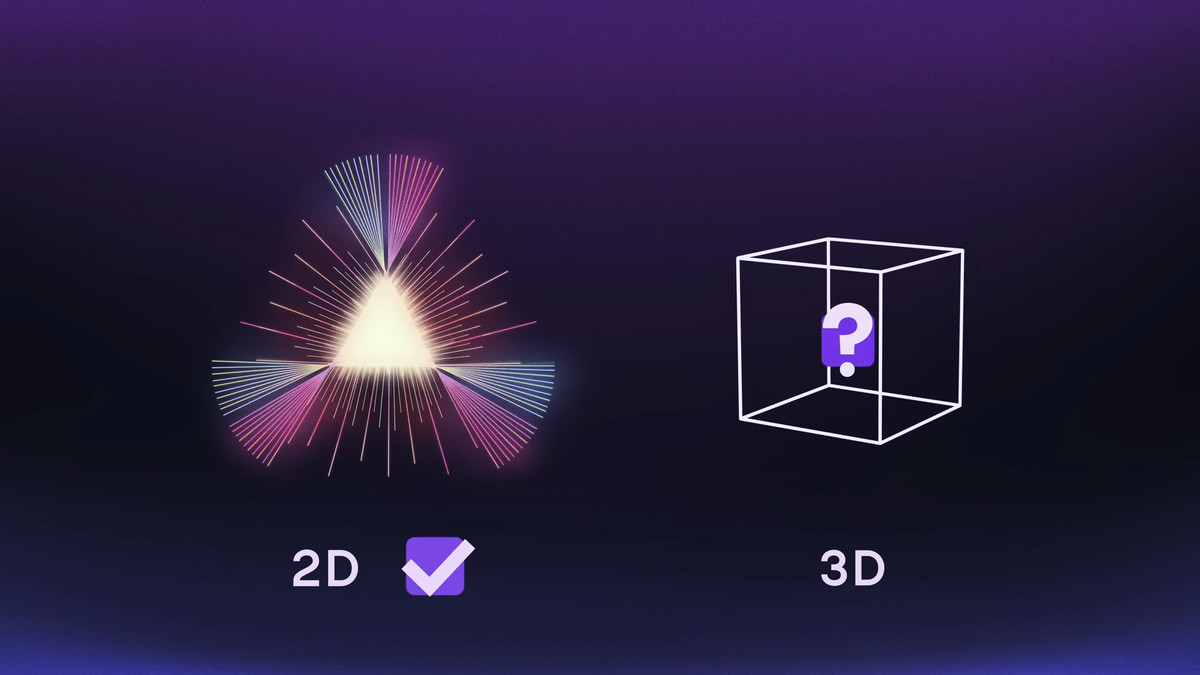
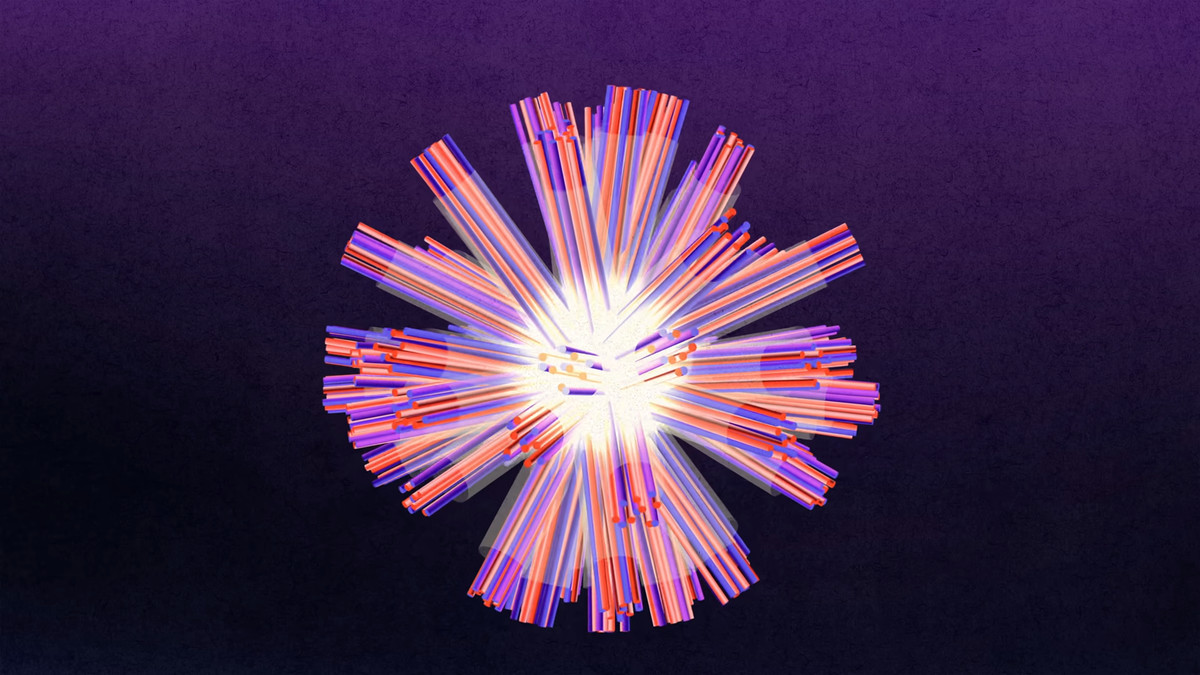
In 2025, Hong Wang and Joshua Zaal used cutting-edge analytical techniques to fully prove this three-dimensional conjecture. Their multiscale analysis method involves treating the needle as a thin tube of radius δ and observing it in stages, from microscopic to macroscopic scales, much like changing the magnification of a microscope. They rigorously proved the 'non-clustering' property, which means that numerous tubes do not cluster excessively in a specific location in space. This controlled the blurring of information that occurs when transferring information between different scales, and demonstrated that the Kakeya set fills space in three dimensions.
This proof will contribute to fields that form the backbone of modern mathematics and physics, such as harmonic analysis and partial differential equations. It will also contribute to improving computational models that accurately describe phenomena such as how signals, such as radio waves, travel through space and overlap. Now that a difficult problem that has long plagued many mathematicians has been resolved in three dimensions, it is expected to open new doors to higher dimensions and lead to the development of new analytical methods.
Related Posts: