Glass storage technology '5-dimensional memory crystal' that can store 360TB of data for 13.8 billion years on a 13cm disc is close to being realized
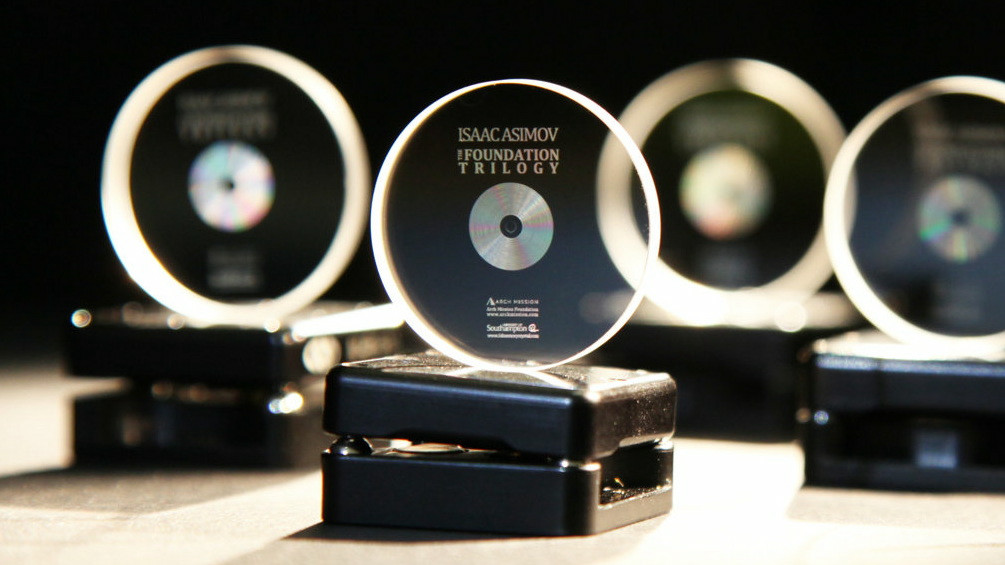
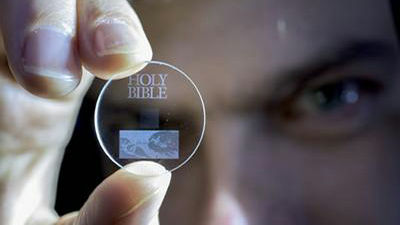
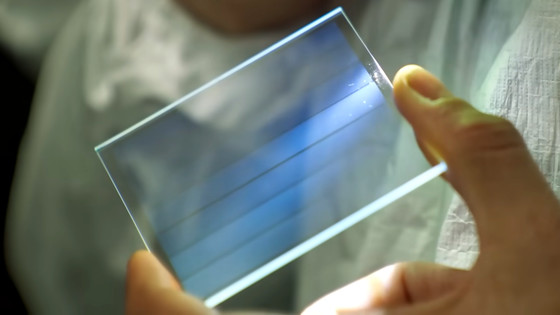
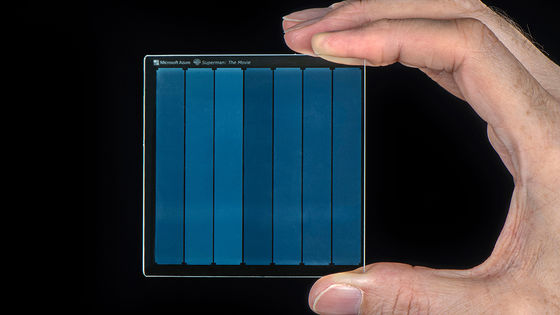
SPhotonix, a startup spun out of research at the University of Southampton in the UK in 2024, is preparing to introduce its '5D Memory Crystal' technology, which uses fused silica glass, into data centers. This 5D memory crystal can store up to 360TB of data on a single 5-inch (approximately 12.7cm) glass disk, has an estimated lifespan of 13.8 billion years, and can retain data even in temperatures as high as 190°C.
5D glass storage 'memory crystals' promise up to 13.8 billion years of data storage resilience, which is roughly the age of the universe — crams 360 terabytes into 5-inch glass disc with femtosecond laser | Tom's Hardware
SPhotonix 5D memory crystal: cold storage lasts 14B years • The Register
https://www.theregister.com/2025/12/14/sphotonix_moves_5d_memory_crystal/
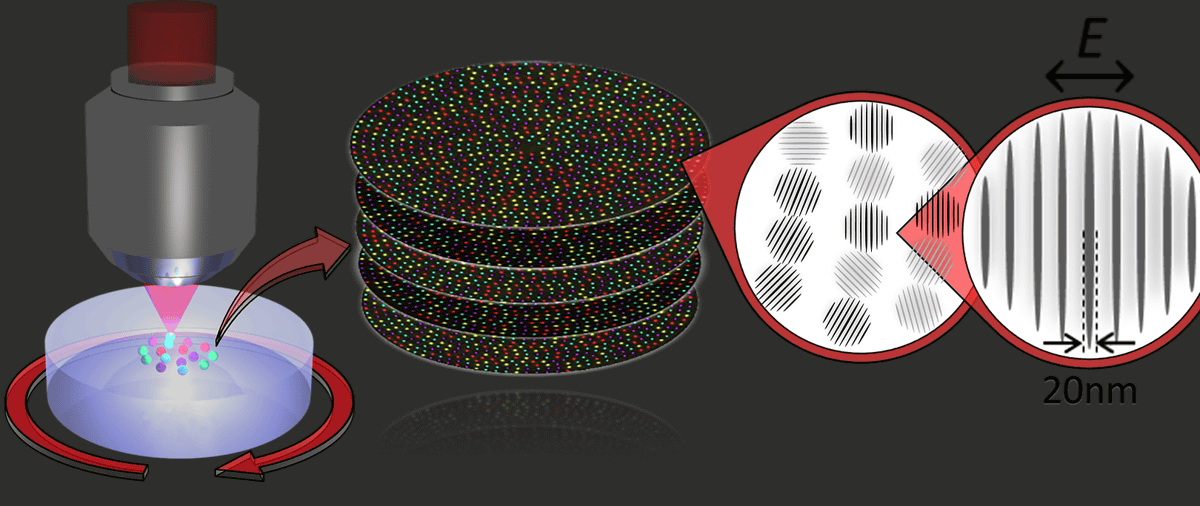
SPhotonix, a spin-off company from the University of Southampton in the UK, was founded in 2024 and is developing a new data storage technology called '5D Memory Crystal.' This technology records data by creating nano-level structures in molten silica glass using a femtosecond laser .
Introducing '5-dimensional data storage,' a data storage that can be used forever without a lifespan - GIGAZINE
Five-dimensional memory crystals use a femtosecond laser to create nanoscale structures (voxels) in glass, encoding information along three spatial coordinates (x, y, z) plus the orientation and intensity of the structures. In other words, they utilize five dimensions: the three dimensions of length, width, and height, plus the 'intensity' and 'direction' of light.
The greatest features of 5D Memory Crystal are its overwhelming durability and capacity. A single 5-inch glass disk can store up to 360TB of data, with an estimated lifespan of approximately 13.8 billion years, equivalent to the age of the universe. Data will not be erased even in high-temperature environments of 190 degrees, and no power is required for storage, making it less environmentally hazardous than conventional hard disks or SSDs, and suitable for long-term storage.
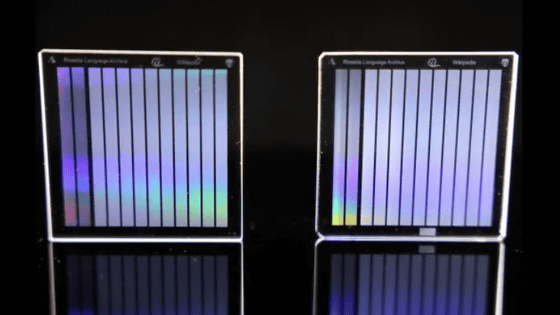
5D Memory Crystal focuses on storing 'cold data,' which is data that is accessed infrequently and can be retrieved in 10 seconds or more. Furthermore, because it does not require power to store data, it is considered superior to existing hard disk drives in terms of environmental impact and cost. It has already been demonstrated to store data such as the human genome and game software, and the company is strengthening its development structure by hiring researchers from Microsoft's Project Silica .
SPhotonix has raised $4.5 million (approximately ¥675 million) in funding to advance its technology to a prototype demonstration phase. The company is also in discussions with large data center operators, and plans to begin trial operations in actual data centers within the next few years. At the time of writing, the prototype's transfer speeds are 4MB/s for writes and 30MB/s for reads, slower than existing archiving systems. However, the company aims to achieve speeds that are competitive with existing storage technologies such as magnetic tape within the next three to four years.
In terms of specific costs, the initial system's writer is estimated to cost about $30,000 (about 4.5 million yen) and the reader about $6,000 (about 900,000 yen), and field-deployable readers are expected to be available within about 18 months. Rather than aiming for manufacturing, SPhotonix is adopting a business model of licensing its technology, similar to Arm and NVIDIA, and intends to expand into the market through a consortium.
Related Posts:


in Hardware, Posted by log1i_yk