Microsoft's 'technology to store data on glass for over 10,000 years' advances, making it possible to record data on household glass
Microsoft Research, a research institute for Microsoft, has announced that it has developed a technology called 'Project Silica,' which uses
Laser writing in glass for dense, fast and efficient archival data storage | Nature
https://www.nature.com/articles/s41586-025-10042-w
Project Silica's advances in glass storage technology - Microsoft Research
https://www.microsoft.com/en-us/research/blog/project-silicas-advances-in-glass-storage-technology/
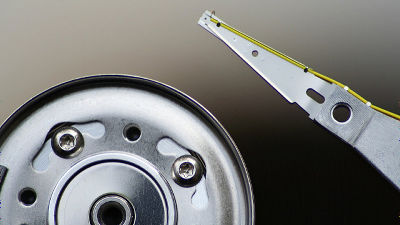
Existing archiving methods such as magnetic tape and HDDs have a limited lifespan, deteriorating over a period of several years or even several decades at most, making them unsuitable for long-term data retention. This necessitates periodic data migration to transfer data to new media, which places a significant burden not only on time and equipment but also on energy.
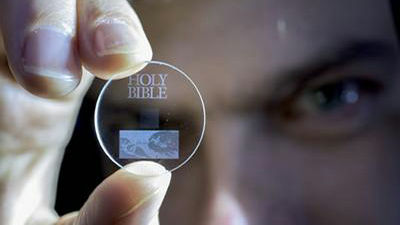
Therefore, Microsoft Research is promoting 'Project Silica,' which creates a nanoscale data recording layer inside glass and studies archival media capable of storing data for hundreds of years.
Microsoft's 'Project Silica,' which stores data on glass plates, has grown to 7TB, more than 100 times the storage capacity, and 10 times the storage period, to 10,000 years - GIGAZINE
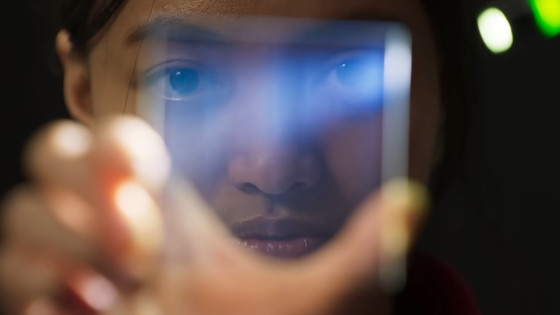
Previously, Project Silica had used high-quality quartz glass. Quartz glass has high optical transparency and heat resistance, and is a material used in optical fibers and advanced optical equipment. However, quartz glass is difficult to manufacture, its sources are limited, and its manufacturing costs are very high.
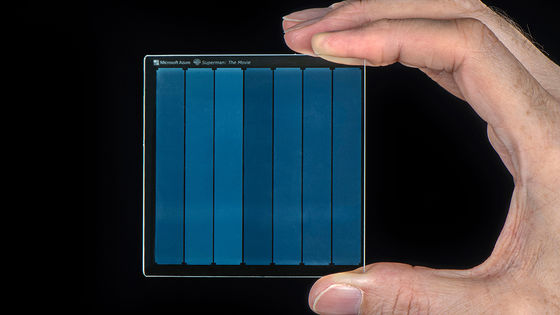
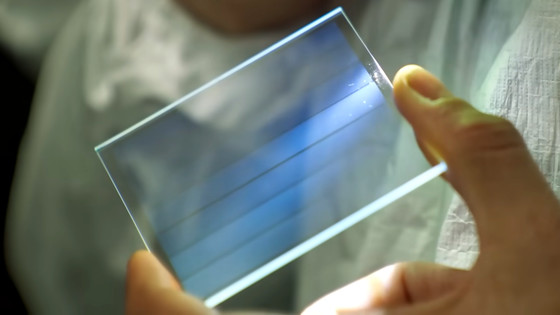
The key point of the research announced this time by Microsoft Research is that it demonstrated data storage on borosilicate glass, which is also used in kitchen cookware and oven doors. Because borosilicate glass is inexpensive and readily available, Microsoft Research says that it solves major challenges in practical application, such as storage cost and media availability.
Furthermore, this research devised a new data recording method called 'phase voxels.' While conventional methods require multiple pulses, this new method records data with just a single laser pulse, significantly reducing the complexity and cost of the writing process. Furthermore, the equipment required to read the written data has also been simplified, requiring only one camera instead of the three or four required previously, making the reader smaller and less expensive.
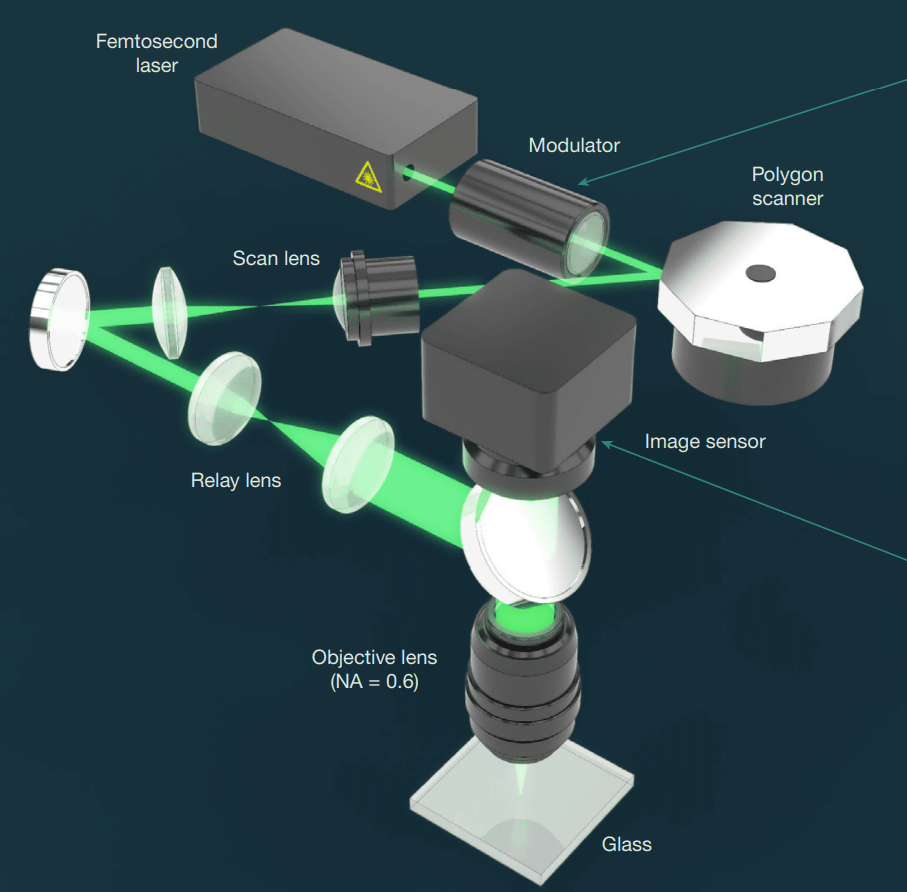
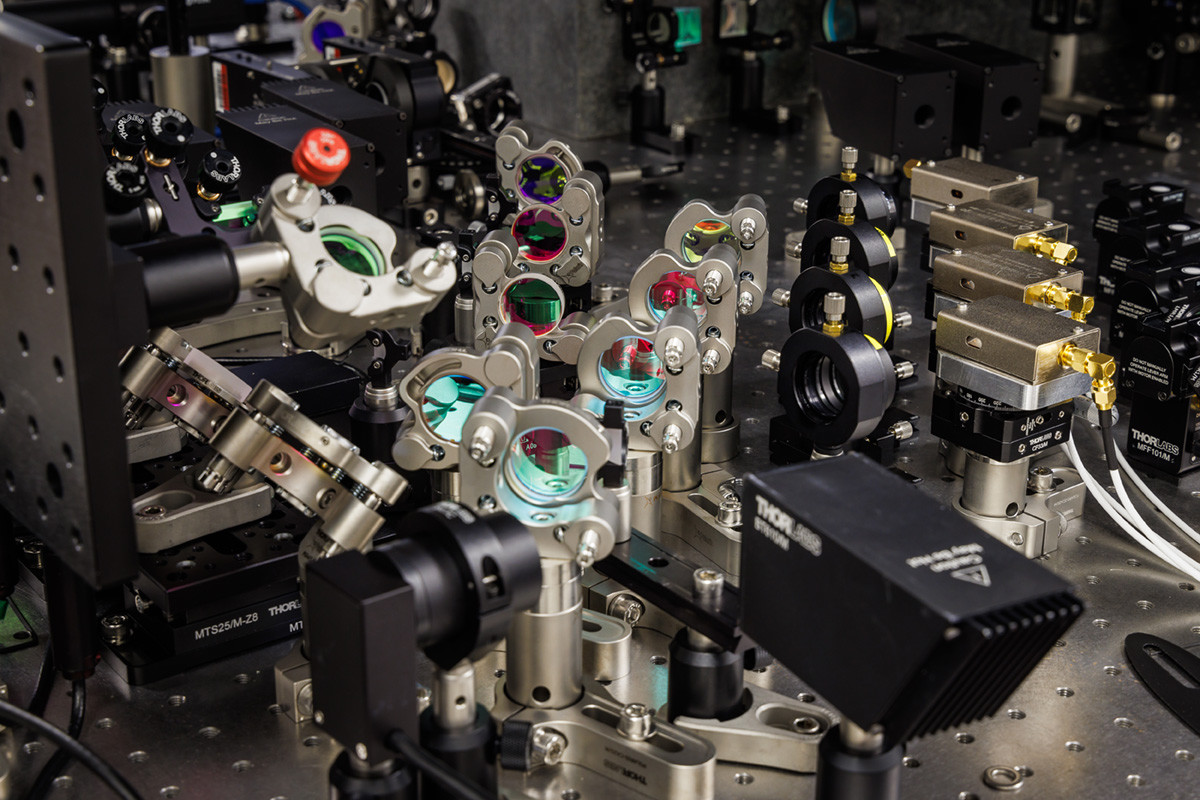
Furthermore, the development of a multi-beam distribution system based on thermal simulations has enabled parallel writing using multiple beams, dramatically improving throughput. In fact, a writing speed of 65.9 Mbit/s was demonstrated in parallel writing using four beams, demonstrating that high speeds are possible without thermal damage to the media.
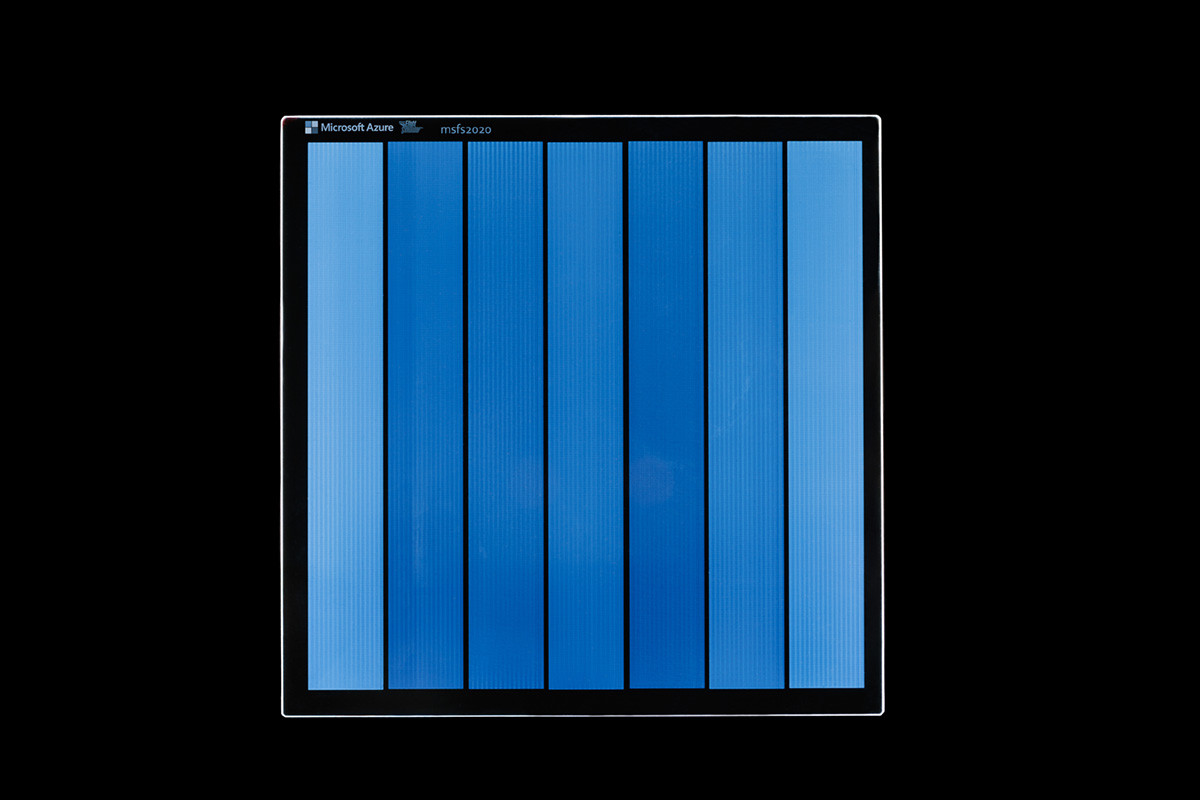
In this research, a practical capacity of 4.8TB was achieved on a single 120mm square, 2mm thick synthetic quartz glass plate, and 2.02TB on a borosilicate glass plate. The recording density reached 1.59Gbit/ mm³ on the synthetic quartz plate, achieving multi-layer recording of over 300 layers. Considering that the lifespan of existing magnetic tape and hard disk drives is only a few decades, this is a groundbreaking achievement, breaking the current situation where periodic data migration requires significant costs and energy.
Regarding durability, accelerated aging tests based on
Regarding the current status and future of Project Silica, Microsoft Research stated, 'The research phase is now complete, and we continue to consider learnings from Project Silica as we explore the ongoing need for sustainable, long-term preservation of digital information. We have added this paper to our published works so that others can build on it.'
Related Posts: