A mystery novelist explains that AI-powered deepfakes are influencing mystery novels.

The development of generative AI has made it possible to generate incredibly realistic videos, images, and audio with significantly less effort and time than before.
Crime Reads » How AI Deepfakes Are Changing the Rules of Crime Fiction
https://crimereads.com/how-ai-deepfakes-are-changing-the-rules-of-crime-fiction/
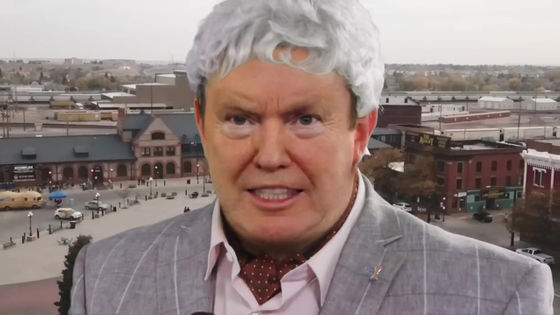
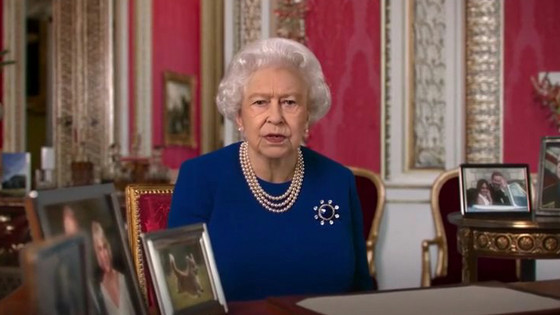
Deepfakes, which use AI to make it appear as if real people have done or said things they didn't, were once extremely costly to produce and lacked credibility. However, in recent years, the proliferation of high-performance generative AI has made it possible to generate deepfakes with significantly less effort and time than before. Governments around the world are trying to understand the impact of deepfakes, but as of the time of writing, sufficient legal regulations are not in place.
In a situation where it's no longer possible to determine authenticity simply by carefully examining the images and videos themselves, the only thing we can rely on to distinguish whether something is AI-generated is the broad context surrounding the people and objects appearing in the video or image. People are left with no choice but to make judgments like, 'I can't imagine Tom Hanks appearing in a dubious dental insurance ad, so this ad is probably AI-generated.'
Deepfakes are most effective when used to deceive specific targets by thoroughly researching the people they feature in videos and other content. In 2024, a finance officer working for a Hong Kong engineering company was invited to a video conference by someone claiming to be the Chief Financial Officer (CFO). The victim was completely convinced because the faces and voices of the CFO and colleagues in the video conference were so realistic that they transferred 200 million Hong Kong dollars (approximately 3.8 billion yen) to the account as instructed, but it was later discovered to be a scam. It turned out that all the participants in the conference were fakes generated using deepfake technology.
A man accidentally sent 3.8 billion yen to a scammer following instructions from his deepfake boss. Is there a way to spot a deepfake? - GIGAZINE

Fraud that doesn't target specific individuals is more common, with numerous dubious advertisements featuring celebrities and businesspeople appearing on social media. There are also cases where deepfakes, created to damage the reputation of politicians, are spread through bot accounts.
McTiernan argues that deepfakes make for excellent subject matter in crime novels, and indeed, deepfakes are used as a means of personal attacks in his book ' Three Reasons for Revenge .'
Deepfakes appear twice in 'Three Reasons for Revenge.' The first is a video that appears to show a psychologist named Robert having sex with a patient, and the second is an audio recording of a fashion designer named Elsa harshly criticizing her influencer employer. Apparently, one of these is real and the other is a deepfake, but in the film, both Robert and Elsa claim that it is a deepfake.
This puts those around the victim in a desperate situation: 'Should we trust the person we've interacted with so far, or should we believe videos and audio that look completely authentic?' McTiernan states, 'Deepfakes are the worst kind of personal attack if you are innocent. A video that uses your voice, nuances, tone, lips, cheeks, and dimples to convey a message that is the exact opposite of what you want is a serious form of violence. Once that video is out there, you will have to live in constant anxiety. You will always be worried about who saw it and who believed it.'
On the other hand, for those who have been put in a precarious position by the release of genuine videos or recordings, the claim that 'this is a deepfake' has become a new escape route. However, McTiernan argues that the tactic of attacking legitimate evidence as a deepfake would only be effective for the wealthy, who can hire PR firms specializing in reputation management and manipulate public opinion through bots and influencers.

When deepfakes render evidence itself unreliable, the truth that is accepted depends not on 'what has been proven,' but on 'who can be trusted,' 'how often the claims are repeated,' and 'whose side of the story is heard first.' In 'Three Reasons for Revenge,' deepfakes shake relationships, forcing those around Robert and Elsa to choose between trusting relationships they've built over years and trusting just a few seconds of video or audio.
McTiernan stated, 'Crime novels have always asked what happened, who to believe, and what is admissible as evidence. And new technologies have always presented opportunities and challenges to law enforcement, both in fiction and in reality. What makes deepfakes different is that they strike at something personal and irreplaceable: our own judgment, our eyes and ears, and our trust in one another.'
Related Posts: