Research suggests that psychopathic personality traits are linked to microorganisms in the body.

Gut and oral microbiota composition is associated with psychopathic personality: a cross-sectional study | Translational Psychiatry
https://www.nature.com/articles/s41398-026-04052-z
Meditation Retreat Rapidly Reprograms Body and Mind
https://today.ucsd.edu/story/meditation-retreat-rapidly-reprograms-body-and-mind
Psychopathic Tendencies Are Linked to Microbes Inside Your Body, Study Reveals : ScienceAlert
https://www.sciencealert.com/psychopathic-tendencies-are-linked-to-microbes-inside-your-body-study-reveals
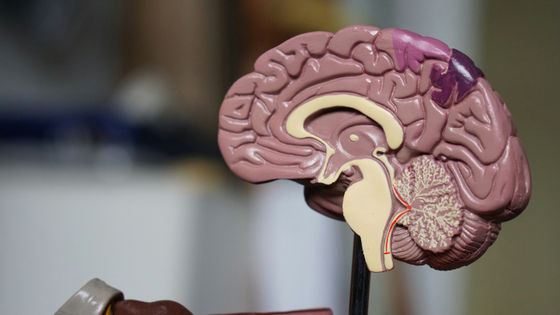
Psychopathic tendencies include a lack of empathy, antisocial behavior, impulsivity, and selfishness, with a clinical prevalence of approximately 1%. While the biological basis of psychopathy is not yet fully understood, previous research has shown that the brains of psychopaths share structural commonalities.
Common characteristics of 'psychopathic brains' revealed through brain scans - GIGAZINE

However, a research team led by biomedical researcher Carolina Costa believed that brain structure is not the only factor influencing psychopathy. At the time of the research, Costa was a doctoral student at the University of Porto, and at the time of writing, she is a postdoctoral researcher at the University of Oxford.
In their paper, the research team states, 'While changes in the brain, particularly in the prefrontal cortex and temporal limbic system , appear to be directly related to psychopathy, this alone is insufficient to provide a comprehensive neurobiological explanation for psychopathic behavior.'
The research team then hypothesized that 'the composition of the gut and oral microbiome may be related to latent psychopathy.' While previous studies have shown that internal microorganisms influence fear responses and various mental illnesses , the link to psychopathy remained unclear.
In this study, 200 healthy adult participants were asked to complete a questionnaire designed to measure psychopathy, and to provide blood, saliva, and stool samples. The research team analyzed these responses and samples to investigate the relationship between psychopathy and the microorganisms in the body.

The analysis revealed no clear correlation between gut and oral microbiota diversity and psychopathy. However, a positive correlation was found: the greater the amount of bacteria in the gut microbiota, particularly
While these results do not indicate a causal relationship, it is possible that each bacterium may, in some way, influence psychopathic tendencies. The research team points out that Alisonella species have long been associated with several diseases, and that this may be because they promote inflammation associated with anxiety and depression .
Similarly, Prevotella species have been linked to neuropsychiatric disorders and are thought to affect emotional processing . Furthermore, Croatibacillus ebriensis is suspected to be a bacterium that produces gamma-aminobutyric acid (GABA) , an inhibitory neurotransmitter involved in the regulation of impulsivity.
Furthermore, this study also found a correlation between higher levels of Treponema vincentii in the oral microbiome and lower psychopathic tendencies. However, the researchers have not yet discovered the mechanism by which Treponema vincentii influences psychopathic tendencies.

It is important to note that this study only found correlations and does not demonstrate a causal relationship that 'having a high amount of certain gut bacteria leads to becoming a psychopath.' Furthermore, the paper published early in the psychiatric journal Translational Psychiatry is an unedited version and may undergo further editing before final publication.
Related Posts:






in Science, Posted by log1h_ik