Cloudflare has open-sourced its internal AI platform, 'Cloudflare OS,' enabling the creation of business applications while protecting confidential information.

Cloudflare has open-sourced a new version of its internal AI platform, 'Cloudflare OS.' This new version allows AI agents to securely access internal company data and can be used for tasks such as document creation, research, business application development, and automation of routine tasks.
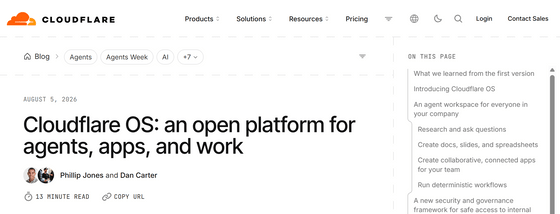
Cloudflare OS: an open platform for agents, apps, and work | The Cloudflare Blog
To effectively utilize AI for work, it needs access to internal documents and business systems. However, granting AI broad permissions could lead to the leakage of confidential information or unintended operations. On the other hand, strictly restricting permissions would reduce it to a chatbot that can only answer general questions.
To achieve a balance between convenience and security, Cloudflare rebuilt Cloudflare OS, which it had been using internally. The initial version of the application was not software that continuously connected to and operated with internal systems, and even for tasks with largely fixed processing procedures, it was necessary to re-execute agent skills and consume AI model tokens. Furthermore, there was a risk that confidential information could be exposed to users who did not have permission to view the original data through the sharing of deliverables.
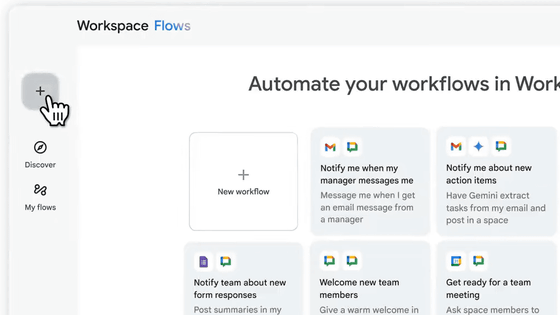
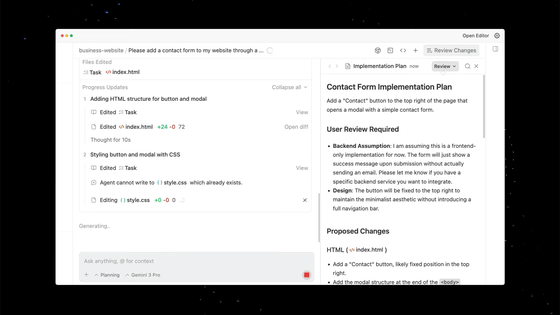
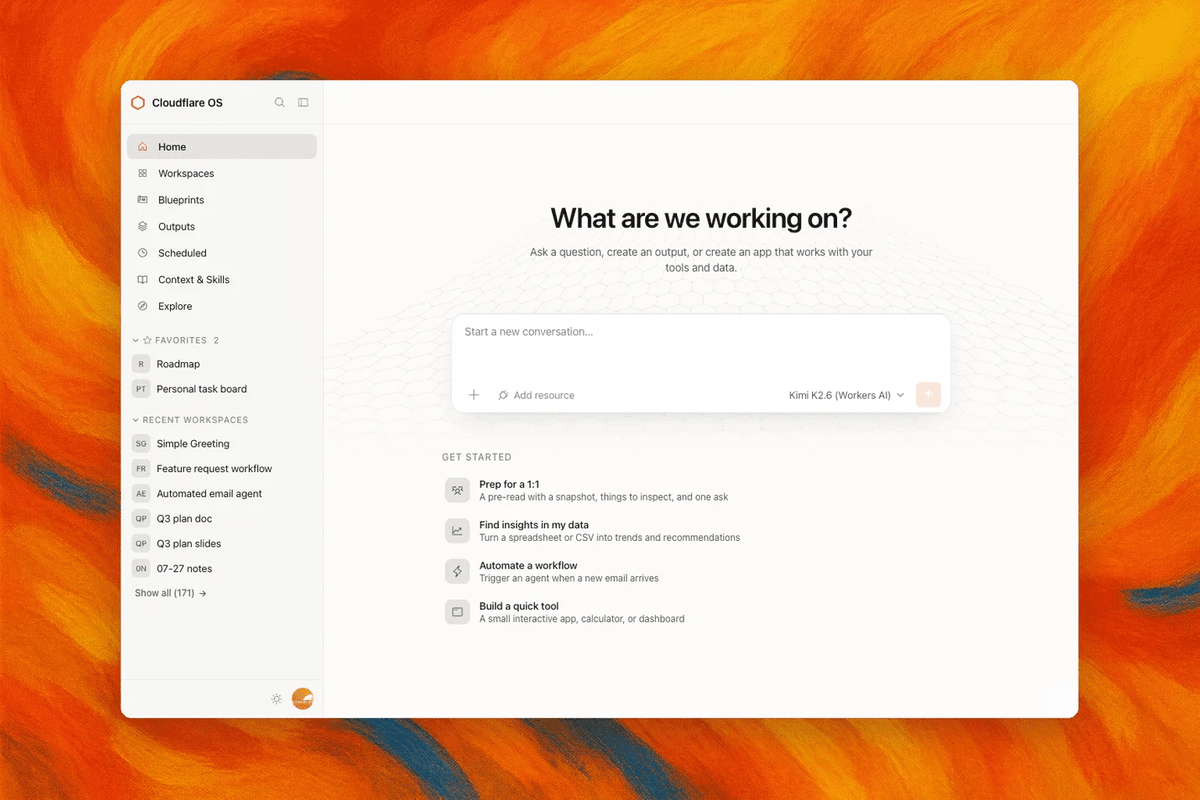
The new Cloudflare OS allows you to execute predefined processes as regular programs and utilize AI models only when decision-making is required. Users can create documents, spreadsheets, dashboards, and business applications simply by communicating their objectives in natural language. Created workflows can be executed when needed, or automatically triggered by scheduled events or events within the company's internal systems.
Furthermore, to ensure the secure handling of internal company information, Cloudflare provides 'Gatekeeper,' a Cloudflare Worker that mediates access between Cloudflare OS and external services. AI and created applications have no access rights by default; users and administrators only grant permission for the data and operations they need, and Gatekeeper applies the access policies set by the user. For example, it can be set so that only specific repositories are read instead of the entire GitHub account, or so that GitHub issues can be read but source code cannot be opened.
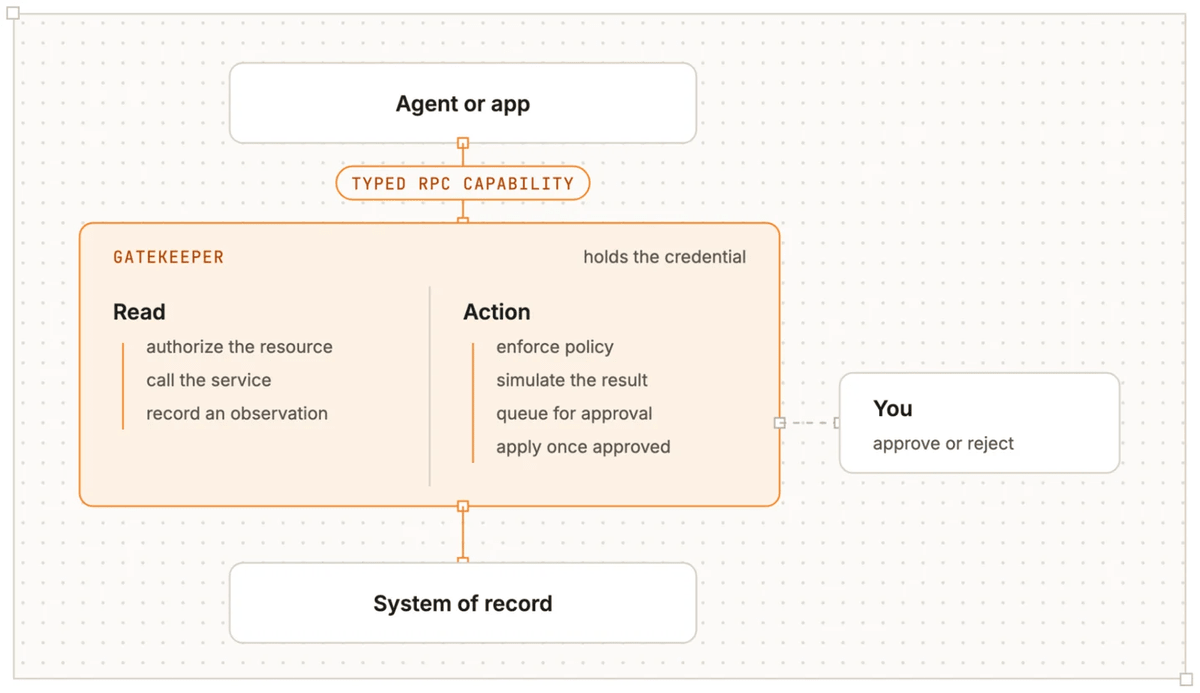
Cloudflare OS records the resources referenced by the AI, and the gatekeeper verifies that users opening the artifacts have access to the original resources. When sharing dashboards created with sensitive data, the system verifies that viewers have access to the original data before displaying them. This means that the system manages not only when information is passed to the AI, but also who the generated artifacts are shared with.
The business applications you create can be shared with other users, and can also be duplicated as a 'Blueprint,' which serves as a template for the application. Blueprints only contain the program; saved data, conversation history, and authentication information are not carried over.
Cloudflare OS is released under the Apache License 2.0, allowing companies and developers to deploy it as their own internal AI platform and customize the interface and integration features. As of the time of writing, it is an early access version still under development, and Cloudflare states that it plans to add features such as a fully managed service accessible from an administration panel and the ability to operate it from Slack in the future.
Related Posts: