Read for free 'Guidelines for Commanding During the Initial Stages of a Disaster,' based on real-life experiences from the Great East Japan Earthquake: What actions should commanders take in the first hour, first day, and first week after a disaster strikes?
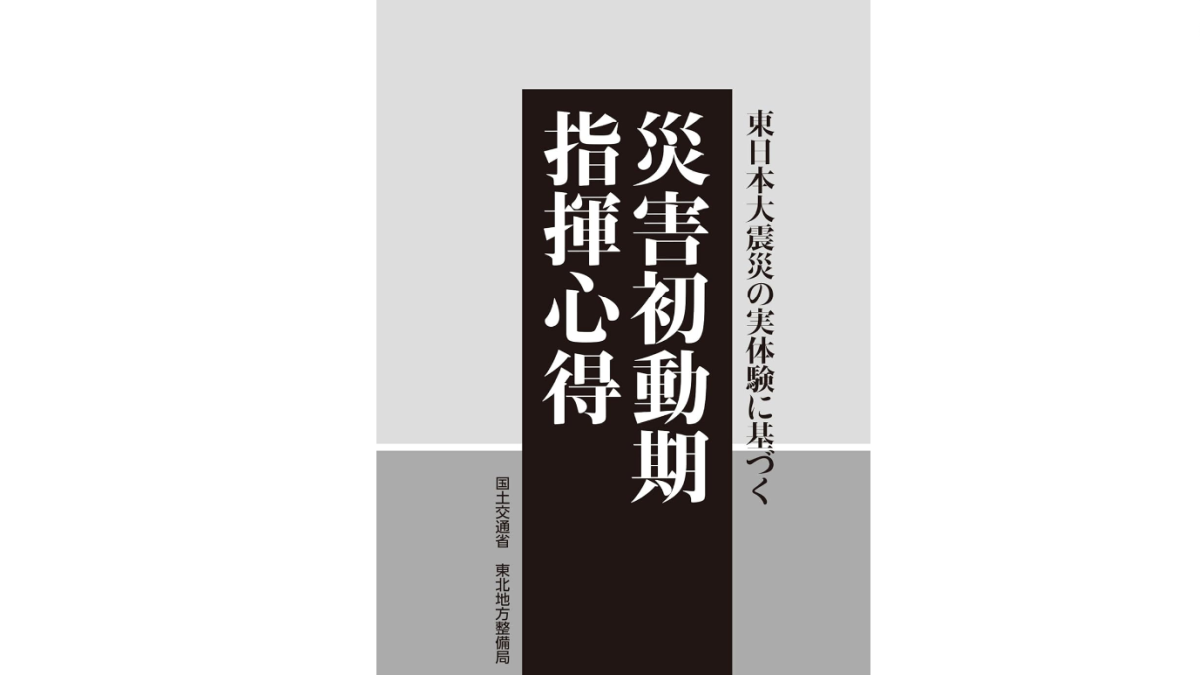
When a large-scale disaster occurs, those in command of the disaster response are forced to make decisions from the very beginning, even regarding situations not anticipated in the pre-established disaster prevention plan. Based on the experience gained from the Great East Japan Earthquake, the Tohoku Regional Development Bureau of the Ministry of Land, Infrastructure, Transport and Tourism has compiled a book titled 'Guidelines for Commanding in the First Hour, Day, and Week After a Disaster,' outlining 'Actions Commanders Should Take in the First Hour, Day, and Week After a Disaster,' which is available for free on Kindle.
Disaster Memorial Museum: Command Guidelines for the Initial Stage of a Disaster
https://www.infra-archive311.thr.mlit.go.jp/kokoroe.html
When the Great East Japan Earthquake struck on March 11, 2011, the Tohoku Regional Development Bureau, which was responsible for disaster response including securing relief routes, providing support to affected municipalities, and procuring supplies, compiled the experience gained from that time into internal documents and created a set of specific action guidelines for commanders at all levels of the regional development bureau, titled 'Guidelines for Commanding in the Initial Stages of a Disaster.'
According to a 2015 press release (PDF file) from the Tohoku Regional Development Bureau, the printed book 'Guidelines for Commanding in the Initial Stages of a Disaster' has been sold for a fee as a public service by the Tohoku Regional Development Association since August 2013. On February 9, 2015, it was converted into an ebook with the cooperation of Amazon, and free Kindle distribution of both Japanese and English versions began. The English version was created by the Japan International Cooperation Agency (JICA) and is reportedly used as training material for crisis management by the regional development bureau and JICA.
The purpose of compiling the 'Guidelines for Commanding During the Initial Stage of a Disaster' is as follows:
- Sharing 'experiential knowledge' that only those who have personally experienced the Great East Japan Earthquake can understand, among those involved.
- To serve as a guideline for navigating the first week until recovery and reconstruction in accordance with disaster prevention plans get on track.
This will serve as a guideline for commanders at all levels of regional development bureaus to keep in mind when preparing for a major earthquake directly beneath the capital, or earthquakes in the Tokai, Tonankai, and Nankai regions.
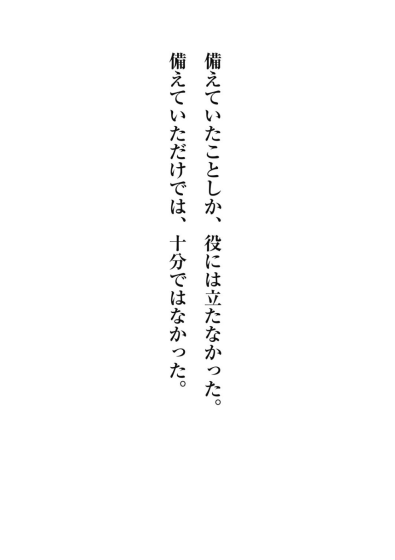
The Tohoku Regional Development Bureau reflected that 'in the Great East Japan Earthquake, only what we had studied past disasters, prepared countermeasures, and trained for actually proved useful,' but explained that since the nature of each disaster is different, it is necessary to be familiar with past lessons and apply them flexibly. They wrote, 'Only what we had prepared for was useful. But preparation alone was not enough.'
The 'Guidelines for Commanding During the Initial Stages of a Disaster' consists of 211 pages and is comprised of the following six chapters.
◆Chapter 1: The Mission of Regional Development Bureaus
Section 1: The Mission of Local Development Bureaus Regarding Disasters
Section 2: The Mission of Each Class Commander
◆Chapter 2: One hour after the disaster strikes
Section 1: Actions to take within one hour after a disaster strikes
Section 2: Establishing an Initial Response System
Article 1: Initial arrangements by the assembled participants
Article 2: Return of absent executives
Section 3: Sharing awareness among all staff members
Section 4: Disaster Response Headquarters
Section 3: Initial Instructions
Section 1: Information Gathering (System)
Section 2 Information Gathering (Management Facilities)
Section 3: Utilization of disaster relief helicopters
Section 4: Preparation for Information Dissemination
Item 5: Liaison dispatch (prefecture/Self-Defense Forces)
Section 6 Record
◆Chapter 3: The Day After the Disaster
Section 1: Actions to take within one day after a disaster strikes
Section 2: Preparing to secure a relief route
Section 1: Preparation for road opening
Section 2: Preparation for opening up the shipping lane
Section 3: Arrangement of construction company and equipment
・Section 3 Regional support preparation
Section 1: Preparation for dispatching liaison officers (municipalities)
Article 2 Protection of refugees
◆Chapter 4: One Week After the Disaster - Operational Actions -
Section 1: Operational actions to be taken within one week after a disaster occurs.
Section 2: Establishing the System
Article 1 Establishment of a chain of command
Section 2: Expansion of the system in accordance with the situation
Section 3: Dispatch of TEC-FORCE
Section 3: Securing a rescue route
Section 1 Road clearing
Section 2 Route clearing
Section 3 Emergency Drainage
Section 4: Community Support
Article 1. Liaison dispatch (municipalities)
Article 2 Dispatch of disaster response equipment
Article 3 Procurement of Goods
Section 5: Response to Nuclear Power Plant Accidents
◆Chapter 5: One Week After the Disaster - Rear Support Section -
Section 1: Logistical support to be taken within one week after an incident occurs.
Section 2: Logistics
Article 1: Ensuring communication
Section 2: Support for Staff and Their Families
Section 3 Transportation of materials and personnel
Section 4 Food security
Section 5 Securing fuel
Section 3: Information Dissemination
Section 1: Press Releases and Media Coverage
Section 2: Responding to Inspection Visits from Domestic and International Sources
Section 3: Use of the Internet
Section 4: Collaboration with related organizations
Article 1 Cooperation with the Self-Defense Forces
Section 2 Cooperation with the Japan Coast Guard, etc.
Section 3: Collaboration with the Construction Industry
Section 5: Preparing for Rapid Recovery
Article 1 Temporary suspension of normal construction work
Section 2 Emergency discretionary contract
◆Chapter 6 Supplement
Section 1: Commendation of Distinguished Service
Section 2: Reduction of the organizational structure
The Kindle version is available for free from the link below.
Amazon.co.jp: Disaster Initial Response Command Guidelines Based on Real Experiences from the Great East Japan Earthquake (eBook): Tohoku Regional Development Bureau, Ministry of Land, Infrastructure, Transport and Tourism: Kindle Store
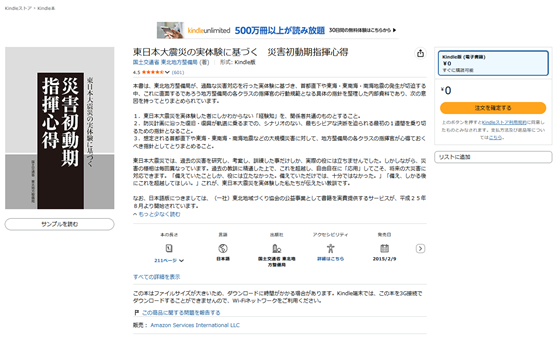
The following are excerpts from reviews of 'Disaster Initial Response Command Guidelines' submitted to Amazon.co.jp.
This book is a compilation of the government's initial response to the Great East Japan Earthquake, detailing how they responded, what was successful, and what they learned from their mistakes. It's not just a simple book on disaster preparedness; it contains many valuable insights into peacetime preparations for emergencies, organizational theory, and mindset during emergencies. Personally, I felt that points such as appointing proper managers, ensuring subordinates get enough rest, paying attention to meals, and eating meals together are universally applicable ideas, regardless of whether it's a crisis or peacetime.
I obtained this book as a reference when considering disaster prevention in my region. It was helpful because it describes realistic measures and lessons learned from a major earthquake, written from the perspective of someone in a leadership position in the local government. The use of photographs and maps conveyed the author's determination to pass on the lessons learned to future generations.
I think anyone in charge of general affairs or safety at their workplace would benefit from reading this. It covers basic things that you 'already know,' but it's very easy to understand because it's organized step-by-step and explains what to prepare and how to act.
It is free of unnecessary subjectivity, written based on facts and results, and interspersed with appropriate reasoning, making it very easy to read. That said, it is not a detached account, and the anxiety, confusion, and continuous decisions made during the earthquake are vividly conveyed.
Related Posts:





in Note, Posted by log1b_ok