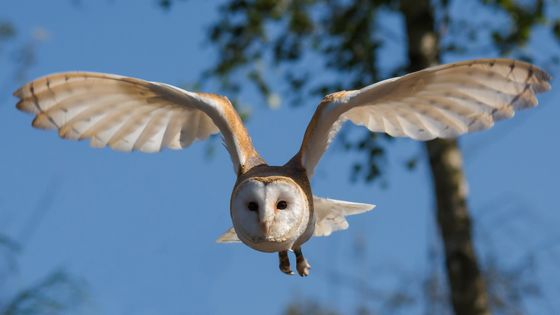
It has been discovered that barn owls use different hunting methods depending on their body color.
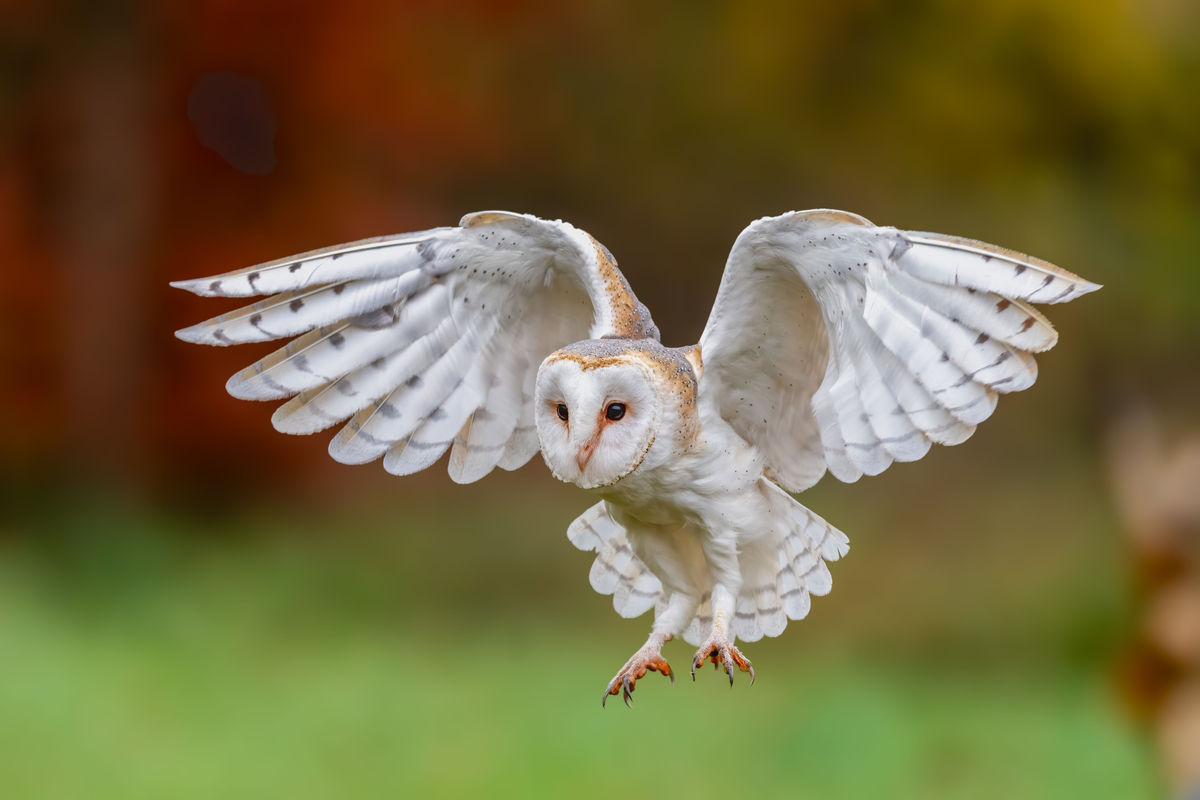
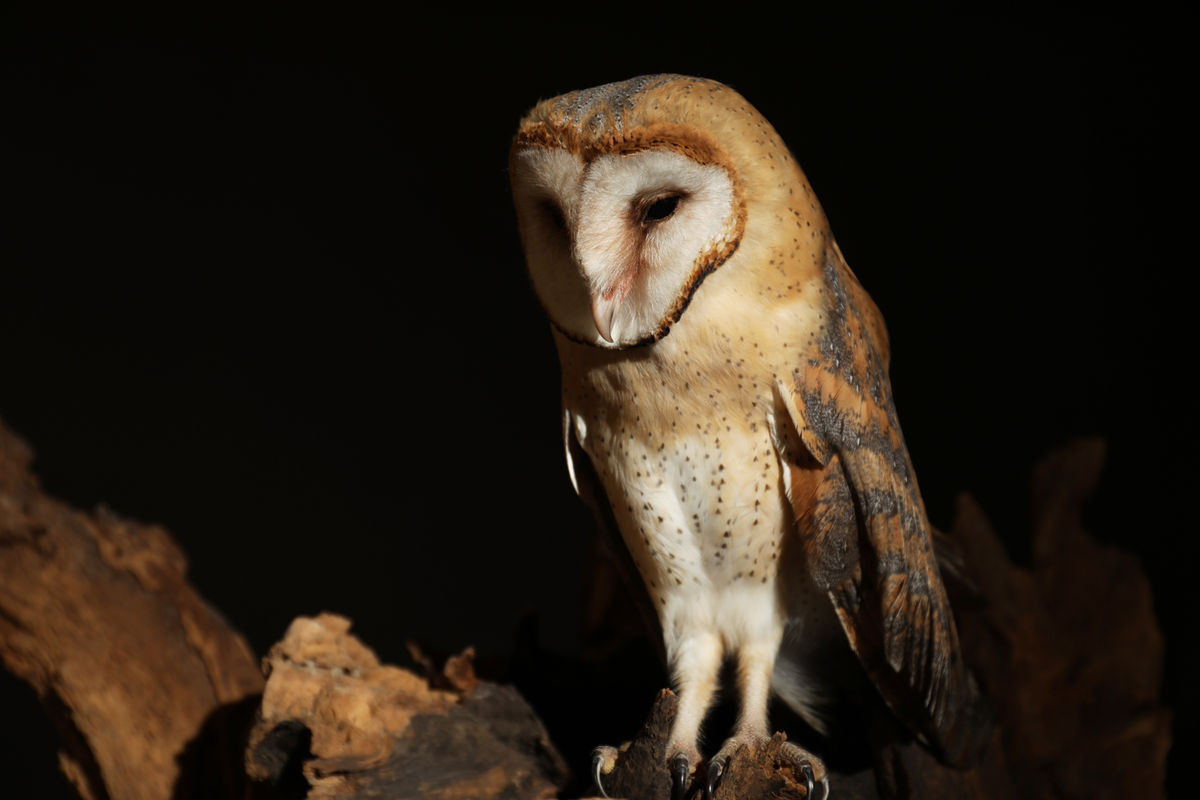
Barn owls have plumage in a variety of colors, from dark brown to bright white. New research has revealed that barn owls hunt using their own body coloration.
Barn owl color morphs hunt differently in moonlight: Current Biology
White barn owls may use moonlight to startle prey
https://phys.org/news/2026-06-white-barn-owls-moonlight-startle.html
Kim Schalcher and her colleagues at the University of Lausanne in Switzerland focused on barn owls with white feathers and decided to investigate the hunting methods of barn owls from the perspective of why they have such bright colors despite being predators.
Therefore, Schalcher and his colleagues attached tracking devices to 69 wild barn owls living in western Switzerland, recording their feather color, location, acceleration, and activity time for each individual. Furthermore, they investigated which areas of the ground were illuminated by moonlight and compared this with the owls' flight paths to determine where the shadows were cast.

The study revealed that under bright moonlight, white individuals tended to fly towards the moon more often than brown individuals. Schalcher et al. hypothesized that the white individuals reflected moonlight off their feathers, taking advantage of the small animals' tendency to freeze in surprise at sudden flashes of light to hunt.
White individuals preferred the brightest hours of the night and tended to avoid the brightest hours of the night on dimmer nights. This suggests they only utilize moonlight when it is strong. White individuals also preferred areas without shade and exhibited behavior that avoided exposing themselves to the dark at night. Brown individuals, on the other hand, only showed a slight preference for brighter hours. Schalcher et al. suggest that 'they may have chosen brighter hours simply because it improved their visibility, rather than trying to startle anything with the moonlight.'
Regarding the 'hunting success rate,' there was no difference between white and brown individuals, but the 'number of prey caught per hour' tended to increase in white individuals as the moonlight intensified. In addition, white individuals spent less time searching for food under a bright moon, indicating an overall improvement in foraging efficiency. Furthermore, on nights with a bright moon, white individuals had a higher hunting success rate, caught more prey per hour, and spent less time searching for food.
Schalcher and his colleagues stated, 'Despite being conspicuous, white owls consistently catch prey by flexibly adjusting the time and place they hunt. This behavior may break down as artificial lighting increases.'
Related Posts: