'Anthropeum' is a game where you click on a map to guess where and when historical artifacts housed in the Metropolitan Museum of Art were made.
The Metropolitan Museum of Art has released a game called ' Anthropeum ' where players try to guess when and where historical artifacts in its collection were made. There are over 500,000 artifacts in total, with 10 questions available each day. Players must deduce the date of creation and the country/region based on the appearance of the artifacts displayed on the screen.
Anthropeum
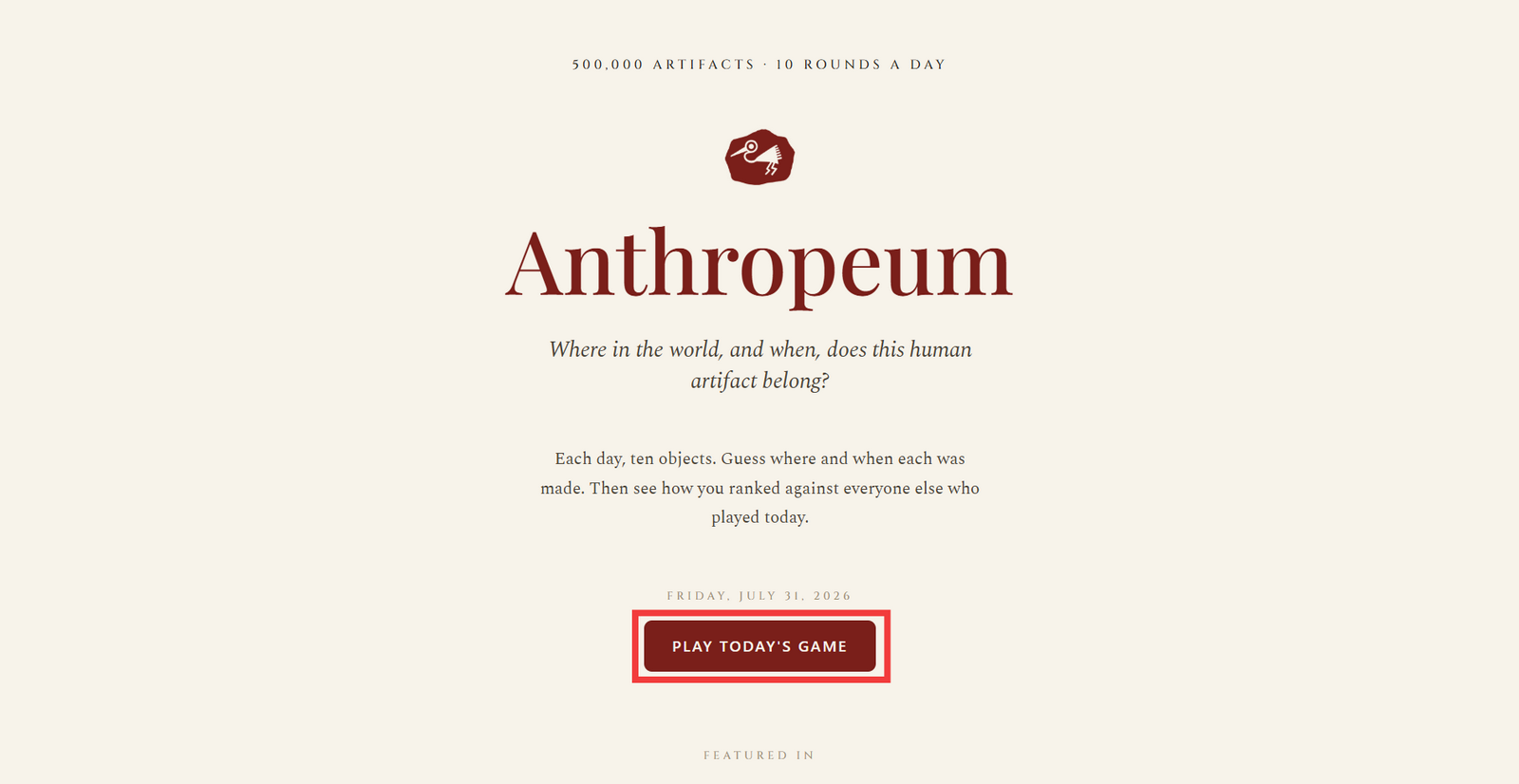
Go to Anthropeum and click 'PLAY TODAY'S GAME'.
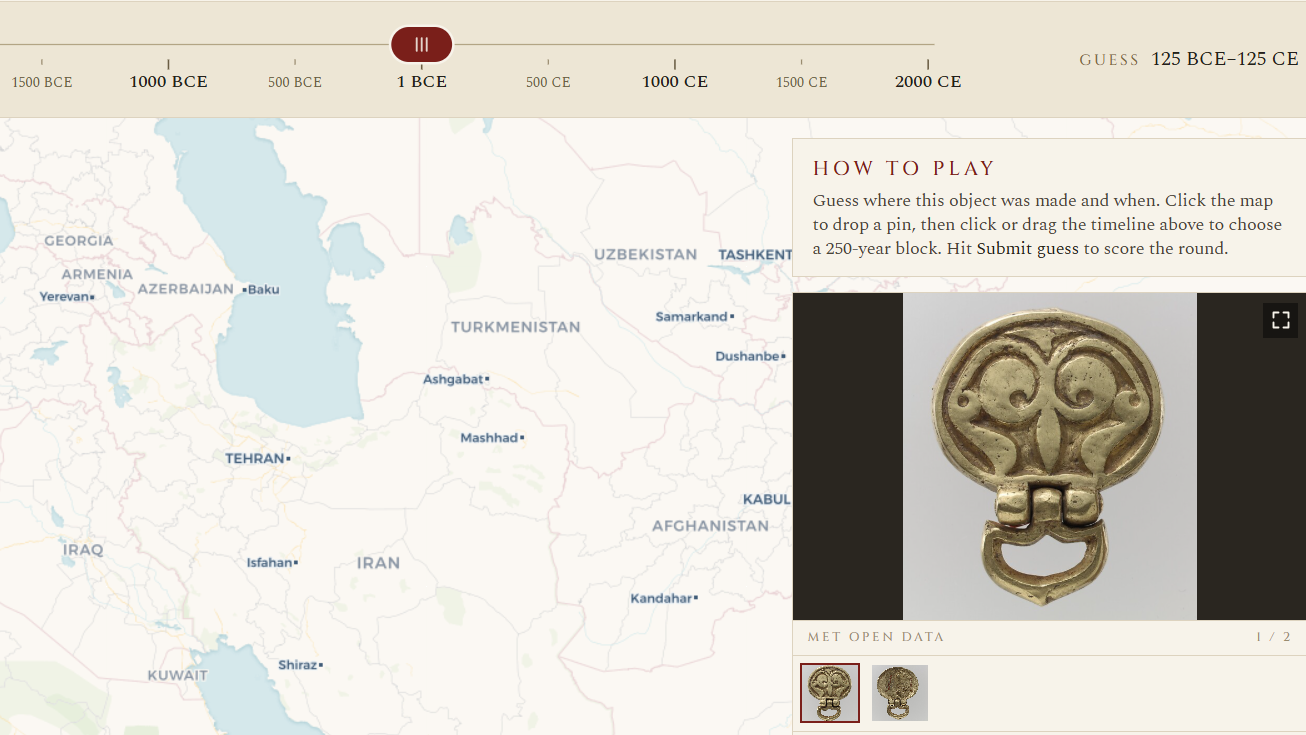
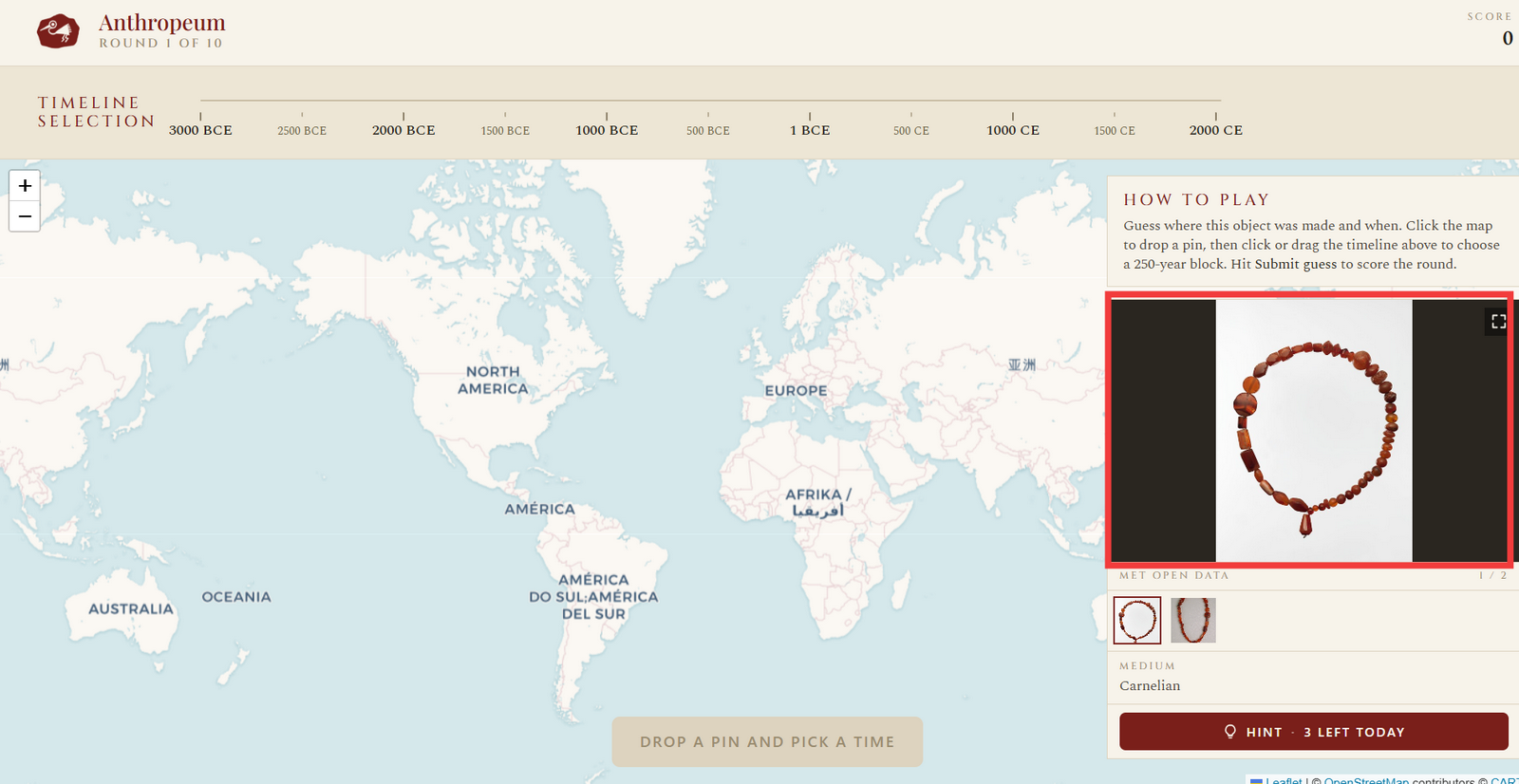
A number line representing the era is displayed at the top of the screen, a world map in the center, and historical artifacts on the right. Click on the photo.
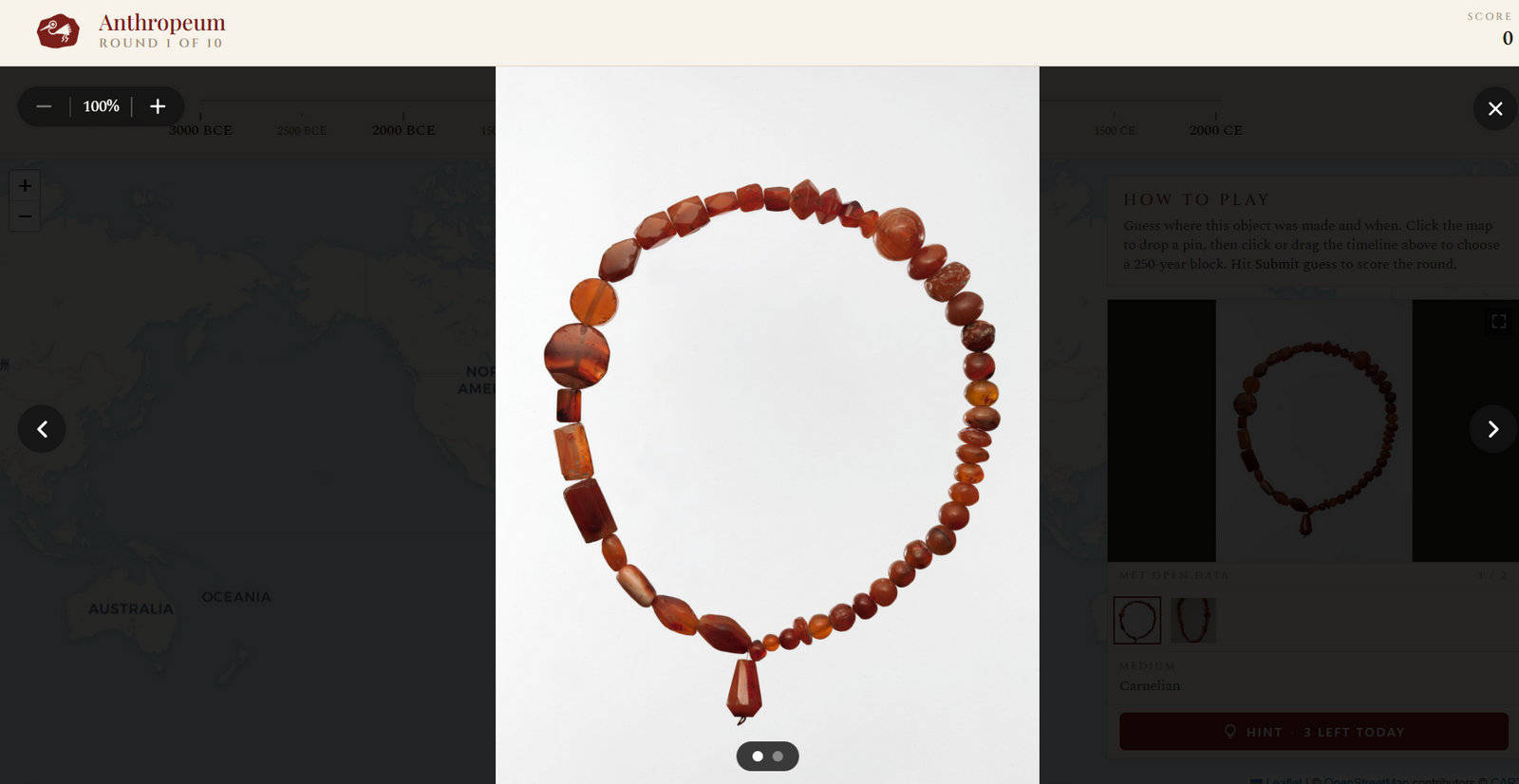
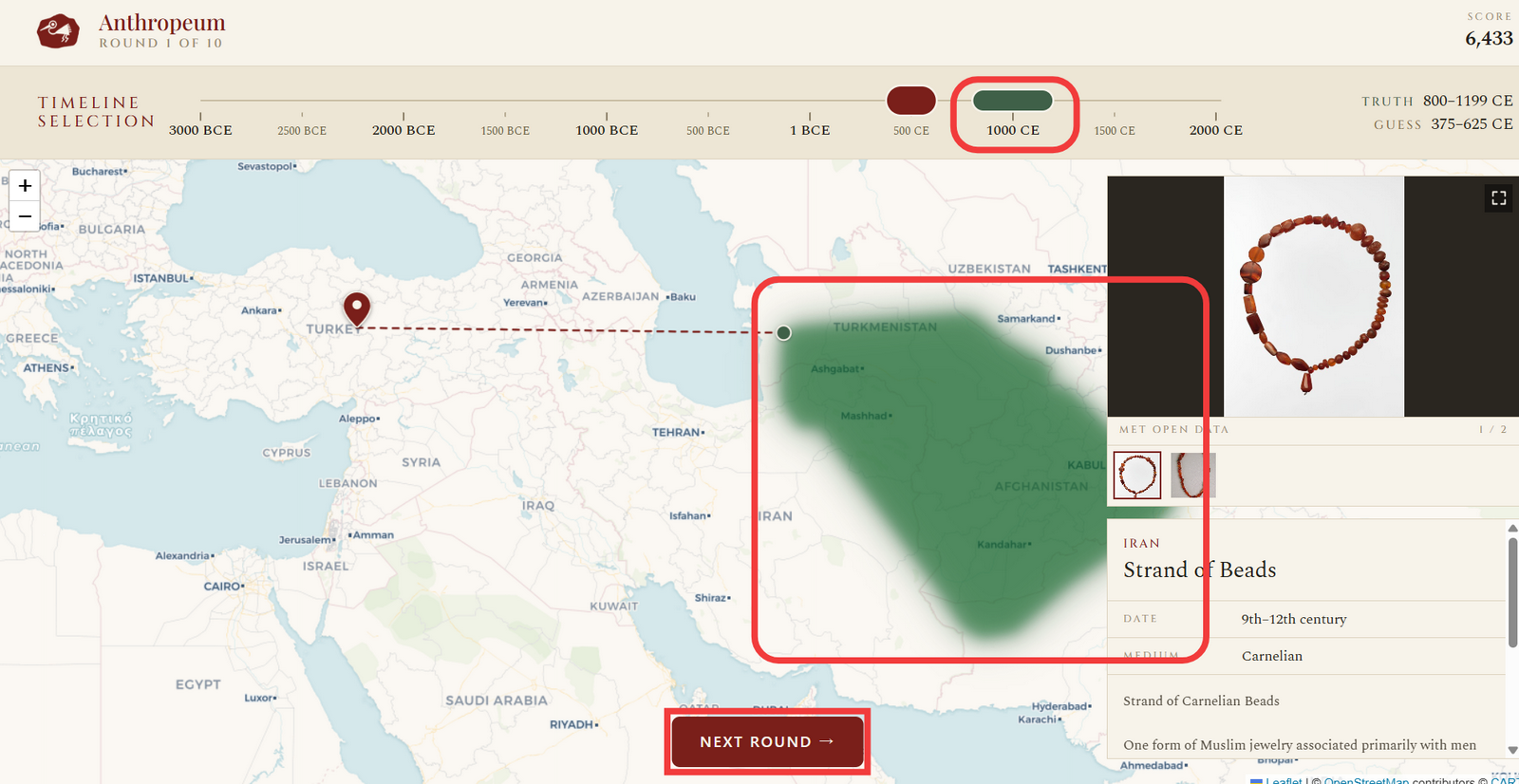
The photo was displayed in a larger size. It appears to be an ornament like a necklace, but the stones are beautifully polished and cut, suggesting a civilization with a certain level of craftsmanship.
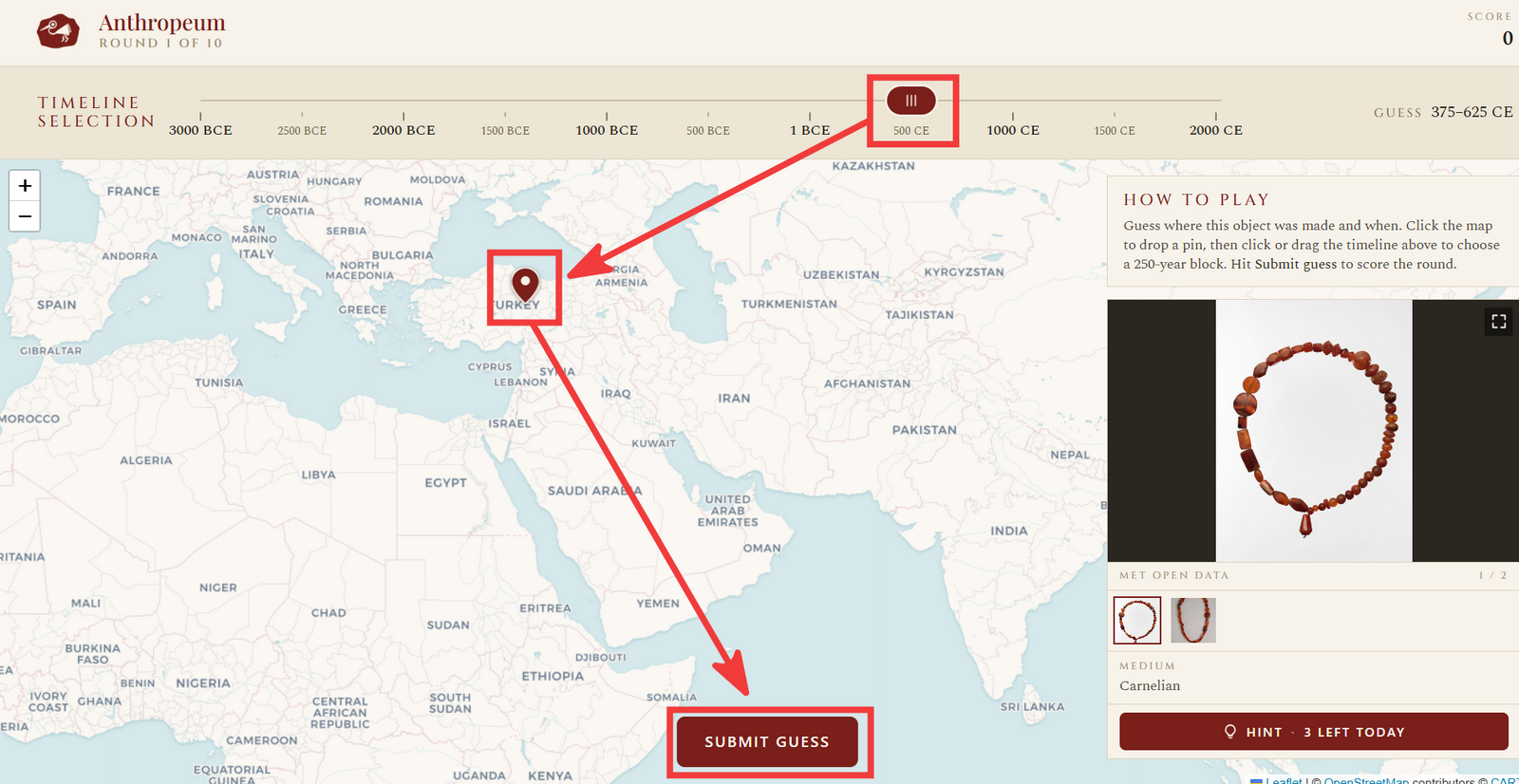
Therefore, assuming it was a moderately developed civilization, I clicked on the time period around 500 AD and the location around Turkey, known as the crossroads of Eastern and Western civilizations. I then clicked 'SUBMIT GUESS'.
The answer is that it was made in the Central Asian region from Turkmenistan to Afghanistan between the 9th and 12th centuries, so while the general guess wasn't bad, it was slightly off. There are 10 Anthropeum questions available each day, and to proceed to the next question, click 'NEXT GUESS'.
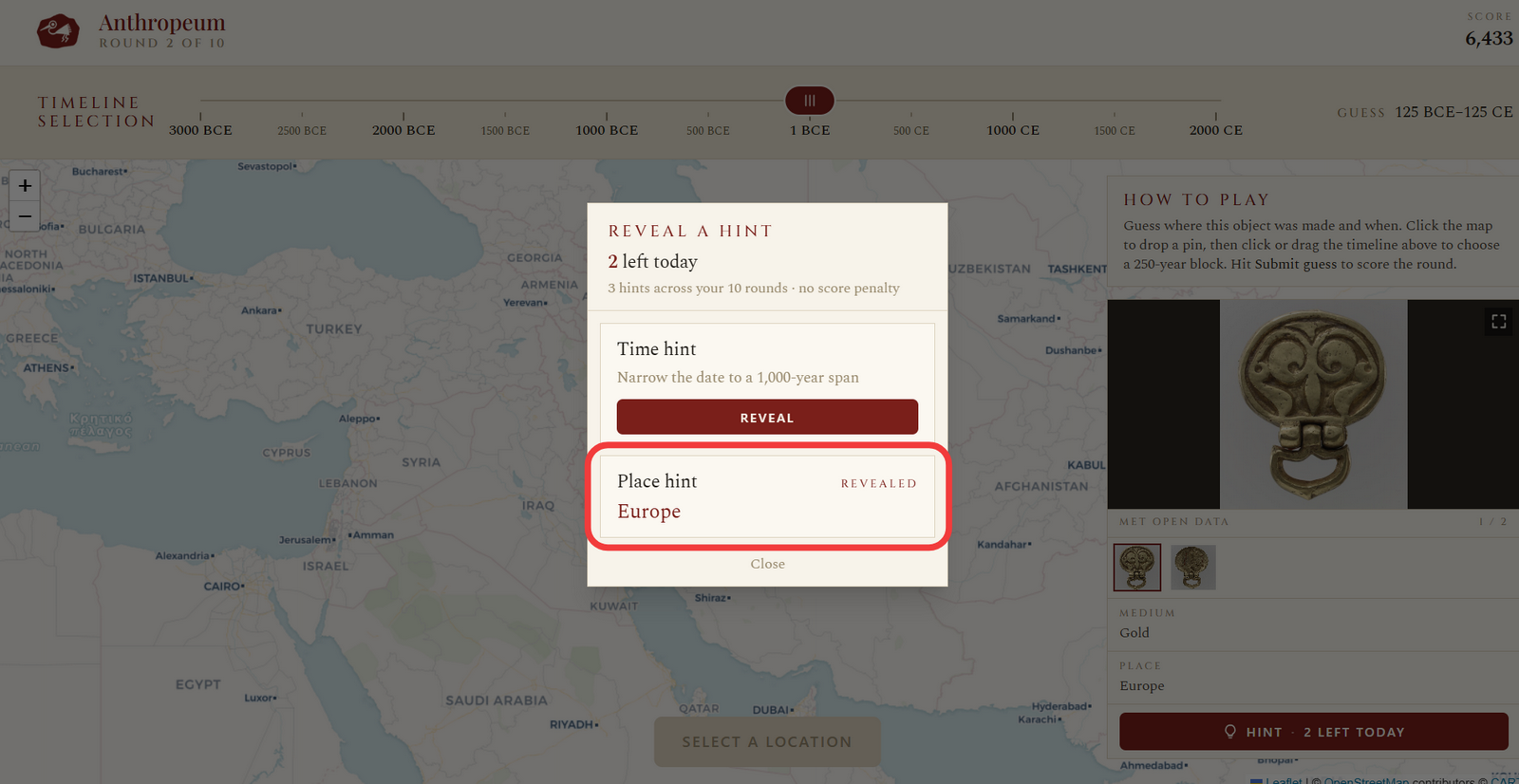
Next is a metal part. I have absolutely no idea what it's used for, but it looks like a door knocker.
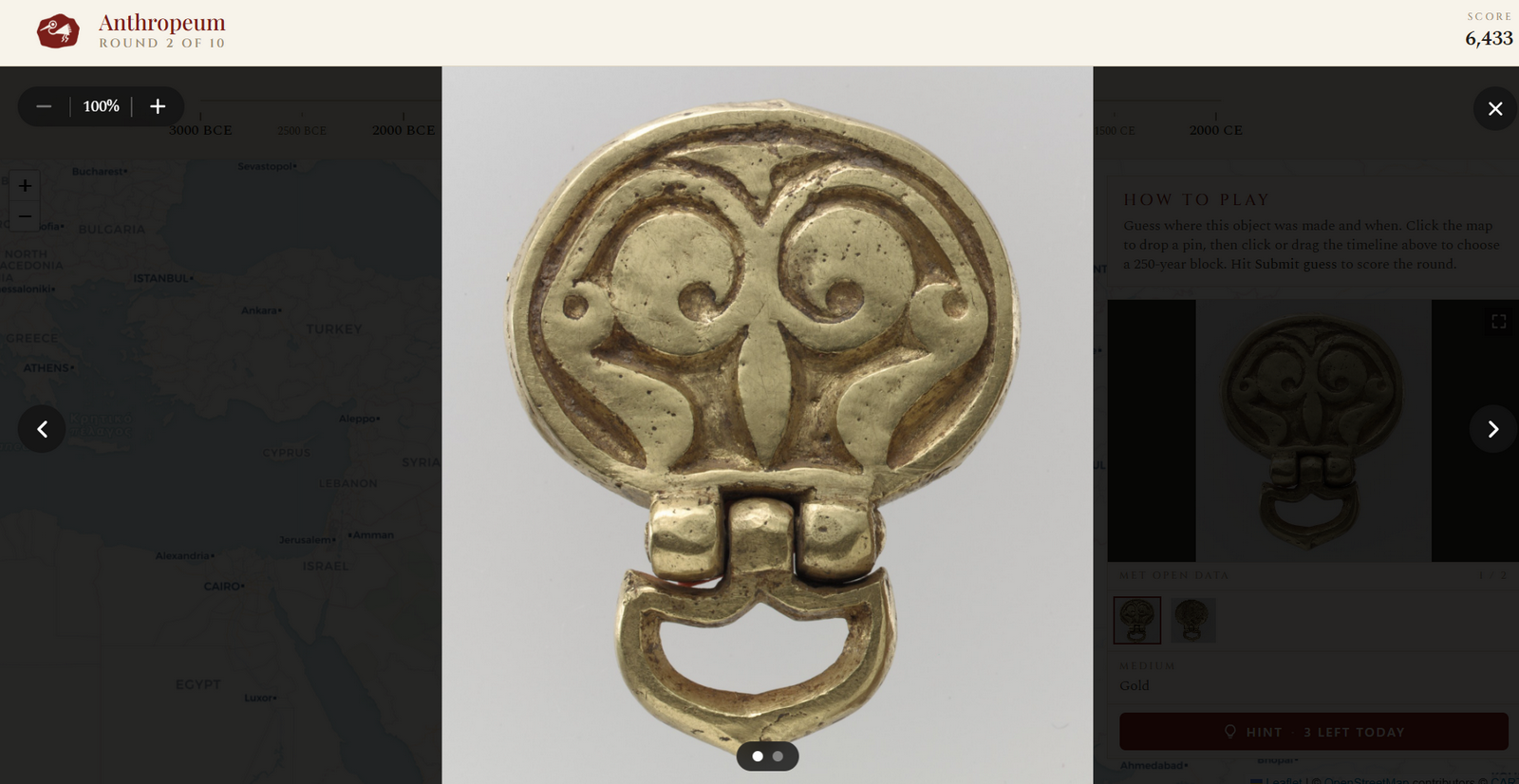
This alone doesn't allow us to make any deductions, but Anthropeum allows you to view hints up to three times a day. Click 'HINT' below the picture.
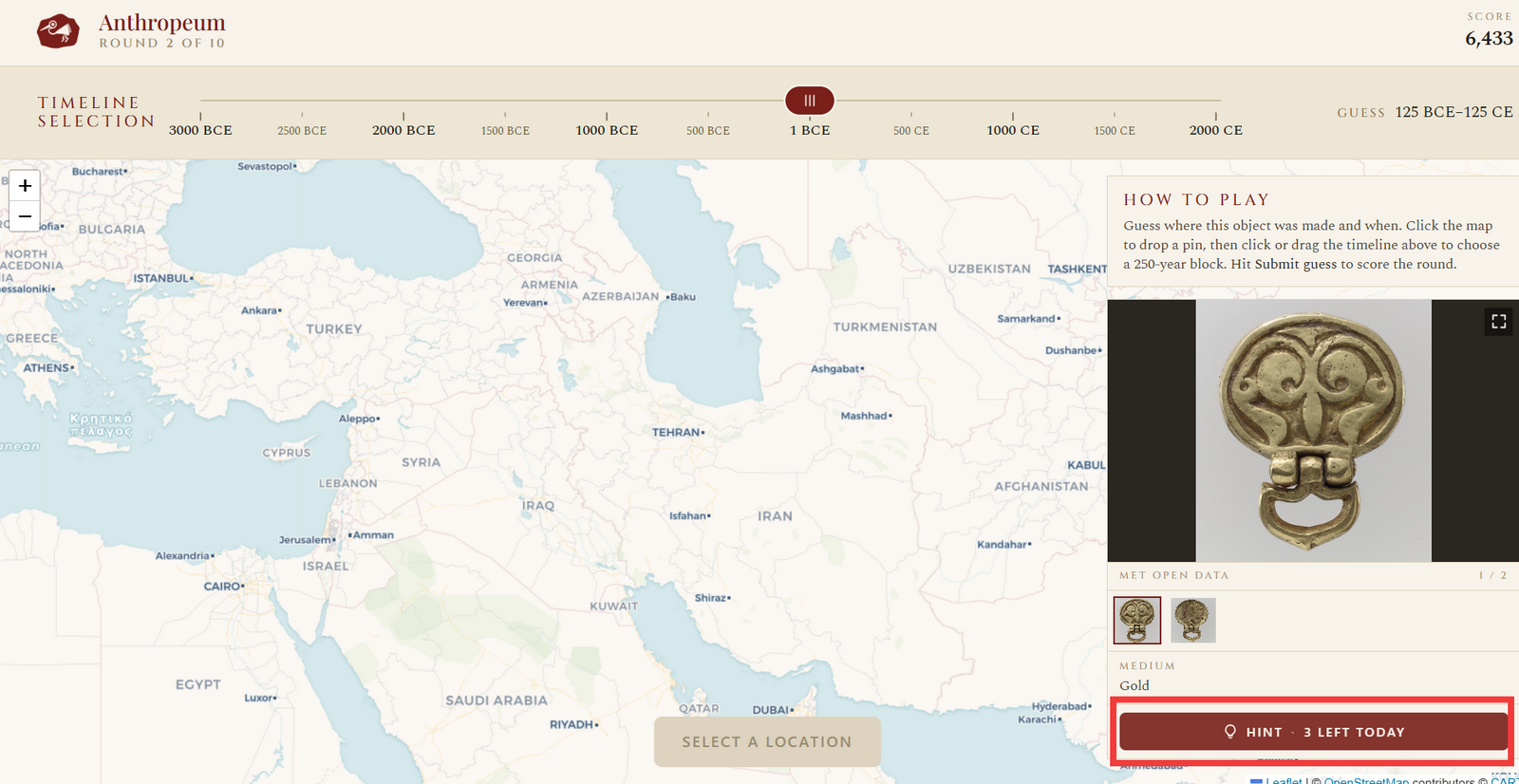
There are two types of hints: 'Time Hint' which indicates the time period, and 'Place Hint' which indicates the location. This time, click on 'REVEAL' in 'Place Hint' to check it out.
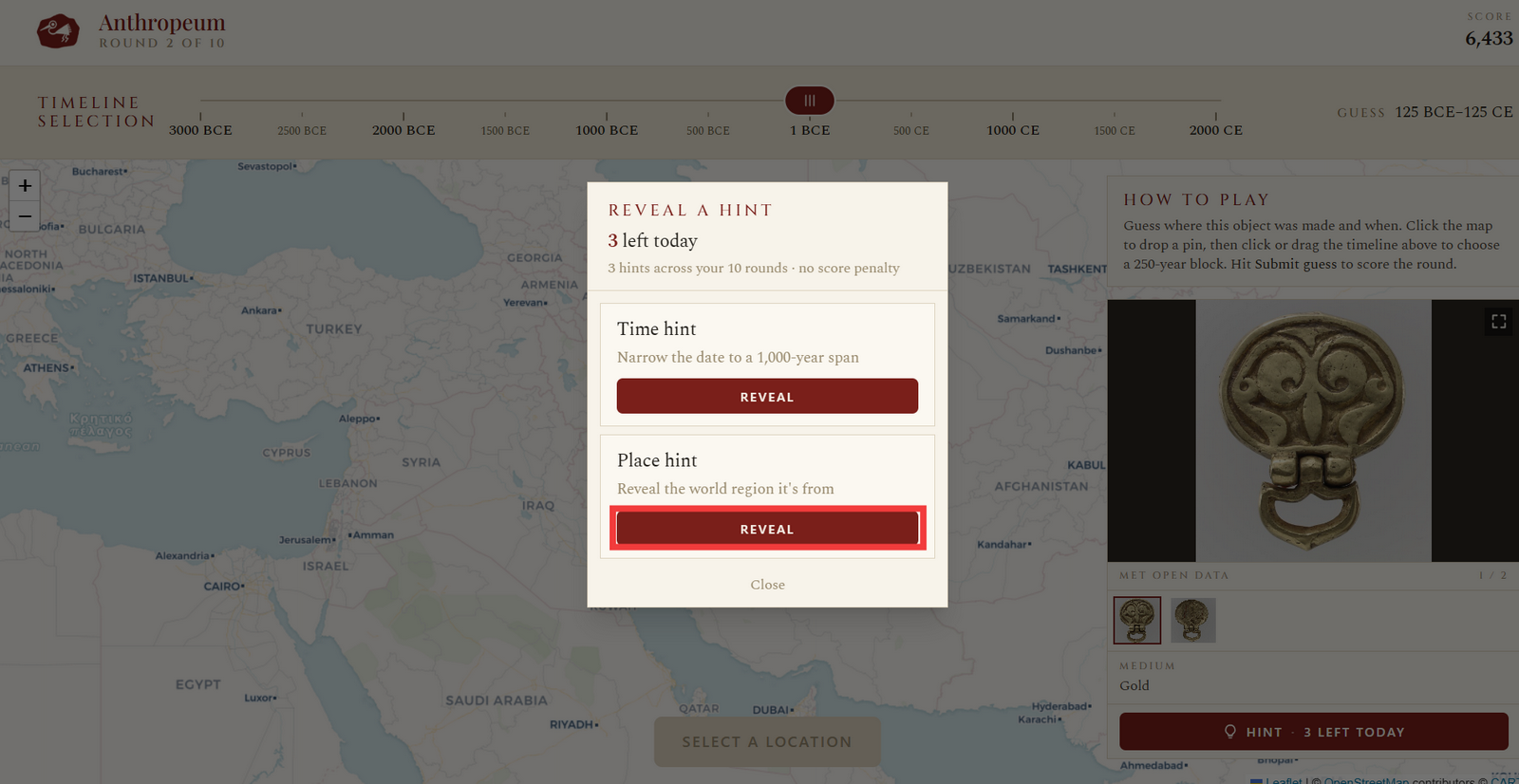
The hint was 'Europe'.
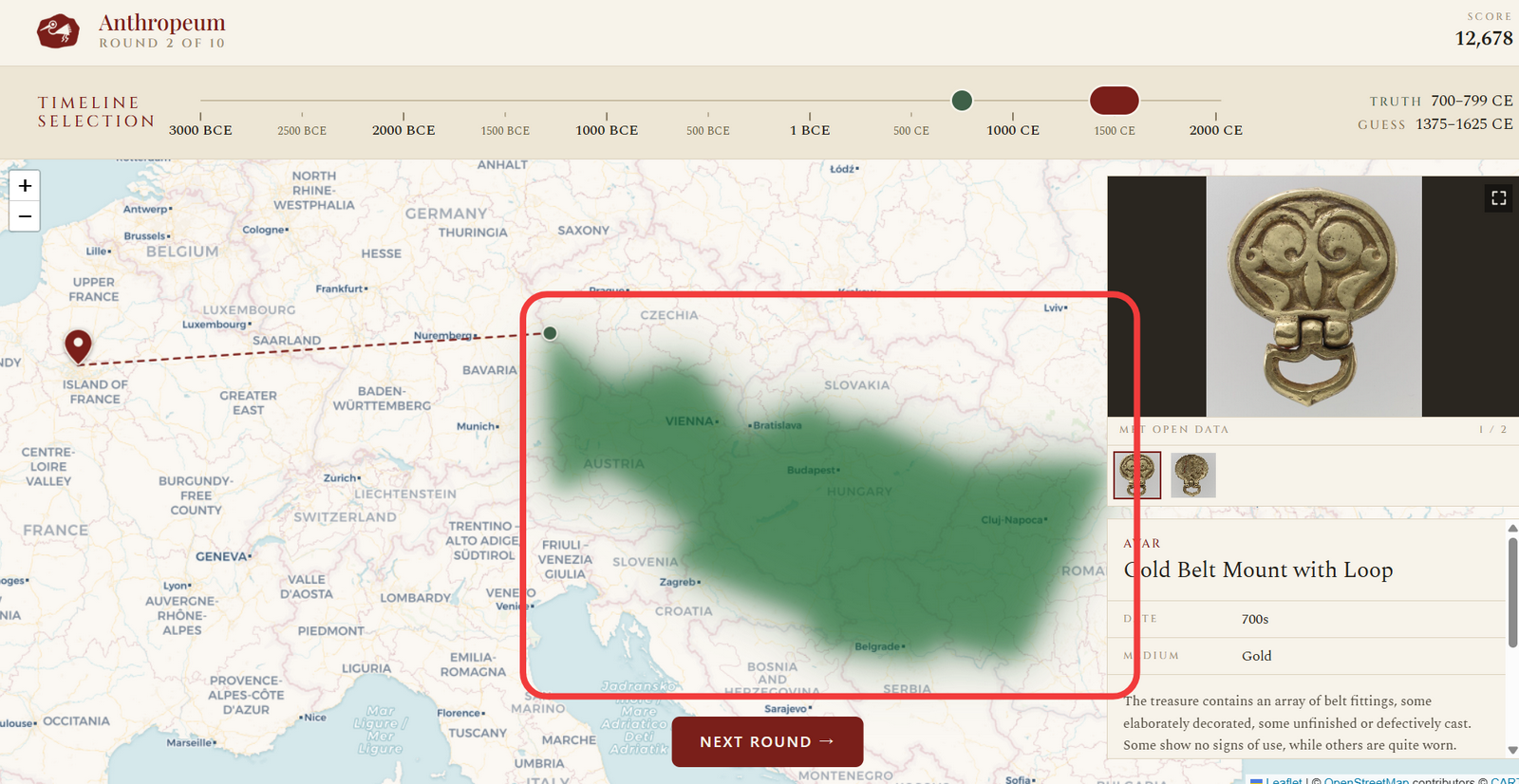
Since it was a gold-colored ornament from Europe, I vaguely thought it might be from 17th-century Paris, but the answer was 8th-century Eastern Europe, which was completely wrong. According to the explanation, it is a belt buckle of
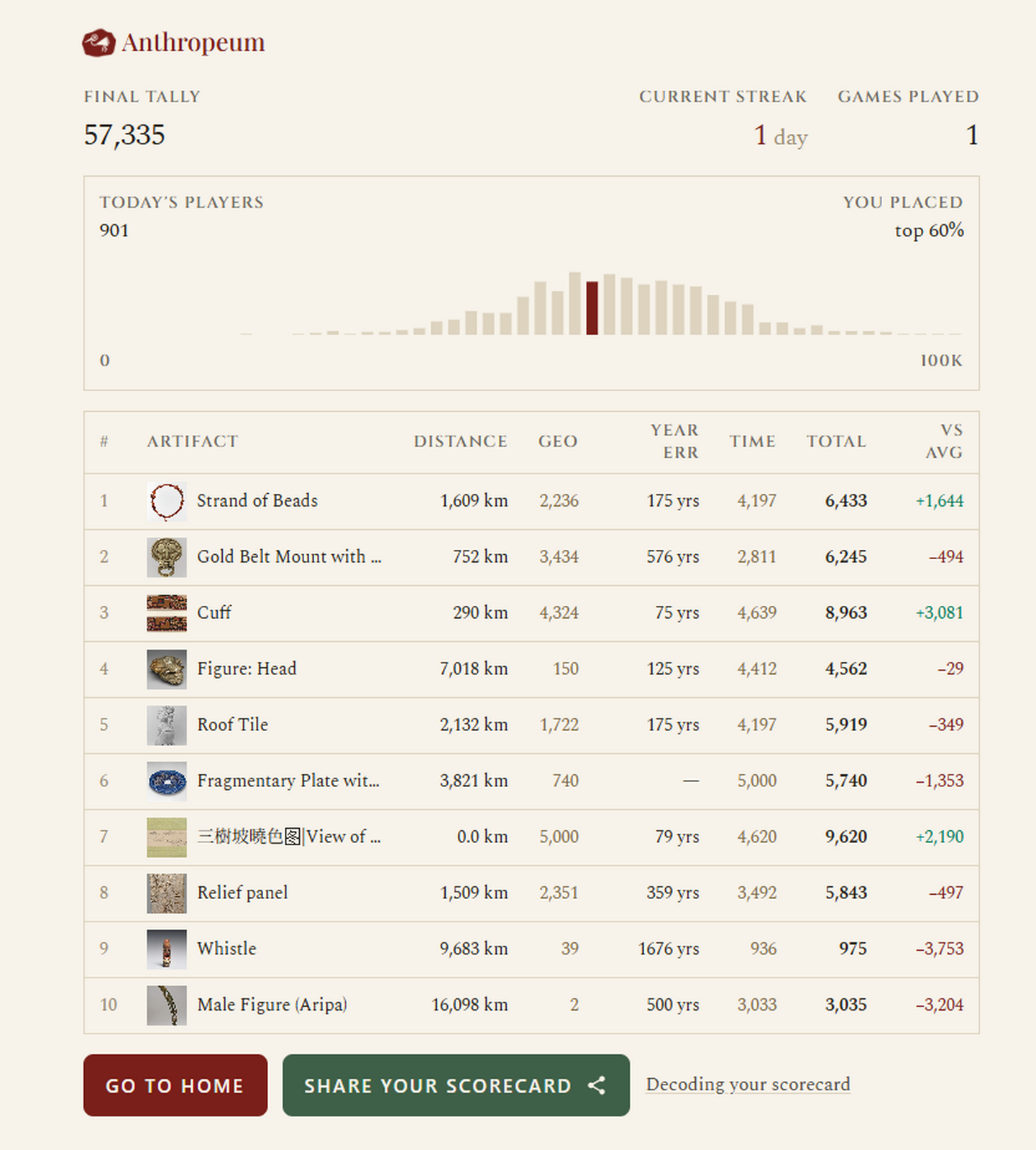
After answering 10 questions in this manner, the results were displayed as follows. Each artifact is scored out of 10,000 points, based on its proximity to the relevant era and location. Those confident in their knowledge of world history and the cultures of various countries should definitely give it a try.
Related Posts: