Artists talk about the 'lost joy of music piracy' in an era of widespread music streaming services.

During the heyday of CDs, torrent sites for illegally sharing music files were popular, but nowadays, with free streaming services and many artists releasing their music for free on video sites, the situation surrounding music piracy has changed dramatically. Music media outlet Pigeons & Planes published an article titled 'The Lost Joy of Music Copyright Infringement,' which summarizes the changes in the music community that have accompanied the rise and fall of piracy.
The Lost Joy of Music Piracy: WhatCD, Oink, and Spotify | Pigeons and Planes
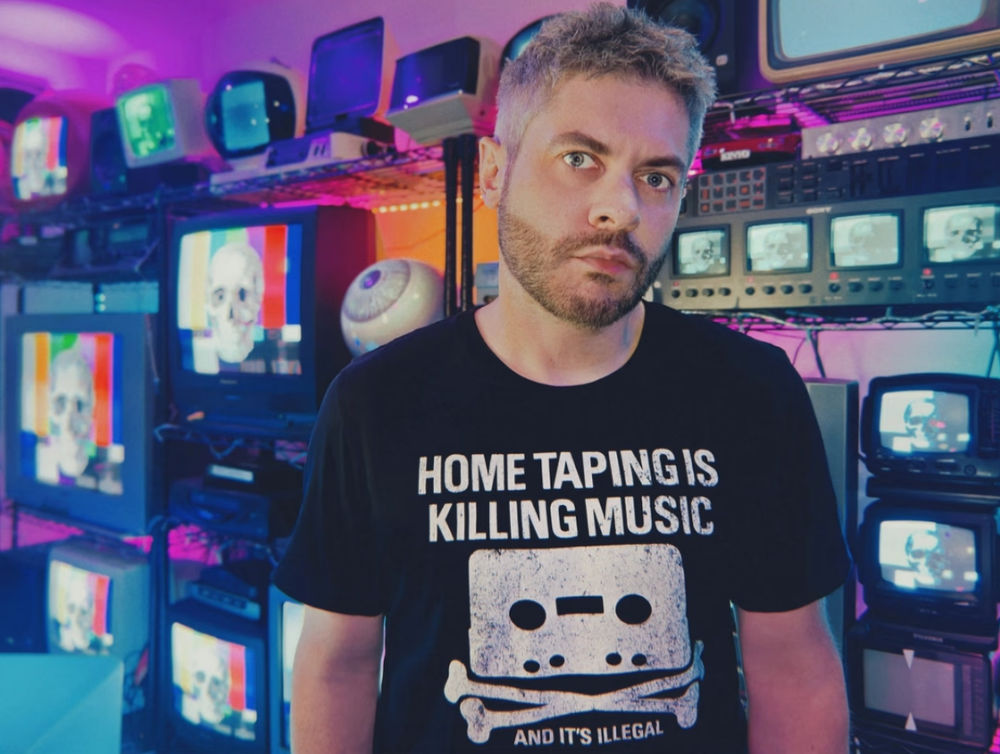
Creative director Rob Sheridan , known for his wide range of work including with the American rock band Nine Inch Nails , spoke about the internet and music in an interview with Pigeons & Planes. Despite having a decades-long career in the music industry, Sheridan is known for openly defending media copyright infringement, and on the day of the interview, he was wearing a T-shirt with the logo ' HOME TAPING IS KILLING MUSIC ,' which has also been used as the logo for the major piracy site The Pirate Bay .
Sheridan says that he was deeply involved in the world of illegal file sharing since high school, where everyone uploaded their MP3 collections to the local network in his dorm. He became a fan of many kinds of music after listening to many albums that he couldn't afford at the time, and he even created a Nine Inch Nails fan site, which led to him designing the band's official website in 1999.
Sheridan revealed that he invited
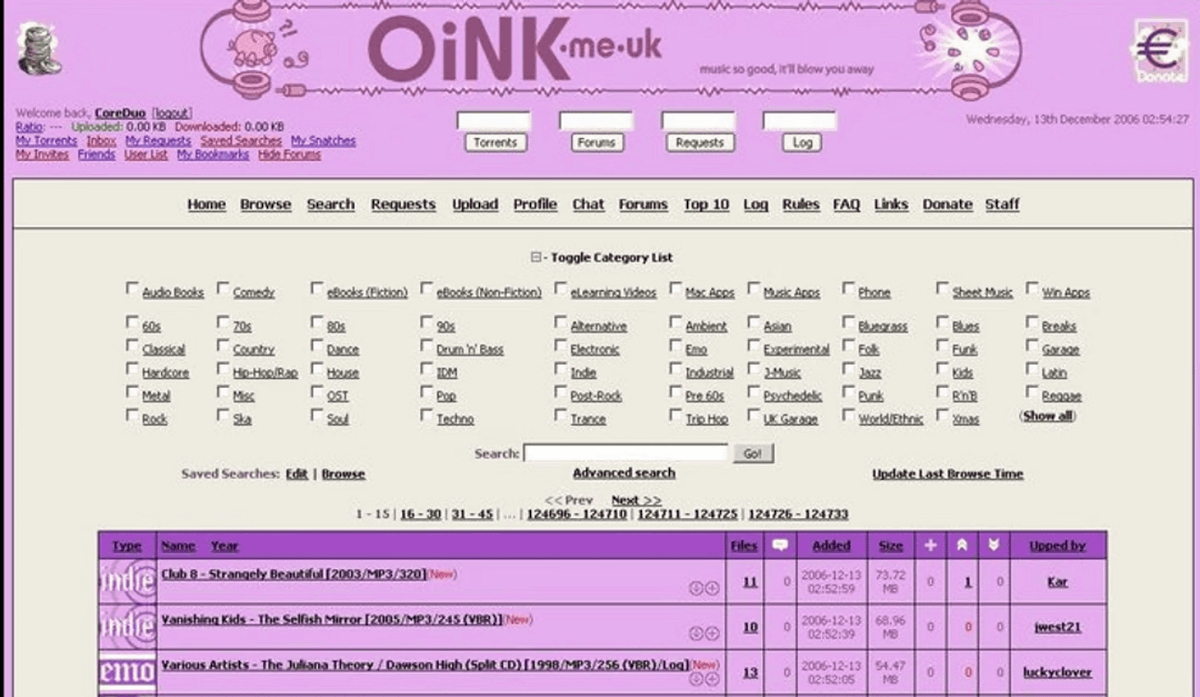
Sheridan and Reznor then promoted their 2007 album '
On the day Oink's Pink Palace closed, a new invitation-only music BitTorrent tracker and community, ' What.CD ,' was launched. Sheridan describes What.CD's success as 'a product of the music industry's failure to adapt to an increasingly digital world.' Sheridan, who was actually invited to become a member of What.CD, says, 'No longer do you have to scour music blogs and forums looking for active Mediafire links, or visit multiple torrent sites looking for obscure albums you read about online. The entire world of music has suddenly come together in one place.'
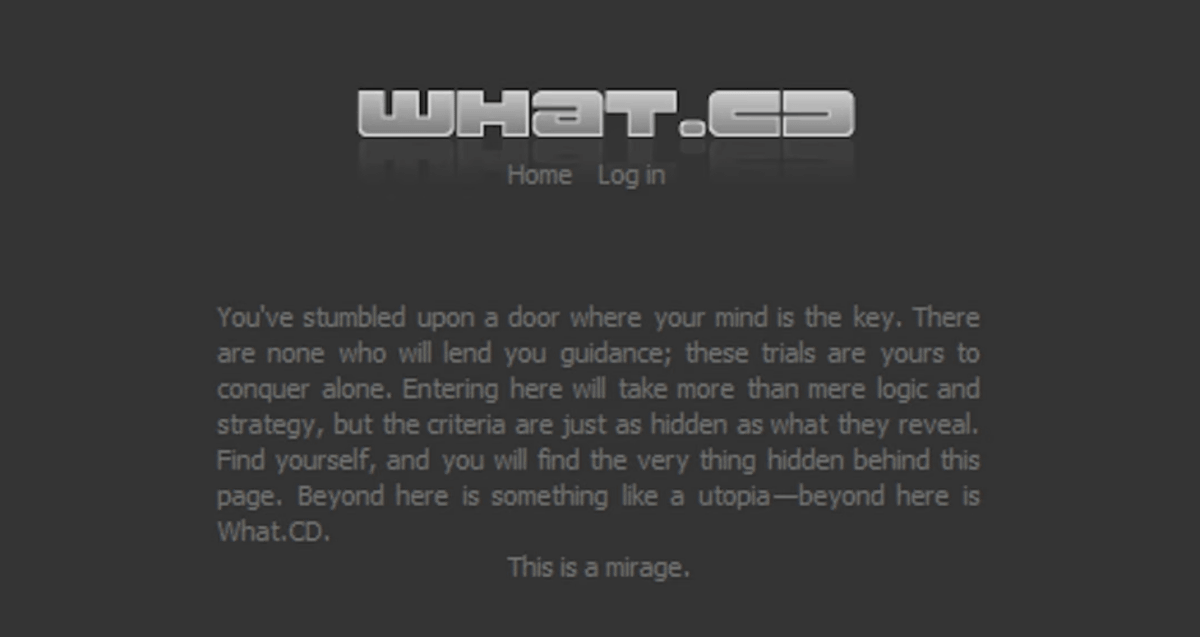
Access to What.CD required an invitation from a user with a proven track record, and its privacy made it difficult for law enforcement to crack down on. A former What.CD staff member and moderator, speaking to Pigeons & Planes, explained how What.CD worked: 'Public sites lack a community, no accounts, and little incentive to share files other than goodwill. Private trackers are built on the premise of only one account, so the mechanism for tracking upload-to-download ratios creates a strong incentive to keep content seeded and available to others. This is the magic that makes private trackers inclusive and trustworthy.' By around 2011, What.CD had grown into the largest music archive in history, but it was ultimately shut down in November 2016.
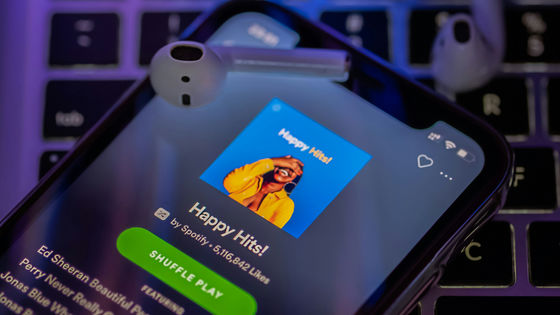
Around the same time that What.CD shut down, streaming services began to gain widespread popularity. As CD sales continued to plummet, record companies withdrew from physical releases, and large-scale music leaks became increasingly rare. Sheridan expressed his frustration with the streaming-dominated society, saying, 'The idea that music should be free was like a statement of where music was headed. Streaming is not economically sustainable for artists, and some artists can't even make ends meet despite being streamed millions of times a month, while Spotify pays huge contract fees to popular podcast hosts. There are far too many examples showing how much money flows to billionaires and big corporations, and artists are constantly being treated unfairly. That's my frustration with the situation we're in now.'
Pigeons & Planes points out that 'What.CD was more than just a torrent tracker,' emphasizing the importance of the community of passionate music fans. While the internet has opened new doors for musicians, Pigeons & Planes argues that it has also accelerated the 'corporatization of online spaces' and 'algorithmic domination,' inflicting irreparable damage on natural music discovery and the independent community. Although the proliferation of streaming services has reduced music copyright infringement, the record industry has instead provided artists with meager compensation and products with impersonal user interfaces, rather than the economic stability that piracy should have prevented, and concludes by stating, 'It is clear that musicians are still being exploited.'
Related Posts:







in Web Service, Posted by log1e_dh