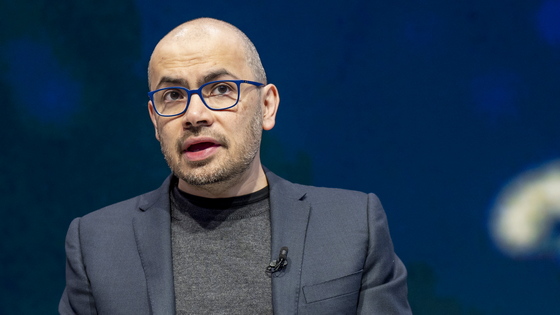
Google DeepMind CEO Demis Hassabis has called for the establishment of an independent standards body to regulate cutting-edge AI, with the CEOs of OpenAI and Microsoft also expressing their support.
by
Demis Hassabis, co-founder of Google DeepMind and recipient of the 2024 Nobel Prize in Chemistry for his research on AI for predicting protein structures, has proposed the establishment of a new standards agency in the United States to scientifically evaluate cutting-edge AI models and manage serious risks. Sam Altman, CEO of OpenAI, Satya Nadella, CEO of Microsoft, and Sundar Pichai, CEO of Google, have all expressed their support for this proposal.
A Framework for Frontier AI and the Dawning of a New Age
https://demishassabis.substack.com/p/a-framework-for-frontier-ai-and-the-dawning-of-a-new-age
In an article published on July 14, 2026, titled 'A Framework for Frontier AI and the Dawning of a New Age,' CEO Hassabis suggested that artificial general intelligence (AGI) could become a reality within a few years. He argued that if AGI can be developed and deployed in a responsible manner, it could accelerate drug discovery, clean energy, and the development of new materials, bringing great benefits to humanity.
On the other hand, CEO Hassabis pointed out that intense competition between companies and nations in AI development is causing technological advancements to surpass human understanding. He warned that cutting-edge models are already beginning to cause cybersecurity problems, and that as their capabilities improve, risks related to nuclear weapons and biology, as well as the risk of humans losing control of autonomous AI, could also become apparent.

by Christopher Michel
To address these risks, CEO Hassabis proposed that the United States establish a “standards agency” to continuously test the capabilities of cutting-edge AI. This agency would be modeled after a federally supervised public-private partnership or self-regulatory organization, such as the Financial Industry Regulatory Authority (FINRA), and would include representatives of independent, leading engineers and open-source developers on its board of directors.
Standards agencies will develop procedures and criteria for evaluating AI models and conduct national security-related tests in cooperation with federal agencies and national laboratories. A system is envisioned in which models that exceed certain standards in regularly updated benchmarks will be designated as 'frontier-grade,' and organizations that develop such models will be designated as 'frontier laboratories.'
Frontier Institutes are required to adopt practices such as publishing model cards detailing the technical information of their models, maintaining robust cybersecurity, vetting key personnel, and making sufficient investments in safety research. Initially, this will be a voluntary system where each institute submits its models to a standards agency up to 30 days before public release. After the effectiveness of the evaluation system is confirmed, it will be required that models pass a review before being offered in the U.S. market.
The evaluation criteria include dangerous capabilities such as cyberattacks and biological threats, as well as signs that the AI may attempt to circumvent security measures or intentionally deceive humans. The benchmarks will initially be updated quarterly, and in the future, the standards body itself will create its own independent, private tests to prevent models from being optimized only for known test questions.
This framework applies to frontier-level models that have reached a certain capability standard, regardless of the country of development or whether they are open or closed models. On the other hand, models from startups and universities that do not meet the standard are excluded, with the aim of addressing the most advanced AI risks without hindering technological innovation.
Hassabis also stated that if the situation worsens, a mechanism is needed in which standards agencies can adjust the pace of development by multiple frontier laboratories. Furthermore, he argued that the system started in the United States should be developed into a common international standard to manage global risks while spreading the benefits of AI more widely.
Regarding this proposal, OpenAI CEO Altman posted, 'This is a thoughtful proposal from Demis.'
this is a thoughtful proposal from demis: https://t.co/WwzfcLJXT5
— Sam Altman (@sama) July 14, 2026
Microsoft CEO Satya Nadella also believes that we should aim for a frontier AI ecosystem that fosters innovation and choice while avoiding a situation where 'the world breaks down due to the release of just one model,' and he acknowledges that 'we need more of this kind of thinking.'
An important piece from Demis. We need more of this kind of thinking. A good reminder that the goal is a frontier ecosystem that promotes innovation and choice, while avoiding any one model drop that breaks the world! https://t.co/y9S2JQB3aD
— Satya Nadella (@satyanadella) July 14, 2026
Google CEO Pichai commented, 'Well said, Demis. It's worth reading.'
Well said Demis! Worth reading https://t.co/VPj2lxEX71
— Sundar Pichai (@sundarpichai) July 14, 2026
Twitter co-founder Jack Dorsey also expressed his approval, calling it 'fantastic.'
excellent https://t.co/ACO2Ke5oWC
— jack (@jack) July 14, 2026
Hassabis CEO concludes, 'We need to use the time remaining before AGI arrives to establish a technologically secure foundation and international framework, and guide AI in a direction that benefits all of humanity.'
Related Posts:







in AI, Posted by log1i_yk