SpaceX destroyed 260 Starlink satellites in the atmosphere within six months, according to its semi-annual report filed with the FCC.

In its semi-annual report on first and second-generation Starlink, submitted to the FCC (Federal Communications Commission) on July 1, 2026, SpaceX revealed that it disposed of 260 Starlink satellites by atmospheric re-entry between December 2025 and May 2026.
ICFS Pleadings & Comments Summary - ICFS Portal
https://fccprod.servicenowservices.com/icfs?id=ibfs_pc_summary&sys_id=0480680acfb947505791bf252f851c5b
SpaceX vaporizes 260 Starlink satellites in six months using Earth's atmosphere — new environmental concerns emerge over burning 2,700-pound orbital data centers, FCC seeks to exempt satellites from regulations | Tom's Hardware
https://www.tomshardware.com/tech-industry/space/spacex-vaporizes-260-starlink-satellites-in-six-months-using-earths-atmosphere-new-environmental-concerns-emerge-over-burning-2-700-pound-orbital-data-centers-fcc-seeks-to-exempt-satellites-from-regulations
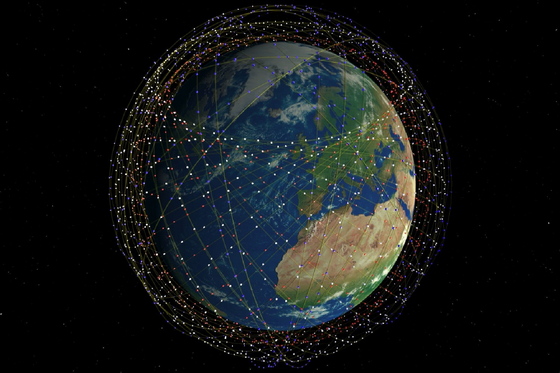
According to the report, of the 260 Starlink satellites that were decommissioned, 176 were first-generation satellites, with the remainder being second-generation. In addition, another 349 satellites were decommissioned during the same six-month period and are scheduled to be decommissioned in stages over the next few months. Starlink operates a constellation of more than 10,000 satellites and is said to decommission multiple satellites on a daily basis.
Each satellite has an operational lifespan of approximately five years. When its fuel is depleted, it uses its remaining fuel to enter a controlled descent orbit, eventually re-entering the atmosphere and burning up completely. First-generation satellites weigh approximately 260 to 295 kilograms, and second-generation satellites weigh approximately 800 to 1250 kilograms. Recovery is technically difficult and unrealistic from a cost perspective, hence this incineration disposal method is employed.

This disposal method almost completely incinerates the satellite, leaving no debris on the ground. However, researchers are calling for further investigation and regulations regarding its impact on the atmosphere. The FCC has previously excluded satellites from its environmental review process, citing concerns that regulations would slow down the space race. The FCC has formally proposed exempting satellite operations from the National Environmental Policy Act (NEPA) as 'extraterrestrial activities,' but this proposal has not yet been approved as of the time of writing.
SpaceX plans to deploy up to 42,000 Starlink satellites into low Earth orbit, and in January received FCC approval for an additional 7,500 second-generation satellites. They also announced plans for an on-orbit data center, 'A1,' with 120 kilowatts of computing power, and are currently constructing the 'Gigasat' manufacturing facility, spanning 11 million square feet, to produce these satellites.
Elon Musk's SpaceX plans to launch 1 million solar-powered satellite data centers - GIGAZINE
The semi-annual report also details the efforts to avoid collisions. SpaceX employs a threshold that is approximately 100 times stricter than the industry standard of 1 in 10,000,000, where it will perform a maneuver if the probability of collision exceeds 3 in 10 million. Under this standard, the first-generation satellites performed 65,137 thrust maneuvers during the reporting period, and the second-generation satellites performed 142,015. This translates to approximately 36 and 46 maneuvers per satellite per year, respectively.
The report also mentions instances of satellite deorbit failures. In the first generation, two satellites, 'STARLINK-34343' and 'STARLINK-36253,' experienced malfunctions suspected to be hardware failures. The problematic components were identified and removed from future designs. Two similar failures have been reported in the second generation, and both are expected to be addressed through future design changes.
In its report, SpaceX calls on other satellite operators to provide similarly transparent information disclosure. The company argues that it cannot maintain long-term space sustainability on its own and that all operators, including those licensed outside the U.S. but providing services within the U.S., should disclose the status of their satellites.
Related Posts:



in Hardware, Posted by log1i_yk