While 'pearl buttons' built the button industry in the American Midwest, they also drove local bivalve mollusks to the brink of extinction.
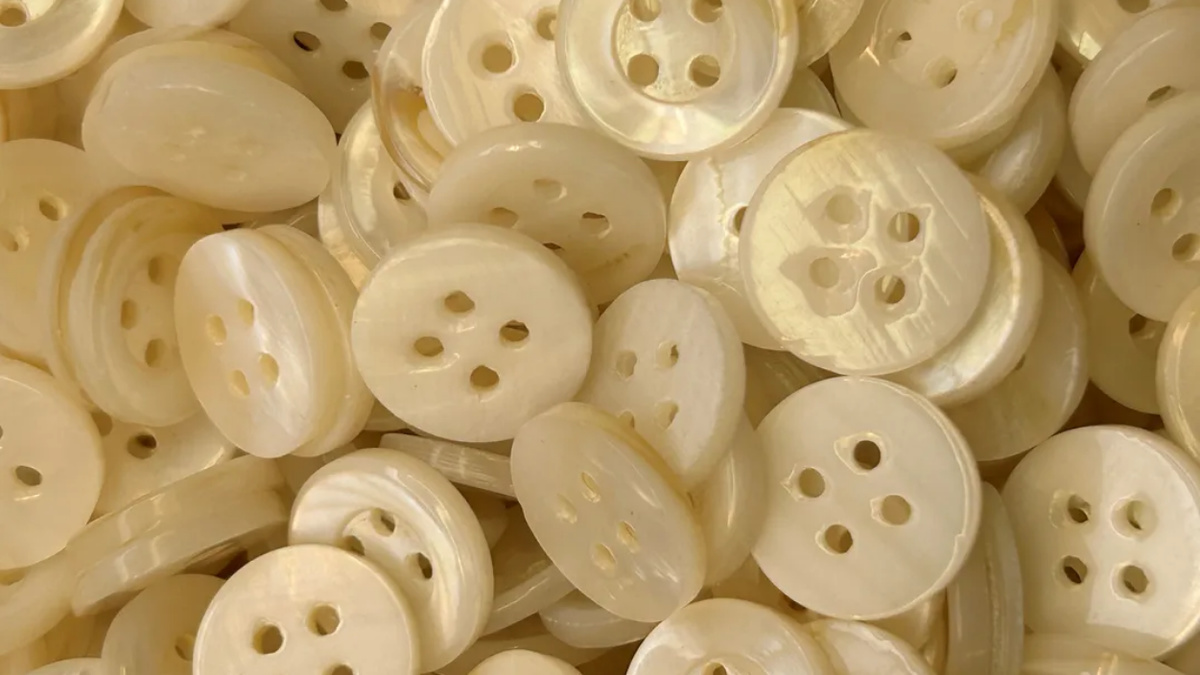
John Bepple, a button maker who emigrated from Germany to the United States in the late 1880s, laid the foundation for a major industry with 'pearl buttons' made from the nacre of seashells. However, at the same time, the local freshwater bivalve population suffered a devastating blow, and the industry declined within about half a century. The Smithsonian magazine, a media outlet that covers themes and subjects researched, investigated, and exhibited by
How One German Button Maker Searched the Rivers of the American Midwest for the Shells That Could Make Him a Fortune
https://www.smithsonianmag.com/smithsonian-institution/how-one-german-button-maker-searched-the-rivers-of-the-american-midwest-for-the-shells-that-could-make-him-a-fortune-180989012/
While modern buttons are primarily made of plastic, they were once predominantly made from seashells. In mid-19th century America, button factories commonly used imported marine shells, with little use of locally sourced freshwater bivalves. Bepple, who worked as a button maker in Germany, received a shipment of freshwater bivalve shells collected from rivers in the American Midwest. He recognized that these shells possessed a pearly luster and sufficient thickness, making them a suitable material for high-quality buttons. In the late 1880s, Bepple emigrated to America and began searching for bivalves suitable for button making in the rivers of the Midwest.
Bepple established his base in Muscatine, Iowa, a town rich in shellfish, and founded the first pearl button factory in 1891. This success attracted many other companies, and by 1905, dozens of factories had been established in Muscatine alone, with the pearl button industry growing to the point where approximately 1.5 billion buttons were produced annually. Between 1880 and 1910, Muscatine's population doubled from 8,000 to 16,000, and it flourished to the point of being known as the 'Pearl Button Capital of the World.' Below are mussels used to make pearl buttons and actual buttons made at the time, on display at the National Museum of Natural History in Washington, D.C.
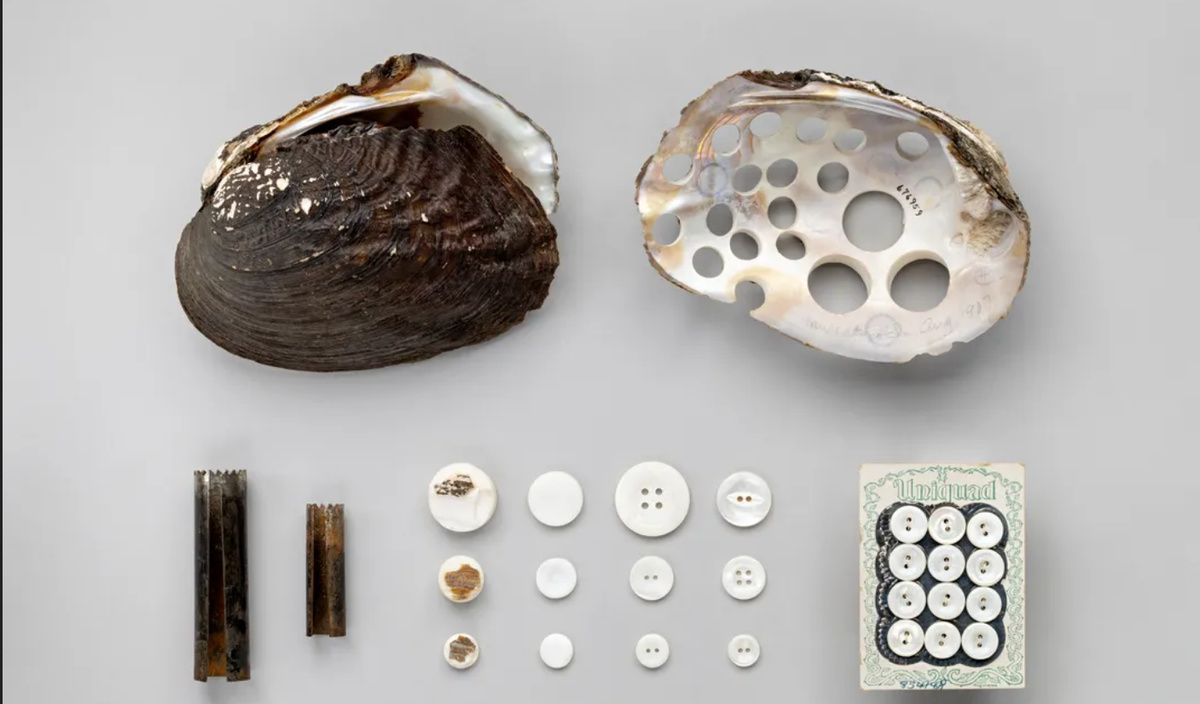
The seashells used for pearl buttons needed to be large and thick enough to produce many buttons. After hollowing out a circular blank from the bivalve shells collected from the riverbed, they were polished and then drilled with a machine. Another group of workers, mainly young women, sorted the buttons by color to ensure that a set of buttons was available for one garment.
After pearl buttons were made, the bivalve shells, still hollowed out in the shape of buttons, were often discarded into rivers. Dustin Joy, director of the National Pearl Button Museum in Muscatine, recalls walking along the Mississippi River in Keaseburg, Illinois, where his grandparents lived, saying, 'I found a shell full of holes at the bottom of the river.'
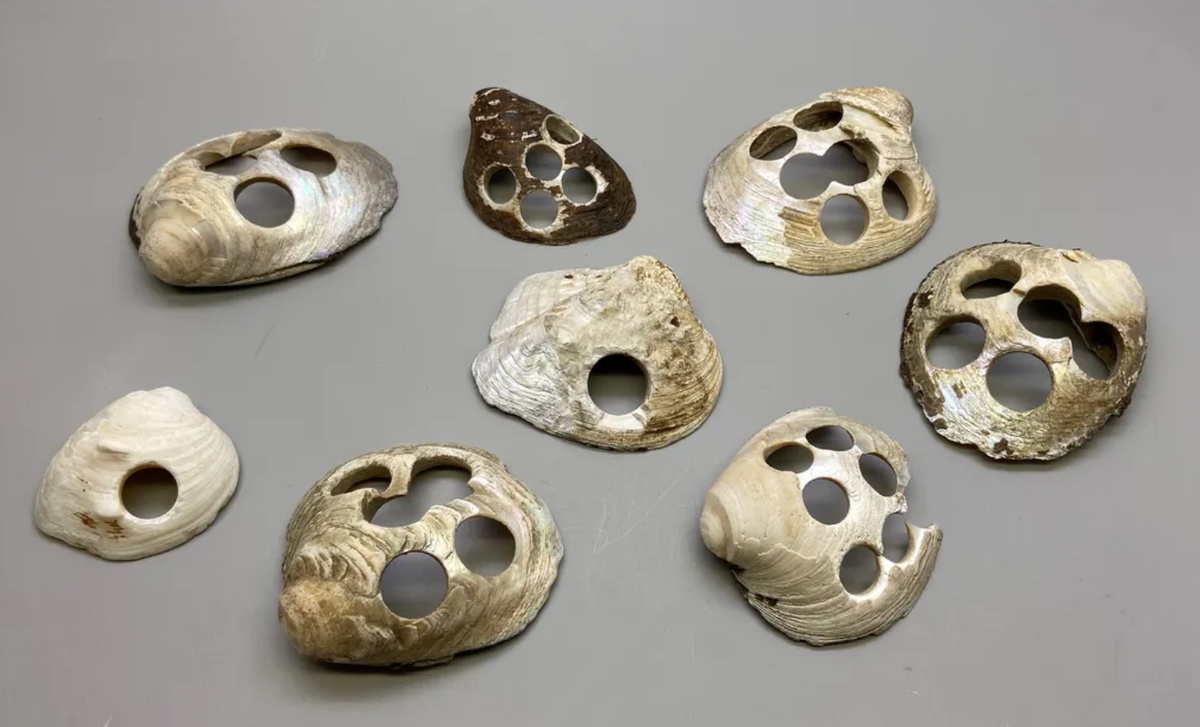
As the industry expanded, bivalve populations around the factories rapidly declined, forcing harvesters to move their fishing grounds to more distant rivers. As a result, the freshwater bivalve population plummeted. Bivalves are slow growers, and it takes many years for them to grow shells large enough for pearl button production. Joy says, 'Given the balance of supply and demand, the pearl button industry was destined to fail eventually. They overused natural resources indiscriminately. It seems this country will have to repeat this lesson many times over.'
Following the drastic decline in the population due to overfishing, the pearl button industry began conservation efforts for freshwater bivalves. In 1908, Congress established the Fairport Biological Laboratory in Iowa, a place where experts studied freshwater bivalves and attempted to reintroduce them to the Mississippi River. Two years later, Bepple, a key figure in the pearl button industry, joined the laboratory, developing new harvesting techniques and documenting the size and characteristics of the bivalve habitats. However, Bepple's efforts were unsuccessful, and the Iowa Biographical Dictionary states that 'he ordered unnecessary equipment and chemicals to confuse future competitors.'
From the 1920s onward, inexpensive and easy-to-mass-produce plastic buttons became widespread. Although plastic buttons were not of the same quality as pearl buttons, they were far easier to manufacture and, of course, did not affect the reproduction of river organisms. Button factories that did not start switching to plastic during this period closed down one after another, and pearl buttons ceased to be manufactured in Muscatine after the 1960s.
Even today, freshwater bivalves remain endangered, and the Center for Biodiversity, a non-profit organization focused on
Related Posts:



in Note, Posted by log1e_dh