The ovaries may play a 'second role' even after a woman goes through menopause.
post-reproductive ovary shifts from a reproductive to an immune-like organ | Molecular Human Reproduction | Oxford Academic
https://academic.oup.com/molehr/article/32/2/gaag038/8705536
Ovaries Appear to Develop an Incredible Second Role After Menopause : ScienceAlert
https://www.sciencealert.com/ovaries-appear-to-develop-an-incredible-second-role-after-menopause
In recent years, the average human lifespan has increased dramatically, and the post-menopausal lifespan of women has also become longer. Therefore, it is important to understand not only the pre-menopausal functions of the ovaries, such as the production of female hormones and eggs, but also the functions they have after menopause.
Associate Professor Francesca Duncan, a reproductive scientist at Northwestern University School of Medicine in Illinois, USA, has long been researching the possibility that the ovaries retain some function even after menopause.
Therefore, Duncan and his research team analyzed ovaries taken from mice of various ages to investigate what changes occur before and after menopause. Although the bodies of mice do not necessarily match those of humans, they share a similar evolutionary history, so it is possible to obtain some clues.
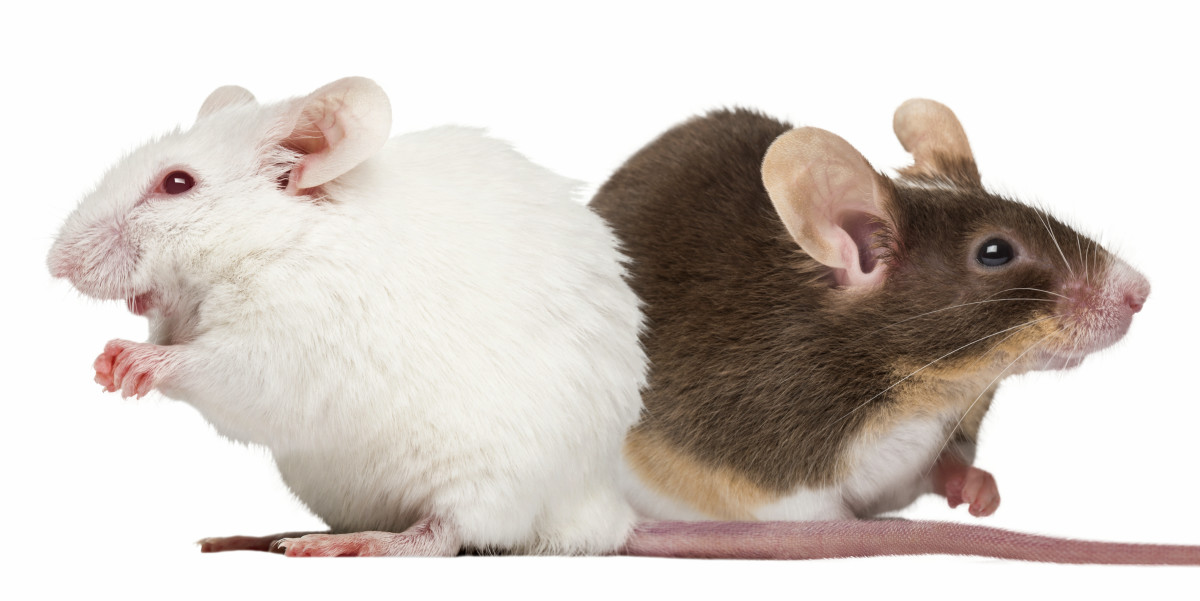
In this study, we used ovaries extracted from young mice of reproductive age (2 months old), older mice of reproductive age (18 months old), and mice past reproductive age (24 months old). Mouse ovaries generally cease to function after about two years, and there is no decrease in
The research team meticulously observed ovarian tissue under a microscope and analyzed the anatomical structure of ovarian tissue at each life stage. They also performed RNA sequencing to read the sequence information of RNA molecules present in the biological tissue, investigating what genes are present in the ovaries and which genes are involved in protein production.
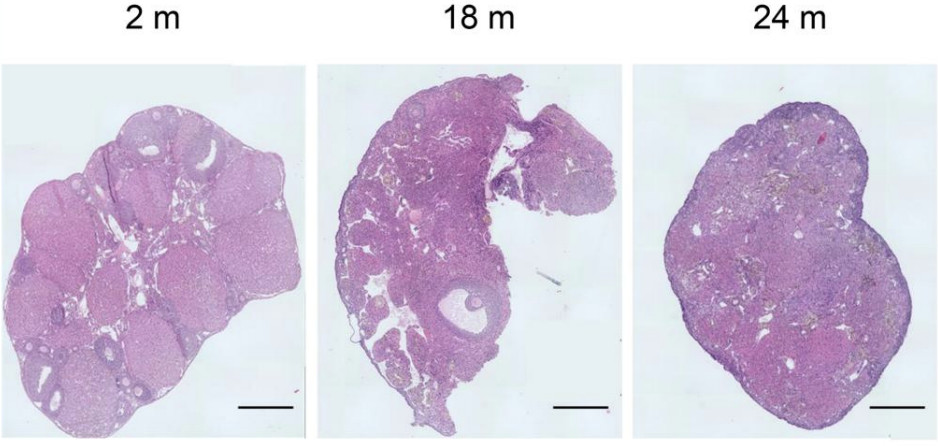
As expected, older mice showed a decline in ovarian reproductive function, with a decrease in follicles and changes in the arrangement of cell tissue. On the other hand, it was found that ovaries that had finished reproducing showed increased infiltration of immune response-related cells such as T cells , macrophages , and multinucleated giant cells , indicating a shift from reproductive function to an immune-dominant characteristic.
In addition, another unreviewed paper published by Duncan et al. confirmed that the composition of proteins produced by the ovaries of 28 postmenopausal women differed significantly with age. The new study supports previous findings suggesting that the ovaries remain active even after menopause.
The images below show sections taken from the ovaries of a 2-month-old mouse, an 18-month-old mouse, and a 24-month-old mouse, from left to right.
These findings suggest that the ovaries continue to undergo molecular changes even after they have ceased reproductive function, and that after menopause, they play a role similar to that of the immune system. In their paper, the research team stated, 'These findings challenge the common belief that ovaries are inactive after reproductive function ends, and instead suggest that they acquire an immunological identity and may exert endocrine and paracrine influences on systemic aging.'
Related Posts:






in Science, Posted by log1h_ik