Meta has developed 'Brain2Qwerty v2,' an AI model that can read text from brain activity without surgery.
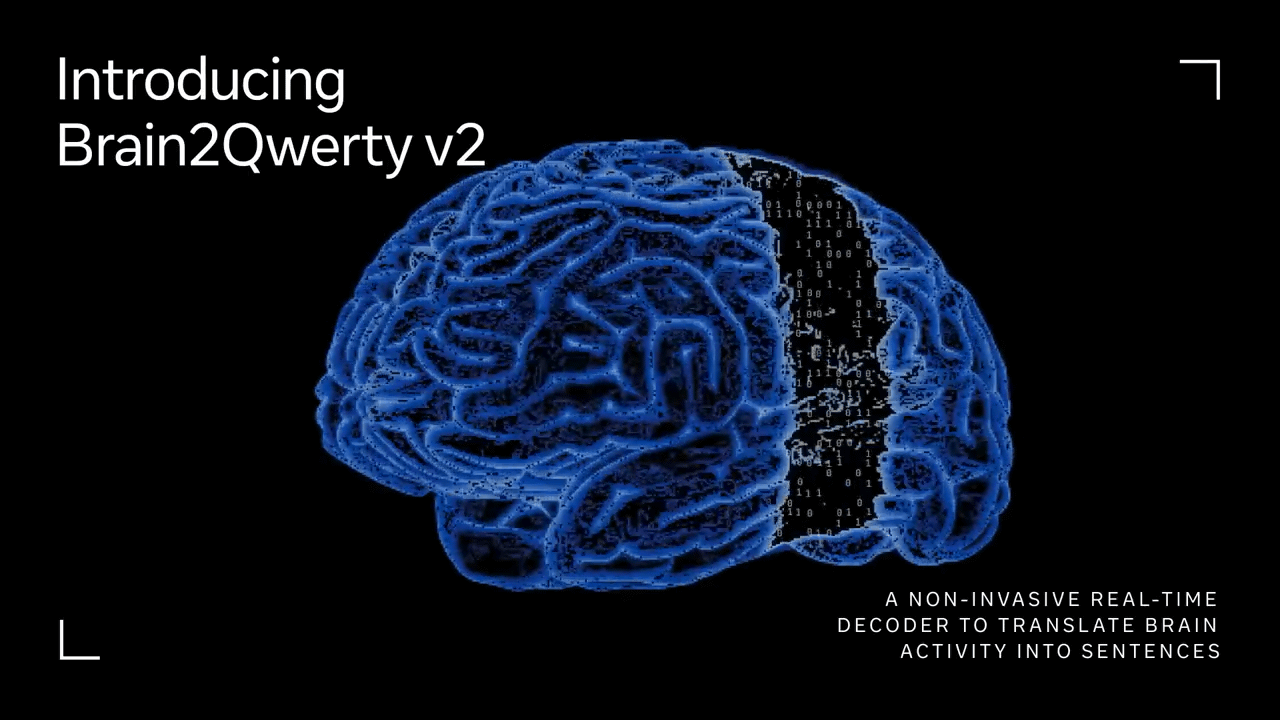
Meta has developed ' Brain2Qwerty v2 ,' an AI model that enables text reading from brain activity without the need for surgery. Brain2Qwerty v2 is said to achieve text prediction accuracy equivalent to invasive methods involving surgery.
From Brain Waves to Words: Brain2Qwerty Offers a New Path to Communication Without Surgery
While several research institutions have developed technologies to read text based on brain activity, improving reading accuracy previously required surgically implanting electrodes in the brain to read brainwaves. Brain2Qwerty is an AI model developed by Meta in collaboration with the Basque Center for Cognition, Brain and Language (BCBL) , which enables text reading based on magnetoencephalography (MEG) data without the need for surgery. The initial version (v1) of Brain2Qwerty was released in February 2025.
Meta announces technology that uses AI and non-invasive magnetic scanners to predict input text from brainwaves with up to 80% accuracy - GIGAZINE
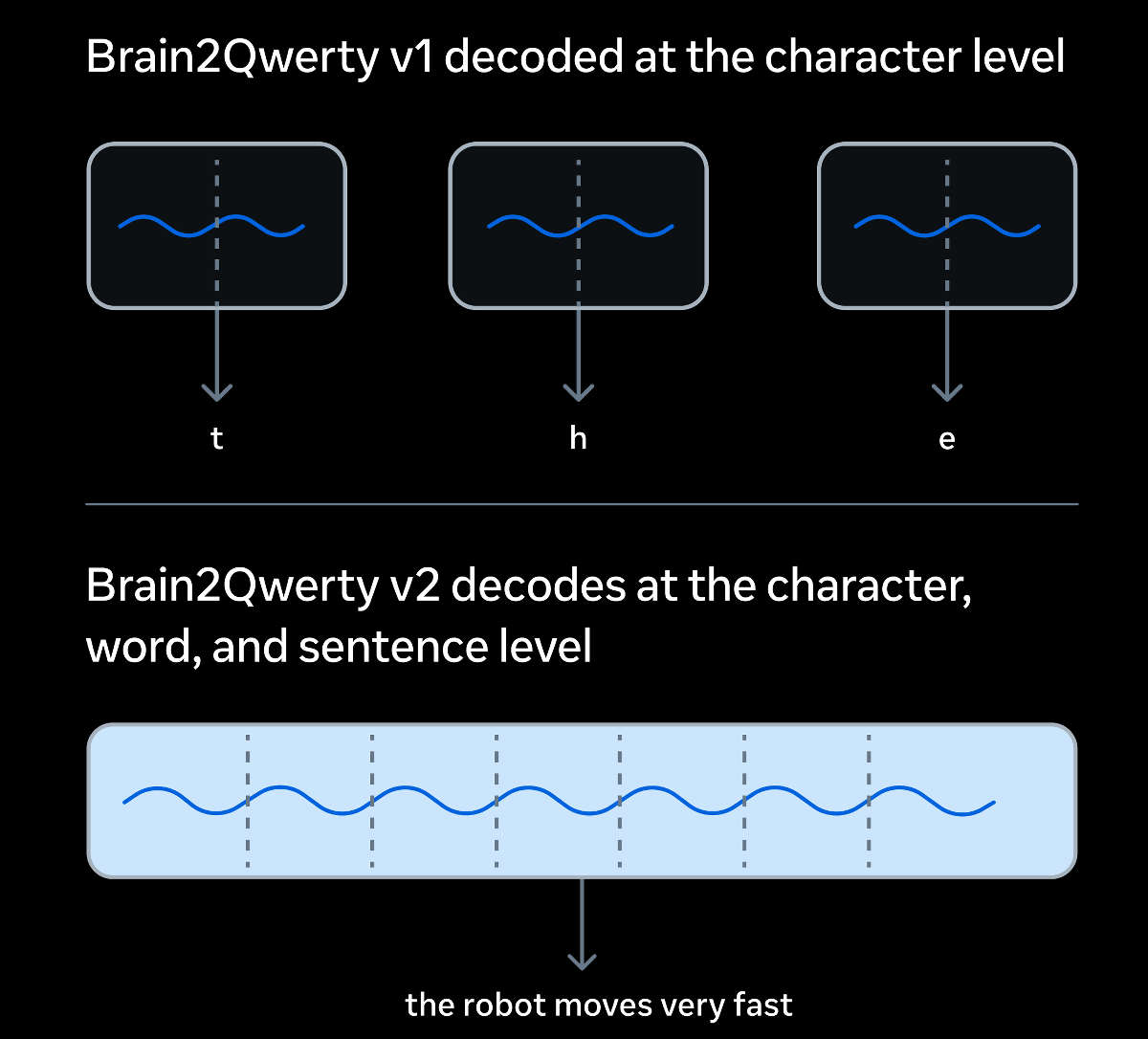
Brain2Qwerty v1 read characters one by one, but Brain2Qwerty v2 enables reading at the word and sentence level.
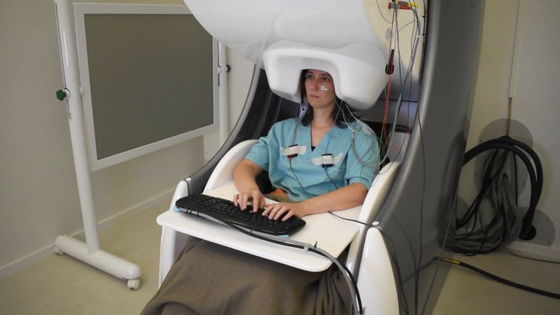
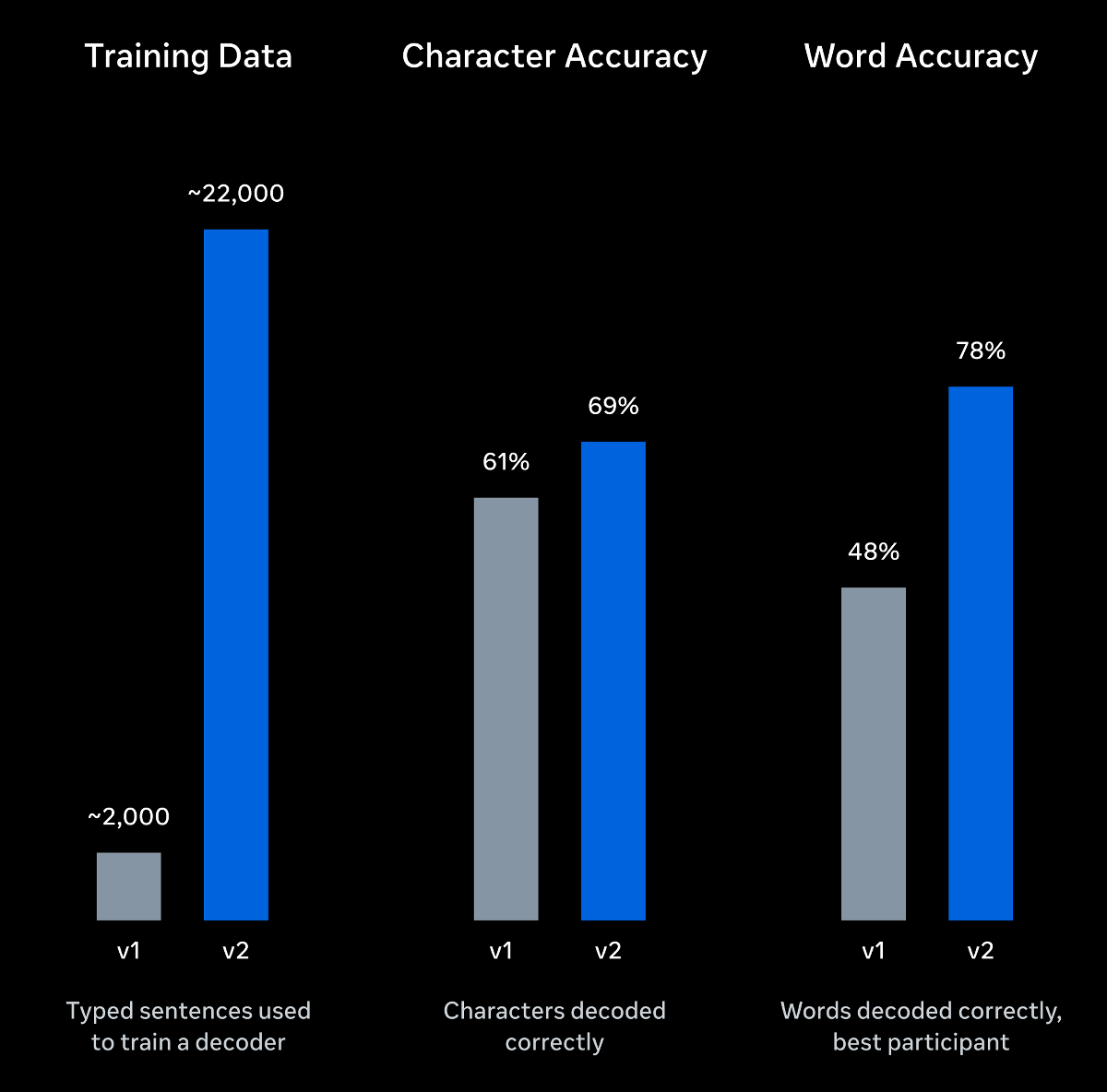
Brain2Qwerty v2 was trained using approximately 22,000 text data points obtained from nine volunteers. Each volunteer typed for 10 hours while their brain's magnetic field (MEG) was measured. The typing content and the resulting brain magnetic field measurements were used as training data to train the AI model.
Brain2Qwerty v2 shows improved text recognition capabilities compared to Brain2Qwerty v1, achieving a character recognition success rate of 69% and a word recognition accuracy of up to 78%. According to Meta, the best performing subjects were able to recognize more than half of the entire text with one word or less error. It has also been confirmed that accuracy improves with increasing amounts of training data.
Meta has published an unreviewed paper on Brain2Qwerty v2 at the following link.
Accurate Decoding of Natural Sentences from Non-Invasive Brain Recordings | Research - AI at Meta
https://ai.meta.com/research/publications/accurate-decoding-of-natural-sentences-from-non-invasive-brain-recordings/
The Brain2Qwerty v1 paper, published in February 2025, passed peer review and was published in Nature Neuroscience on June 29, 2026.
Noninvasive decoding of typed sentences from human brain activity | Nature Neuroscience
https://www.nature.com/articles/s41593-026-02303-2
Additionally, Meta has made the training code for Brain2Qwerty v1 and Brain2Qwerty v2 available at the following link.
GitHub - facebookresearch/brain2qwerty: Non-invasive decoding of typed sentences from MEG and EEG brain recordings using a convolutional encoder, transformer, and character-level language model. · GitHub
https://github.com/facebookresearch/brain2qwerty
Furthermore, the training data for Brain2Qwerty v1 is available at the following link.
bcbl190626/SpanishBCBL · Datasets at Hugging Face
https://huggingface.co/datasets/bcbl190626/SpanishBCBL
Related Posts:




in AI, Posted by log1o_hf