Can the 'little finger exercise' that's trending on TikTok really stop cognitive decline?

Alzheimer's disease, which increases with age, causes cognitive decline and mental impairment. Recently, a video on TikTok claiming that a simple exercise called 'pinky time,' which involves moving your little finger, can prevent cognitive decline has become popular.
Can wiggling your pinky really stop cognitive decline?
https://theconversation.com/can-wiggling-your-pinky-really-stop-cognitive-decline-285441
Here's an example of a 'Pinky Time' video that's trending on TikTok. As of the time of writing, it has garnered nearly 150,000 likes.
@visage.dore4 Is Your Brain 🧠
♬ original sound - VISAGE.DORE4
The Pinky Time technique is simple. Extend your thumb and ring finger and bring them together, then extend your remaining pinky finger.

Then, bend your little finger until it touches your palm. The poster claims that if you can do this, your brain is in a healthy state.
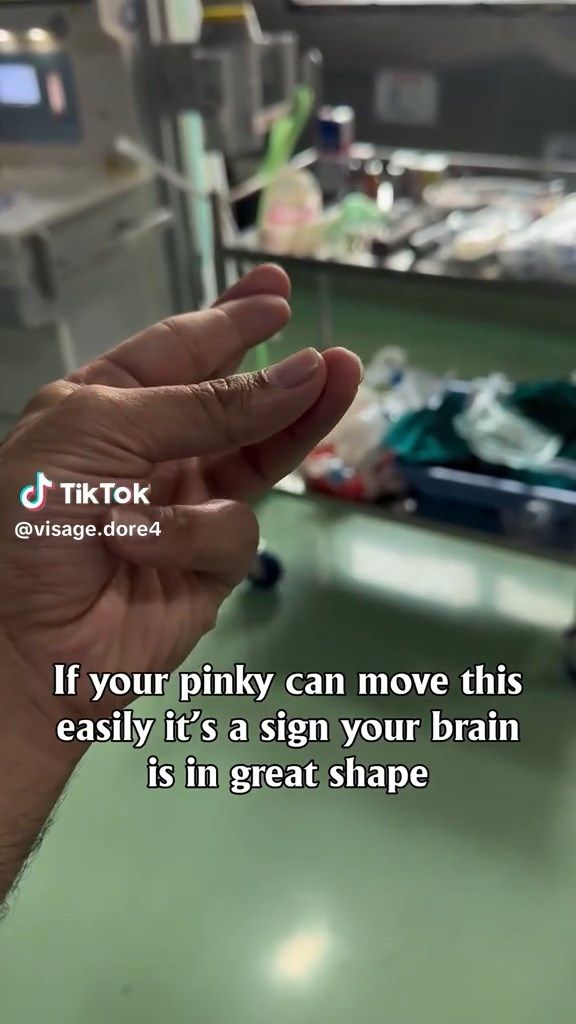
Furthermore, it is believed that continuing Pinky Time for 7 to 10 seconds a day can help prevent Alzheimer's disease and improve brain

Kovacs stated, 'It's easy to see why this idea is gaining attention. A free, easy daily habit to protect yourself from one of the most dreaded symptoms of aging is appealing. However, while this trend is vaguely based on actual neuroscience, the conclusions it draws are ambitious and far beyond what the evidence allows,' pointing out that Pinky Time is appealing but not supported by evidence.
Indeed, fine motor skills such as learning new chords on the guitar or creating complex patterns while knitting require considerable concentration. The brain must plan each movement, suppress incorrect movements, and constantly adjust actions based on visual information and tactile sensations. For this reason, hobbies like playing a musical instrument or knitting are associated with improved memory and enhanced brain function.
Furthermore, scientists have actually used '
While it's true that learning new movements reconstructs neural circuits and stimulates the brain, this doesn't immediately lead to the prevention of cognitive decline. Many factors are involved in finger coordination, including mobility, flexibility, and past injuries. Some healthy individuals may struggle with this movement, while others with cognitive impairment may perform it easily. Furthermore, as one becomes accustomed to the movement, the attention and cognitive effort required decreases, diminishing its value as brain training.
Studies on various hand and finger exercises have shown positive effects in people who already have cognitive decline. However, as of the time of writing, there is no evidence that difficulty with little finger exercises predicts cognitive decline, nor is there strong evidence that practicing Pinky Time can prevent cognitive decline.
Kovacs stated, 'Pinky Time may be a fun and harmless challenge, but its explosive popularity oversimplifies a complex situation. It has been proven that mundane but important fundamentals such as exercise, sleep, healthy eating, social connections, good sensory function, and lifelong learning are still effective in protecting brain health.'
Related Posts:








in Free Member, Video, Science, Posted by log1h_ik