What was the 'siloxane incident,' in which vapors from antiperspirants and wet wipes caused problems on the International Space Station?
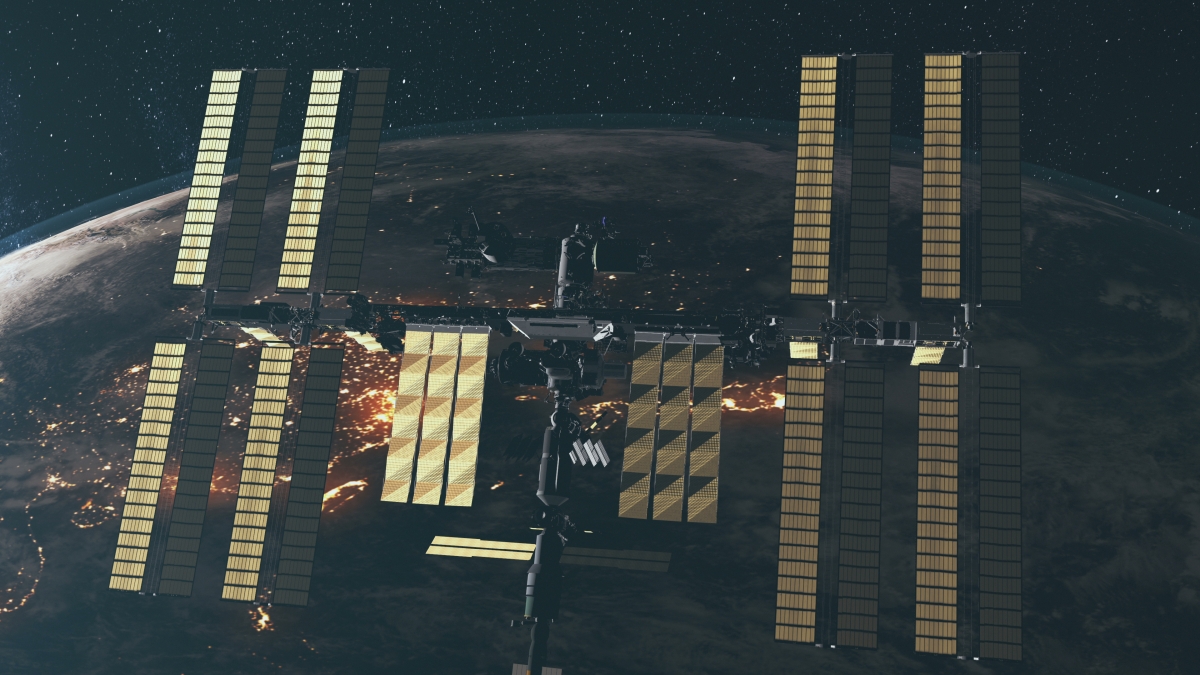
The International Space Station (ISS) uses a water recycling system that recovers drinking water from astronauts' urine and moisture inside the spacecraft. However, after the full-scale implementation of water reuse, problems arose with rising levels of organic matter contamination in the drinking water. Maciej Chegłowski, who writes about space development and life support systems, explains the 'siloxane incident' that occurred on the ISS.
L'Affaire Siloxane - Mars For The Rest of Us
https://mceglowski.substack.com/p/laffaire-siloxane
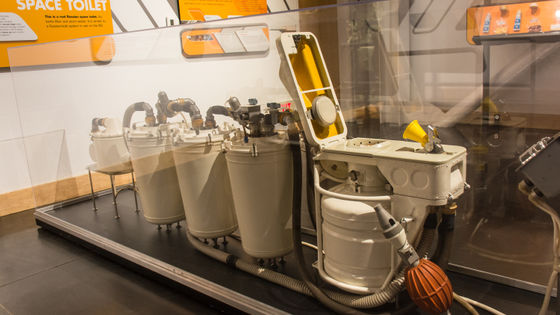
According to Chegłowski, in the early days of the ISS's operation, water for astronauts had to be transported from Earth by the Space Shuttle. By 2005, over 9,000 kg of water had been delivered to the ISS, and an additional 7,000 kg of treated urine awaiting recycling was stored in tanks in orbit. Then, in November 2008, a water recycling system was introduced to the ISS, which is expected to increase the water recycling rate from 45% to 80%.
However, in June 2010, 13 months after the water recycling system became operational, the level of 'total organic carbon' in the water the astronauts drank began to rise. Total organic carbon is an indicator of organic contamination in the water, but it alone does not reveal the identity of the pollutants. When NASA designed the ISS, they set a safe limit of 3 ppm for total organic carbon in drinking water, and as of the summer of 2010, it was estimated that if the rise continued, the safety limit would be exceeded in December of that year.
If safety limits were exceeded, NASA would have had to consider either launching new drinking water to the ISS or returning the crew to Earth. Since the ISS did not have facilities to analyze unknown chemicals, a sample of the drinking water was returned to Earth by the Russian spacecraft Soyuz and analyzed in a laboratory. As a result, the unknown contaminant was identified as dimethylsilanediol .
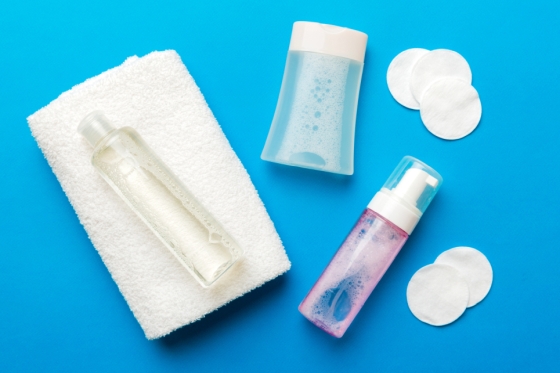
Dimethylsilanediol belongs to a group of compounds called ' siloxanes ,' which are compounds containing silicon, carbon, and oxygen bonds. Siloxanes are widely used in cosmetics, contact lenses, caulking materials, packaging materials, and various hygiene products, and are also ingredients that give antiperspirants and hair conditioners a smooth feel. According to Chegłovsky, the main sources of siloxane vapor on the ISS were antiperspirants, wet wipes, lotions, and leave-in hair conditioners, and approximately 1.5g of siloxanes evaporated into the air inside the ISS per day.
The process by which these siloxanes entered the drinking water is as follows: According to Chegłovsky, siloxanes in the air inside the ship are first broken down with the help of ionizing radiation entering from space, becoming dimethylsilanediol, which is easily soluble in water. Then, the dimethylsilanediol collects in the water condenser, passes through the water treatment system almost unchanged, and finally enters the drinking water.
Chegłovsky explains that the sharp increase in total organic carbon observed on the ISS 'is not due to the sudden generation of dimethylsilanediol.' Dimethylsilanediol weakly binds to the ion exchange medium in water treatment filters and is captured by new filters. Therefore, dimethylsilanediol is hardly detectable in drinking water immediately after filter replacement.
However, after several months have passed since the filter was replaced, the resin inside the filter becomes saturated with dimethylsilanediol, and the dimethylsilanediol is pushed out into the drinking water by other substances, causing a sharp increase in the total organic carbon level. Then, once all the dimethylsilanediol accumulated in the filter has been released, the total organic carbon level returns to almost zero, but apparently the same process repeats when the filter is replaced again.
Chegłowski suggests that NASA could not ignore dimethylsilanediol because the increase in total organic carbon due to dimethylsilanediol could mask the increase of other, more serious pollutants.
NASA tried to find a way to capture only dimethylsilanediol in water, but was unsuccessful. So NASA switched to a strategy of capturing siloxane vapor before it enters the water, and in 2015 replaced some of the HEPA filters on the ISS with siloxane-removing filters containing activated carbon. While these new filters reduced the concentration of siloxane in the air inside the spacecraft, mold began to proliferate, leading to complaints of respiratory symptoms from astronauts.
Ultimately, NASA succeeded in capturing some of the siloxanes in the air while suppressing the growth of mold by adopting a filter that combined activated carbon and HEPA in equal parts.
Chegłowski explained that the siloxane problem on the ISS 'is an example of how trace components from common everyday products can lead to major problems in space life support systems.'
Related Posts:


in Science, Posted by log1b_ok