What was the big problem with the toilet malfunction discovered immediately after the launch of the 'Artemis II' mission spacecraft?
On April 2, 2026, Japan time, NASA announced the successful launch of the Orion spacecraft as part of the Artemis program, a manned lunar landing project. Shortly after launch, a toilet malfunction was discovered on Orion, which was quickly repaired through the cooperation of the crew and ground crew. However, the situation of a 'toilet becoming unusable' in a spacecraft is completely different from that on Earth.
Artemis II Flight Update: Crew and Ground Teams Successfully Troubleshoot Orion's Toilet - NASA
Artemis 2 crew fixes toilet, can now pee in it
https://www.astronomy.com/space-exploration/artemis-2-crew-fixes-toilet-can-now-pee-in-it/
NASA has launched the Orion spacecraft to carry out the Artemis II mission, the second phase of the Artemis program. Four astronauts are on board Orion, and they are scheduled to perform various tasks, including a flyby , over a period of 10 days before returning to Earth.
Artemis II mission successfully launches to send humans to the moon for the first time in half a century - GIGAZINE
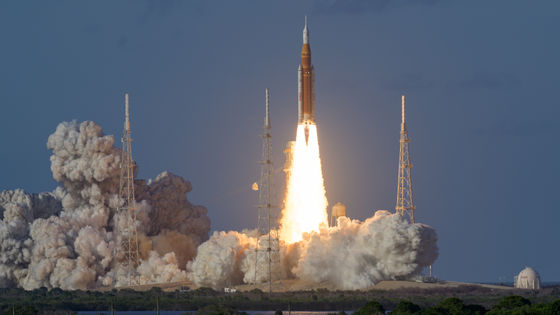
Immediately after launch, even though it was only the first day of flight, the toilet malfunction light on the Orion spacecraft came on.
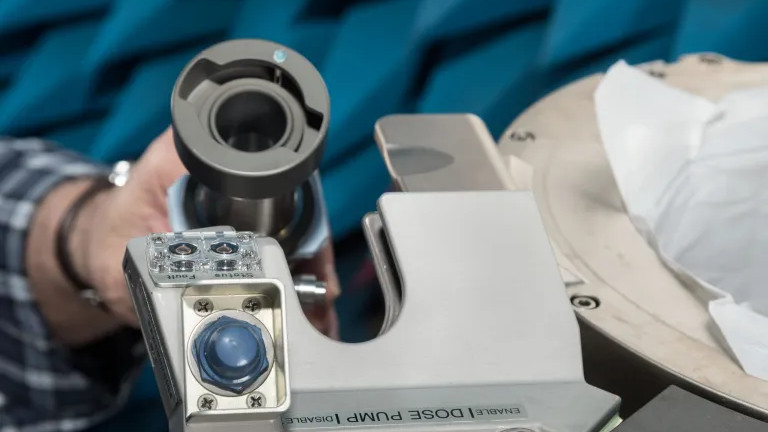
NASA uses the Universal Waste Management System (UWMS) as a space toilet. On platforms such as the International Space Station where astronauts stay for extended periods, the UWMS supplies pre-treated urine to a recycling system, where it is recycled as water.
However, in the case of short-term missions like 'Artemis II,' waste is not pre-treated with chemicals and is instead stored for disposal.
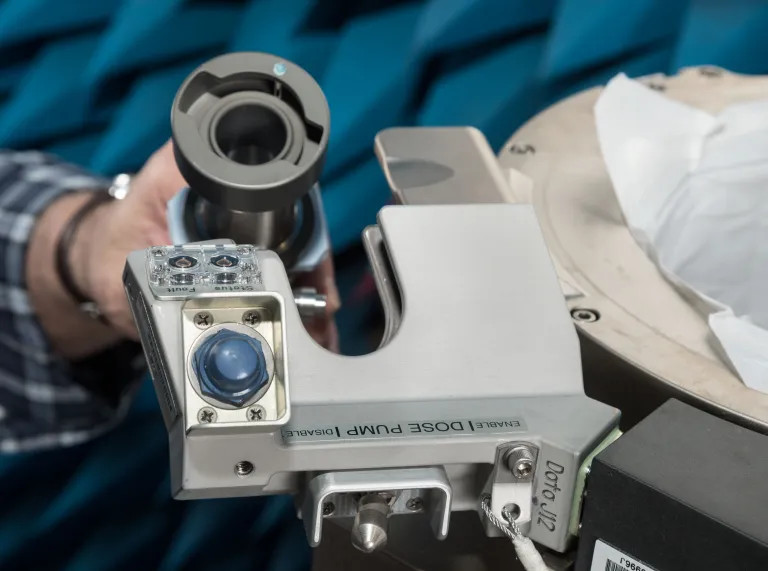
On Earth, urine and feces expelled from the body fall due to gravity, but in a gravity-free environment, they don't fall. Therefore, UWMS uses airflow to separate urine and feces from the body and suck them into the appropriate container for storage. In the newer type of UWMS, airflow is automatically generated when you try to use the toilet, so odor is also controlled. This is what the actual part that touches the body looks like.
by NASA
Boldly Go! NASA's New Space Toilet Offers More Comfort, Improved Efficiency for Deep Space Missions - NASA
https://www.nasa.gov/humans-in-space/boldly-go-nasas-new-space-toilet-offers-more-comfort-improved-efficiency-for-deep-space-missions/
The problem occurred with a controller that is part of the UWMS's control system, and the issue caused the fan to stop working. One of the crew members who participated in the mission, Christina Koch, followed the instructions of the ground team and successfully repaired the device, but she was unable to use the restroom for at least six hours.
During the six hours when the toilets were malfunctioning, a 'foldable emergency urinal (CCU)' was used. The Orion crew attempted to dispose of the contents of the CCU overboard as per procedure, but the ground team requested a delay, citing concerns that 'releasing urine overboard could generate a small amount of thrust, potentially disrupting the Orion's navigation system.' The disposal was only approved the following morning.
The Orion spacecraft mission is being live-streamed at the following link at the time of writing.
NASA's Artemis II Live Mission Coverage (Official Broadcast) - YouTube
Footage of the Orion's exterior is also being streamed.
NASA's Artemis II Live Views from Orion - YouTube
Related Posts: