Elon Musk's SpaceX raises approximately 12 trillion yen in the world's largest initial public offering (IPO).
by
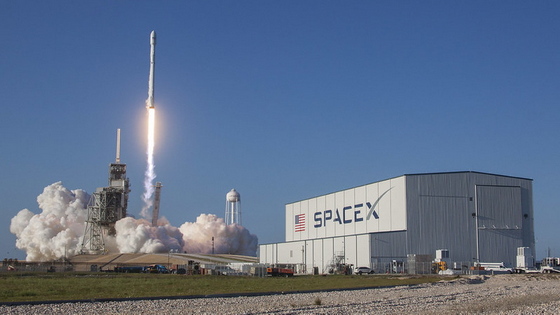
SpaceX, led by Elon Musk, has raised $75 billion (approximately 12 trillion yen) in its initial public offering (IPO). The company, which develops rockets, satellites, and AI, achieved the world's largest IPO, driven by strong demand from investors.
Elon Musk's SpaceX raises $75bn in the world's biggest IPO
https://www.ft.com/content/1890e552-aa7e-4d7f-98f1-db4f165e8827?syn-25a6b1a6=1
SpaceX official prices shares at $135 in the largest IPO ever | TechCrunch
https://techcrunch.com/2026/06/11/spacex-officially-prices-shares-at-135-in-the-largest-ipo-ever/
SpaceX offered 555.6 million shares at $135 per share (approximately 21,600 yen). This amount significantly exceeds the $24.9 billion (approximately 3.98 trillion yen) that Saudi Aramco raised when it went public in 2019.
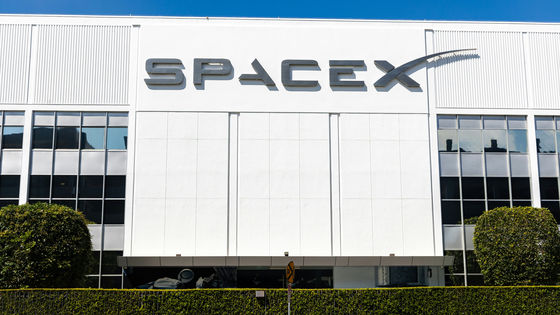
SpaceX's official name is 'Space Exploration Technologies Corp.', and it is traded on the Nasdaq market under the ticker symbol 'SPCX'. While the price of a typical IPO is usually fixed at the start of market trading, SpaceX took an unusual approach by proposing a target price of $135 per share to investors in advance. If the underwriters exercise the greenshoe option to sell additional shares, the amount raised could increase to $86 billion (approximately 13.8 trillion yen). In that case, the company's valuation is estimated to reach $1.78 trillion (approximately 285 trillion yen).
This IPO attracted a flood of orders from giant asset management companies, sovereign wealth funds from Gulf states, hedge funds, and individual investors. SpaceX received orders more than three times the size of its offering, with individual investors alone placing orders exceeding $100 billion (approximately 16 trillion yen). Musk has previously expressed his intention to bring smaller shareholders closer to the core of the company's ownership structure, and individual investors are expected to be allocated around 20% to 25% of the SpaceX shares offered. Consequently, the number of shares allocated to large institutional investors, which are usually given priority in IPOs, will be limited.
SpaceX plans to invest the funds raised in AI infrastructure and new satellite constellations . The company has unveiled a concept drawing of its first AI satellite with a 70-meter wingspan, and an on-orbit AI data center is positioned as a central plan for capturing the $28.5 trillion (approximately 4,560 trillion yen) target market that it claims.
SpaceX is applying to regulators for permission to launch rockets to deploy up to 1 million AI data center satellites in Earth orbit by the end of 2027 - GIGAZINE
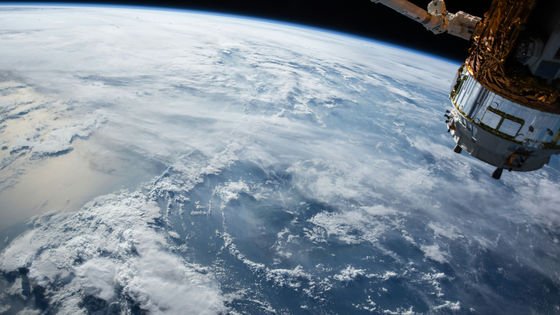
On the other hand, they also need to allocate $20 billion (approximately 3.2 trillion yen) to repay the bridge loan they provided in March. Musk said, 'We are entering a new phase of massive growth, and we need capital for that.' He also explained that the idea of building AI data centers in space is the best way to overcome the energy constraints on Earth.
by
However, justifying SpaceX's high valuation remains a major challenge. SpaceX is a loss-making company, valued at 92 times its $19 billion (approximately 3.04 trillion yen) in revenue over the past year, placing it among the world's top 10 most valuable companies. Lead underwriter Goldman Sachs analysts predict that SpaceX's AI-related revenue will increase 100-fold by 2030, reaching $322 billion (approximately 51.5 trillion yen).
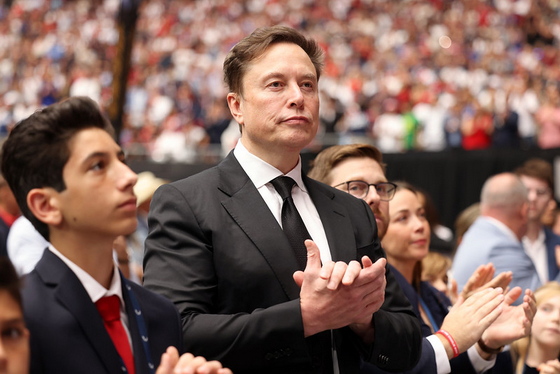
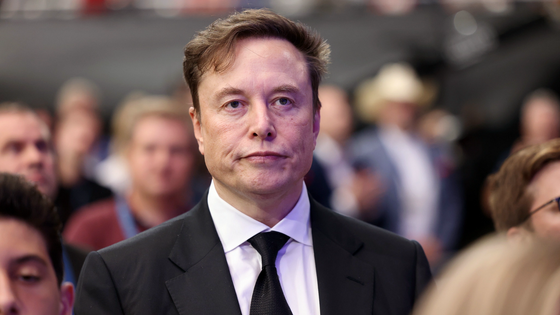
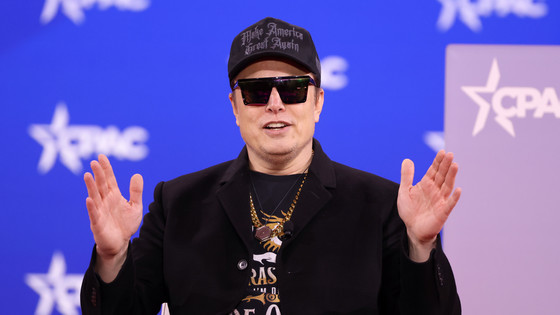
The biggest beneficiary of this IPO will be Elon Musk himself. He will own just under 850 million Class A shares, each with one vote, and will also be entitled to receive 5.6 billion Class B shares, each with 10 votes. In addition, he will receive 1 billion shares as a reward for betting on the unlikely scenario that SpaceX will build a colony on Mars that will house 1 million people.
by Gage Skidmore
Antonio Gracias, founder and CEO of Valor Management, owns 503.4 million shares, with his stake valued at nearly $68 billion (approximately 10.9 trillion yen) based on the IPO price. Other board members and investors, such as Luke Noseck, own 33 million shares, and COO Gwynne Shotwell owns nearly 12.6 million shares.
As a privately held company for approximately 20 years, SpaceX has raised around $40 billion (approximately 6.4 trillion yen) from around 400 venture capital firms. This IPO is expected to bring significant benefits to these long-term backers. On the other hand, for the many small investors who invested in SpaceX through special purpose vehicles (SPVs), it may take time for the scale of their profits and their eligibility to receive them to become clear. It is said that some investors will not be able to grasp their actual profits until the phased lock-up period ends.
Nasdaq has approved a fast entry rule that will allow SpaceX to be included in the Nasdaq 100 after 15 trading days. FTSE Russell, part of the London Stock Exchange Group, has also adopted a 5-trading-day fast entry rule and plans to include SpaceX in the Russell 1000 and Russell 3000 early.
Related Posts:
in Note, Posted by log1i_yk