A jacket has been developed that can extract nearly one liter of drinking water from the air.
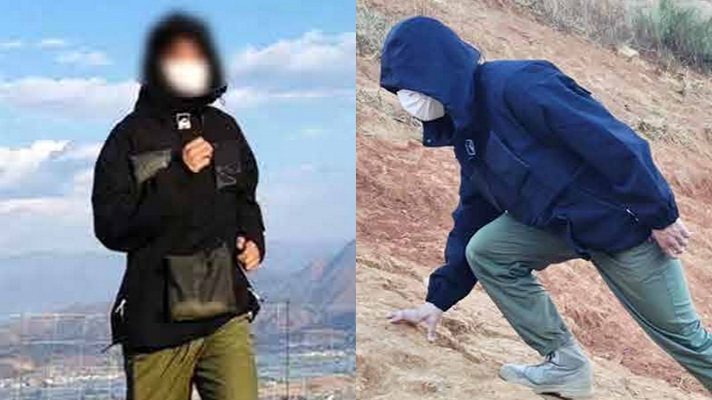
A research team at the University of Texas at Austin has developed a jacket-type device that can collect moisture from the air and extract drinking water. This technology incorporates moisture-recovering capabilities into the fibers themselves, and is intended for use in environments where access to drinking water is difficult, such as hiking, camping, farming, disaster response, and military operations.
Scalable hierarchical textile fibers toward personalized wearable atmospheric water harvesting | Science Advances
This Jacket Pulls Drinking Water From Thin Air - UT Austin News - The University of Texas at Austin
https://news.utexas.edu/2026/06/11/this-jacket-pulls-drinking-water-from-thin-air/
The technology to capture water from the air is called 'atmospheric water capture,' and until now, it has been studied using box-shaped devices, large panels, or layers of adsorbent materials. However, instead of making the device larger, the research team redesigned it as a portable water source for individuals by making the fabric itself, which can be used in clothing, capable of collecting moisture.
This jacket incorporates 'hierarchical open porous fiber (HOP-Fiber)' that captures water vapor in the air. HOP-Fiber has pores on its surface and pores of various sizes arranged in layers inside, allowing it to liquefy water vapor on the surface and then quickly move the water into the interior of the fiber.
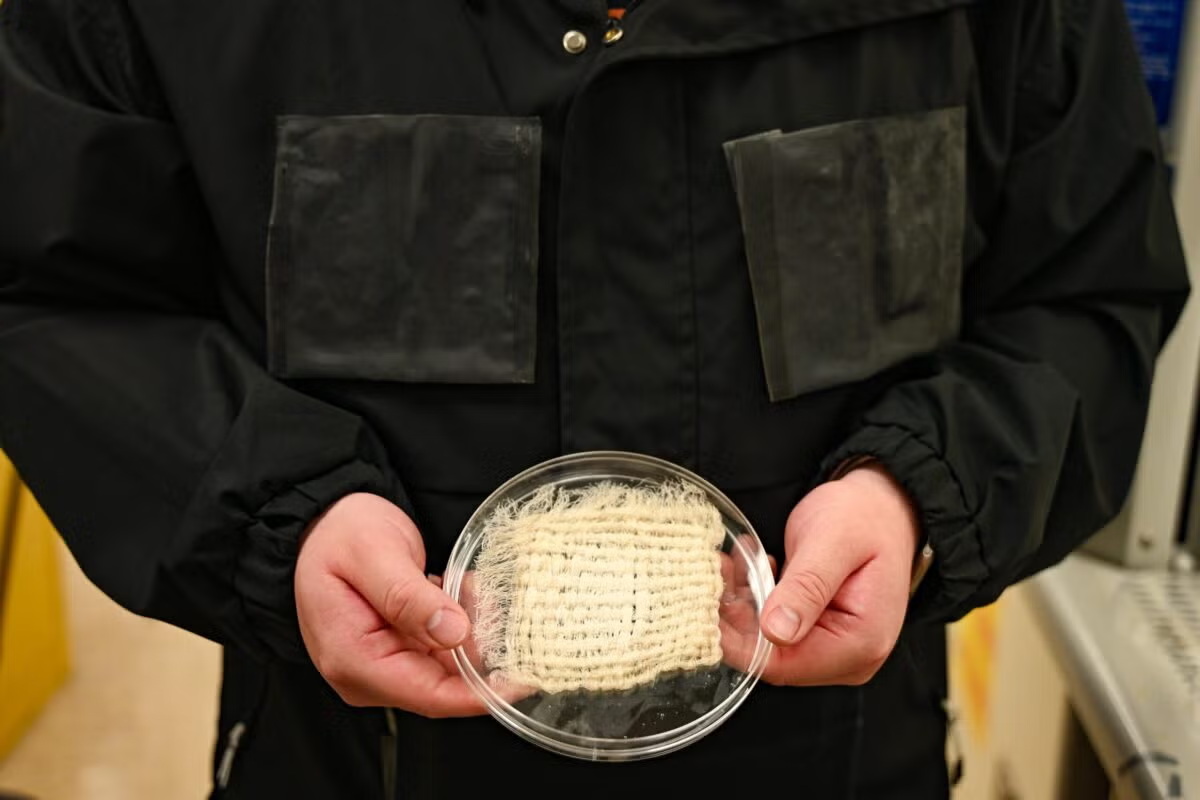
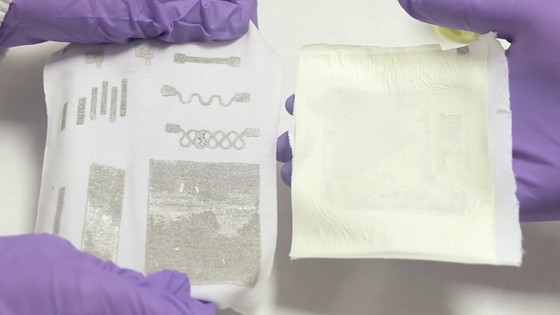
The HOP-Fiber used in this study is made by combining hydroxypropyl cellulose and cellulose in a weight ratio of 3:5 to create a fiber structure, and lithium chloride is incorporated to enhance its hygroscopic properties. The research team successfully produced HOP-Fiber-4 continuously at a rate of 509m per hour using a 20-nozzle spinning machine and wove it into a fabric on a square meter scale.
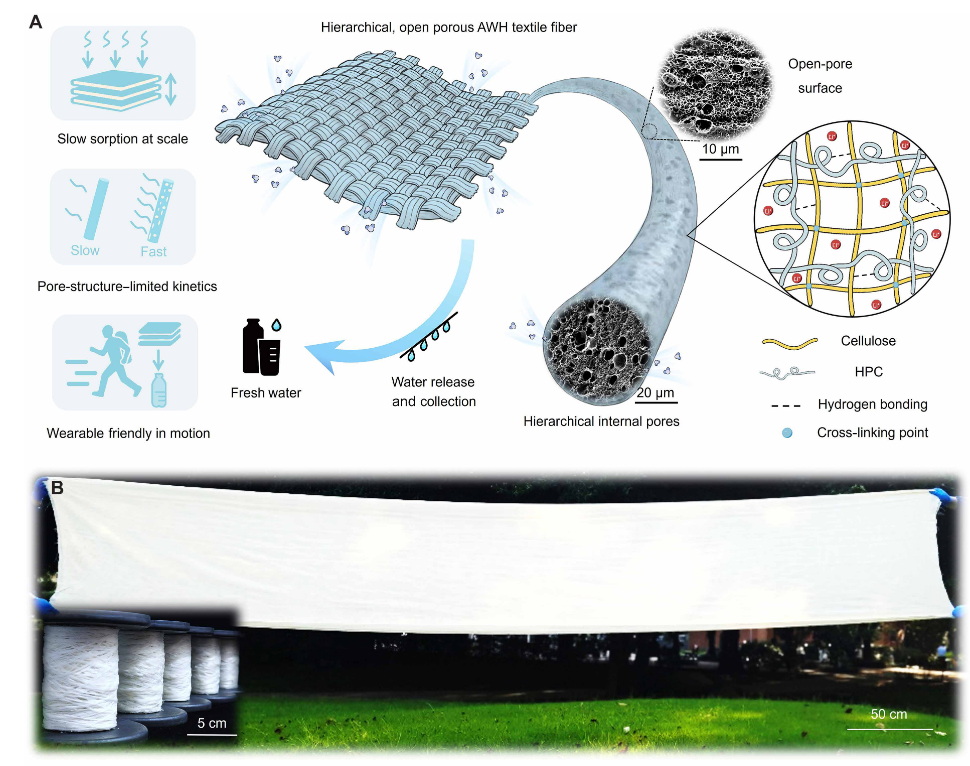
According to the research team, even when these fibers are woven into fabric, the pathways for water vapor are maintained, thus suppressing the degradation of performance when scaled up compared to conventional adsorbents. Experiments have shown that the water absorption performance when scaled up is 3 to 10 times better than that of conventional water recovery materials.
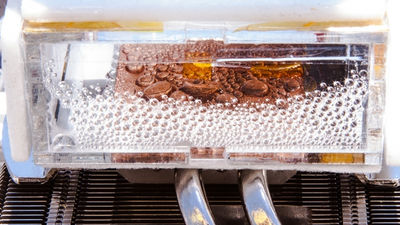
The jacket has a total of four moisture recovery units attached to the front and back. The recovery units are removable, and after absorbing moisture, they are placed in a foldable recovery device and heated, where the moisture evaporates and condenses on the inner surface, collecting as liquid water.
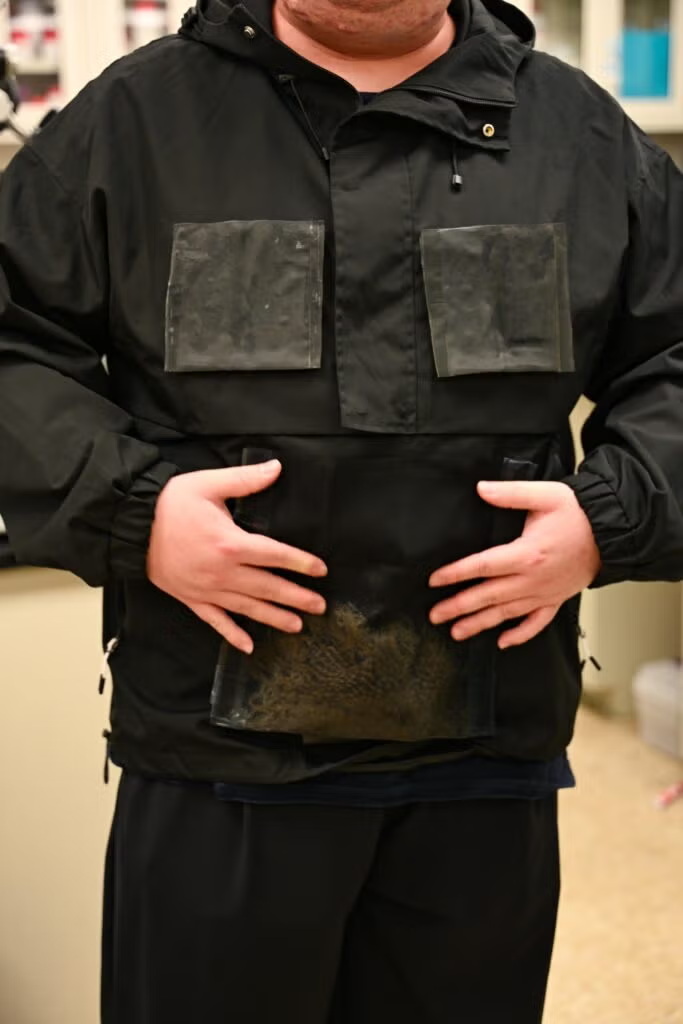
In experiments, the adsorbent demonstrated the ability to produce 3.76 to 7.45 liters of water per kilogram per day in an environment with a relative humidity of 20 to 80%. The actual amount of water recovered ranged from 410 ml to 894 ml per day, and according to the research team, this resulted in approximately 400 to 900 ml of drinkable water per day, depending on the humidity.
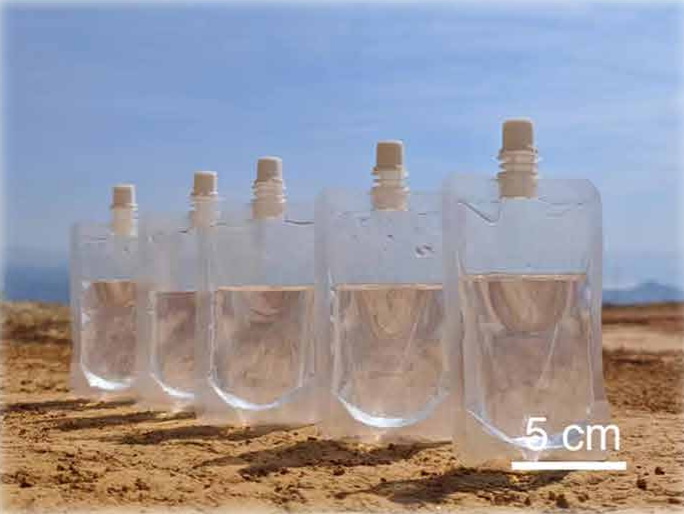
Outdoor tests were conducted in the arid region of Xichang, China; the semi-arid region of Austin, USA; and the humid region of Chengdu, China. In the arid environment of Xichang, 410 ml of water was collected per day, and it was reported that the collected water had low levels of lithium ion residue and met the WHO (World Health Organization) standards for drinking water.
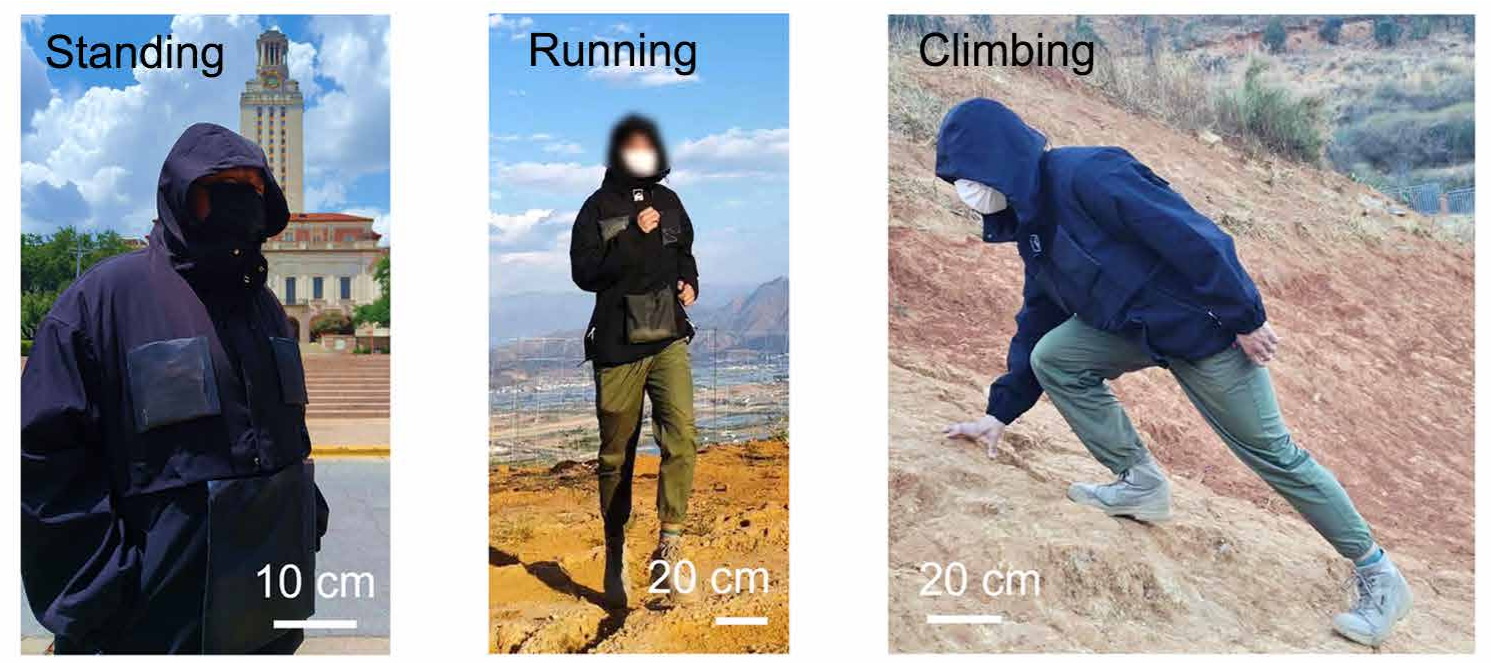
This fabric is said to be able to withstand deformation such as rolling, folding, and twisting, and is envisioned for use not only in clothing but also in backpacks, tents, and emergency shelters. The research team plans to further develop the technology for outdoor activities, remote work, disaster response, and improving water access in arid regions and areas with limited infrastructure.
Related Posts: