Why has 'astrology,' which has absolutely no scientific basis, continued to be loved from ancient times to the present day?

Examining the Enduring Appeal of Astrology | Psychology Today
https://www.psychologytoday.com/us/blog/this-is-america/202606/examining-the-enduring-appeal-of-astrology
Astrology is believed to have originated from large-scale astronomical observations conducted in ancient Babylonia, and spread to Greece, India, the Arab world, Europe, and China. Babylonian astrology reached Greece around the 3rd century BC and developed into ' horoscope astrology ,' which was used to predict individual fortunes.
In his book ' The City of God ,' Saint Augustine, a bishop of the Roman Empire around the 4th century BC, attacked astrology, which had been popular among Greeks, Romans, and Muslims for centuries, asking, 'If human actions are predetermined by the movement of the stars, where is the will and judgment of God?' Later, when Christianity became the state religion of the Roman Empire, pagan practices, including astrology, were sometimes punishable by death.
Astrology experienced periods of rise and fall over the following centuries, but in the early 20th century, astrologers shifted their focus from predicting the future to 'personality analysis and psychological counseling' based on the positions of the planets, sun, and moon at an individual's birth. In this way, astrology regained immense popularity.

Altshuller explains astrology by introducing the book '
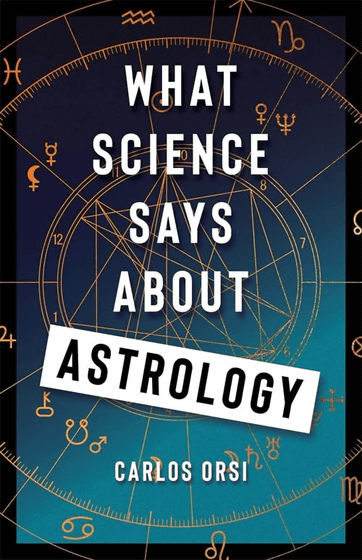
On the other hand, astrology has been met with numerous scientific counterarguments. For example, an analysis of 10 million couples found no influence of astrology on their compatibility. Furthermore, studies have shown that people born at the exact same time and place do not necessarily have the same or similar personalities. Additionally, the horoscopes used by astrologers vary considerably from person to person, and may not accurately reflect the actual positions of the stars.
As a reason why astrology remains popular despite scientific counter-evidence, Orsi cites the typical reaction of people who undergo personality analysis. Orsi points out that patients and clients who receive personality analysis from an astrologer tend to find parts of the analysis that apply to themselves and accept the diagnosis, treatment, and theoretical views as effective and useful. Furthermore, even those who are skeptical of astrology tend to become more favorable towards it if they receive generally positive reports about themselves, as they tend to judge them as accurate.
Experienced astrologers recognize the importance of their relationship with clients and understand how to make a good impression. They project a confident demeanor, listen attentively to and observe information outside of astrology, such as age, income, education, race, and gender, and draw information from their clients. Then, adopting an empathetic and dramatic approach, the astrologer's job is to convey what the client wants to hear, while Orsi points out that 'astrology has no basis in reality.'
Orsi concludes, 'Astrology is one of humanity's longest-running attempts to understand the universe and to find laws in nature. However, it is now something that belongs in museums and history books, and is not suitable for our daily lives.'
Related Posts:








in Note, Posted by log1e_dh