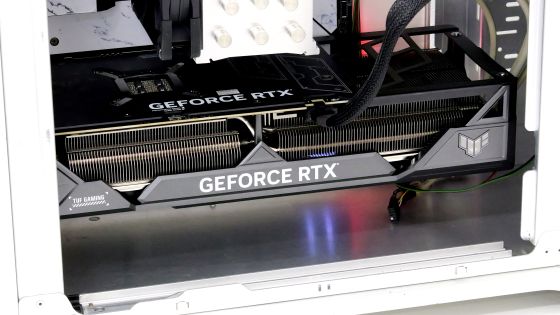
What are the modification methods to bypass the performance limitations imposed by NVIDIA on the GeForce RTX 5090?
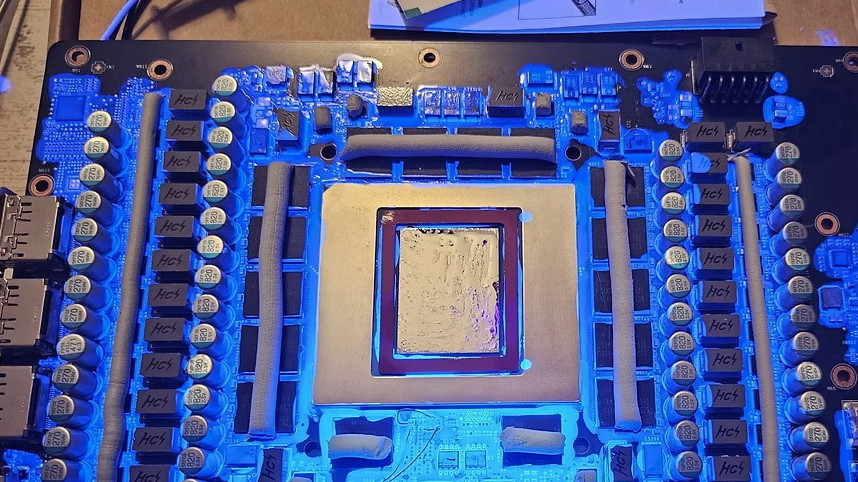
PickleRick of the overclocking-related website Xtreme Systems states that 'overclocking GPUs is no longer as easy as it once was,' and he is investigating a modification method that enables overclocking beyond the manufacturer's limitations on NVIDIA's flagship GPU,
External clock generation on RTX 50 series
https://www.xtremesystems.us/post/external-clock-generation-on-rtx-50-series
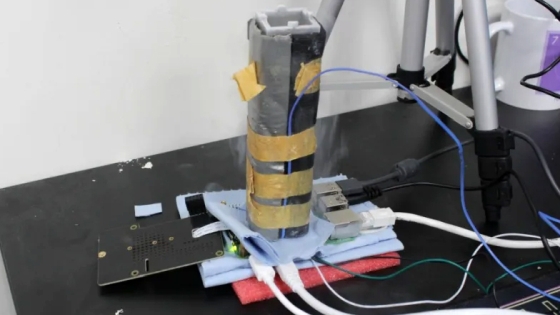
PickleRick's approach involves connecting an Elmor External Clock Board (Elmor ECB), which supplies an arbitrary reference clock to the GPU from an external source, to the GPU. This method bypasses the reference signal generated by the oscillator on the GPU board and instead sends a different reference signal from the Elmor ECB to increase the overall operating clock of the GPU. The aim of using the Elmor ECB is to delve into areas that are difficult to access with software or vBIOS and to unlock the potential performance of the RTX 50 series.
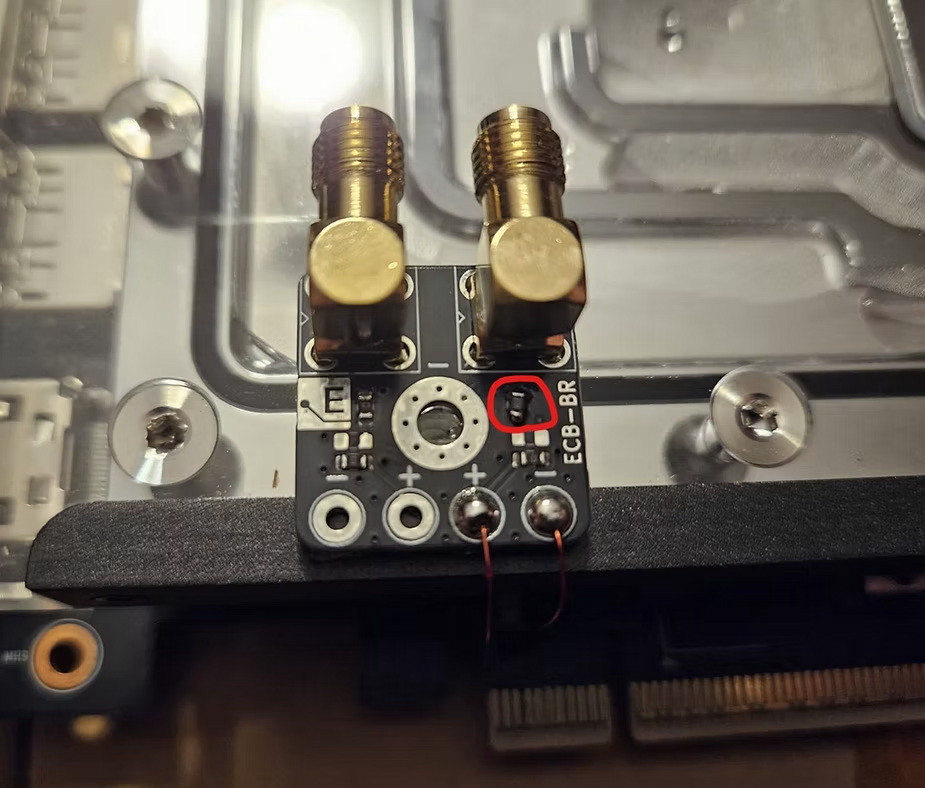
According to PickleRick, the idea of using Elmor ECB is not entirely new, and overclocking by replacing crystal oscillators was practiced from the late 1970s to the early 1990s. At that time, there were limited means of changing the clock using software or jumpers, so the chip was sped up by changing the reference clock itself.
Subsequently, jumper and software-based adjustments became widespread on motherboards, and GPU clock speeds and voltages could be manipulated relatively freely. However, PickleRick recalls that editing the vBIOS became more difficult with the GTX 10 series and beyond, and in recent years, the scope for user adjustments has narrowed.
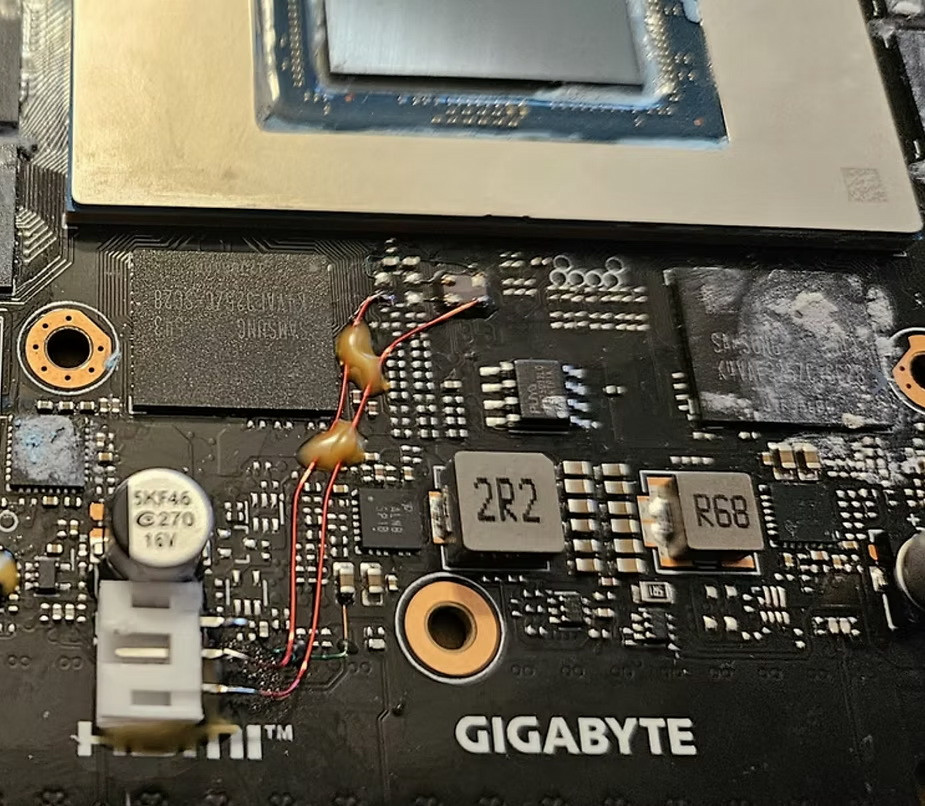
Even with the high-end RTX 50 series, it's becoming difficult to push the VRAM clock frequency to its limits, and apparently, the crossbar clock, which affects the connection speed inside the GPU, can only be partially adjusted by swapping the vBIOS. With the RTX 5090, the operating frequency of the crossbar, which is the data path inside the GPU, is said to be a good indicator of individual differences. PickleRick considers those that stay around 2600MHz to be less likely to improve, while those that reach around 2700MHz and also have a high-clock GPU core are considered excellent. Therefore, PickleRick thought, 'If we can increase both the memory and the crossbar with external clocks, we might be able to extract performance that is not visible through normal adjustments.'
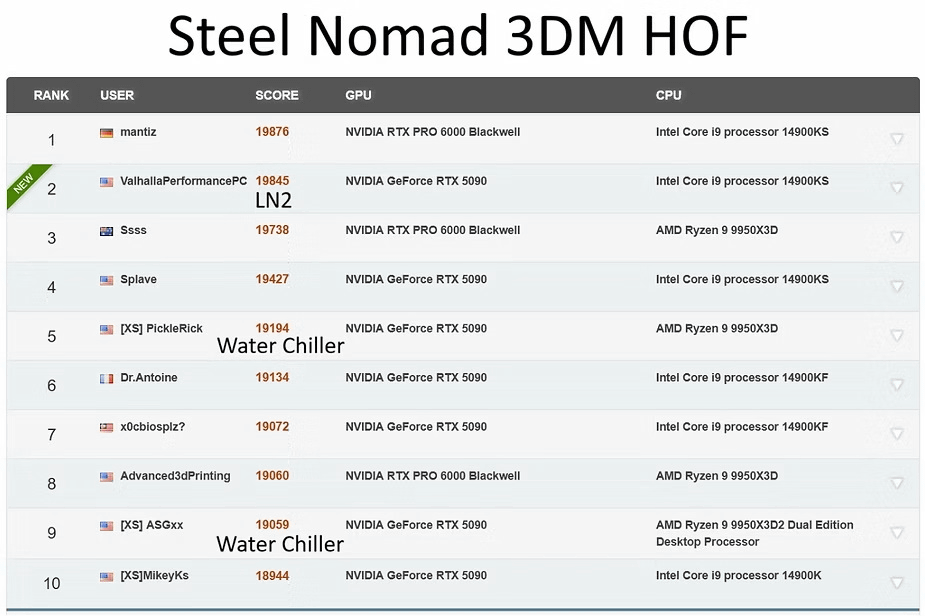
The verification process, conducted over several weeks with the cooperation of Turbogear, who possesses expertise in RF engineering, has been reported. Early benchmarks have shown that even with a low-cost water cooling unit, the results surpassed several liquid nitrogen cooling scores.
On the other hand, this modification is not yet at a stage where it can be reliably used by everyone. If the wiring is poorly managed, it can crash just by someone standing up or moving quickly near the GPU, and in some cases, it may not even boot up. The biggest challenge is that the input signal expected by the GPU and the signal output by the Elmor ECB are different.
PickleRick then attempted to make the signal safer and more stable by combining voltage divider circuits, RF attenuators, and low-pass filters. The best result was a configuration using a 20Ω series resistor, 1800mV output, and minimum drive strength, which resulted in a VPP of around 1.2V in the circuit. Cards tested with this configuration reached the equivalent of +5467 in MSI Afterburner 's memory slider and approximately 2920MHz in crossbar clock. Furthermore, in Port Royal , raising the crossbar increased the score by about 500 points, setting the memory beyond the normal limit increased it by another 200 points, and lowering the coolant temperature by 7°C and increasing the clock speed surpassed the previous highest score by 1500 points.
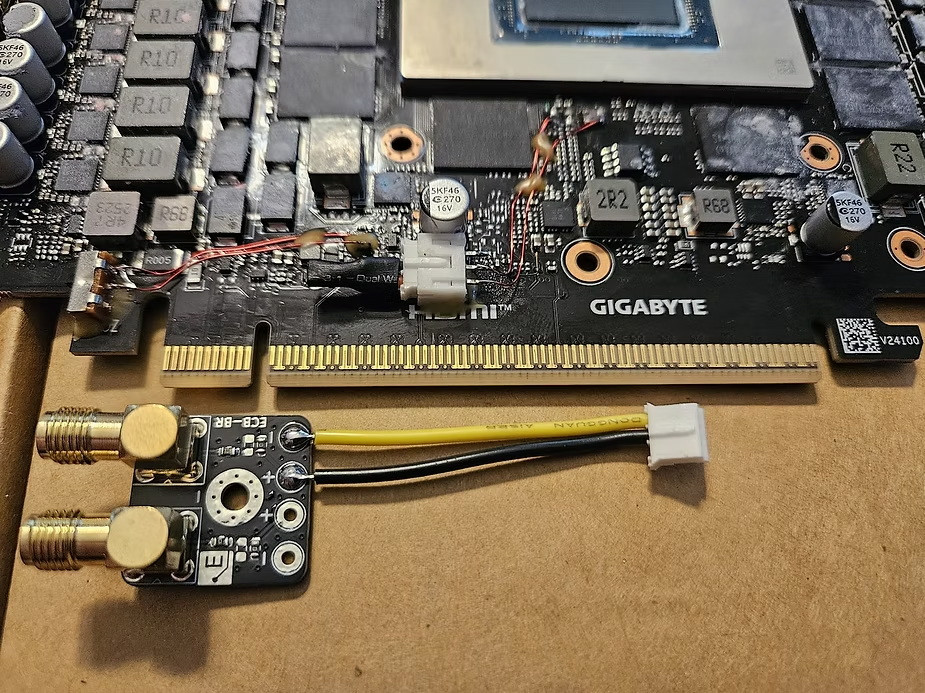
However, when using an external clock, the clock value displayed by NVIDIA will differ from the actual frequency. PickleRick explains that the displayed value is calculated based on a 27MHz reference clock, so the actual clock needs to be calculated separately.
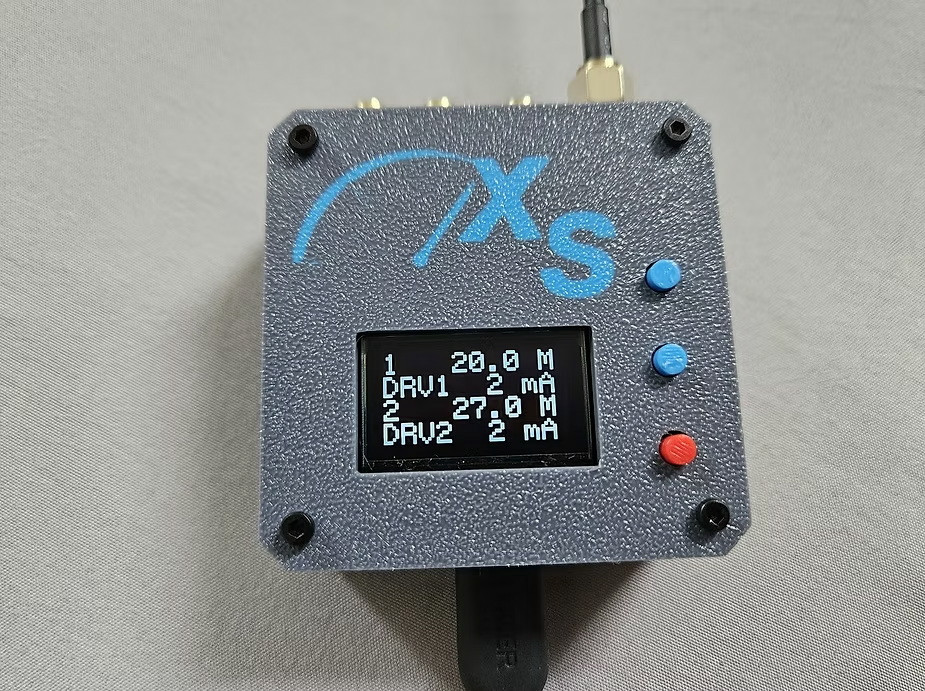
This modification affects not only memory and crossbars, but also HDMI, PCIe, GPU cores, and PWM fan speed. PickleRick states that 'it's similar in nature to overclocking the motherboard's BCLK, and may require an HDMI monitor that can accept out-of-range signals, or in some environments, enabling CSM mode or integrated graphics.'
Related Posts:
in Hardware, Posted by log1i_yk