Chrome sets a new browser benchmark record on the M5 MacBook Pro, claiming the best performance among all browsers.
Google's web browser, Chrome, has achieved its highest-ever scores in two browser benchmarks: Speedometer 3.1 and Jetstream 3. In fact, Chrome has achieved the highest score of any browser in Speedometer 3.1.
A Double Victory for Web Speed: Chrome Breaks Records Again on Speedometer 3.1 and Jetstream 3
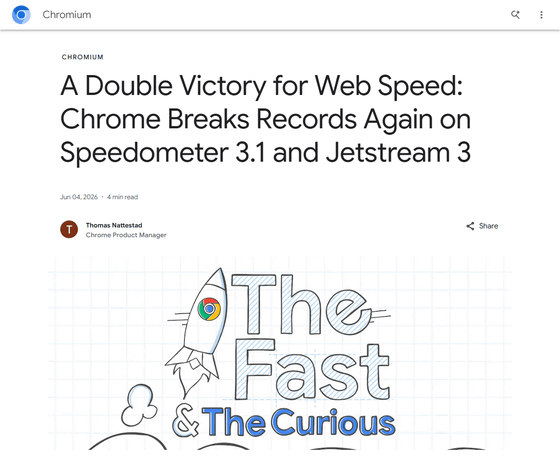
Chrome for Mac breaks benchmark records on the latest MacBook Pro - 9to5Mac
https://9to5mac.com/2026/06/05/chrome-for-mac-breaks-benchmark-records-on-the-latest-macbook-pro/
Speedometer 3.1 is a web browser benchmark that measures the responsiveness of web applications by measuring the time it takes for simulated user interactions on various workloads. Developed in open collaboration with multiple web browsers, including Chrome, Speedometer 3.1 is capable of measuring the responsiveness of web applications through workloads that cover various areas of Blink , the rendering engine used in Chrome.
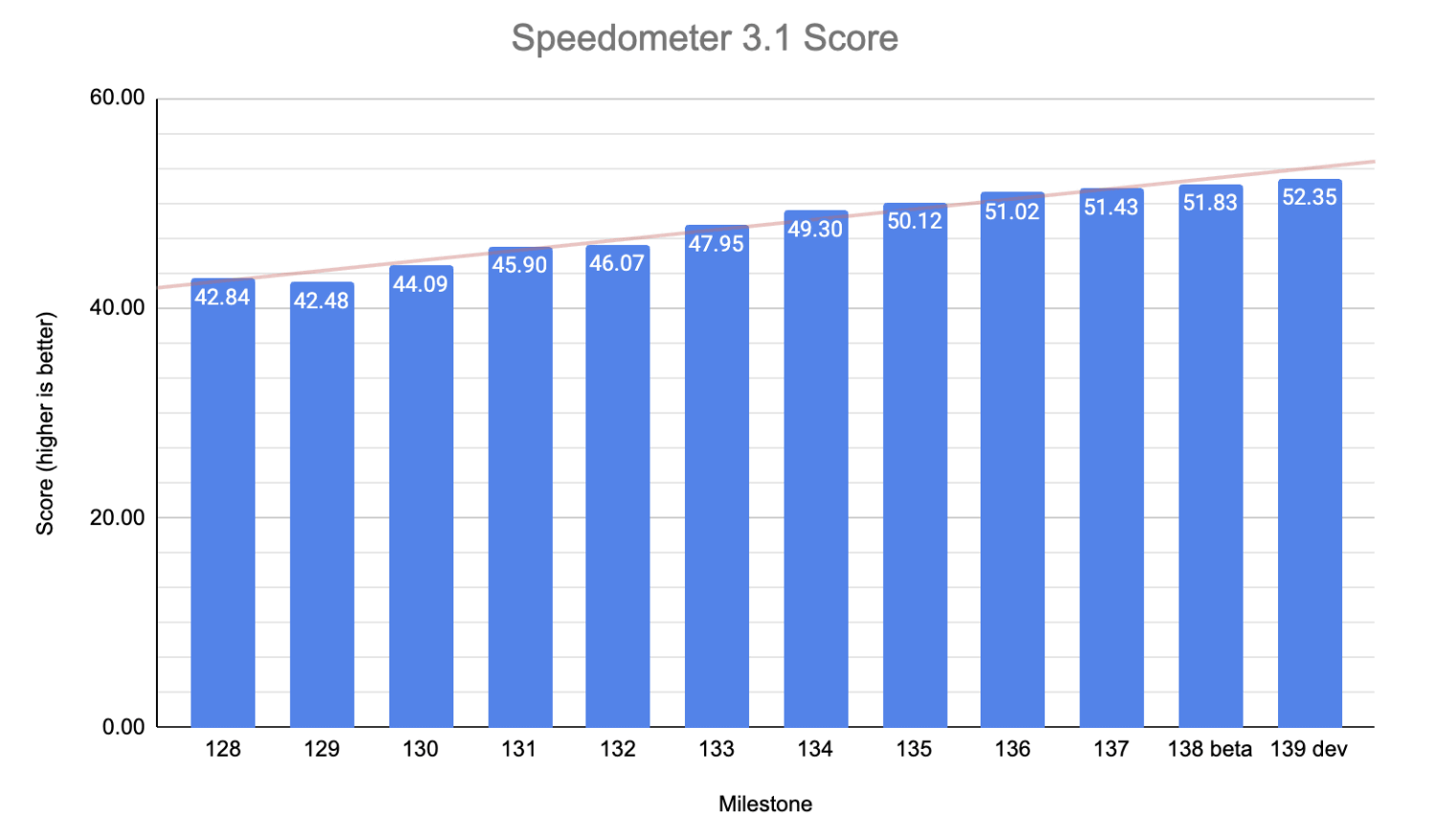
In June 2025, Google published an article on its Chromium blog showing how Speedometer 3.1 benchmark scores have improved from Chrome 128 to Chrome 139 dev using an M4 MacBook Pro running macOS Sequoia 15.
The graph below summarizes the changes in benchmark scores from Chrome 128 to Chrome 139 dev, clearly showing that the scores have gradually improved with each version.
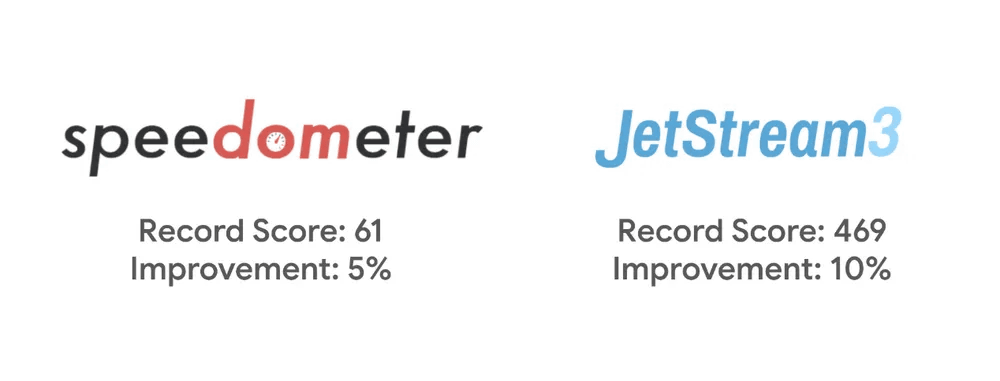
Google has now run Speedometer 3.1 on an M5 MacBook Pro running macOS Tahoe 26.0.1. macOS Tahoe 26.0.1 is the next major version of macOS after macOS Sequoia 15. The benchmark score was 61 , the highest ever among all browsers, representing a 5% improvement from the June 2025 benchmark results.
In addition, Google has also released benchmark scores for JetStream 3. JetStream 3 is a 'benchmark suite for JavaScript and WebAssembly focused on advanced web applications.' JetStream 3.0 was just announced at the end of March 2026 and, like Speedometer 3.1, was developed in collaboration with engineers involved in the development of major JavaScript and WebAssembly engines, with contributions from browser development companies such as Apple, Google, and Mozilla.
In the JetStream 3 test, the 'M5 MacBook Pro with macOS Tahoe 26.0.1' scored 469 points. Google is highlighting this result as 'a 10% improvement compared to another test conducted in early 2026.'
Google stated that Chrome has succeeded in providing users with a 'faster internet experience,' as evidenced by improvements in Speedometer 3.1 and JetStream 3 benchmark scores.
Google cited updates to JavaScript, WebAssembly, and Blink as factors that contributed to the improvement in benchmark scores.
JavaScript is a part that directly impacts the processing speed of websites and web applications, and improvements have been made to speed up async/await processing, optimize the timing of JavaScript function optimizations, and speed up BigInt .
WebAssembly is a technology that enables near-native app speeds in browsers and is used in games and AI processing. Google has implemented optimizations in WebAssembly, such as SIMD instruction optimization and reduction of overhead in function calls from JavaScript to WebAssembly.
Blink is the core browser engine for Chrome. Blink optimizes DOM manipulation, element attribute processing, CSS animation processing, significantly improves string copying efficiency using SIMD operations, reduces the time and overhead required to build DOM elements from raw text on the first site load by directly optimizing string generation within the HTML fast path parser, and optimizes Apple Advanced Typography (AAT) shaping, among other things.
Related Posts:






in Software, Posted by logu_ii