The argument is that AI-generated photos make it impossible to distinguish between 'reality and fiction,' and therefore legal regulations and AI watermarks are necessary to protect reality.
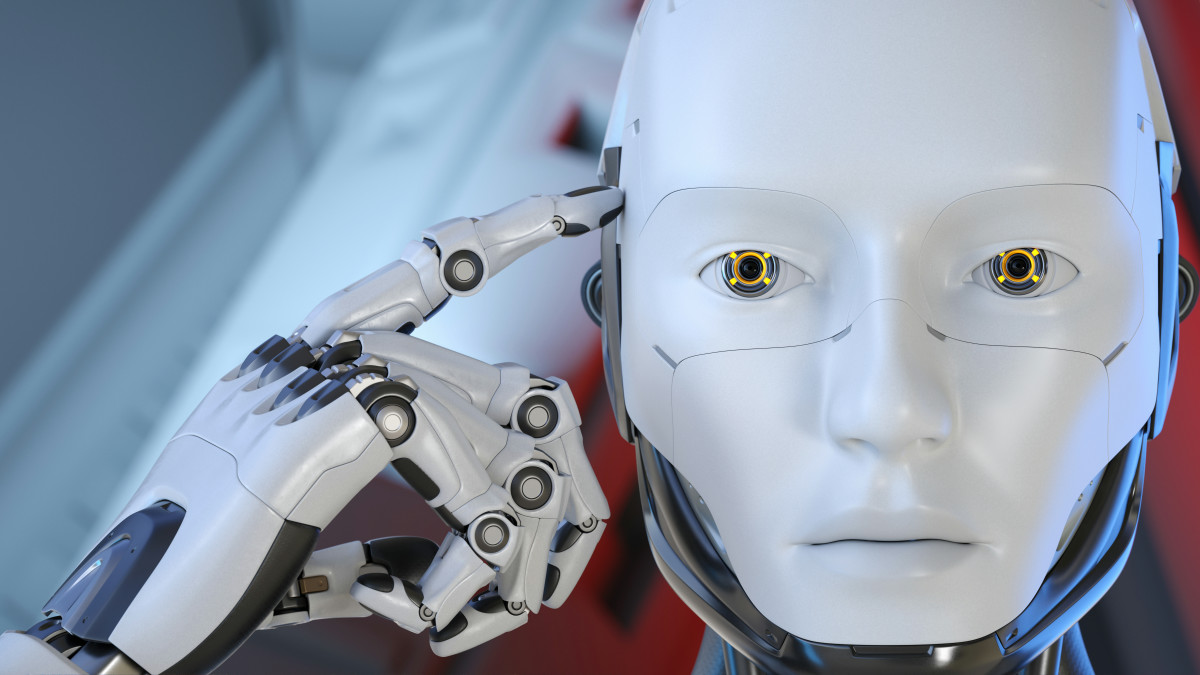
Generative AI can produce images of such high quality that they are indistinguishable from real photographs, making it increasingly difficult to determine whether something is real simply because it's in a photograph.
AI-generated images are making it impossible to distinguish truth from fiction. We need laws and AI watermarks to protect our shared reality. | Live Science
https://www.livescience.com/technology/artificial-intelligence/ai-generated-images-are-making-it-impossible-to-distinguish-truth-from-fiction-we-need-laws-and-ai-watermarks-to-protect-our-shared-reality-opinion
On June 6, 1944, in the midst of World War II, the Allied forces launched the Normandy landings to invade Nazi-occupied France. Although the photographs taken at the time were grainy and blurry, Baldwaj points out that 'for people around the world who never witnessed the battlefield, these photographs were evidence that made them feel the sacrifices, courage, and collective purpose of war firsthand, and they became war itself.'

by Robert F. Sargent, US Coast Guard
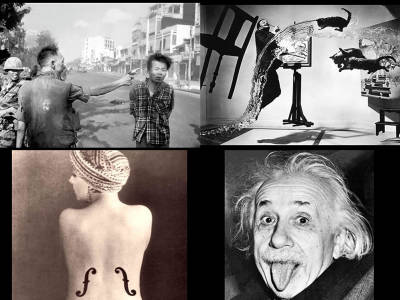
Other examples of iconic photographs taken during major events include
However, advances in generative AI have made it possible for anyone to generate images that are not only realistic but also emotionally resonant and contextually convincing. While traditional image editing techniques required advanced skills and sometimes left clear evidence that could be deciphered with careful analysis, today's image-generating AI can quickly and inexpensively produce large quantities of plausible fake images.
Baldwaj points out that historically, photographs have been treated as the most useful evidence, and the proverb 'seeing is believing' actually shows that photos and videos speak louder than text or audio. However, with AI now capable of fabricating any number of extremely realistic photos, the premise that 'photographs have some causal relationship with reality, even if they are staged or edited' has collapsed.
Using AI, it's easy to generate images depicting 'enemy atrocities' or 'staged victories designed to boost morale.' The risks associated with image generation AI are not mere speculation; AI-generated images are already beginning to be used for propaganda.
In fact, a large number of fake images and videos circulated online during the US-Israeli attacks on Iran. For example, the following image, which supposedly shows American soldiers being held captive by Iran's Revolutionary Guard Corps, has been found to be entirely generated by AI. In addition, images of US radar systems allegedly damaged by Iranian drone attacks circulated widely, but these too were found to be fake.
THREAD: Misinformation in the Iran/US/Israel war - 7 March
— Shayan Sardarizadeh (@Shayan86) March 7, 2026
These images, viewed 4 million times, claim to show US Delta Force soldiers being detained by Iran's Revolutionary Guard.
The images are all AI-generated. Google's SynthID finds Google AI watermarks in them. https://t.co/AfaIZyLBLw pic.twitter.com/3inenwbG0G
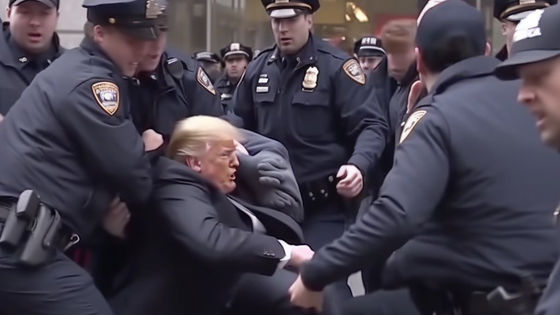
In the past, a large number of fake images claiming that 'Donald Trump has been arrested' were also generated.
A person who used the image generation AI 'Midjourney V5' to create a fake image claiming 'former President Trump has been arrested' has been banned from using the service - GIGAZINE
The problem isn't just the circulation of fake photos generated by AI. For example, in April 2026, the British Society for the Prevention of Cruelty to Animals (SSA) published shocking photos of a house where 250 poodle mixes were being kept, but despite this being true, many on social media claimed it was an AI-generated fake.
This case suggests that, as AI has become capable of fabricating highly accurate photographs, even genuine photographs may be mistaken for AI-generated and lose their effectiveness. The phenomenon where genuine visual evidence is dismissed because a malicious individual claims it was fabricated by AI is sometimes called the 'liar's dividend .'
Baldwaj warned, 'Democratic societies are built on a common foundation of facts and experiences. Disagreements over interpretation are inevitable and often healthy, but there must be some common understanding of what actually happened. Photographs have long played an important role in establishing that common understanding. When the reliability of photographs is lost, collective judgment is also lost.'
Baldwaj argues that in order to solve the problems with AI-generated photos, it is necessary to mandate things like 'disclosure of information that clearly indicates that an image is AI-generated both when it is generated by AI and when it is distributed' and 'embedding metadata in the image that indicates that it originated as an AI-generated image or that it was edited by AI.'
These systems must be standardized, interoperable across multiple platforms, and resistant to tampering. The legal framework supporting these technical measures may include holding those responsible for the misuse of AI-generated content accountable and mandating that platforms store and transmit information. Equally important are journalists, courts, and civil society organizations that interpret and communicate this information to the public.
Baldwaj stated, 'The era of naive visual trust is over. However, the goal is not to return to the past, but to build a new system of trust that can withstand the realities of digital manipulation. Maintaining the power of photography as a foundation for shared understanding is not merely a technical challenge; it is an essential responsibility for democracy.'
Related Posts:

in Free Member, AI, Posted by log1h_ik