The reason why the Great Pyramid of Giza has withstood earthquakes for over 4,000 years has been revealed.

by Nina
Architectural and geotechnical aspects affecting earthquake resilience for the antique Egyptian Khufu pyramid | Scientific Reports
https://www.nature.com/articles/s41598-026-49962-6
The Great Pyramid Has Survived 4,600 Years. A Strange Feature May Help Explain Why. : ScienceAlert
https://www.sciencealert.com/the-great-pyramid-has-survived-4600-years-a-strange-feature-may-help-explain-why
Great Pyramid of Giza is incredibly resilient to earthquakes — and it's due to the ancient Egyptians' 'extraordinary' engineering knowledge | Live Science
https://www.livescience.com/archaeology/ancient-egyptians/great-pyramid-of-giza-is-remarkably-resilient-to-earthquakes-and-its-due-to-the-ancient-egyptians-extraordinary-engineering-knowledge
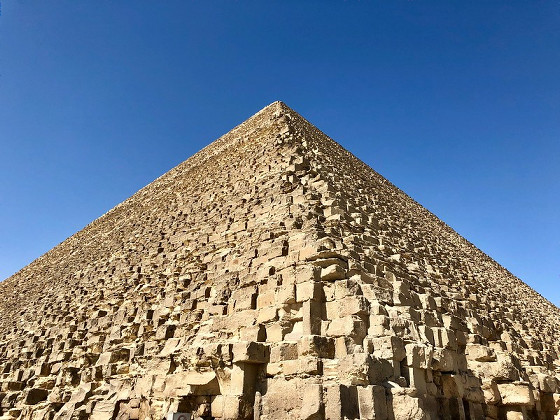
The Great Pyramid of Giza is believed to be the tomb of King Khufu , who ruled the Fourth Dynasty of ancient Egypt. It is a colossal structure made up of 2.3 million megaliths, weighing a total of 6 million tons. When completed, it was approximately 147 meters tall, and even after nearly 4,500 years, it has not suffered any major collapses and maintains a nearly perfect height of approximately 138 meters.
The pyramids are largely solid structures, and their weight is distributed across the entire base in contact with the ground, making them undoubtedly very sturdy buildings. While Egypt is a region where earthquakes that cause significant damage to structures are rare, large earthquakes have occurred frequently within an 80km radius of the Great Pyramid of Giza. In 1847, a major earthquake with an estimated magnitude of 6.8 struck the area, and in 1992, an earthquake with a magnitude of 5.8 was recorded, causing some stones to fall from the top of the pyramid.
Despite being frequently struck by earthquakes, the Great Pyramid of Giza, one of the oldest pyramids in the world, has remained standing while other pyramids around the globe have collapsed. To investigate the reason for this, a team led by seismologist Asem Salama of the Egyptian National Institute of Astronomy and Geography installed vibration sensors inside and around the pyramid to study how it vibrates in response to surrounding vibrations.
by
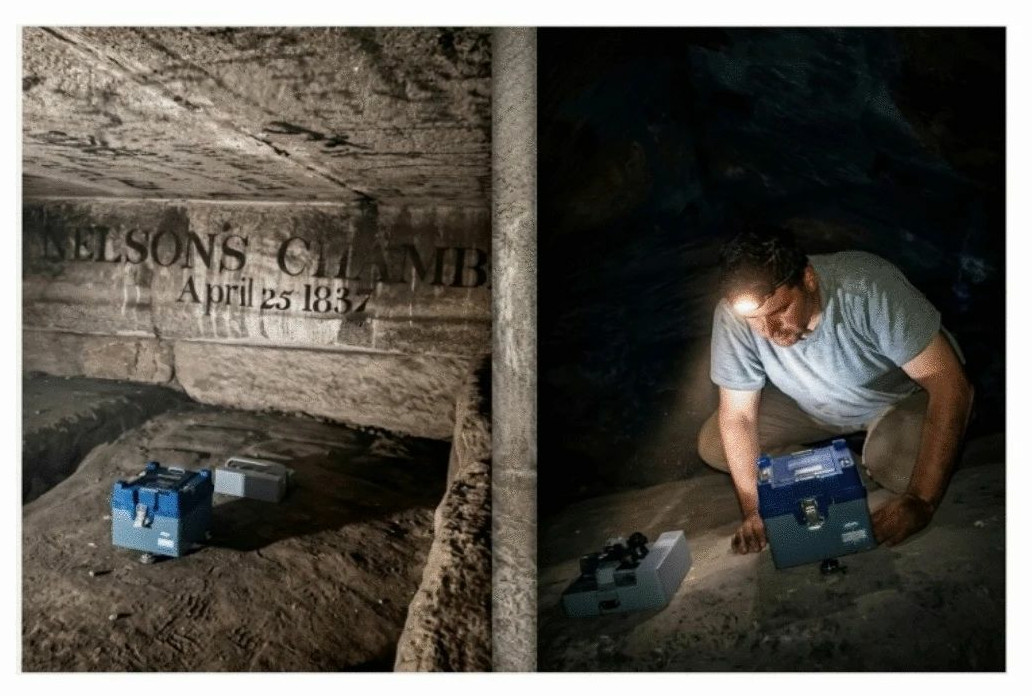
The research team installed a total of 37 vibration sensors in the King's Chamber , Queen's Chamber , the weight-reducing chamber directly above the King's Chamber, passageways, tunnels, outer stones, and the ground around the pyramid. These sensors can detect minute vibrations from various sources that are unevenly distributed in the area, such as vehicles on distant roads, wind, ocean wave energy, and weak vibrations transmitted through the Earth's crust.
Below is a photo of researchers installing vibration sensors during the weight reduction process.
Analysis of the data revealed that these minute vibrations combined to create a constant frequency of approximately 0.6 Hz underground around the pyramids. On the other hand, in most places inside the pyramids, a remarkably uniform vibration frequency of approximately 2.0 to 2.6 Hz was recorded.
According to researchers, the mismatch between the vibration frequency of the ground and the vibration frequency of the pyramid itself may be one reason why the Great Pyramid of Giza suffered little damage from earthquakes. When the vibration frequencies of the ground and the building are different, earthquake energy is not efficiently transmitted from the ground to the structure, preventing serious damage to the building through
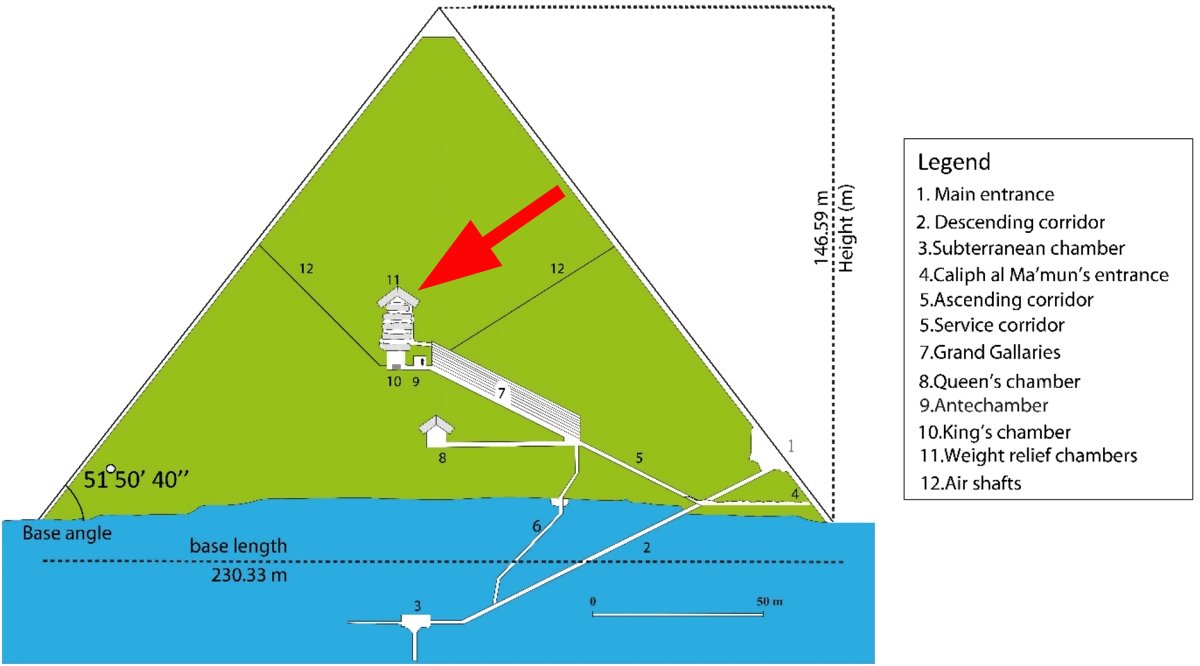
Furthermore, it was shown that vibrations were fairly uniform throughout the pyramid, tending to amplify with increasing height, with the exception of the 'weight-relieving chambers.' These chambers were layered spaces, with their uppermost section exceeding 21 meters above the floor of the King's Chamber, and are generally interpreted as having been constructed to alleviate the load typically placed on the King's Chamber.
Analysis of the data revealed that the vibration amplification rate decreased sharply during the weight reduction intervals, indicating that these intervals play a role in redistributing stress and blocking vibrations. It is unclear whether the people who designed the weight reduction intervals intended vibration blocking in addition to load reduction, but it is possible that they ultimately helped to improve the earthquake resistance of the Great Pyramid of Giza.
The spaces with a gabled top, indicated by the red arrows in the diagram below, are the weight relief chambers (11: Weight relief chambers).
It remains unclear whether earthquake resistance was intentionally incorporated into the construction of the Great Pyramid of Giza, but the research team will continue their investigation in search of evidence. In an email to the science media outlet Live Science, Salama stated, 'This research highlights the extraordinary practical engineering knowledge of the ancient Egyptian architects who developed highly effective construction techniques through centuries of experimentation and refinement.'
Related Posts:




in Free Member, Science, Posted by log1h_ik