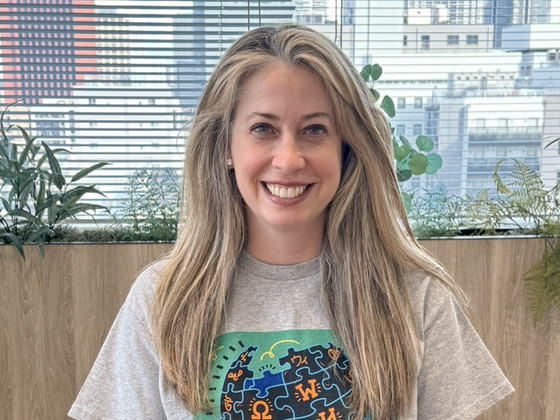
We interviewed Bernadette Meehan, the new CEO of the Wikimedia Foundation, which operates Wikipedia, and asked her in detail about what Wikipedia aims to achieve in the age of AI.
The Wikimedia Foundation, which operates Wikipedia, the world's largest encyclopedia site, celebrating
Wikimedia Foundation/CEO - Meta-Wiki
https://meta.wikimedia.org/wiki/Wikimedia_Foundation/Chief_Executive_Officer/ja

GIGAZINE (hereinafter referred to as G):
Thank you for giving me this opportunity today. I actually had the chance to interview Chris Albon, the head of data engineering, via email some time ago, and I am very pleased to meet you now that you have been appointed as the new CEO of the Wikimedia Foundation.
Many Japanese people probably don't know your background or how you became the CEO of the Wikimedia Foundation. So, could you tell us about your initial involvement with the Wikimedia Foundation and Wikipedia?
CEO Meehan:
I have spent most of my career in the fields of foreign policy and national security policy. I have also spent time in philanthropic work. What my careers have in common is that I am always drawn to work that has a sense of purpose. I like to be able to make a social impact and feel that I am contributing to making the world a better place in some small way. So when I finished my term as U.S. Ambassador to Chile and was offered the opportunity to become CEO of the Wikimedia Foundation, I felt that it was the perfect fit for me.
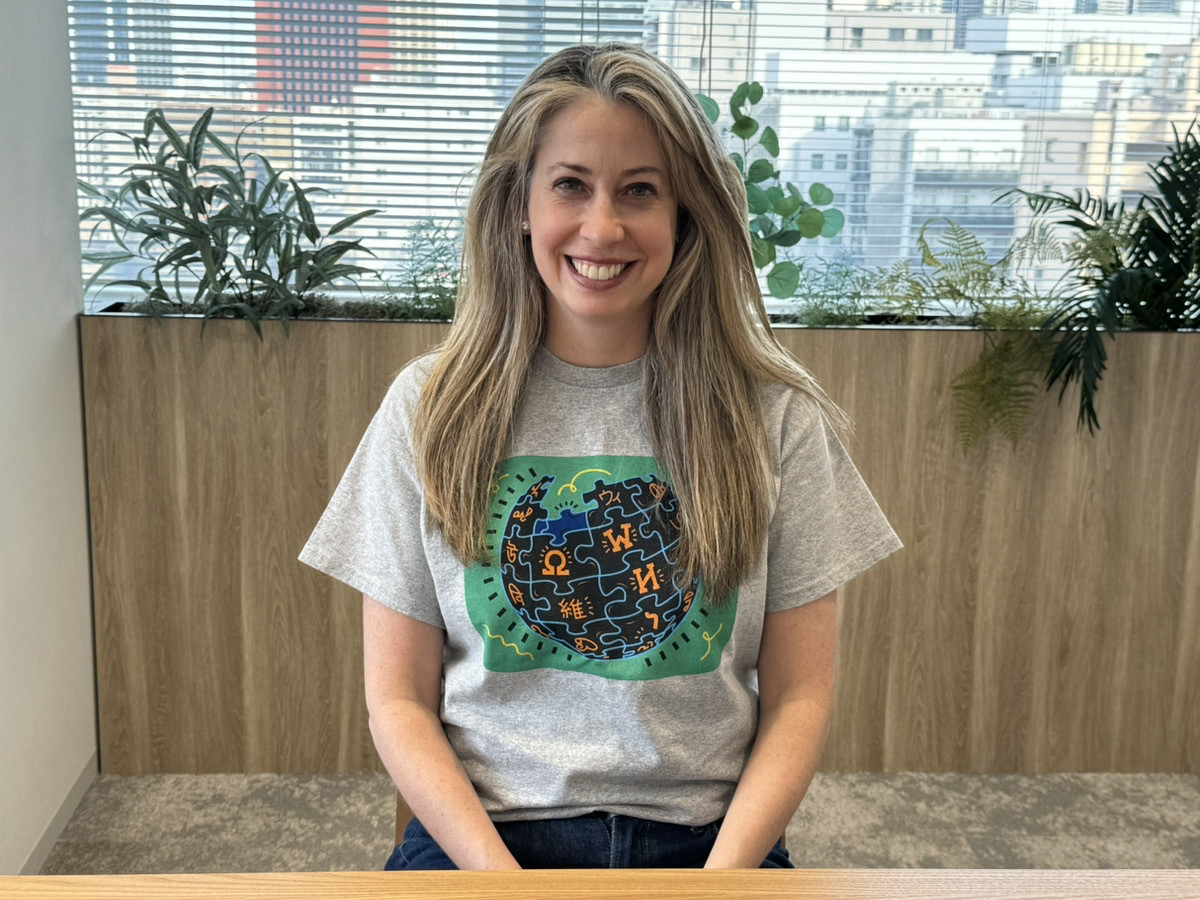
CEO Meehan:
In an era of increasing politicization of information and a diminishing consensus on facts, truth, and knowledge, I felt my skill set was particularly well-suited to Wikimedia Foundation projects. As a diplomat, I am accustomed to dealing with complex ecosystems and numerous global stakeholders around the world. Diplomats are often required to tackle seemingly insurmountable problems, to mobilize people, build consensus, and move issues and challenges forward. Therefore, I felt my experience would be meaningful in addressing the various changes, challenges, and threats facing the Wikimedia Foundation's work.
G:
I see.
CEO Meehan:
My life goal has always been to feel that I am doing the best work in the world. And I truly feel that my role as CEO of the Wikimedia Foundation, which leads the organization that supports Wikipedia volunteers around the world, is the best job. It is a job that supports the success of what is arguably the greatest and most successful global grassroots project in the world.
G:
To begin with, the Wikimedia Foundation isn't very well-known in Japan, except among the editors who edit Wikipedia. Are there actually any Japanese people working at the Wikimedia Foundation?
CEO Meehan:
When I joined the Wikimedia Foundation, I realized that nobody really knew about it, not just in Japan but all over the world (laughs). However, Wikipedia and other Wikimedia projects are for volunteers, not for the foundation. The foundation exists to support volunteers. It's the volunteers who do the work, and the foundation is merely there to support them from behind the scenes.
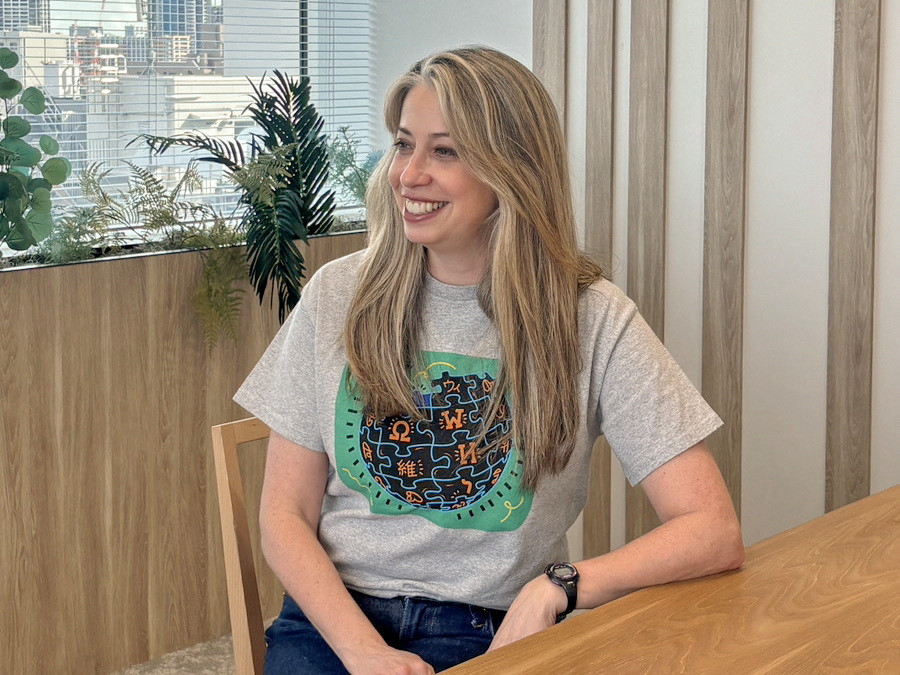
CEO Meehan:
Regarding Japanese staff, for example, there's a woman named Junko in the room right next door who works for the Wikimedia Foundation. She's Japanese, a bridge to the Japanese community, and a wonderful person.
G:
I see. Regarding the work of the Wikimedia Foundation,
CEO Meehan:
Yes, essentially, that's correct. We exist to provide the technology and infrastructure that enables Wikipedia and other Wikimedia projects to operate. That is the primary mission of the Wikimedia Foundation. As part of that, the Wikimedia Foundation is responsible for raising funds to cover expenses such as data centers and infrastructure. For example, we provide tens of millions of dollars annually in grants to various Wikipedia and Wikimedia communities around the world so that partner organizations, user groups, and editors can hold hackathons and edit-thons, create new content, and host events to bring together fellow Wikimedia members.

CEO Meehan:
We also have a global advocacy team that engages with governments and legislatures around the world to promote policies that enable free knowledge to exist globally. The Wikimedia Foundation also works to create a platform that makes that knowledge freely available to the world. Furthermore, our Trust and Safety team works with Wikipedia editors around the world. If we find that an editor is being threatened or harassed, we will support them.
Furthermore, in some countries, we have legal teams that can even take legal action all the way to the Supreme Court to protect people's right to contribute to Wikimedia and Wikipedia projects. So, while the Foundation does a lot, whatever we do, we must be able to answer two questions: 'How does it benefit Wikimedia projects?' and 'How does it support volunteers and editors?' That's why we exist.
G:
I see. Ms. Meehan has now been appointed as the new CEO. Based on the policies you've just described, could you tell us if you have set any goals for strengthening the current direction of the Wikimedia Foundation?
CEO Meehan:
That's right. I love interacting with people. So, part of my mission is to actively engage with communities. That's why I came to Japan today, and the next day I'll be going to Taiwan to attend a regional conference with editors from all over the Asia-Pacific region. So, I want to go out into these communities and be someone who can support them. That's my first goal.

CEO Meehan:
The second goal is to figure out how to adapt our strategy so that Wikipedia, which just celebrated its 25th anniversary this year, can not only survive for the next 25, and even 50 years, but truly thrive in this new AI environment. Now that we are facing new threats and challenges to our models, we must spend a lot of time developing strategies for survival.
G:
Oh, I see. Since we've just come up with the topic of AI, could you tell me more about that? On March 27, 2026, the English version of Wikipedia announced 'New guidelines adopted for text generation AI, article creation prohibited in principle.'
Wikipedia adopts new guidelines for text-generating AI, prohibiting it from creating article text in principle - GIGAZINE
As AI continues to develop, it is expected that it will become increasingly difficult to distinguish between Wikipedia content written by humans and content generated by AI. Given this context, does the Wikimedia Foundation have a specific policy regarding how it plans to proactively utilize AI?
CEO Meehan:
That's right. First of all, that policy about AI was not issued by the Foundation. It came from the English Wikipedia community. In other words, the editors in that community decided that it was the policy they wanted to have in order to manage the English Wikipedia. This is because each language Wikipedia creates its own policies and rules, including those concerning AI. So let me emphasize that the Foundation does not have an editorial role. That policy was not issued by us to volunteers, but came from the editors themselves.
G:
I see!
CEO Meehan:
And the answer to the second question is 'yes.' We are constantly innovating about how we can incorporate AI into our foundation. We have been using AI for many years, and so have many of our project volunteers. However, the foundation of content creation will always remain human knowledge. Therefore, the rules, or guiding principles, values, and knowledge here are human. That will never change. So the question is, 'How can we use AI to develop tools that will allow editors to work more efficiently?'
G:
What do you mean by that?
CEO Meehan:
For example, we've been using AI for years to detect broken links or errors in content. More recently, we've started developing tools for editors that use machine learning and AI. We call this 'suggestion mode.' For example, let's say you're a new editor and you've written an article for Wikipedia. The AI tool can tell you, 'I understand what you've written, but it doesn't include citations. What's written on Wikipedia shouldn't just be your opinion; it needs verifiable sources,' but it can't tell you what those sources should be. We don't allow the AI to say, 'You should change it this way,' because the content itself must be created by a human.
G:
Ah! I see.
CEO Meehan:
This is one example of how we use AI to make the experience more efficient, while knowledge and content remain rooted in human creativity. But this is also what sets us apart. It's precisely why people trust us. Users know that the content is always human-made, not machine-made. That's the difference between getting answers from AI summaries, chatbots, or large-scale language models (LLMs) and the Wikimedia Project.
If it's from Wikipedia, it's clear that humans created that knowledge. And ironically, it's this very fact—that humans created the knowledge—that makes us so valuable to LLMs and AI companies. Because using our dataset means it's knowledge refined by humans, and AI companies know that it can be useful for LLM answers. It's an ironic and interesting situation in a way, that AI relies on human content, including Wikipedia, to create products that it offers to the public.
G:
Since LLM came up in conversation, I'd like to ask: According to Marshall Miller, Senior Product Director at the Wikimedia Foundation, who mentioned in an official blog post in October 2025 that Wikipedia's traffic was decreasing due to AI-generated search summaries and videos shared on social media. What will Wikipedia's traffic be like in May 2026?
Wikipedia's traffic has fallen 8% year-on-year due to the rise of AI. What can be done to save websites suffering from the spread of AI? - GIGAZINE
CEO Meehan:
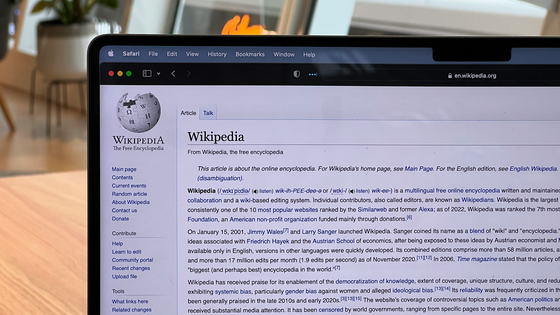
That's right. According to the statistics we've released, page views decreased by 8% year-on-year from December 2024 to December 2025. This is a matter of survival for us because fewer visitors to the site will make it harder to attract new editors to create new content. Also, since 80% of our fundraising model comes from small donations through banners on the site, it means fewer people will see the banners and donate.
G:
I see. You mentioned that '80% of operating funds come from donations,' but if 80% of those are small donations, what does the remaining '20%' come from? Is it income from commercial contracts, or are there other forms of donations or funding sources?
CEO Meehan:
Yes. The remaining 20% is made up of various things. Of course, we get about $9 million (approximately 1.42 billion yen) from commercial contracts. The rest comes from large donations and investment income of over $1,000 (approximately 158,000 yen). Also, in order to diversify our financial portfolio, we established what I mentioned earlier, the 'Wikimedia Foundation,' in 2016. This is used not so much for the operating expenses of the Wikimedia Foundation, but rather to protect our long-term financial stability.
We continue to expand our commercial business, Wikimedia Enterprises, but we don't want it to become too large a proportion of our revenue. That's because what we value most is grassroots support. We never want to create the perception that 'Wikimedia is no longer an independent organization because of the large contributions from corporations or specific sectors.' We will grow, but it's crucial that we don't become too big.
G:
I see. With traffic decreasing, what measures is the Wikimedia Foundation considering?
CEO Meehan:
This situation presents us with new challenges that are of concern, but it's not limited to Wikipedia. Naturally, all media outlets around the world, and others providing content online, are facing the same consequences. This is due to the rise of 'zero-click' user experiences and chatbots. In fact, most data shows that other media outlets are being affected far more severely than Wikipedia. However, we are exploring several ways to address this.
CEO Meehan:
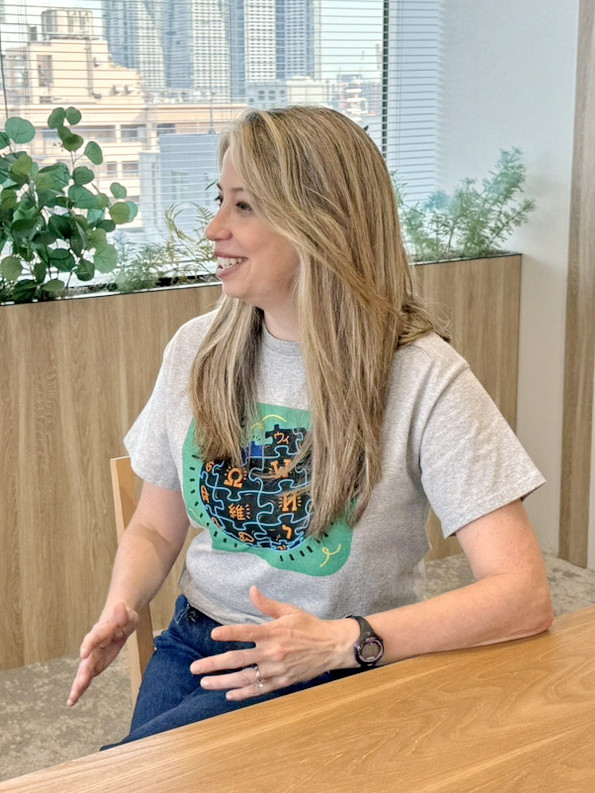
We are focused on attracting new readers, attracting new editors, and encouraging existing editors. We are also focused on diversifying our funding models. To attract new readers, we are focusing on two different areas for the first time. One is the 'OnWiki' experience—how to enhance the website for people who visit it. And the point is that, in response to this change in user behavior, we are for the first time envisioning moving towards 'BeyondWiki.'
G:
What exactly is this 'Beyond Wiki'?
CEO Meehan:
The essence of 'Beyond Wiki' is that we must think not about 'how to get readers to come to us,' but 'how to get Wikipedia content to readers.' Many young people now get news and information from TikTok, Instagram, Facebook, or games. Therefore, we are thinking about strategies that include developing new products. We are exploring ways to deliver all the content we have in new formats for people who don't want to come to the website, such as using short videos or content in games like Roblox.
G:
I see.
CEO Meehan:
We've also invested quite a bit in mobile apps. You can download free apps on both Android and iPhone. Young people spend a lot of time on smartphone apps, after all. Plus, apps allow us to experiment much faster than we could with our entire website. And apps offer a more personalized experience. We respect data privacy and have a policy of not tracking user data, but when you're logged in, you can save and bookmark articles, and we can generate recommendations and suggestions based on your past usage. This is something we're currently introducing as a new feature to attract younger users.

CEO Meehan:
Furthermore, to attract new editors and make editing more enjoyable, we're using features like the 'suggestion mode' and AI tools I mentioned earlier. And as a third area, we launched Wikimedia Enterprise in 2021. This is a commercial agreement that provides businesses with a vast amount of data in various formats, including web APIs and data from specific periods, far exceeding what's available to read Wikipedia for free.
Microsoft, Meta, Amazon, Perplexity, and Mistral AI officially announced as paid program partners of Wikipedia - GIGAZINE
Wikimedia Enterprises is essentially a call to major tech companies and other businesses: 'Our content is always free to use, but our infrastructure is not.' Scraping is destroying our infrastructure. That's why we developed a commercial API. This allows tech companies and other businesses to download and use our information in the way we want, but it also gives us value and allows us to protect our public API.
G:
So that's the significance of Wikimedia Enterprises.
CEO Meehan:
As you know, we have many companies with whom we have these commercial agreements, including Google, Meta, and Mistral. We also have other companies in negotiations, and some companies continue to scrape our data while playing a destructive role and disrespecting our infrastructure. Therefore, for the first time, we are taking additional measures to protect our infrastructure. We are imposing stricter rate limits on automated requests that are used to scrape information from our systems.
G:
I see. By the way, since we're on the topic of mobile apps, I'd like to ask you: do you personally prefer iPhones or Android phones?
CEO Meehan:
Haha! It's an iPhone!
G:
So, you're using a Mac, right?
CEO Meehan:
Yes, I use a Mac. This is, of course, a matter of personal preference. It's not the foundation's policy (laughs). We have staff members who use Android as well. But I just happen to be an Apple person.
G:
Oh really? (laughs) By the way, could you tell me if there's a Wikipedia article that CEO Meehan personally 'likes' or that left the biggest impression on him?
CEO Meehan:
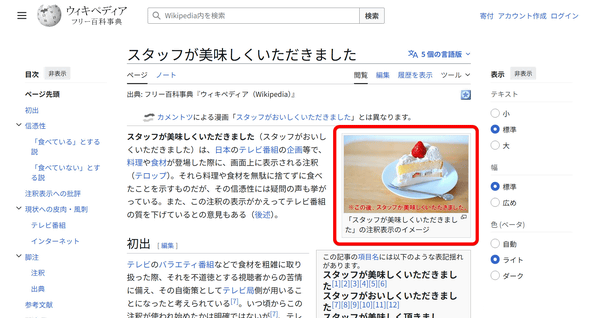
I have many favorite articles on Wikipedia (lol). My favorite way to enjoy it is to fall down the rabbit hole (following links one after another and not being able to get out). Among them, my favorite Japanese Wikipedia page is the one that says, ' The staff enjoyed eating it .' Apparently, this is a phrase that food producers display when they are worried that viewers might criticize them for wasting food by throwing it away. As a result, TV stations have started adding the watermark, 'The staff enjoyed eating it later.'
G:
Yes, that's right (laughs). I see it often on Japanese TV.
CEO Meehan:
We don't have anything like this in America (lol). I really love this article and I tell everyone about it. When you look at the Wikipedia page, there's an example that looks like a screenshot from a TV show, and it shows a piece of cake with the caption, 'The staff enjoyed it.'
G:
There is indeed a photo like that in the article!
CEO Meehan:
Also, I love sports, especially baseball. That's why I love the sports pages on Wikipedia. I can read all sorts of statistics, data, and trivia about my favorite teams and players. It's a place I can go to find all the details I need, whether it's for playing games with friends, talking about drinks, or anything else. Wikipedia has everything you need.
G:
Since CEO Meehan seems quite knowledgeable about Wikipedia articles, I'd like to ask if he has personally edited Wikipedia articles independently of the organization?
CEO Meehan:
No (laughs). I don't edit. Like most people, I use Wikipedia every day. However, I've never been a Wikipedia editor. Since becoming CEO, it's been very important to me to communicate directly with the volunteer community, so I communicate with them when they write on Wikipedia's talk pages. However, to respect editorial consistency, I don't edit the content myself.
G:
I see. This will be my last question, but as CEO, do you have a message for the users, editors, and community of Wikipedia in Japan?
CEO Meehan:
Thank you for this wonderful opportunity. The Japanese Wikipedia is one of the most dynamic in the world. It receives 900 million page views per month, making it the second most popular language version after the English one. I encourage everyone in Japan to consider becoming an editor. Editing means sharing your knowledge of Japan with the world. And it's not just visitors to Wikipedia who are getting information from it; people getting answers from Claude, ChatGPT, or Google's AI search summaries are also getting that information from Wikipedia. So, you may just be editing something you really love at home, but the whole world will have the opportunity to see the results of your work. I am grateful to the Japanese community and I encourage more people to join this project. The Wikimedia Project is a human community, and we welcome everyone to participate.
G:
I see, that makes perfect sense. Thank you very much.
CEO Meehan:
Thank you.
Related Posts:


in AI, Web Service, Interview, Posted by log1i_yk