Google Search has been significantly revamped with AI, now supporting multimodal input and incorporating agent functionality.
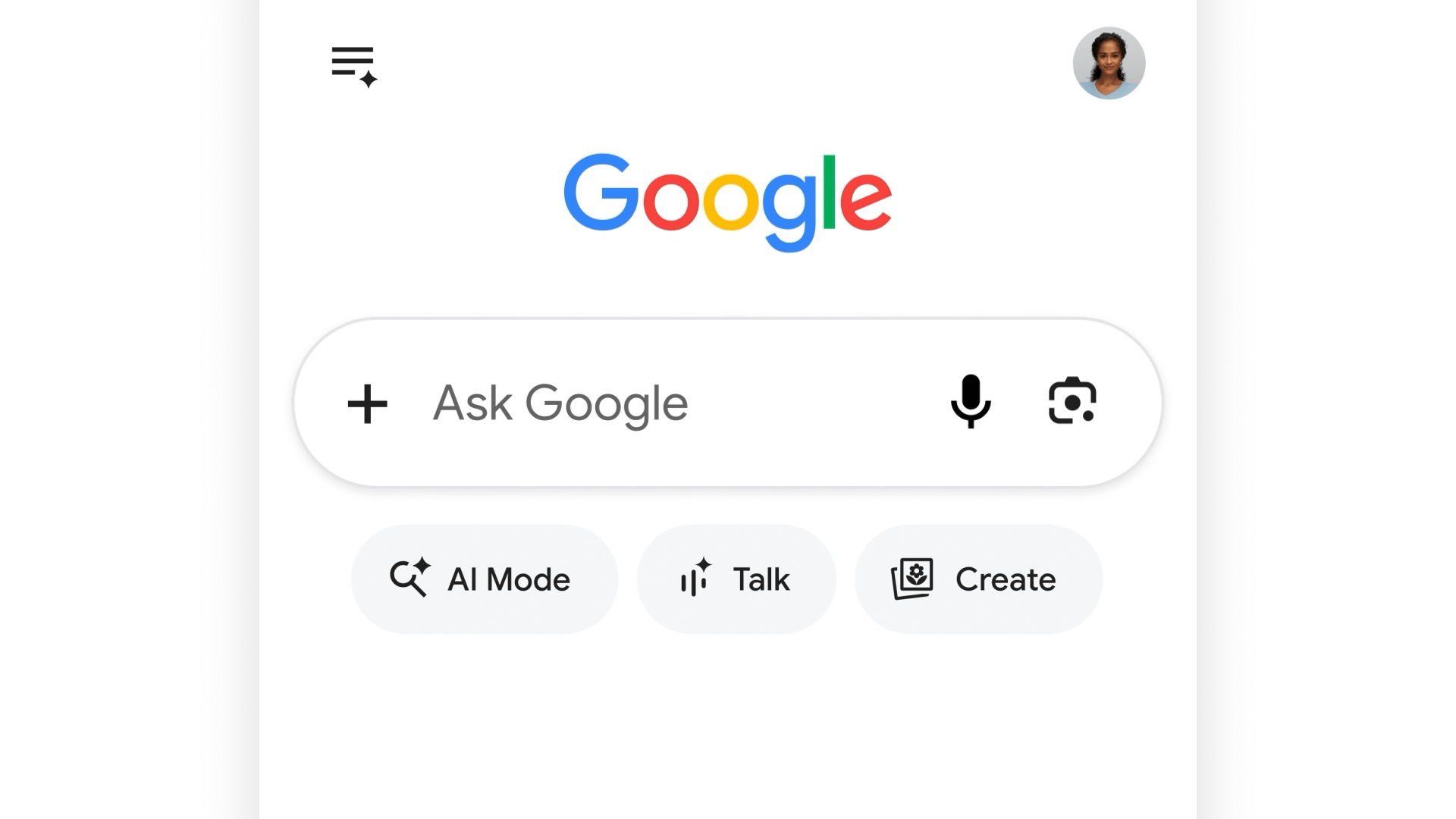
On May 20, 2026, Google announced that it would be introducing advanced AI modeling capabilities to Google Search. This will allow users to leverage agents simply by asking questions. A new, AI-powered intelligent search box will also be introduced, which is said to be the biggest upgrade to the search box in over 25 years.
Google Search's I/O 2026 updates: AI agents and more
What's New in Search - YouTube
The default AI model in Google Search's AI mode will be upgraded to Gemini 3.5 Flash . Gemini 3.5 Flash is the latest AI model, offering cutting-edge performance in agent functionality and coding.
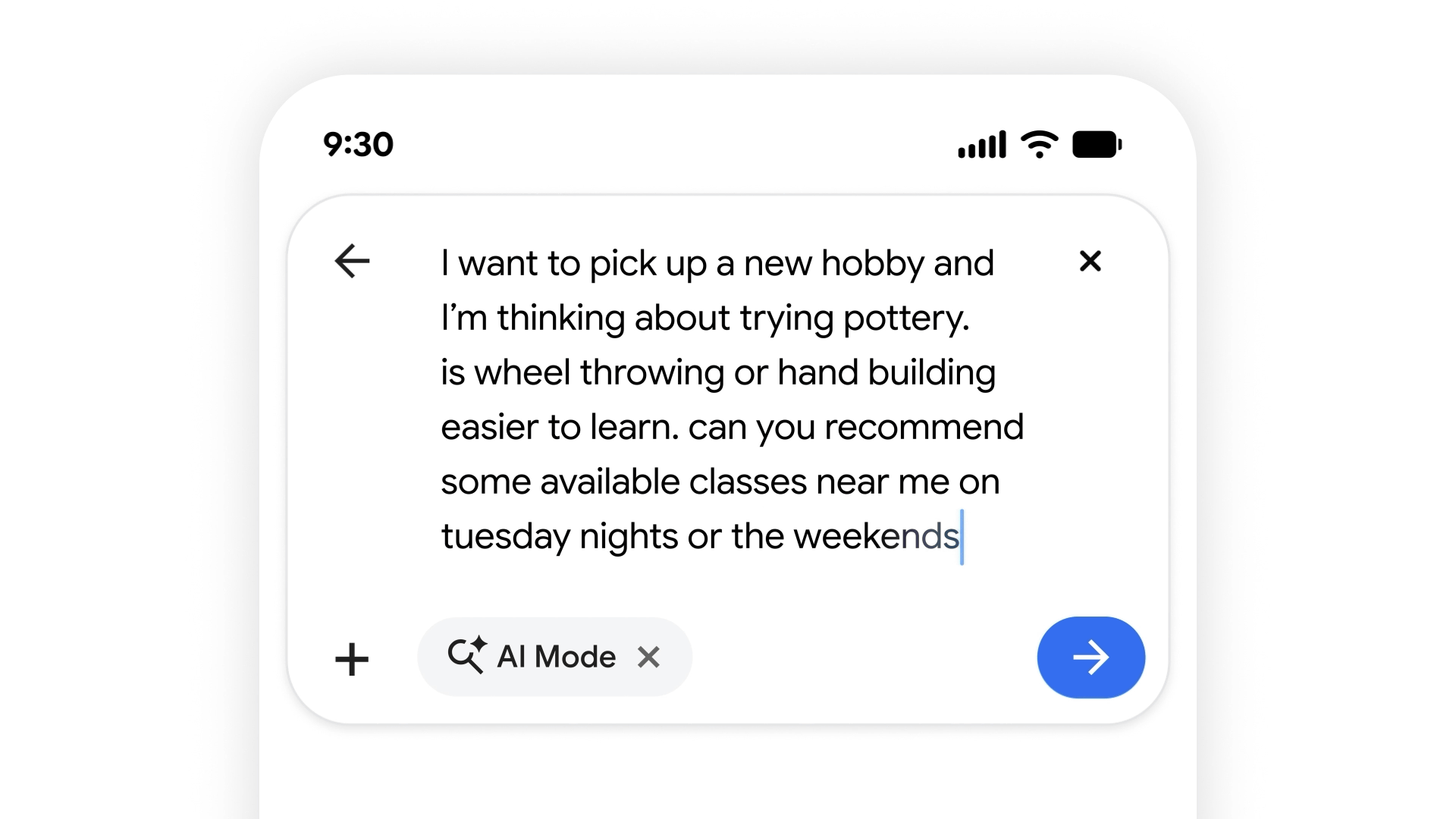
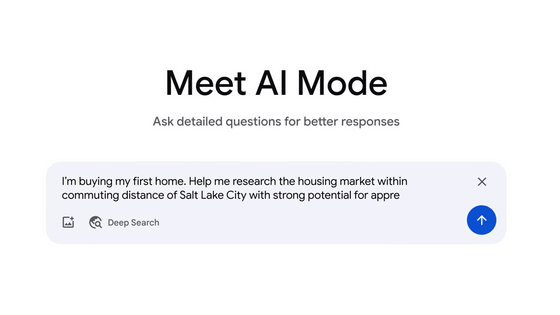
Furthermore, Google announced that it has given its search box the biggest update in the past 25 years. The new search box makes the most powerful AI tools to date easily accessible and allows for more intuitive questioning.
The new search box is more intuitive than ever, dynamically expanding as you type to help you describe what you want to know precisely. Designed to anticipate your intent, it offers AI-powered suggestions that go beyond traditional autocomplete, helping you construct your questions. You can search using any format, including text, images, files, videos, and even open Google Chrome tabs. As always, a wide range of search results are provided. The new intelligent AI search box will be rolled out gradually from May 20th in all countries and languages where AI mode is available.
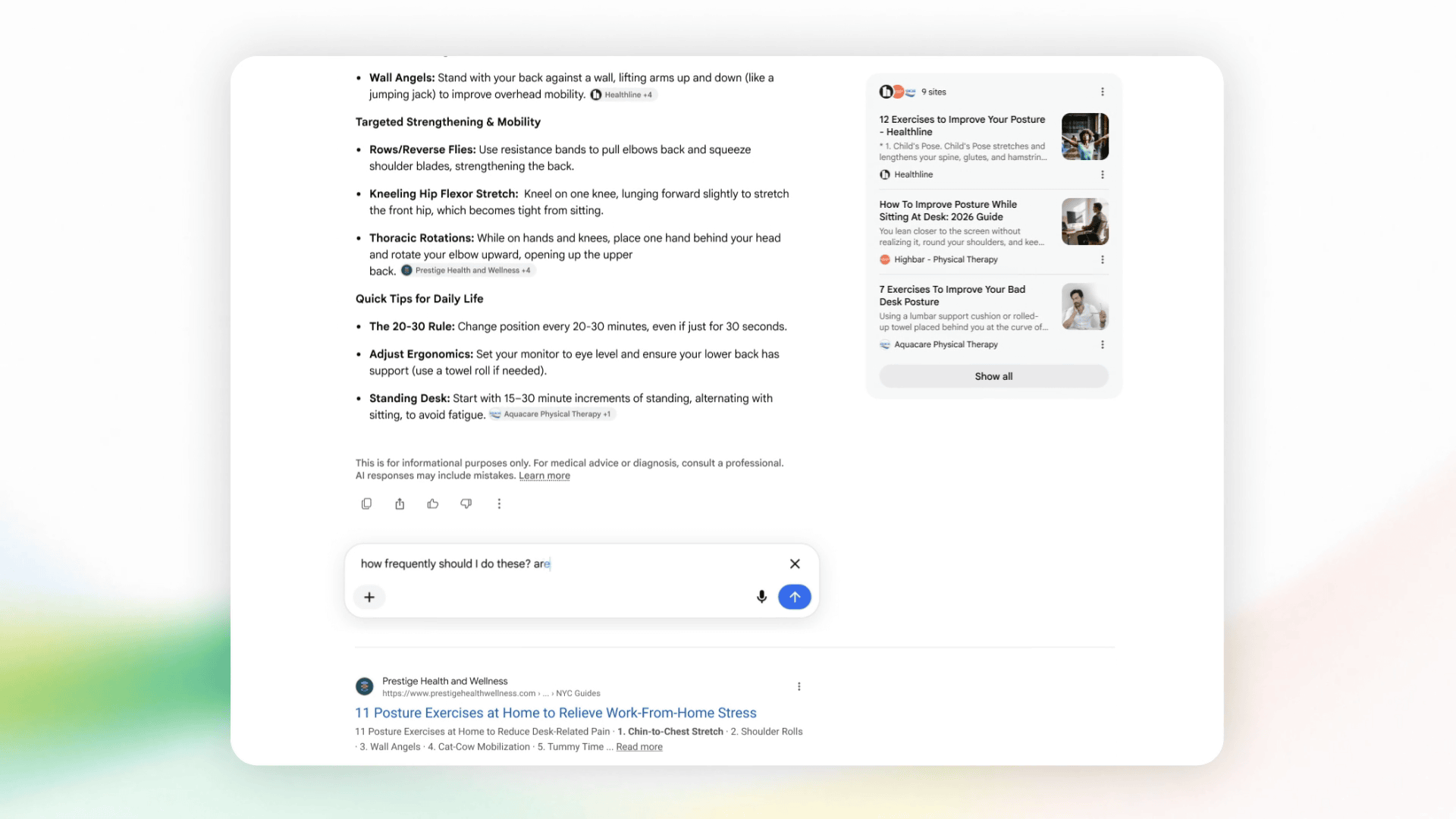
Furthermore, it's now easier to continue a conversation directly from the search results. You can ask additional questions directly from the 'AI Summary' on the search results page and continue a natural conversation in AI mode. The context of the previous conversation is maintained, and as you delve deeper into your research, the relevance of the displayed links and reference articles increases. This seamless search experience is also available worldwide on desktop and mobile devices starting May 20th.
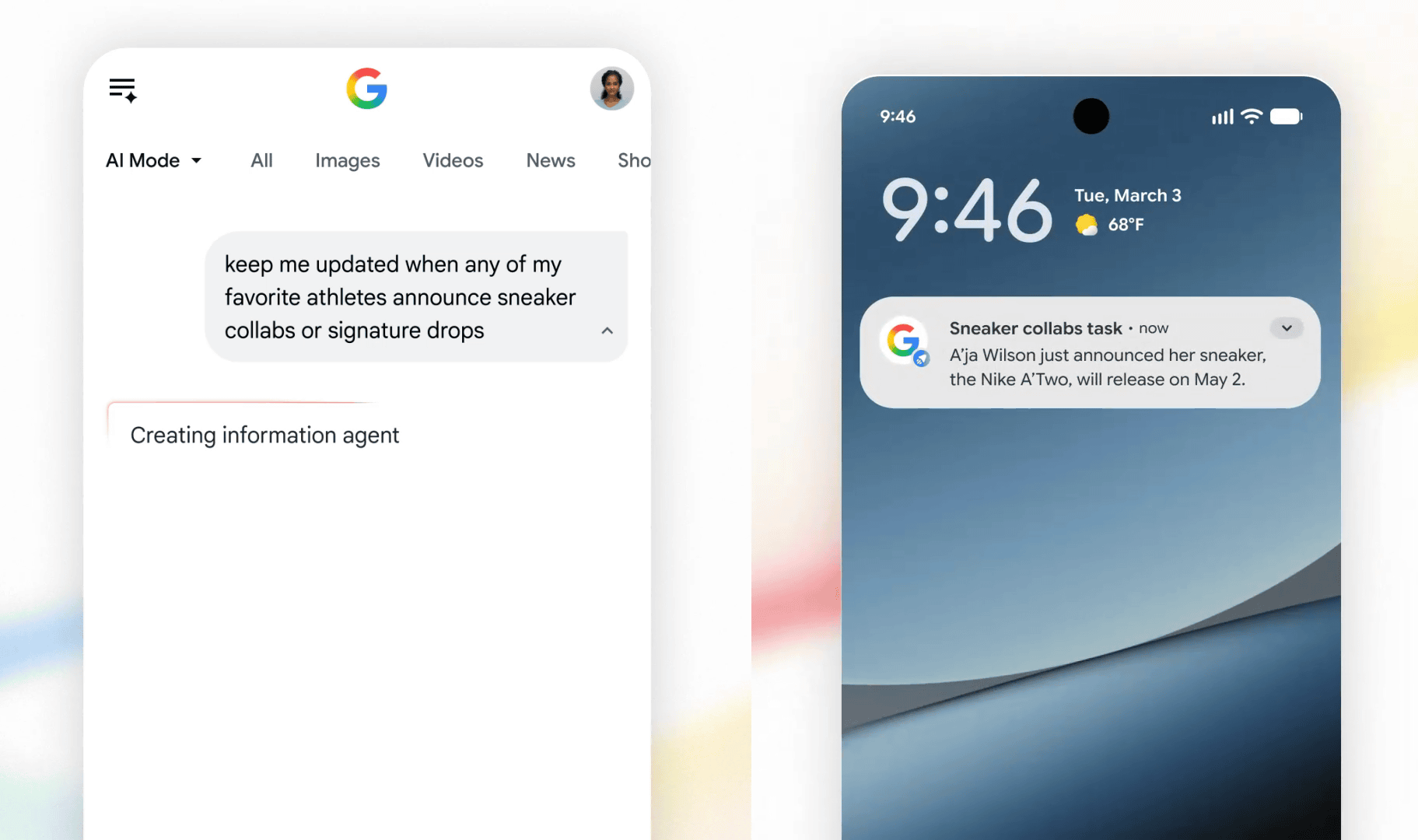
In addition, it will be possible to easily create, customize, and manage multiple AI agents to suit various daily tasks. As a first step, an information agent function, an autonomous AI agent specializing in information gathering, will be provided. This function operates in the background 24 hours a day, 365 days a year, performing advanced inferences to find the necessary information at the right time.
By utilizing the information agent function, you can always stay up-to-date on the latest information about your greatest interests. The agent intelligently checks all kinds of information on the web, such as blogs, news sites, and social media posts, as well as real-time, up-to-date data in finance, shopping, sports, and more, constantly checking for any changes related to your specific questions.
The agent intelligently summarizes information, notifies you of updates, and allows you to smoothly transition to the next action. For example, if you're looking for your ideal apartment, you can simply provide the agent with your desired specific conditions as they come to mind, and the agent will continuously scan for properties that match your criteria and notify you when a suitable property becomes available. The information agent feature is scheduled to be rolled out gradually starting in the summer of 2026, initially to Google AI Pro and Ultra subscribers.
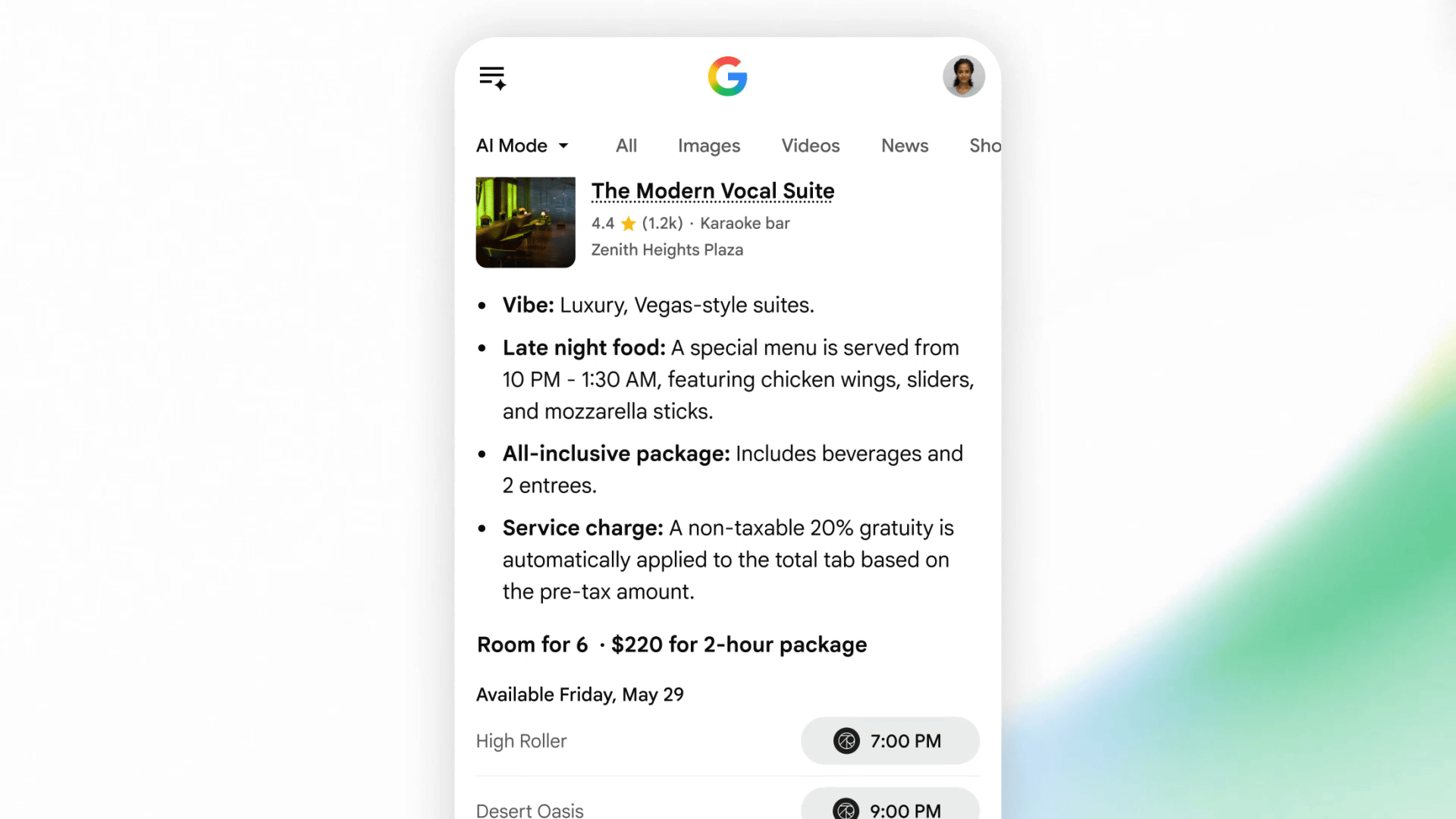
Furthermore, Google Search's agent-based booking feature, currently available only in the US at the time of writing, will be expanded to a wide range of new tasks, including local experience events and various services. Users will be able to simply give specific instructions, such as 'Find a karaoke room that can accommodate 6 people on a Friday night and where food can be ordered until late,' and Google Search will provide the latest rates and availability, along with a link to complete the booking directly. In certain fields, such as home repairs, beauty services, and pet care, users can even ask Google Search to call businesses or service providers directly on their behalf. These features will be rolled out gradually to all US users starting in the summer of 2026.
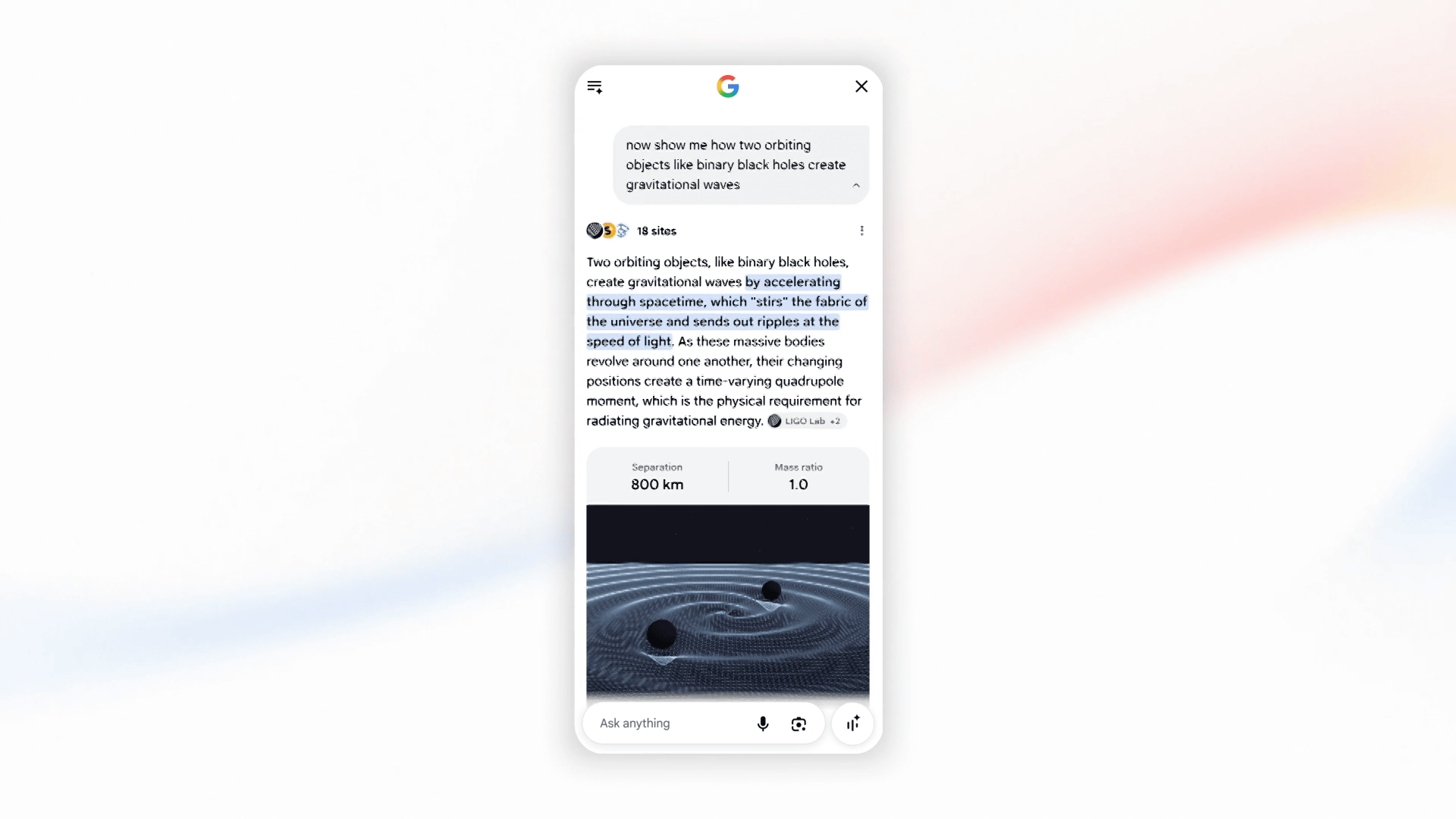
The power of Google Antigravity and the agent-based coding capabilities of Gemini 3.5 Flash are now directly integrated into Google Search. This allows the search function to build the most relevant answers to user questions on the fly. It enables the use of custom generative UIs (user interfaces) tailored to individual needs, including visual tools and simulations.
For example, whether you want to gain a deeper understanding of astrophysical concepts or visually examine how a mechanical watch works, Google Search will design a custom layout for you by combining interactive elements such as images, tables, graphs, and simulations in real time. This custom generative UI feature will be gradually rolled out free of charge to all Google Search users starting in the summer of 2026.
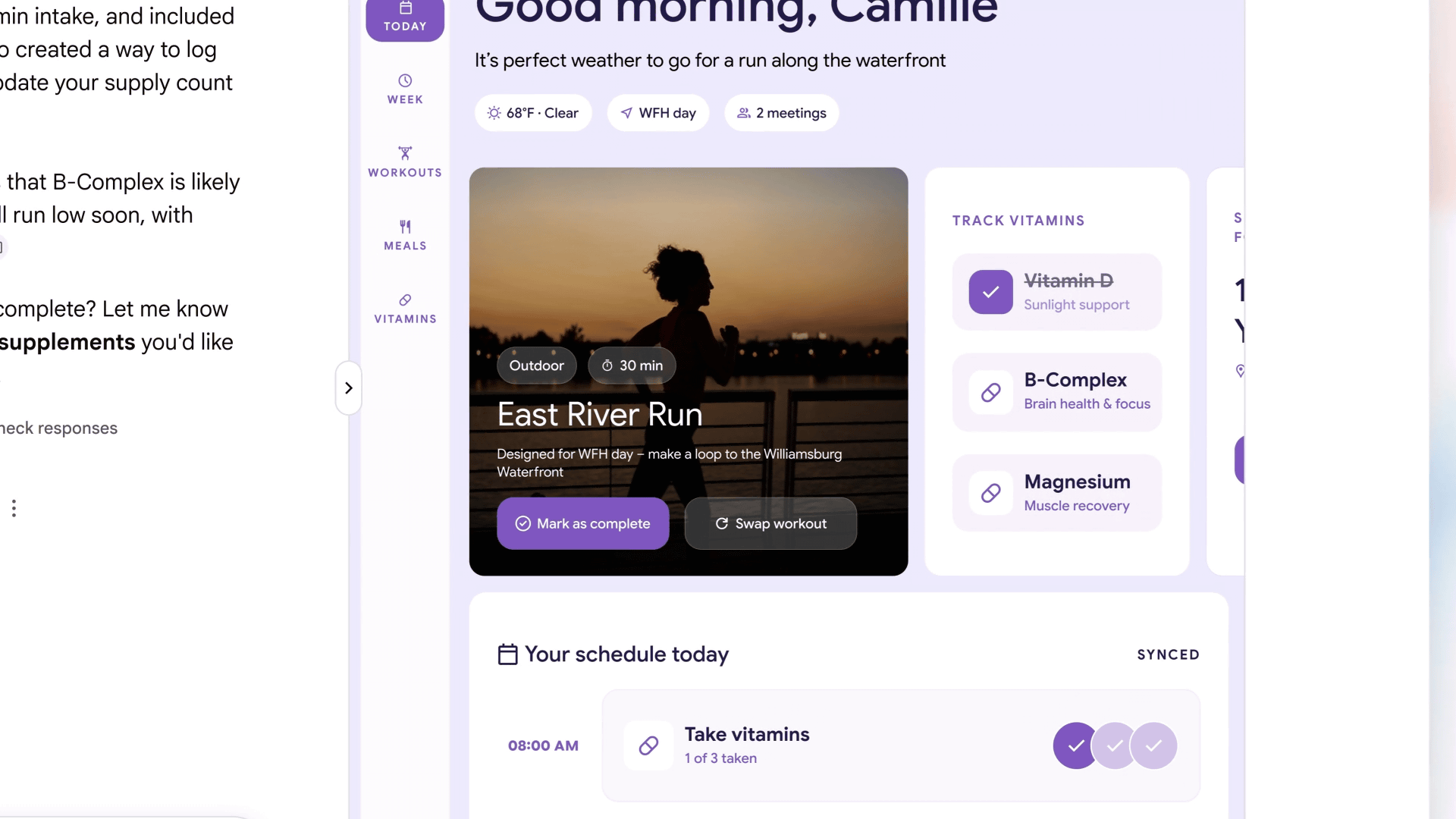
For long-term tasks that involve repeated searches, such as wedding planning or moving preparations, Google Search will allow users to build custom dashboards and trackers (progress management tools) tailored to their needs, allowing them to return to their work at any time. Google describes it as 'like a mini-app built just for your specific task.' This feature, which leverages Google Antigravity to build custom mini-app-like experiences directly from the search screen, will be rolled out in the coming months, initially to Google AI Pro and Ultra subscribers in the United States.
For AI to be truly helpful, it needs not only to know information from around the world, but also to understand the context of each individual user. Therefore, Google is expanding its AI-mode Personal Intelligence offerings to users in 98 languages in approximately 200 countries and regions worldwide, including Japan, without requiring a paid subscription. It can securely integrate with apps like Gmail, Google Photos, and soon Google Calendar. Personal Intelligence is designed with transparency, freedom of choice, and user control as top priorities. Users can always decide whether and when to integrate apps like Gmail and Google Photos.
Related Posts:

in AI, Web Service, Posted by logu_ii