6 million users have selected Firefox on the 'Choose your default browser' screen, meaning it's being selected once every 10 seconds.
In Japan,
Six Million Selections Later: How the DMA Is Giving People Browser Choice - Open Policy & Advocacy
https://blog.mozilla.org/netpolicy/2026/05/11/six-million-selections-later-how-the-dma-is-giving-people-browser-choice/
The Choice Screen is a default browser selection screen that appears when you first start up your smartphone. An example of the Choice Screen on an iPhone is shown below. The browser selected as the default will be set as the browser that launches when you tap a link in various apps.
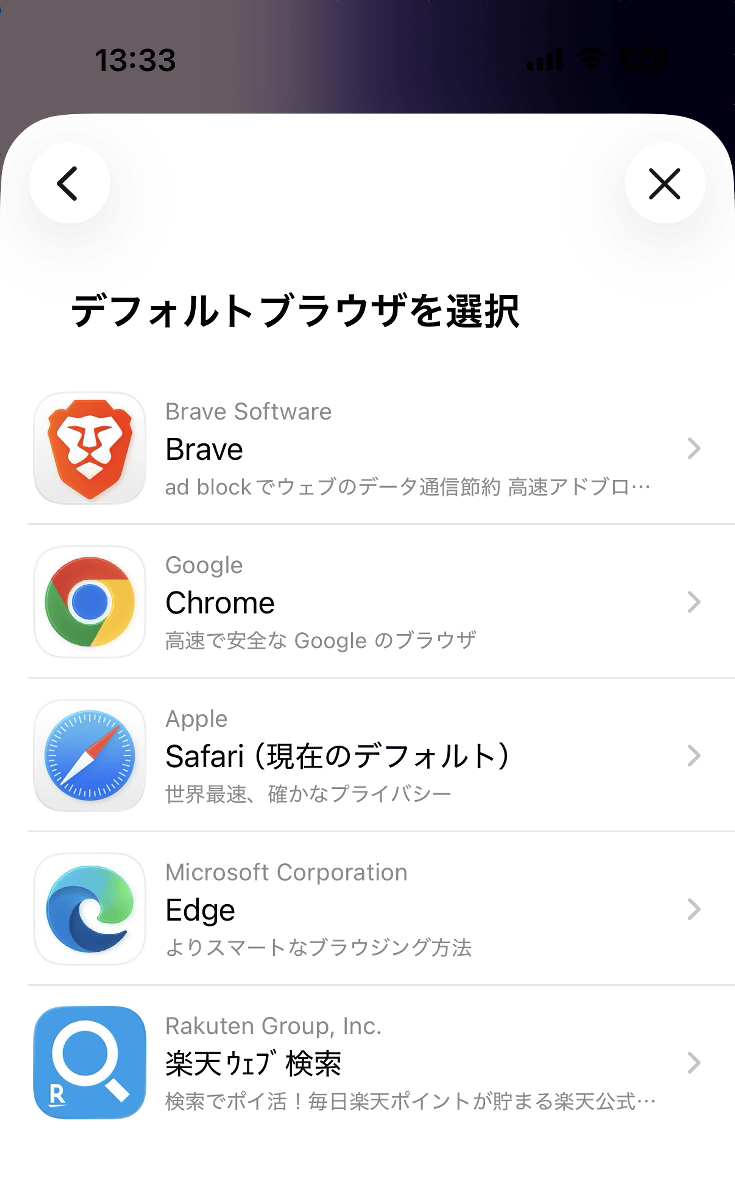
Before the introduction of Choice Screen, iPhones used Safari and Android smartphones used Chrome, with the manufacturer-specified browser set as the default browser. While it was previously possible to change the default browser setting, the introduction of Choice Screen made it possible for a wider range of users to become aware of and change the default browser setting to something other than the manufacturer-specified one.
A default browser selection screen, similar to the Choice Screen, has also been introduced in the EU as part of the EU Digital Markets Act (DMA). According to Mozilla, the developer of Firefox, Firefox has been selected more than 6 million times in total on the DMA's default browser selection screen. This works out to about once every 10 seconds. Users who choose Firefox via the selection screen also tend to have a high retention rate, which is five times higher than with the usual method.
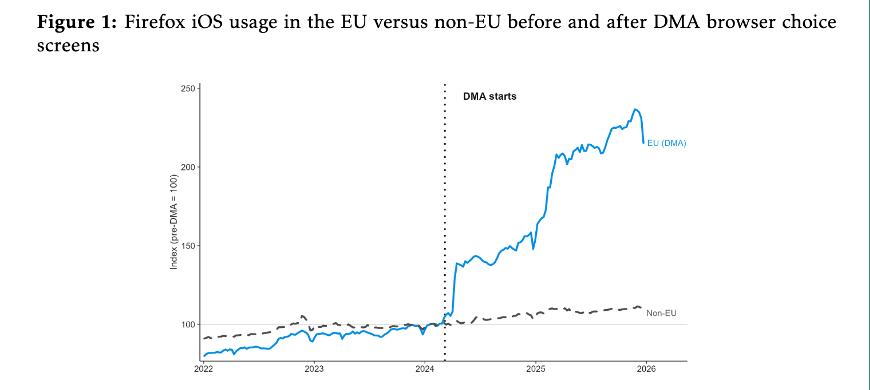
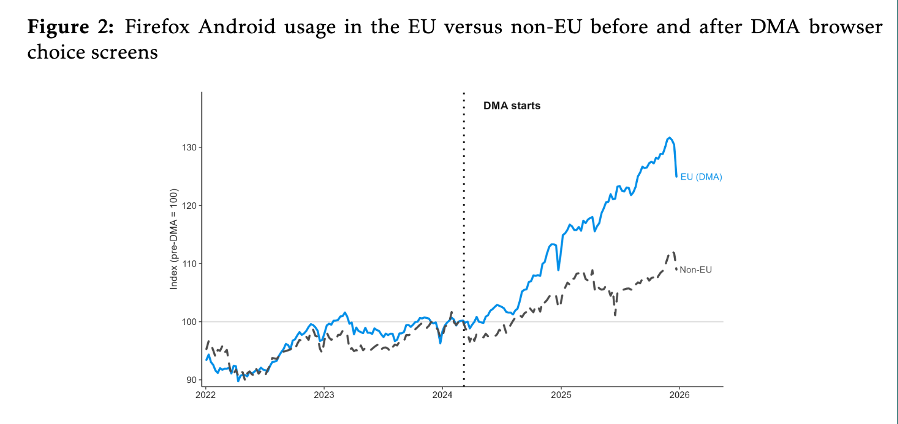
The graph below shows the 'time period' on the horizontal axis and the 'percentage of Firefox daily active users relative to the time when the default browser selection screen was introduced to smartphones via DMA (Mobile Virtual Network Advance)' on the vertical axis. The blue line represents the trend in the number of users within the EU, and the black line represents the trend in the number of users outside the EU. In the case of iPhones, the introduction of the selection screen resulted in a 113% increase in Firefox's daily active users within the EU.
On the other hand, for Android, the number of daily active users outside the EU increased by only 12%. This is thought to be due in part to the fact that Firefox already had a large user base on Android.
While Mozilla is pleased with the increased browser options available to users, it also stated that 'approximately 310 million desktop and laptop PCs in the EU do not have comparable options,' and called for further action.
Related Posts:


in Software, Posted by log1o_hf