Research suggests that humans created the 'world's oldest dice' more than 12,000 years ago.

Dice are tools used in board games and gambling, intended to produce intentionally random numbers or results. Robert Madden, a doctoral student at Colorado State University, has published research suggesting that Native Americans in the western United States created dice more than 12,000 years ago.
Probability in the Pleistocene: Origins and Antiquity of Native American Dice, Games of Chance, and Gambling | American Antiquity | Cambridge Core
Native Americans invented dice and games of chance more than 12,000 years ago, archaeological study reveals | Live Science
https://www.livescience.com/archaeology/americas/native-americans-invented-dice-and-games-of-chance-more-than-12-000-years-ago-archaeological-study-reveals
Scientists May Have Uncovered The World's Oldest Dice : ScienceAlert
https://www.sciencealert.com/scientists-may-have-uncovered-the-worlds-oldest-dice
In his research on the use of dice by Native Americans, Madden focused on a book titled ' Games of the North American Indians ' written by Stuart Kulin, an American museum curator. Kulin was a purveyor of historical records concerning Native American games and also researched the use of dice by Native Americans.
Kylin refers to Native American dice as 'binary lots.' These are objects with a flat or curved surface, one side of which is painted with a specific pattern or color, while the other side is blank. When a binary lot is tossed, it lands with a random side facing up, resulting in random outcomes, similar to tossing a coin. Native Americans often tossed multiple binary lots to produce mathematically complex results.
Based on Kulin's descriptions, Madden created four criteria for dice: 'They must be made of wood or bone and have a double-sided structure,' 'One side must be clearly distinguishable by paint, pigment, or pattern,' 'The surface must be flat or slightly curved,' and 'They must be shaped in a way that allows a player to hold and throw multiple dice at once.' He then researched Native American artifacts dating back 13,000 to 450 years, unearthed from archaeological sites in the Great Plains of the American Midwest and the Rocky Mountains of the West.
As a result, 565 artifacts were identified that met all four criteria of the dice, and 94 artifacts that met some of the criteria. Madden said, 'In most cases, these artifacts had already been excavated and publicized. What was missing was not evidence, but a clear, continental standard for recognizing what we were seeing.'
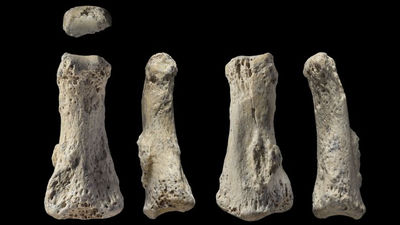
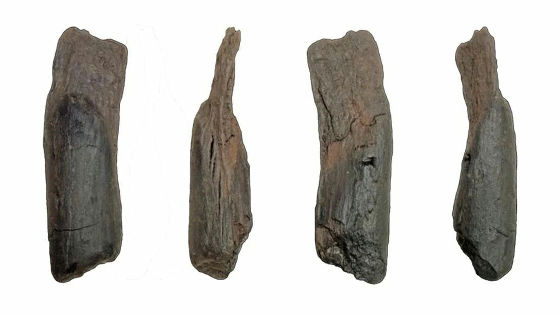
The following photos show examples of foreign objects that Madden identified as dice or considered highly likely to be dice in this study.
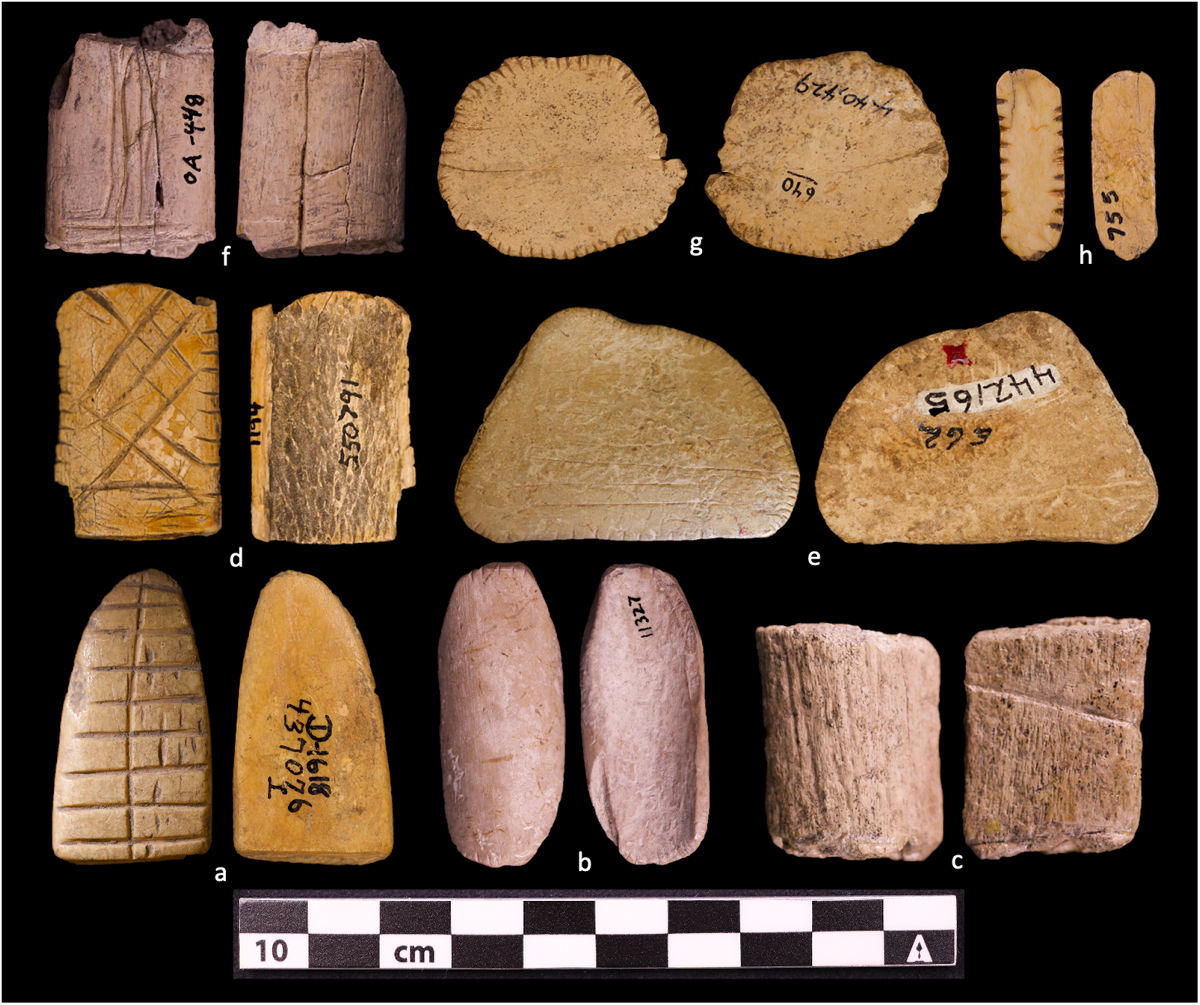
The oldest dice Madden has found were unearthed from Folsom Culture sites in Wyoming, Colorado, and New Mexico, and have been identified as being approximately 12,200 to 12,800 years old. Furthermore, one of them may date back to the Clovis Culture, which is more than 13,000 years old.
Since Native American dice are often found in border regions with high population mobility, Madden speculates that these people may have used dice to exchange goods, information, or partners. Gambling among Native Americans was mainly one-on-one, and the stakes were trade goods such as furs and semi-precious stones .
Looking beyond the Americas, the oldest known dice artifacts have been found in Asia and the Middle East, dating back approximately 5,500 years, suggesting that Native Americans may have invented dice before anyone else in the world. Madden stated, 'These findings suggest that dice, games of chance, and gambling have remained a deeply rooted feature of Native American culture. This has played a crucial role in social integration and has continued for at least the last 12,000 years.'
Related Posts:


in Science, Posted by log1h_ik