The market value of memory-related products has fallen by approximately $100 billion, and Micron's stock price has dropped 15% following reports that Google's announcement of its TurboQuant compression algorithm will drastically reduce AI memory usage.

In the week of March 27, 2026, US memory chip-related stocks fell sharply, resulting in a loss of nearly $100 billion (approximately 15.98 trillion yen) in market value. This is largely attributed to Google's announcement shortly before, which plans to reduce memory usage to one-sixth of what it is currently.
Micron Stock Slumps After Google Unveils New Technology
Chip Selloff Deepens After Google Touts Memory Breakthrough - Bloomberg
https://www.bloomberg.com/news/articles/2026-03-26/memory-stock-boom-seen-resilient-to-threat-from-new-google-tech
Tech stocks hammered on Iran war worries, Meta legal woes
https://www.cnbc.com/2026/03/27/tech-stocks-iran-war-meta-verdict.html
On March 24, 2026, Google announced a suite of compression technologies, 'TurboQuant,' 'PolarQuant,' and 'Quantized Johnson-Lindenstrauss (QJL),' aimed at reducing memory usage, which is a major burden for AI, while also improving processing speed and search performance. Tests have reported that memory usage has been reduced by at least one-sixth.
Google's new algorithm 'TurboQuant' makes AI 8 times faster and reduces memory usage to one-sixth - GIGAZINE

Following this announcement, memory chip-related stocks began to show signs of decline. For example, shares of the American semiconductor manufacturer Micron fell 15%, resulting in a loss of more than $70 billion (approximately 11.2 trillion yen) in market value. SanDisk, which had been the best-performing stock in the S&P 500 the previous year, lost approximately $15 billion (approximately 2.4 trillion yen) in value. Storage companies Western Digital and Seagate also reported losses of several billion dollars (hundreds of billions of yen) each.
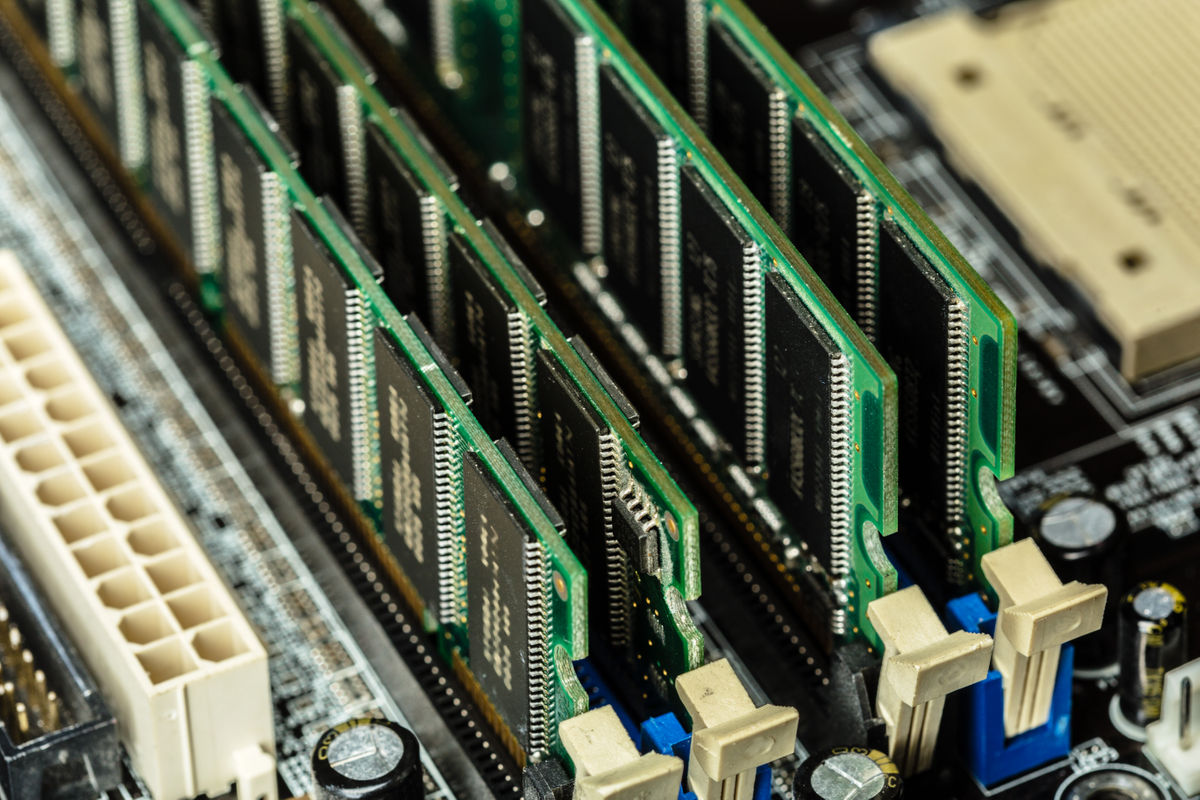
Memory companies like Micron saw their stock prices rise significantly as AI created demand that exceeded memory supply capacity, leading to increased market prices for their products.
Travis Prentiss, chief investment officer at asset management firm Informed Momentum Company, pointed out that 'these stocks have risen so much in the past that it is reasonable for even the slightest news to affect their stock prices.'
Apart from memory-related stocks, it has also been reported that social media stocks fell following Google and Meta's defeat in court. This led to a decline in tech stocks as a whole.
Instagram and YouTube found negligent in a lawsuit concerning social media addiction and were ordered to pay approximately 1 billion yen to each user - GIGAZINE

However, some investors cited ' Jevons' paradox ,' a theory that argues that resource consumption may actually increase even as technology improves efficiency, and pointed out that 'there is no short-term threat' and 'lower costs could increase demand for products, which could be beneficial for memory manufacturers in the long term.'
Related Posts:







in Note, Posted by log1p_kr