Why are mid-career employees more susceptible to burnout?

Why mid-career is such a dangerous time for burnout and workplace stress
https://theconversation.com/why-mid-career-is-such-a-dangerous-time-for-burnout-and-workplace-stress-275358
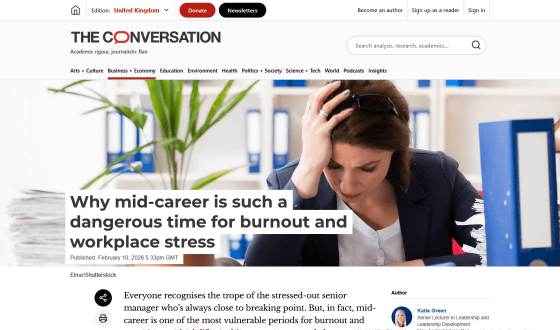
Some might think that mid-career employees with diverse experience should have a higher tolerance for work-related stress than younger employees with less experience. However, past research has shown that professional workers, in particular, are at increased risk of burnout in the middle of their careers.
The main reason why mid-career employees are at increased risk of burnout is the conflict they face between meeting work demands and maintaining work-life balance. As mid-career employees gain experience within an organization, employers begin to demand high standards from them regarding performance, leadership, and working hours. At the same time, people of this age group have more important things in their personal lives, and a multitude of things they want to do and problems they need to solve.
These issues, when combined, increase the risk of burnout among mid-career employees. The risk of burnout is not equal across all groups, and studies have shown that women are more likely to experience burnout in the middle of their careers than men. This may reflect the greater domestic responsibilities expected of women, as well as the higher expectations placed on them regarding time and emotional labor.

Mid-level employees face heavy workloads and are sometimes forced into situations where they must lead organizational transformation teams, achieve their own performance targets, and support junior employees simultaneously. In some workplaces, chronic overload and busyness are the norm, and the ability to withstand and respond to such demands is considered a necessary skill for an employee.
However, the idea that 'mid-career employees have resilience to stress' is merely a misconception. Prolonged stress reduces resilience and eventually leads to burnout. Past experiences do not necessarily prevent burnout; in many cases, they simply mask warning signs such as fatigue, insomnia, and anxiety caused by stress, preventing people from seeking help from outside.
In
Green stated, 'Many workers took on leadership roles with little or no formal preparation, and were forced to learn how to manage people on the job. Promotions often brought significant increases in responsibility without adequate investment in training. Even when opportunities for professional development were available, they were often haphazard and inconsistent. These circumstances fostered anxiety and self-doubt, and were a classic precursor to burnout.'

As part of a project called the Good Employment Learning Lab , Green interviewed over 150 field managers in the public and private sectors. His findings revealed that workplace systems, expectations, norms, processes, culture, and leadership are all related to burnout.
Specifically, workplace cultures such as unrealistic goal setting, excessive monitoring, and long working hours, as well as constant pressure from senior management demanding results, actively increased the risk of burnout. Furthermore, workplace environments such as bullying, sexual harassment, and toxic leadership were even more significant factors in increasing the risk of burnout than working hours.
Green points out that one way to mitigate the risk of burnout is for senior managers to listen to, acknowledge, and appreciate the efforts of mid-level employees. He further argues that it is important to eradicate a workplace culture that demands constant readiness and to provide middle managers with appropriate training and development opportunities.
Finally, Green emphasizes the importance of strong teamwork and fostering a sense of community in the workplace. 'In the middle of your career, when pressure comes from multiple directions, connections with people become essential, not a luxury. The importance of finding joy in work is often overlooked. Opportunities to find meaning, connection, and enjoyment are not luxury extras, but rather a way to protect yourself from chronic stress and burnout,' he said.
Related Posts:








in Note, Posted by log1h_ik