What do you think about letting AI create cooking recipes? We asked three professional chefs what they thought.
There are
Should you be using AI for recipes? 3 real chefs weigh in. | Mashable
https://mashable.com/article/should-you-use-ai-recipes
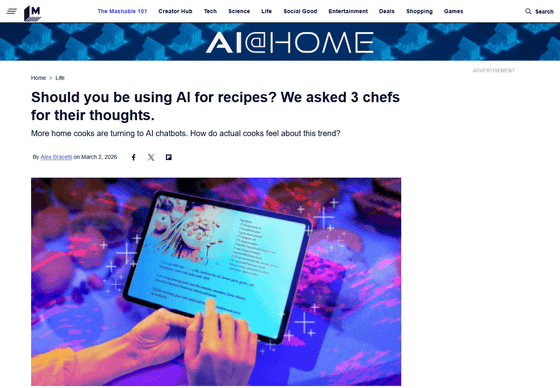
When looking at recipes in books or websites, it can be difficult to specify the number of servings or adjust your preferred seasonings and ingredients. However, by having a chat AI create a recipe, it is theoretically possible to create a recipe that matches specific variables such as portion sizes, preferences, time, and difficulty. However, since AI does not understand the taste of food, it is impossible to know whether a dish made according to an AI recipe will turn out delicious. So, Mashable asked three professional chefs, 'Should AI be used to create recipes?' and summarized their opinions.
Jason Heiselman, head chef at Hungryroot , a grocery delivery service that also offers recipe suggestions, said, 'AI is incredibly good at quickly generating and scaling up cooking ideas. It can synthesize thousands of flavor combinations, cooking methods, and dietary restrictions in seconds. This will be a huge inspiration, especially for home cooks. AI lowers the barrier to entry and helps people try dishes using ingredients they wouldn't normally combine.' In fact, Heiselman also uses AI in cooking both at work and at home.
However, AI cannot taste food, and it is difficult to incorporate important elements such as texture, balance of seasonings, the feel of a sauce when simmered, and the exquisite saltiness and aroma that skilled chefs instinctively master. Therefore, Heiselman said, 'A recipe is merely a framework. Food traditions are rooted in culture, history, and lived experience, and human expertise is paramount. Authenticity is not just about ingredients, but understanding the story and intention behind a dish. The artistry of cooking comes from seasoning, adjusting, plating, and personalizing. AI generates ideas, but the creative decisions that bring a dish to life are still up to humans.'
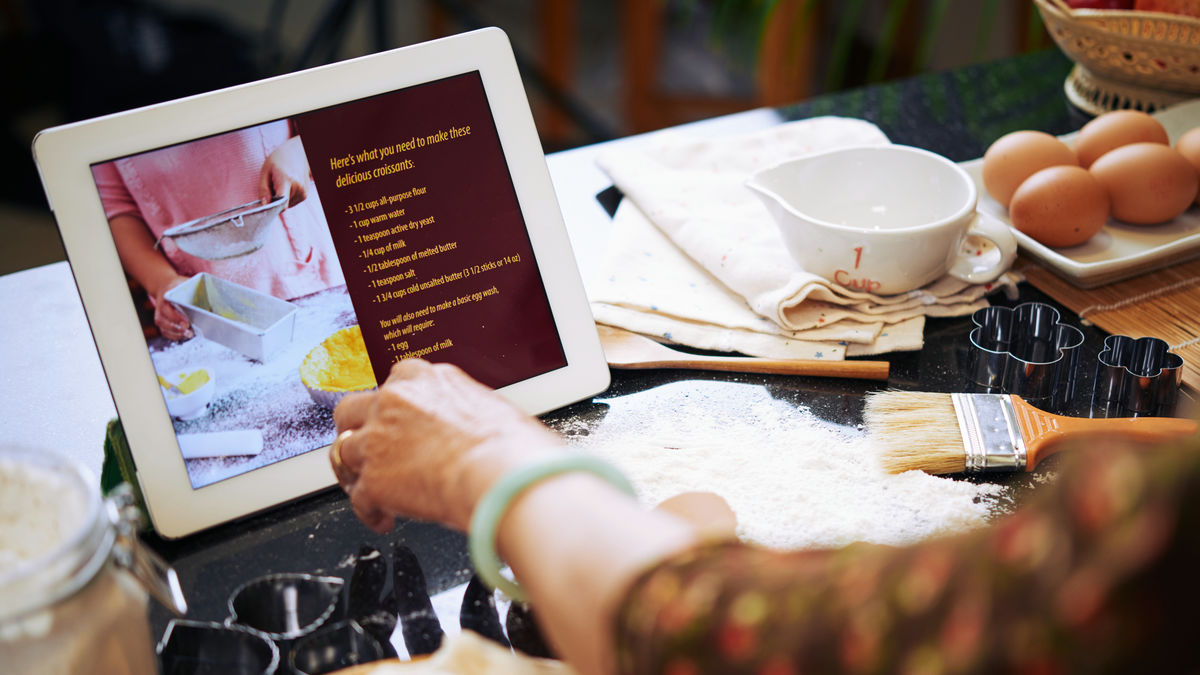
'There's a common refrain in the chef industry that there are no original recipes,' said Chuck Heyworth, a chef and medical nutrition expert at
While pointing out that AI recipes often have significant discrepancies in their measurements, Haworth said, 'Even if an AI recipe contains errors, ultimately human taste is required for cooking. Ultimately, it's up to the individual chef to cook well, and it's up to humans to determine if a recipe is flawed. I think the future of AI in the kitchen is bright. I look forward to continuing to use and tweak AI to help me think about my own recipes for years to come.' Furthermore, according to Haworth, AI can also be useful for applications such as 'converting recipes from other countries into Western-style portion sizes.'
Tom Favoureur, a veteran pastry chef at
Favourelle said the greatest benefit of AI is 'having an assistant who is a mathematical genius and never tires.' By leaving the mundane tasks of converting portions and calculating sugar and fat ratios when mixing ingredients to AI, chefs can devote their time to the more enjoyable and important parts, such as combining flavors and plating. 'AI hasn't replaced my cooking,' Favourelle said. 'But it has made me cook faster and more accurately.'

Both chefs acknowledged that AI is useful in the culinary world and are open to its adoption, but said that human experience is still necessary to judge accuracy, check flavors, and adjust the taste. Mashable summarized, 'AI can scan 10,000 recipes for a certain dish and tell you the most common ingredients, but it can't understand the culture behind the recipe. AI is a good imitator, but it lacks the life experience to generate the final recipe idea.'
Related Posts: