'Universal History Simulator' lets you experience history with narration generated by Google Gemini, allowing you to explore the world as a farmer in the Edo period or a salt miner in ancient Rome
Universal History Simulator (UHS) is an educational history game developed by University of California, Santa Cruz historian Benjamin Breen using Claude Code and other tools. UHS aims to push the boundaries of large-scale language models (LLMs)' capabilities for creating historical fiction, allowing players to experience everyday life in a specific time and place as generated fictional characters.
Map Voyager - Enhanced Engine
GitHub - benjaminbreen/UHS
https://github.com/benjaminbreen/UHS
UHS covers seven historical periods and nine cultural spheres, with NPCs, items, and events that are appropriate for each period and culture. It also features an epidemic system modeled after real epidemiological history, including disease transmission routes and their impact on society.
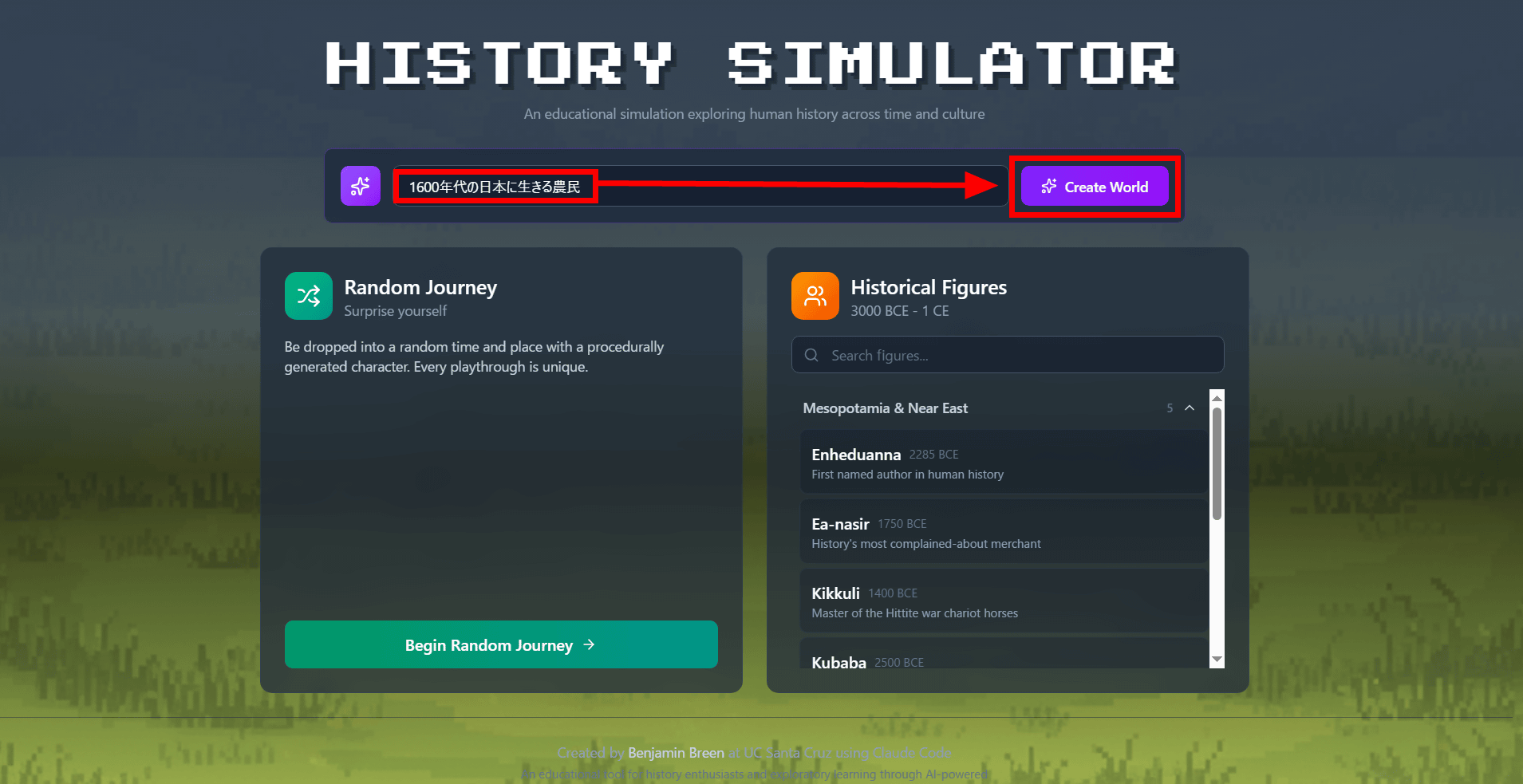
I visited the UHS demo site. I entered my desired time period, region, occupation, etc. in the input field at the top and clicked 'Create World.' In this example, I entered 'Farmer living in Japan in the 1600s' in Japanese.
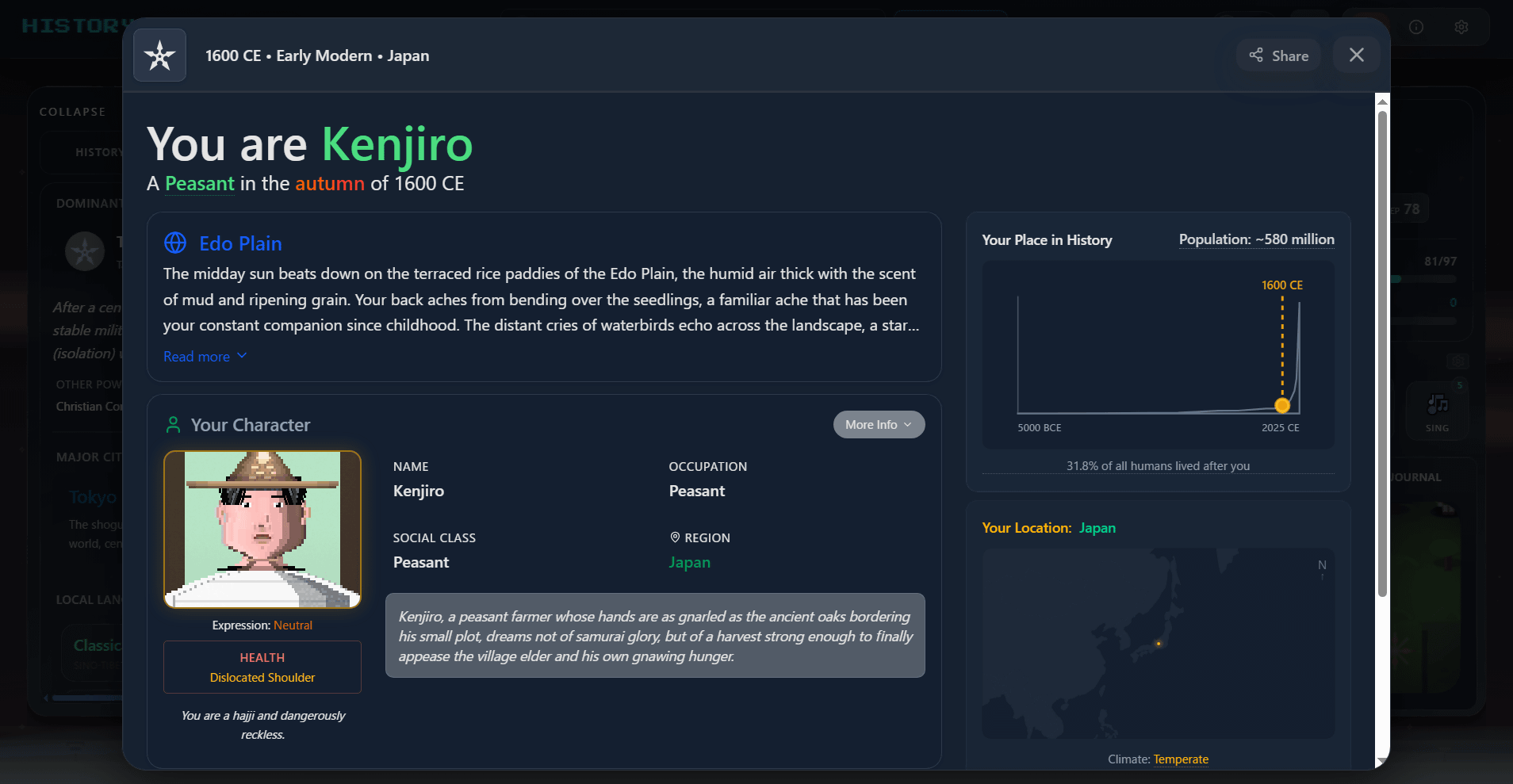
The automatically generated character is 'Kenjiro,' a farmer living in Japan in the 1600s.
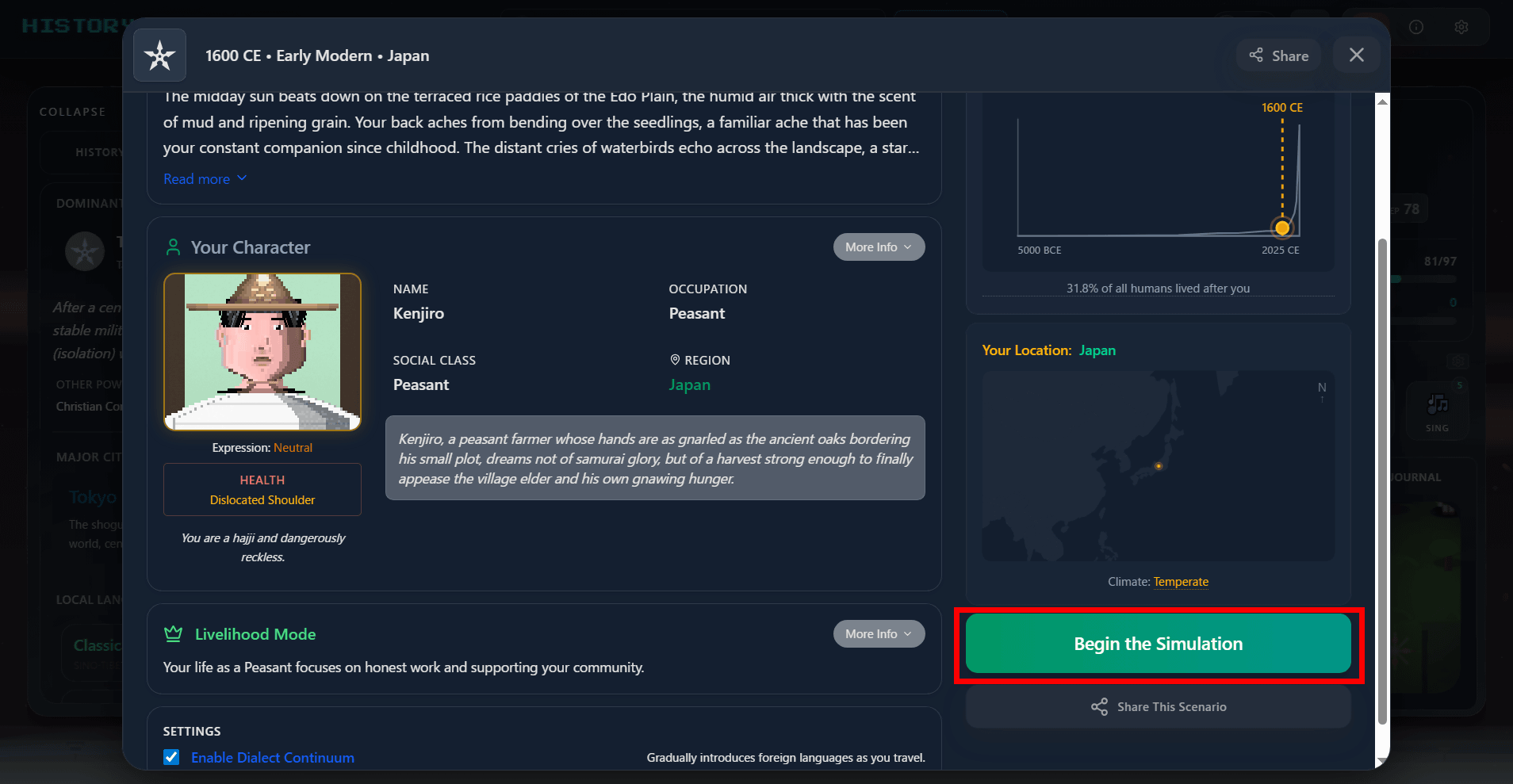
Scroll down and click 'Begin the Simulation.'
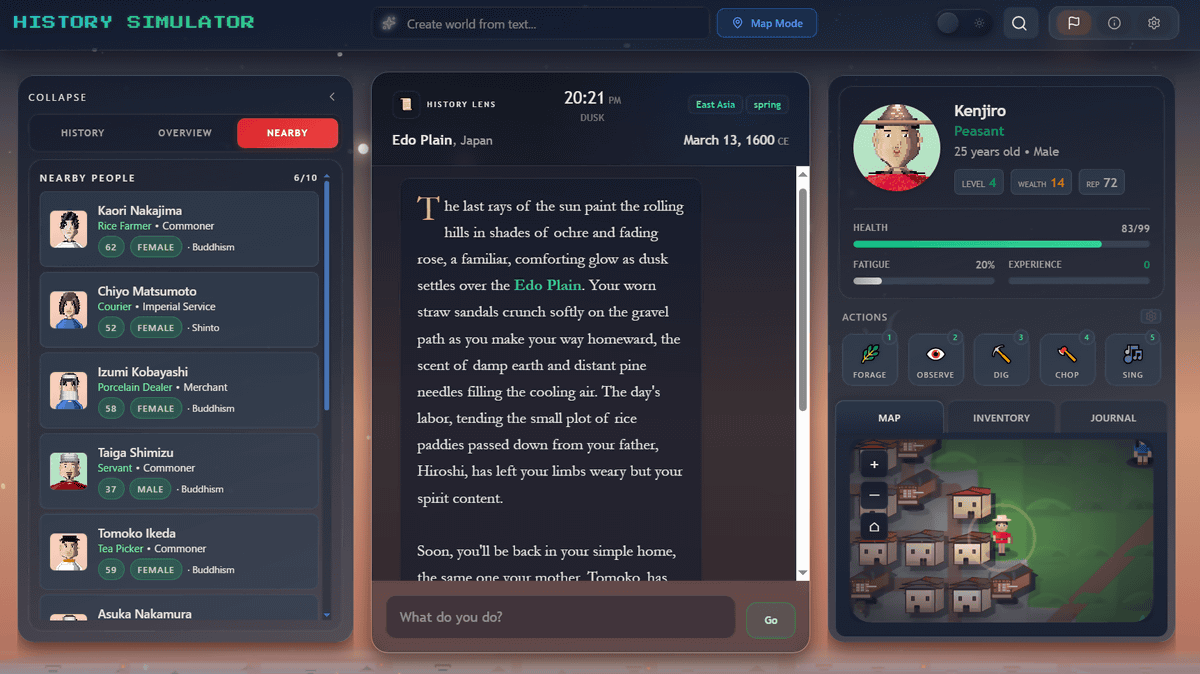
The UHS screen looks like this: There are information columns on the left and right, and an input field in the center.
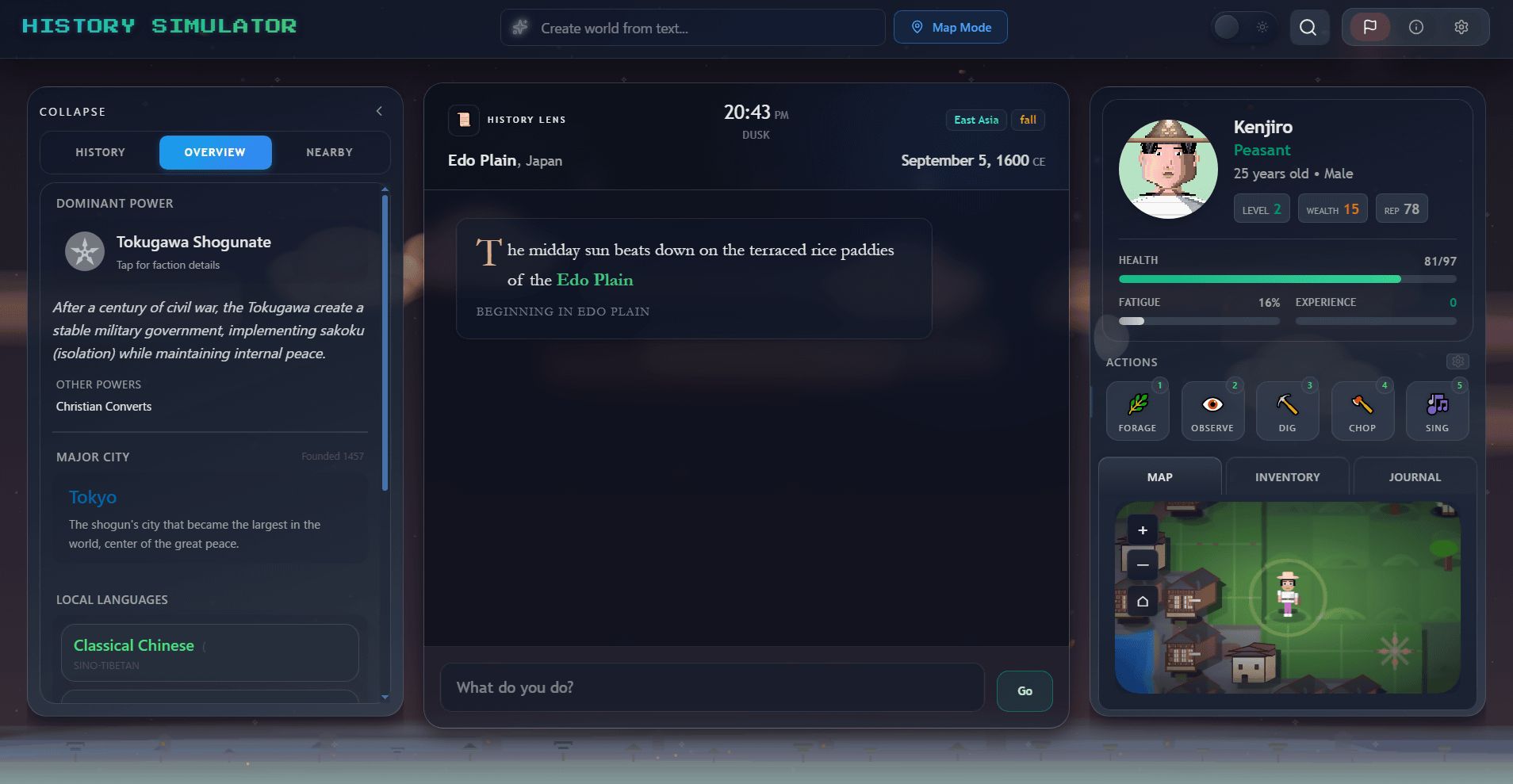
In the 'HISTORY' information column on the left, you can view background information about the era in which you live.
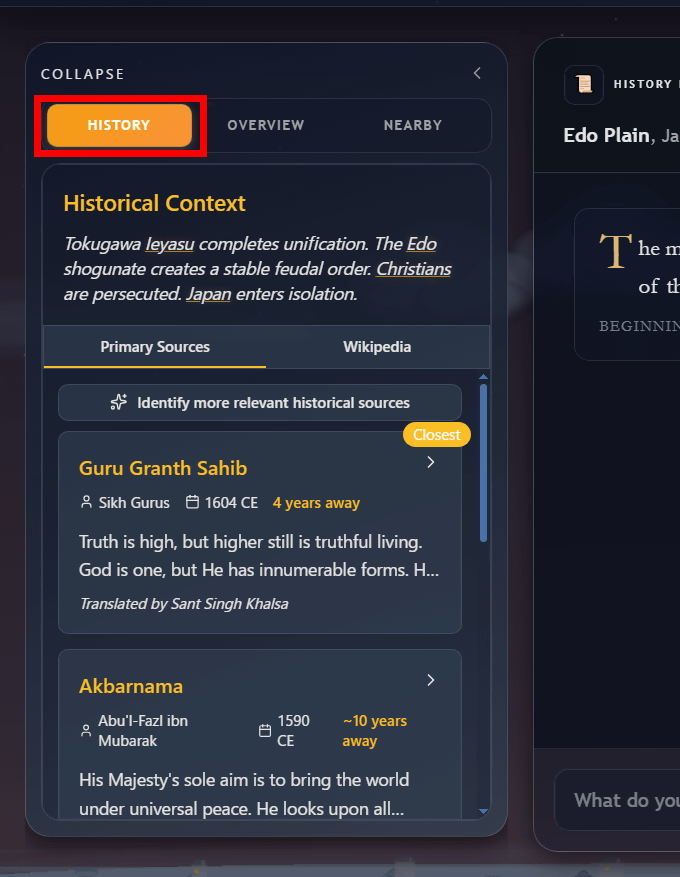
'NEARBY' allows you to check who is nearby and their occupations.
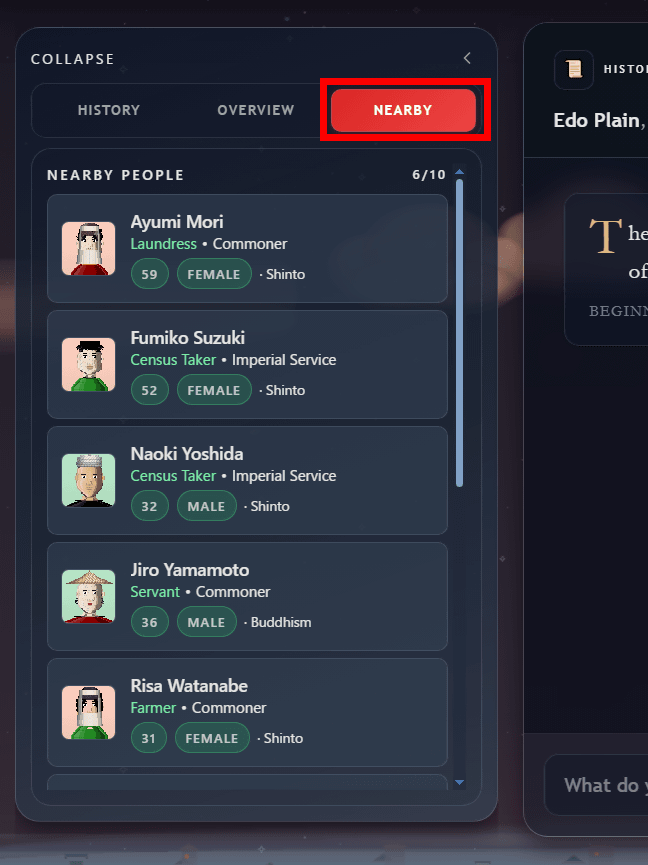
For now, I typed 'plowing the field' into the input field and clicked 'Go.'
The narrator then displayed the following sentence: 'The work continues, but the sun begins to set, bringing the welcome peace of night. A cool breeze rustles through the rice ears. As darkness deepens, the distant mountain shadows fade into the twilight, and the first stars begin to twinkle in the darkening sky.' At the same time, options for what to do next are presented. Select 'Head southeast toward your home in Tokyo' and click 'Go.'
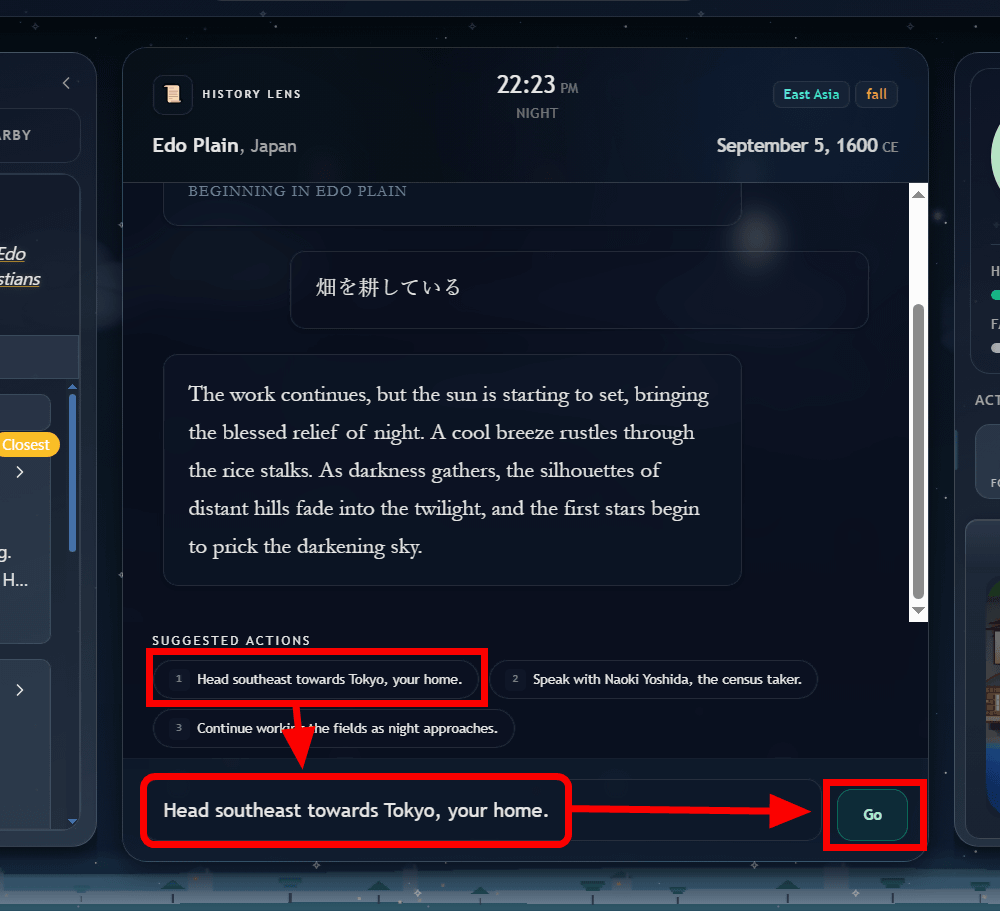
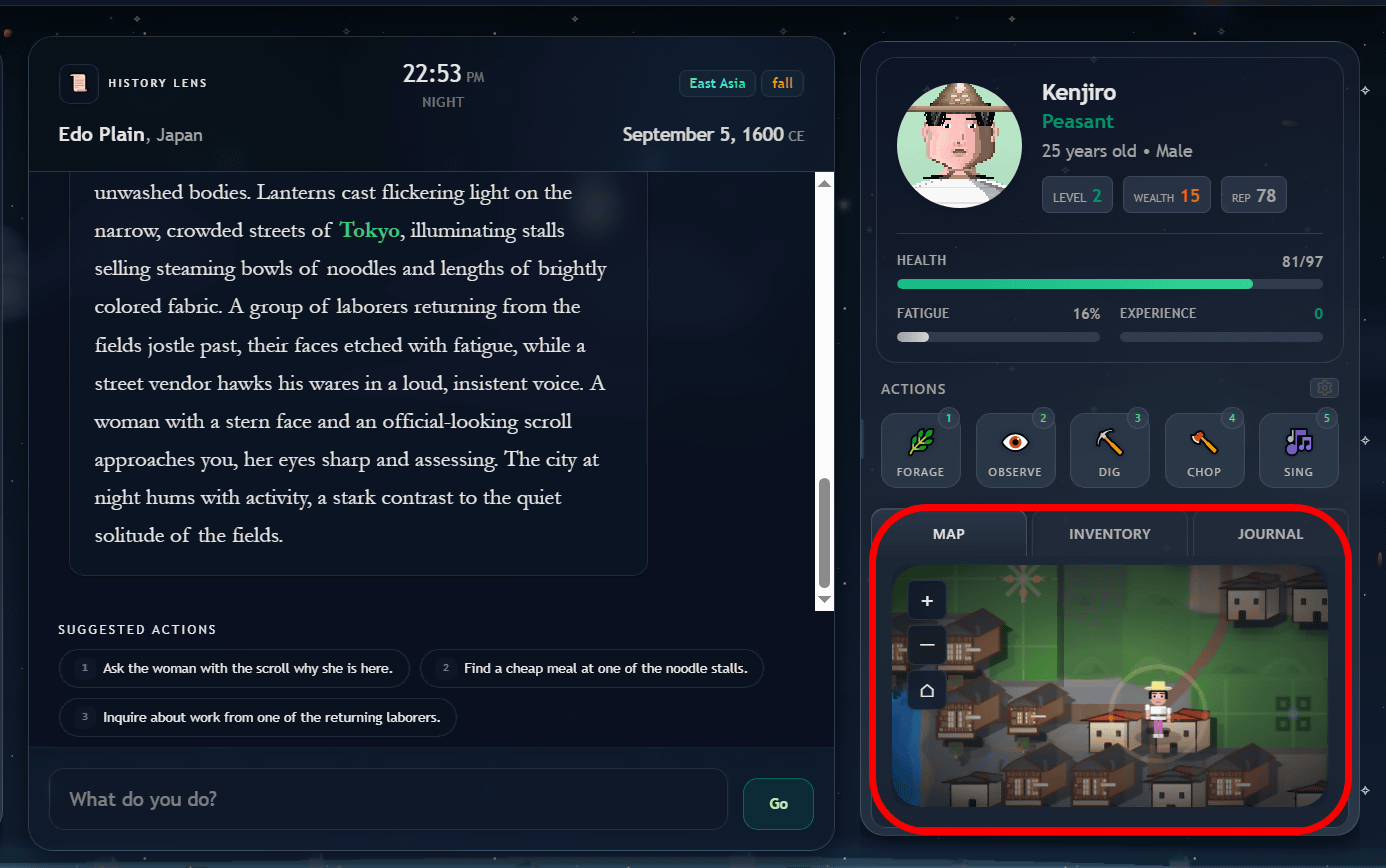
Then, Kenjiro, who was displayed on the map on the right, moved. In this way, by entering text and choosing from the options presented, the generated AI behaves like a game master in a tabletop RPG, moving the character. However, unlike TRPGs, actions are not determined by rolling dice.
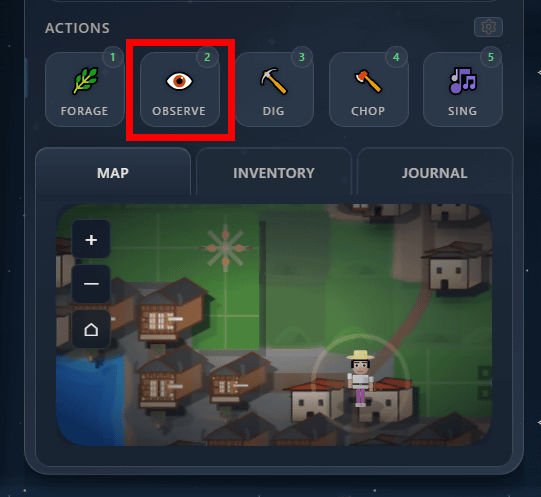
The information column on the right also contains several commands, such as 'OBSERVE,' which allows you to observe your surroundings.
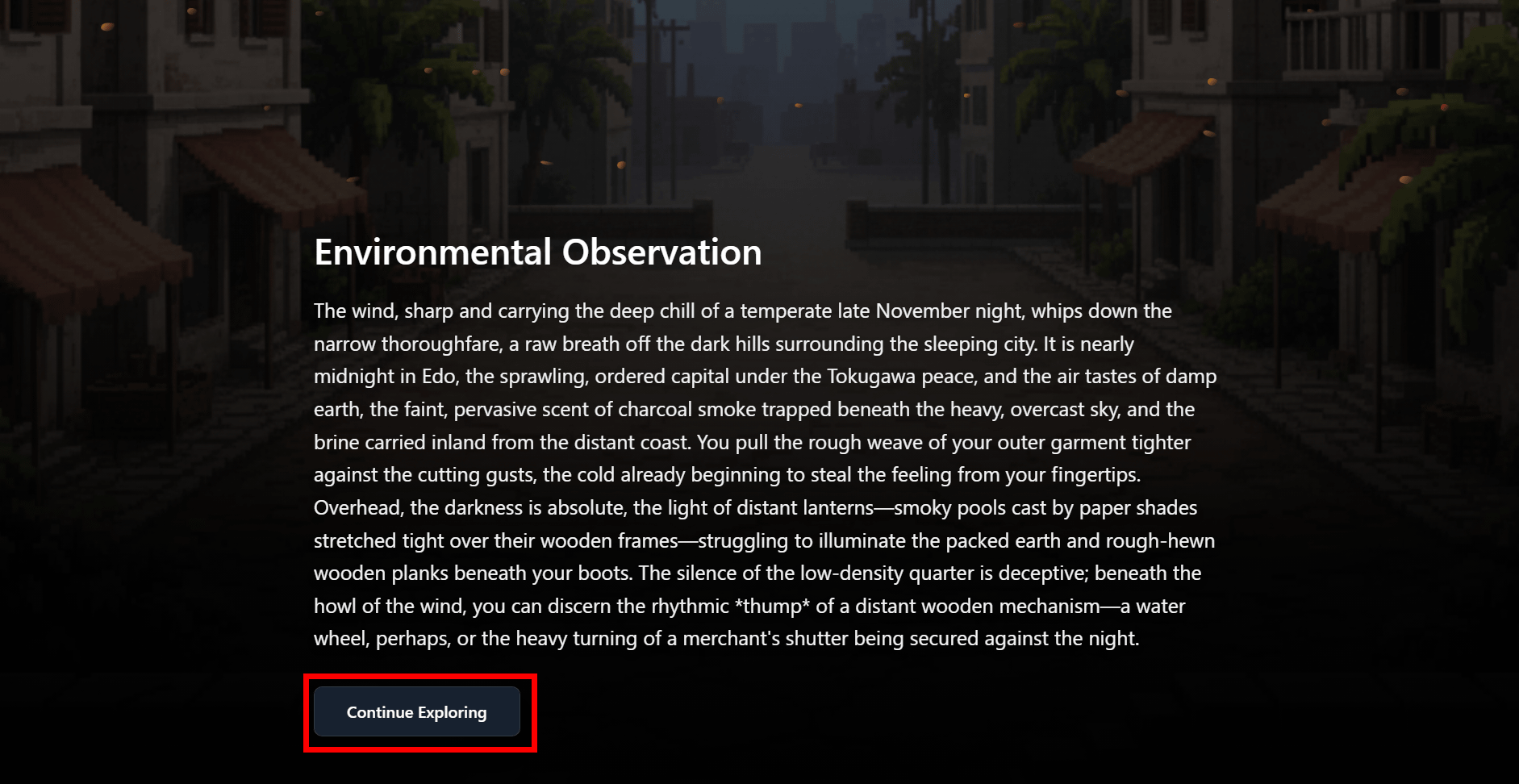
'Edo, the orderly capital city under the peace of the Tokugawa, is about to enter midnight, and the air is a blend of the taste of damp earth, the faint scent of charcoal smoke trapped under a heavy, cloudy sky, and the scent of the sea carried inland from the distant coast,' the video states, reflecting the Edo period. 'The quietness of the deserted district is deceptive, and beneath the howling of the wind, you can hear the steady thud of a distant wooden contraption,' the narrator carefully narrates what is visible and audible. Click 'Continue Exploding' to return to the original screen.
Since I'm here, I decide to talk to Fumiko Suzuki, who is nearby.
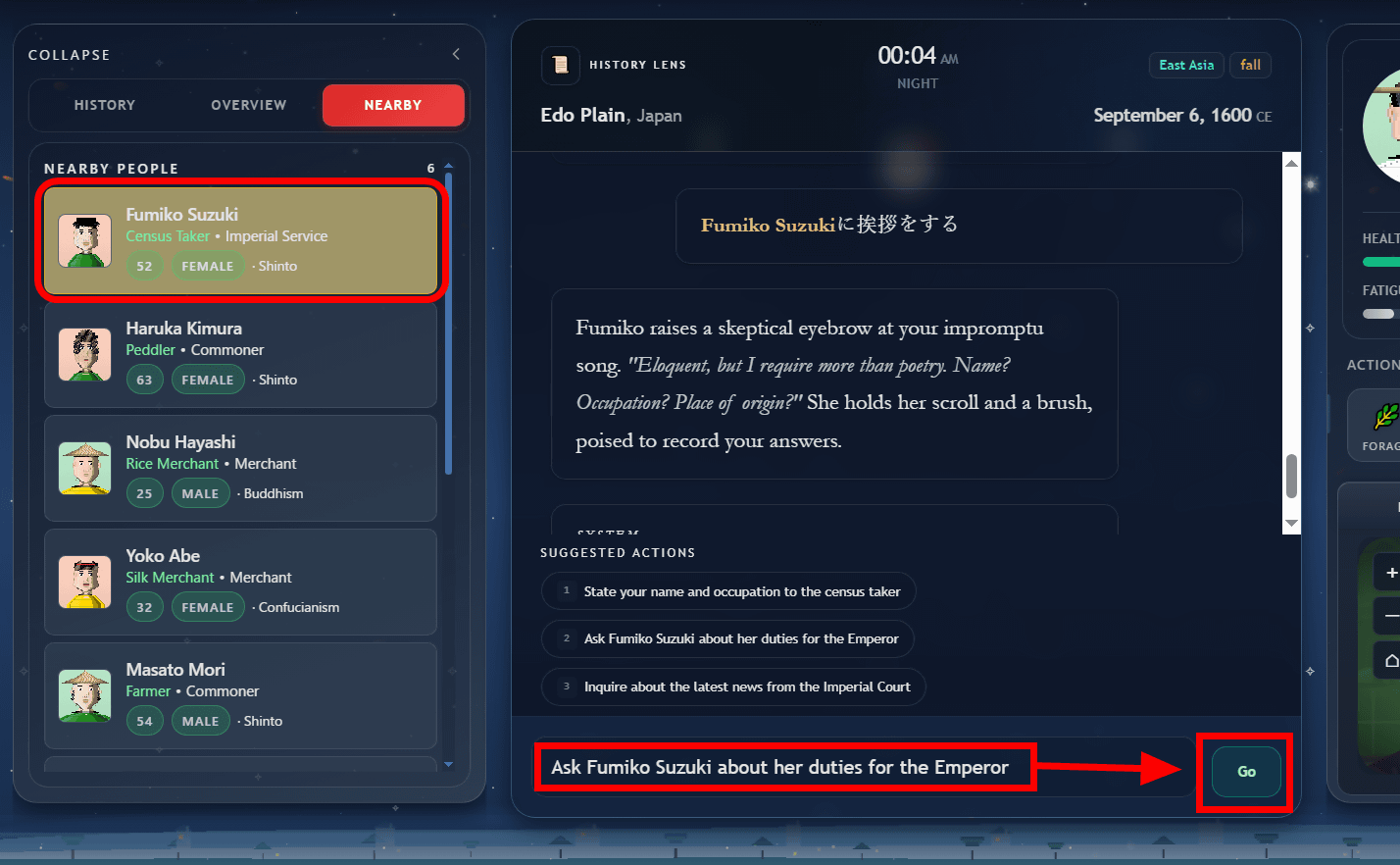
Fumiko Suzuki said she was a census taker and asked me to tell her my name and where I live.
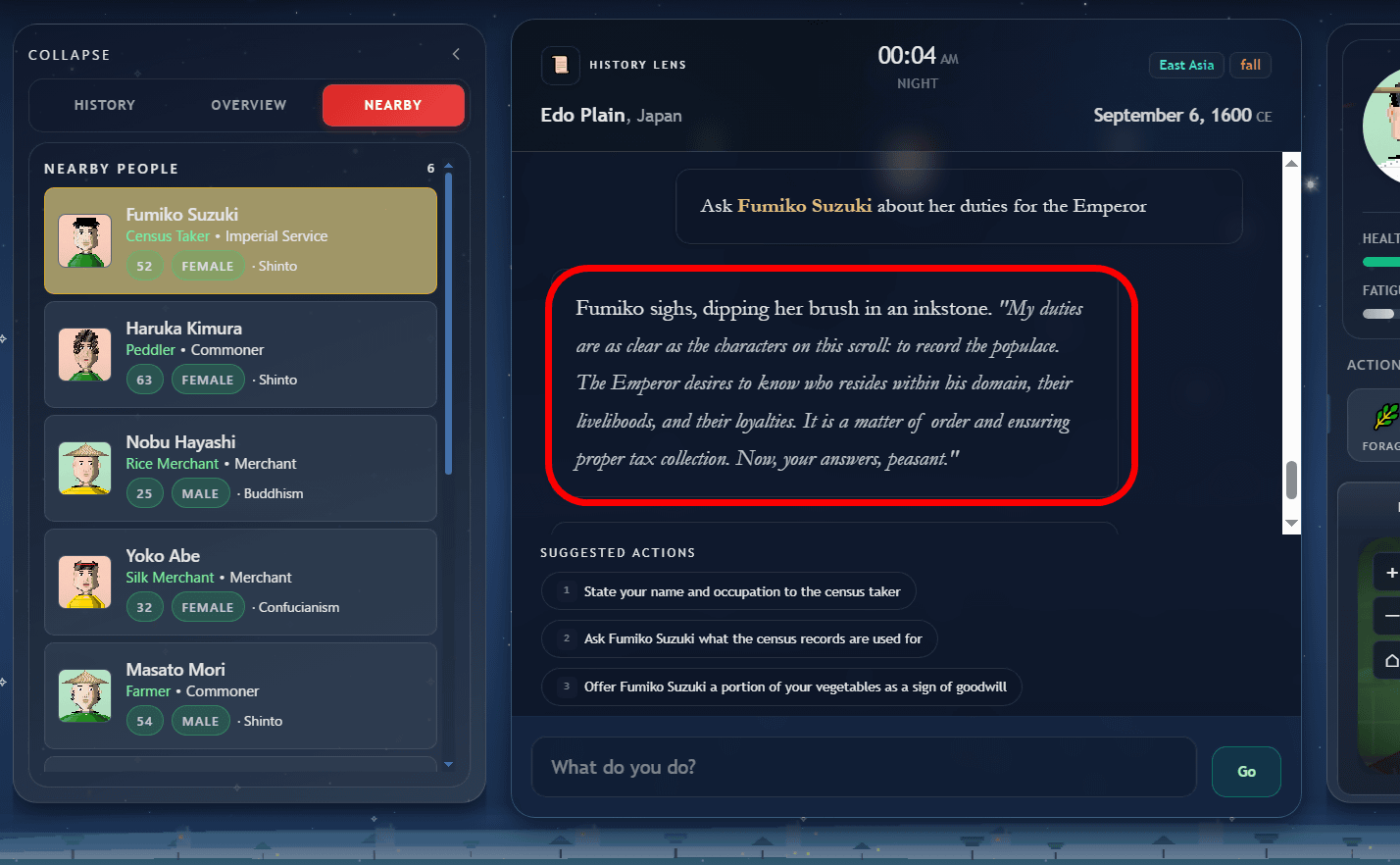
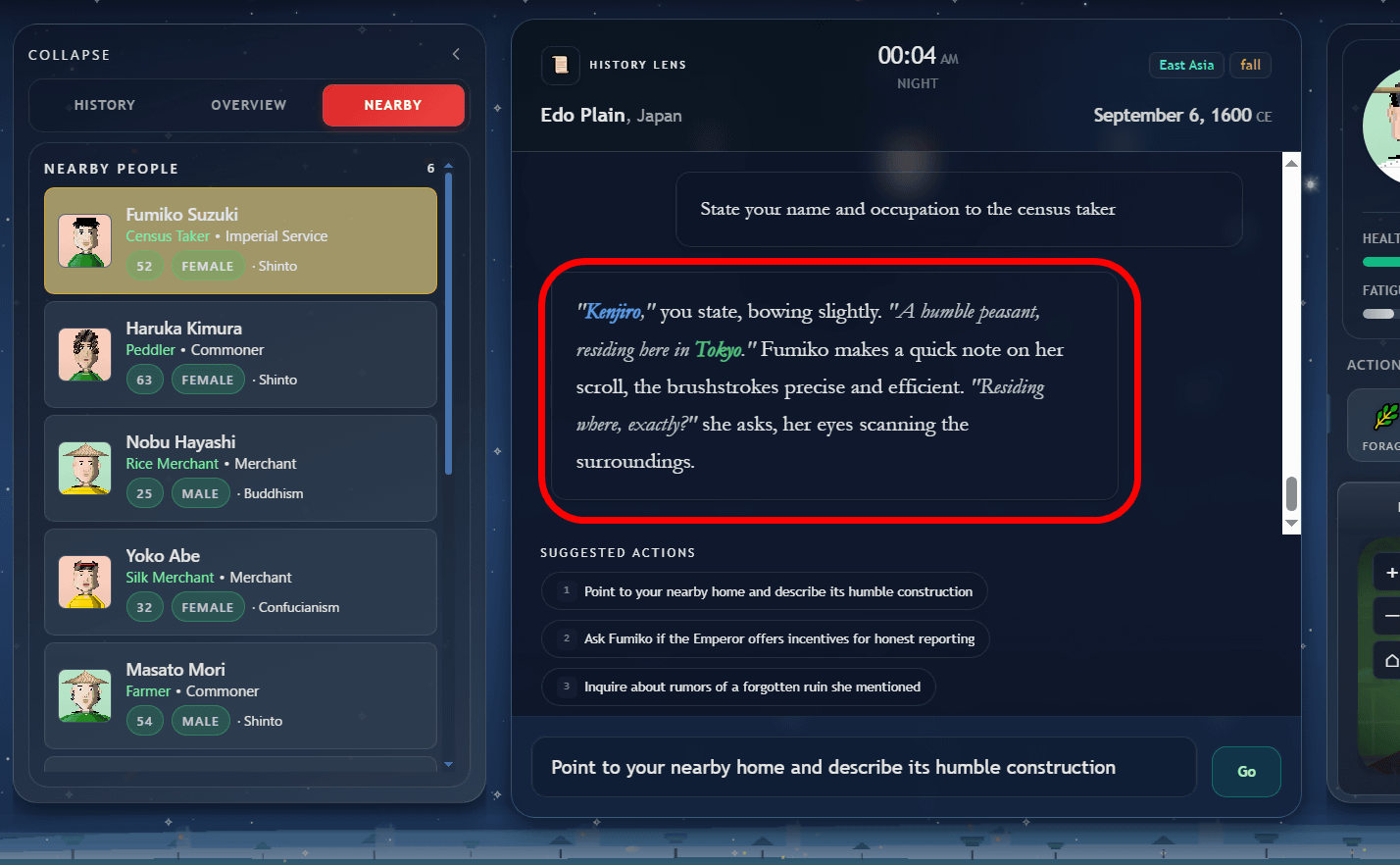
So, the answer is something like this: UHS allows you to become a character and live in that era, with narration and conversation based on generative AI.
The exploration element includes detailed interior maps for specific locations such as government buildings, markets, workshops, and holy sites. The story is designed to present players with difficult choices based on the values of the time, rather than using historical figures to represent modern moral values.
Rather than simply relying on the AI's output, the system uses a structured database to verify the geographical and historical validity and constrain the content. Furthermore, the system also includes educational frameworks such as the presentation and evaluation of learning objectives and primary historical sources.
The UHS source is available as a public repository on GitHub and is open source. Breen welcomes new ideas and encourages people to fork it or contact him if they're interested in contributing to the project.
Related Posts: